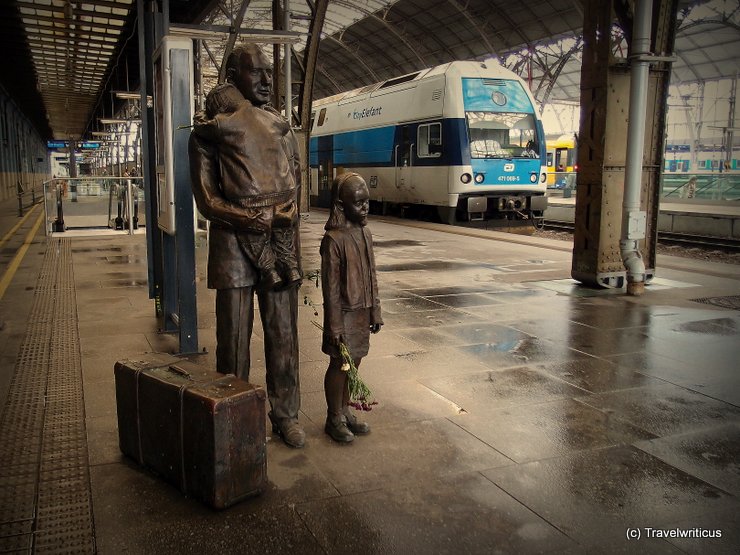
While waiting for my connection train in Prague, my eye fell on a group of bronze statues at platform 1 of Prague Central Station. A man and two children stand next to me. What’s the story behind them? The answer is: Nicholas Winton.
You only see what you know (Goethe)
While waiting for my connection train in Prague, my eye fell on a group of bronze statues at platform 1 of Prague Central Station. A man and two children stand next to me. What’s the story behind them? The answer is: Nicholas Winton.
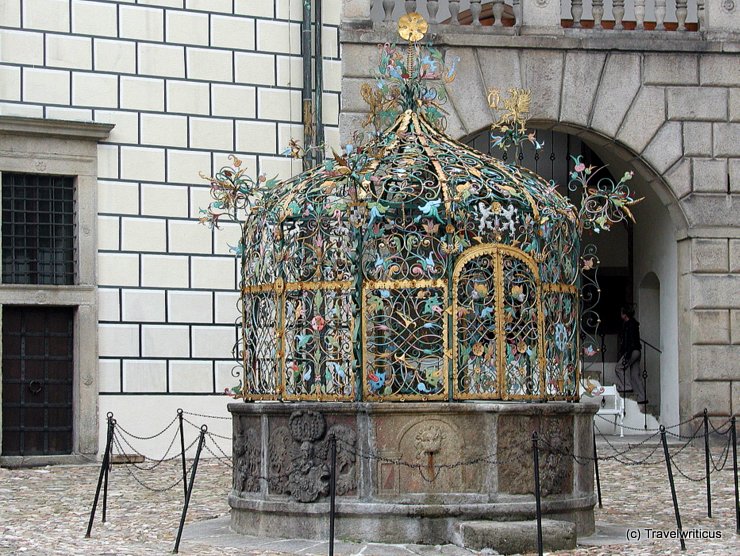
In the Bohemian town of Jindřichův Hradec, a castle of the same name is located. Its former German name was Neuhaus (New House). The literal translation of the Czech name means Henry Castle. Worth seeing is the roundel from 1596, which is counted among the principal works of the Bohemian Renaissance. [German]
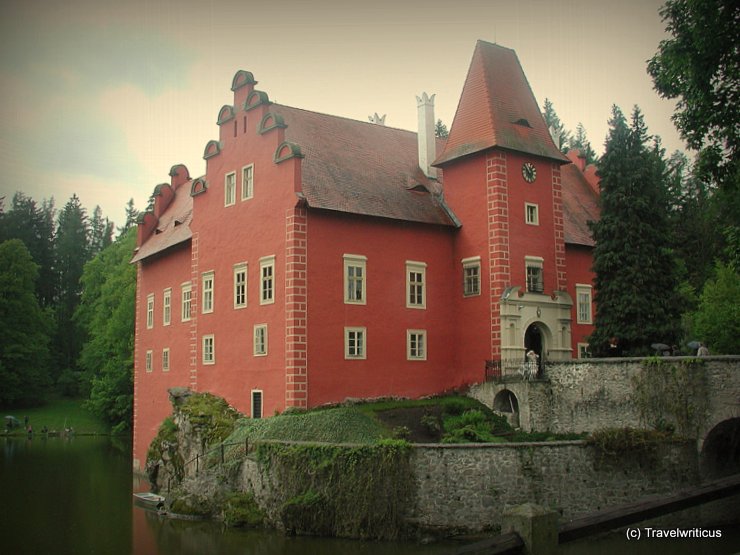
Červená Lhota Castle (Zámek Červená Lhota) in Pluhův Žďár in southern Bohemia is a Renaissance castle on a rock in the middle of an artificial pond. His former German name was Rothlhotta. [German]
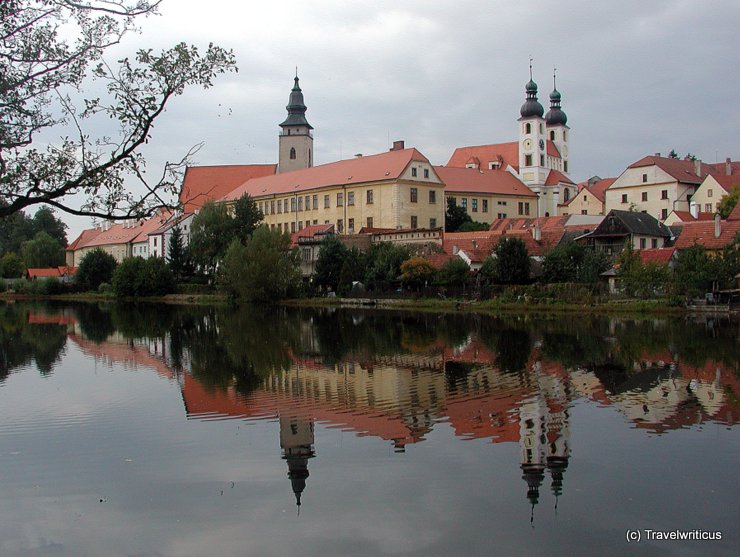
Together with the Štěpnický Pond, the Ulický Pond surrounds the UNESCO World Heritage Site of Telč. During my walk, the steeples of the churches Kostel svatého Jakuba Staršího and Kostel Jména Ježíš reflected in its water. [German]
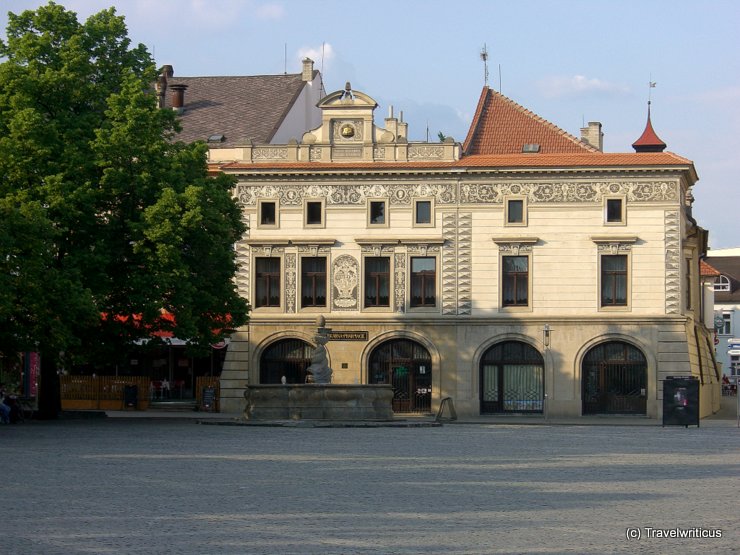
An old pharmacy, a burbling fountain, an empty market square. I experienced this quiet moment in front of a townhouse with a Renaissance façade in the Morovian city of Uherské Hradiště. The building’s diverse structure made me linger longer. [German]
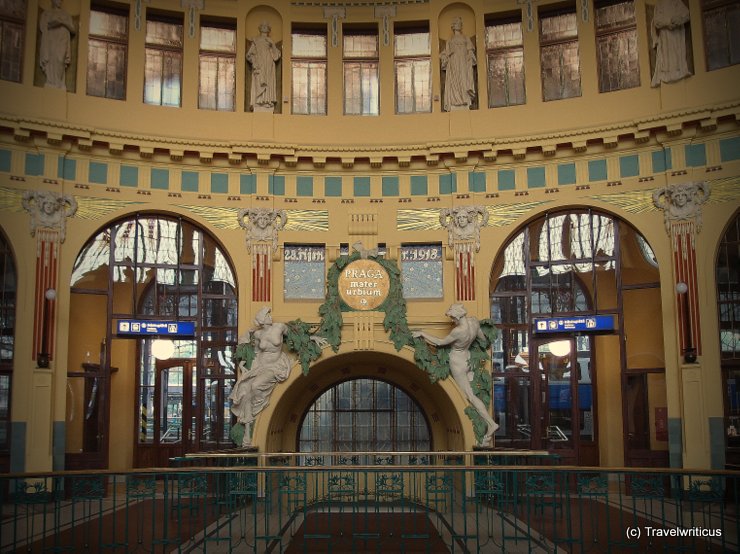
The Art Nouveau hall in Prague’s Central Station (Praha hlavní nádraží) gives a glimpse of the former splendour and glory of the Habsburg Empire. It was designed by Josef Fanta (1856-1954) and opened in 1909. [German]
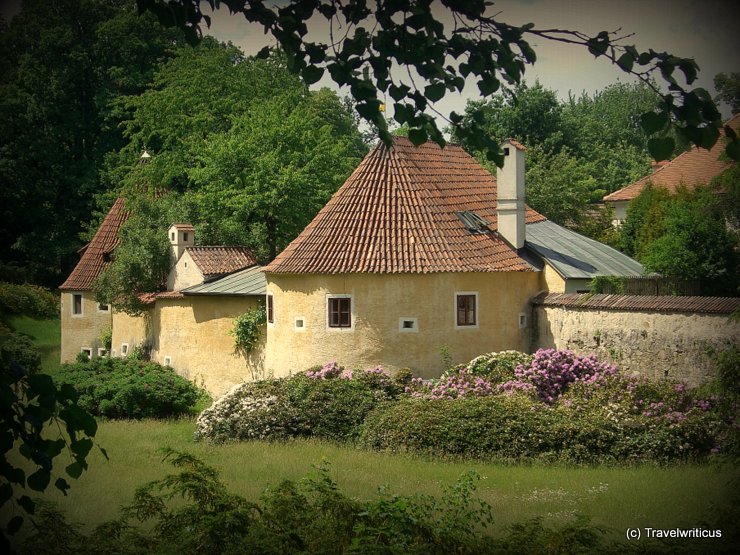
The old town wall of Třeboň offers this romantic view. The walls saw their construction in the years 1525 – 1527. Another attraction of the city is its marketplace. The buildings lining the square date back to the 16th century as well. [German]
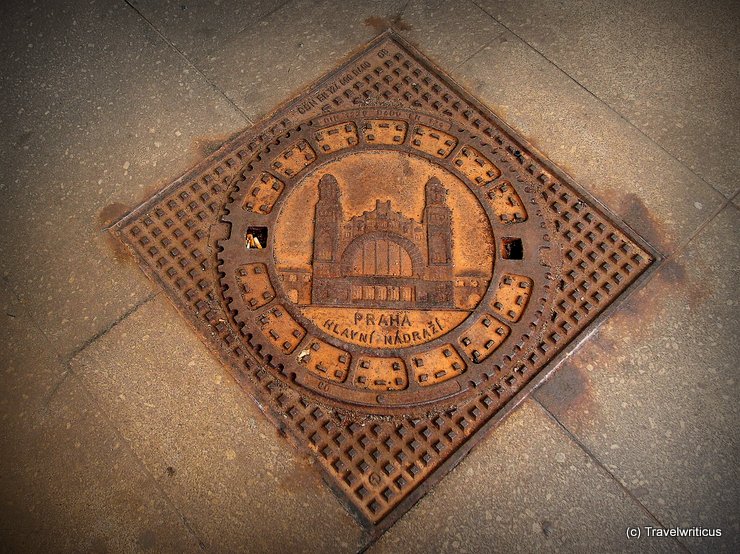
This manhole cover on a platform of Prague Central Station (Praha hlavní nádraží) displays the historic station building. Today, the entrance hall of this building, created by Josef Fanta, forms a hidden gem for friends of Art Nouveau. [German]
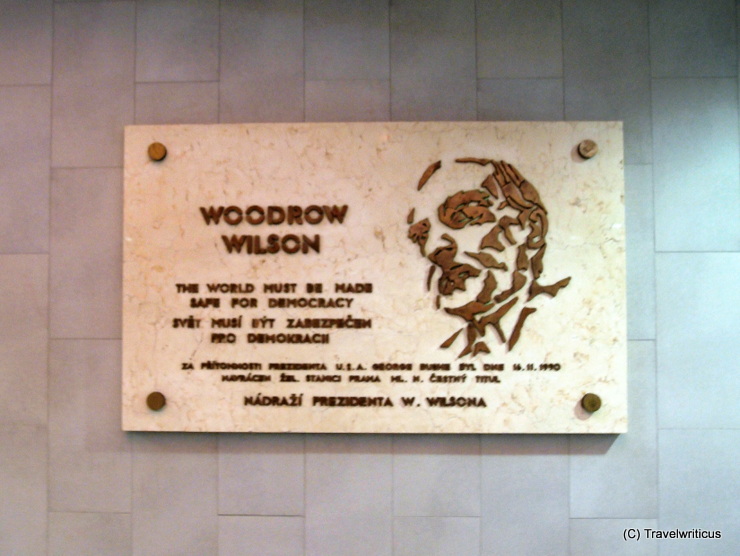
Plaque to the 28th President of the United States Woodrow Wilson, seen at the main railway station of Prague. During the First Czechoslovak Republic and from 1945 to 1953 the largest station of the capital city was named Wilson Station (Wilsonovo nádraží).
When I was a child, I used to watch fairy tales on TV every Christmas season. Generally, these movies were made in the Czech Republic. Many years later, I still remember the plots of these tales, like’ Three Hazelnuts for Cinderella’, ‘Pan Tau’, and ‘Arabela’. What about your memories?
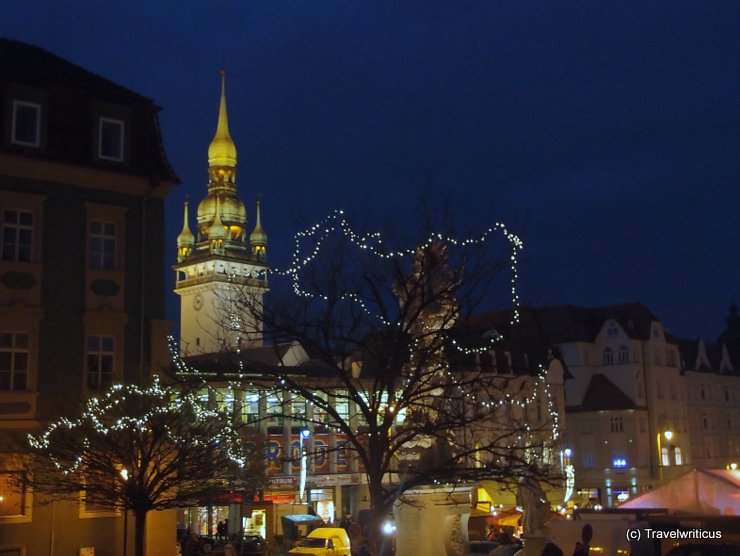
View of a Christmas market in Brno, the 2nd largest city in Czechia. In the background, you see the tower of the old town hall.
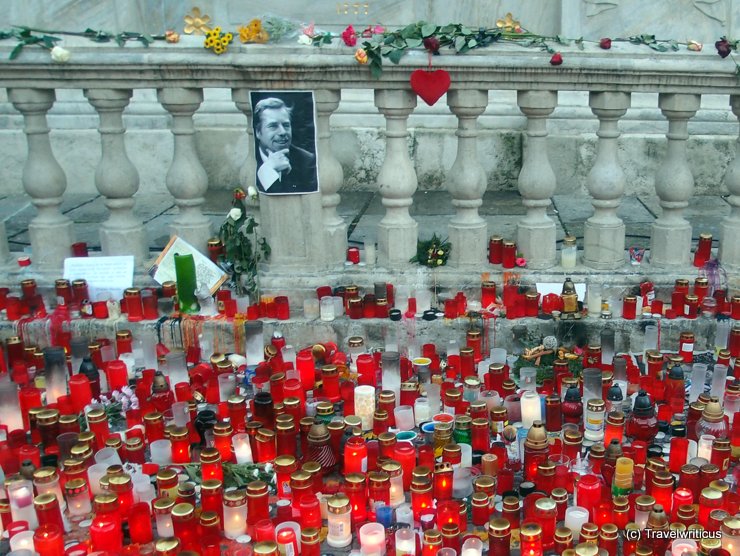
Four days before my visit to Brno, the essayist and politician Václav Havel died. A lot of candles, photos, letters and even drawings covered the squares of the city.