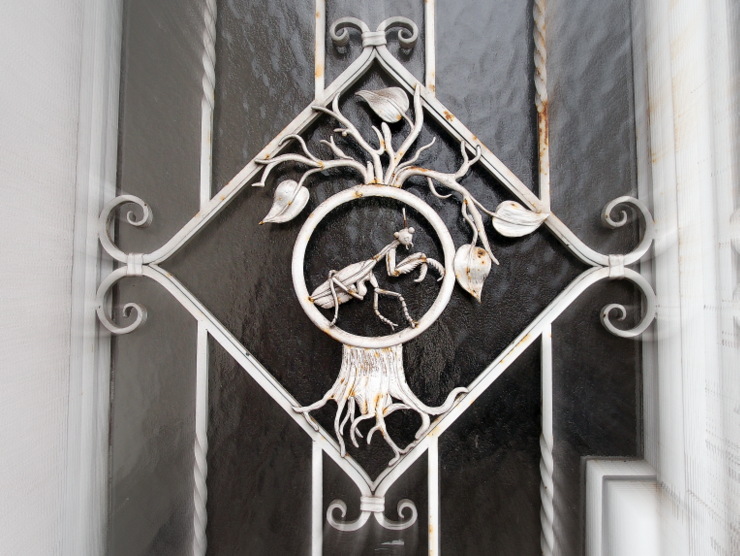
I am a sucker for wrought ironwork. On a walk through Graz, I discovered this image of a praying mantis (Mantis religiosa) as a decoration on a house entrance. What might have been the motivation for this work of art? [German]
You only see what you know (Goethe)
I am a sucker for wrought ironwork. On a walk through Graz, I discovered this image of a praying mantis (Mantis religiosa) as a decoration on a house entrance. What might have been the motivation for this work of art? [German]
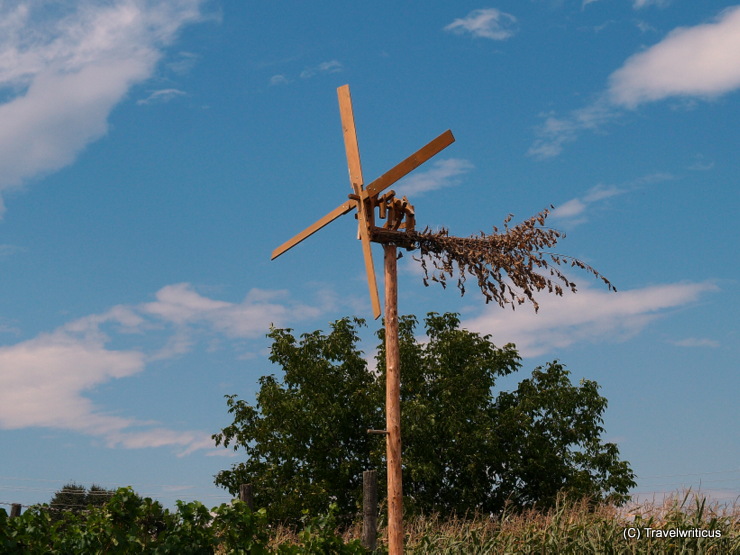
An iconic rural element in Slovenia is the Klopotec. It is a sort of bird-scaring rattle. You find it in many traditional Slovenian wine-growing areas. They are also common in some parts of Austria (esp. Styria) and Croatia (esp. Zagorje).
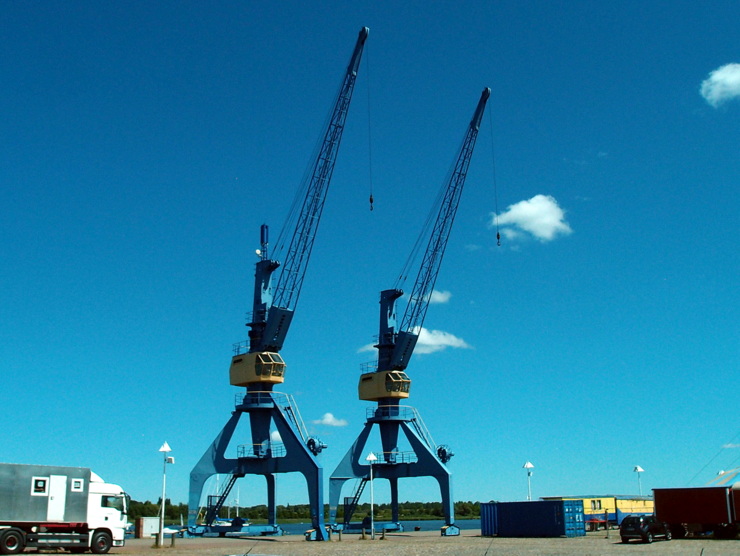
Do cranes own personality? I asked myself this question while strolling around the city harbour of Rostock. There, I found two port cranes nicely coloured blue and yellow. They saw their completion in a GDR combine named TAKRAF in 1960.
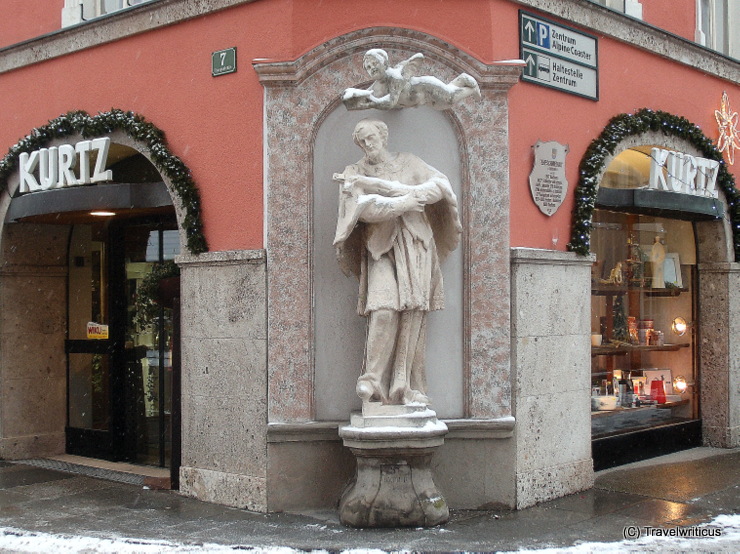
This statue of Saint John of Nepomuk stands at a building named Eheschmiedhaus. The building dates back to the 13th century. The sculpture saw its completion in the first half of the 18th century. I love the levitating angel above his head. [German]
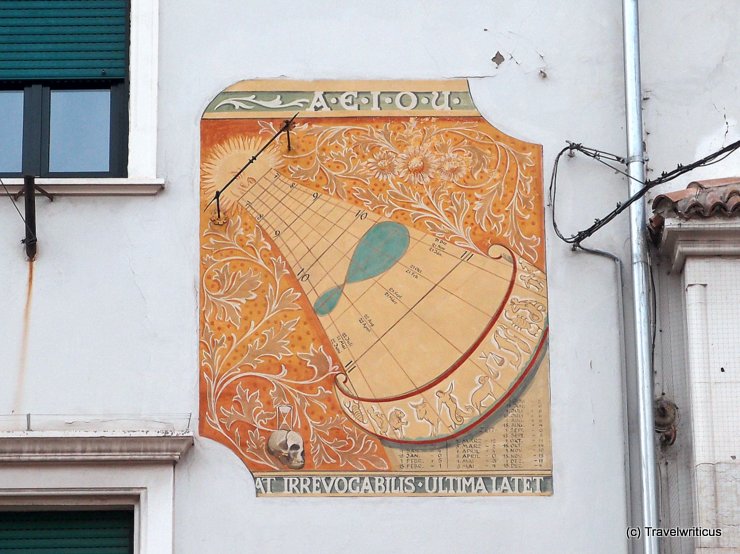
While I walked through Merano in Italy, I came across this sundial. I was impressed by how many elements and codes are compiled in this depiction. For example, you see the motto of Frederick III (A.E.I.O.U.) as well as a skull with an hourglass on top of it. [German]
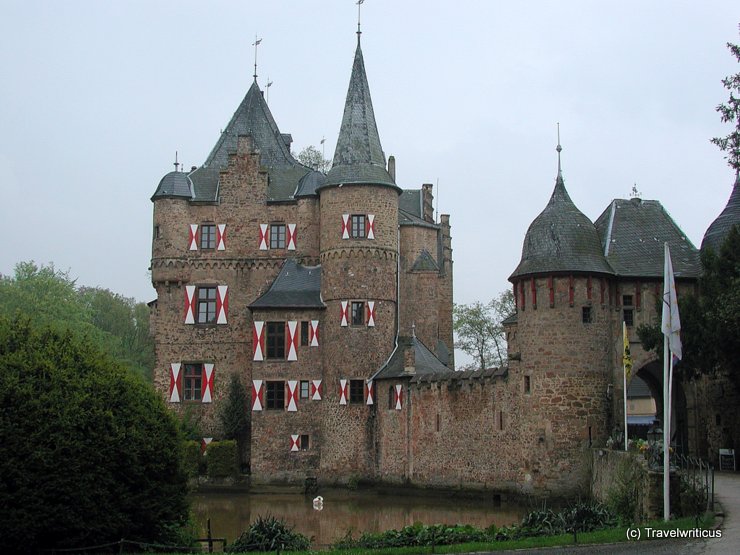
The former moated castle is considered one of the best-preserved castles in the Rhineland. Its origins date back to the 12th century. Today, the walls of Satzey Castle (Burg Satzvey) serve as a venue for knight games and medieval festivals. [German]
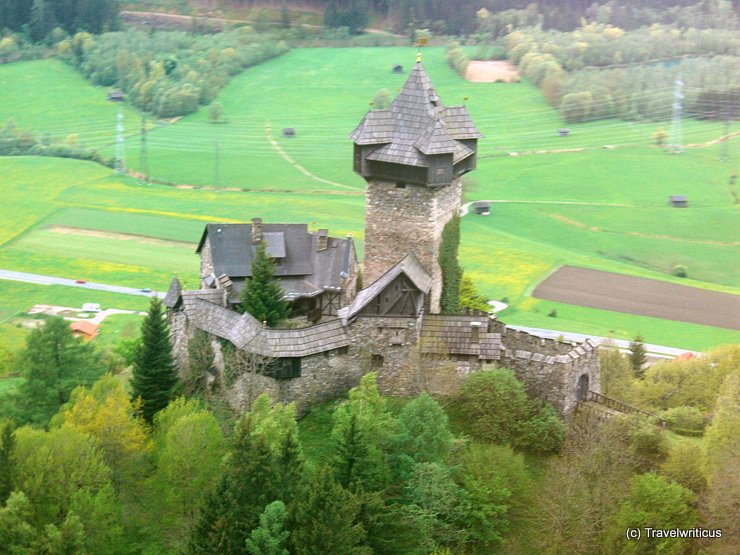
Niederfalkenstein Castle (Burg Niederfalkenstein) stands high over the municipality Obervellach in the Austrian state of Carinthia. This photo was taken from a train while passing the railway bridge Falkensteinbrücke.
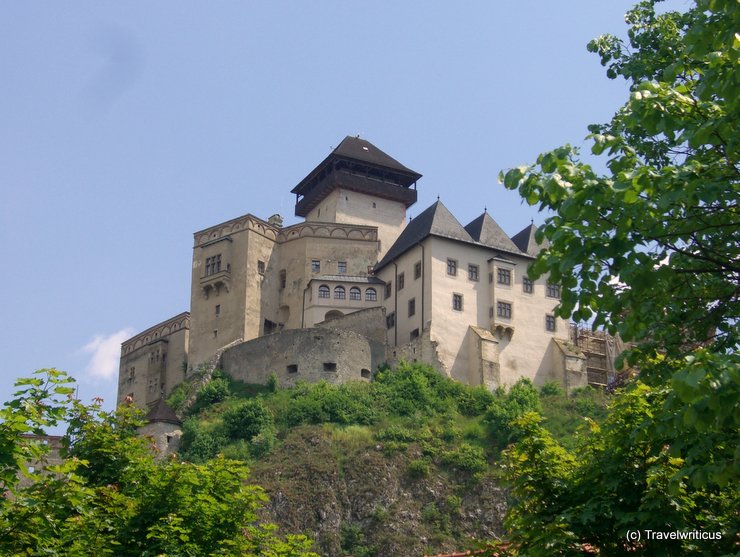
Trenčín Castle (Trenčiansky hrad) is a castle high above Trenčín, a city in the west of Slovakia. For many years, it was the residence of Máté Csák of Trencsén. Today, a castle museum tells about the history of the building and the region.
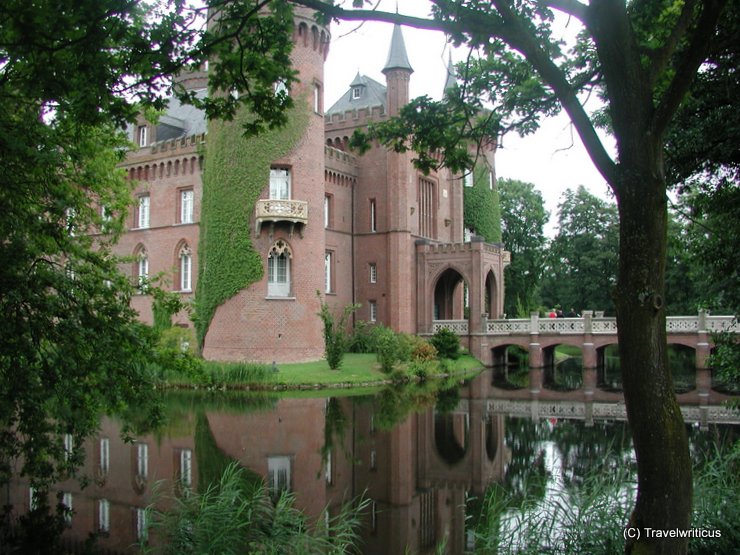
Moyland Castle (Schloss Moyland) in the Lower Rhine region houses a museum for contemporary art and an archive with works by the German artist Joseph Beuys. A noted library of art literature completes the offer.
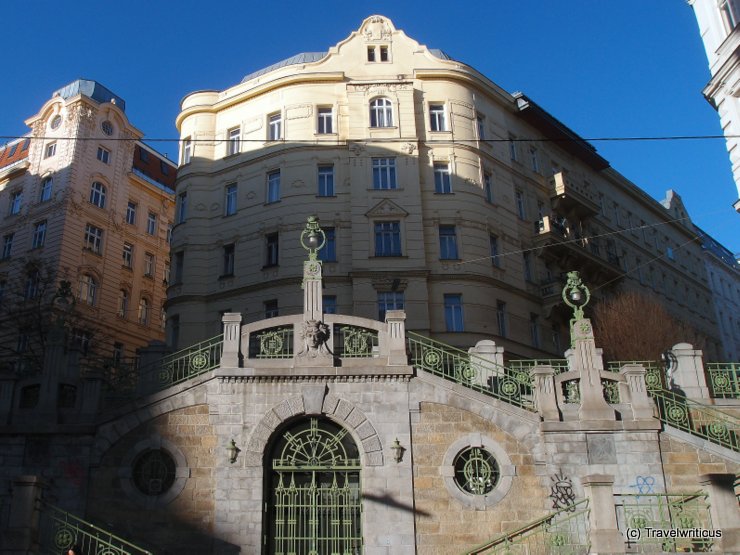
Architect Max Hegele built the Fillgraderstiege in 1905 – 1907. The outdoor staircase connects the Fillgradergasse with the Theobaldgasse in Vienna’s 6th district of Mariahilf. Architecturally, it is considered Viennese Art Nouveau. [German]
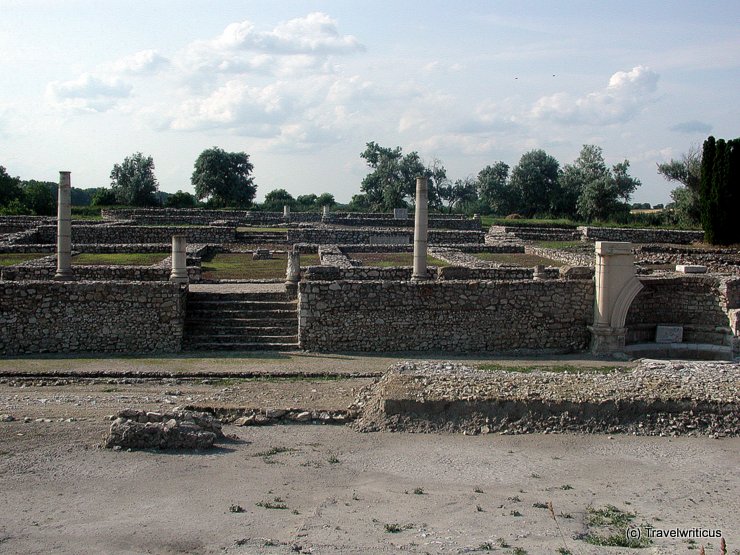
The Gorsium Archaeological Park near Tác tells about life in this region during the ancient age. The Roman influence started here with a fort protecting a road junction and a ford of the Sarviz River in the middle of the 1st century. [German]
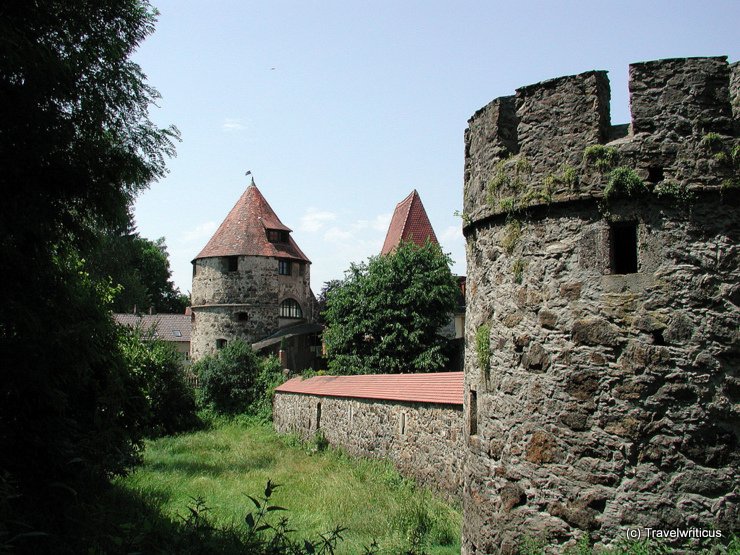
River cruisers may know the mighty Veste Oberhaus high over the Danube River. But there is also a town wall in Passau. You’ll find the depicted towers in the Innstadt area. This city district lies between the Inn River and the Austrian border. [German]