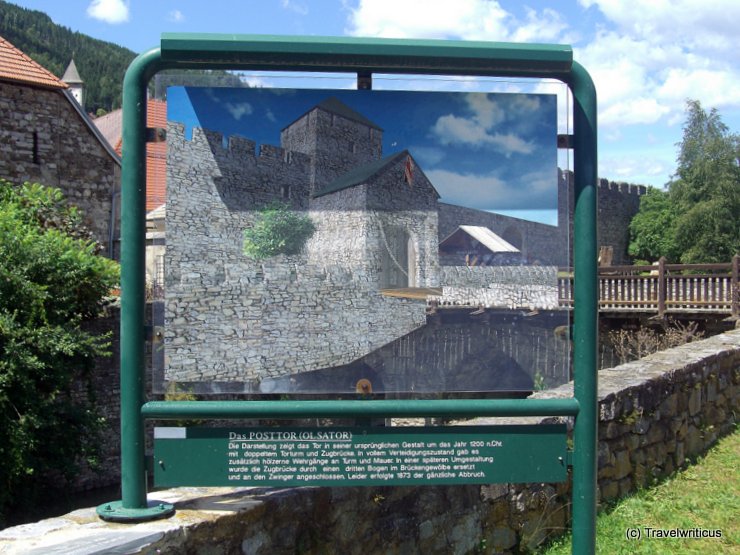
On my walk through Friesach, I discovered this clever idea to visualize the medieval gate called Posttor or Olsator in its shape of about 1200 AD. The sign was transparent, so I was able to match past and present.
You only see what you know (Goethe)
On my walk through Friesach, I discovered this clever idea to visualize the medieval gate called Posttor or Olsator in its shape of about 1200 AD. The sign was transparent, so I was able to match past and present.
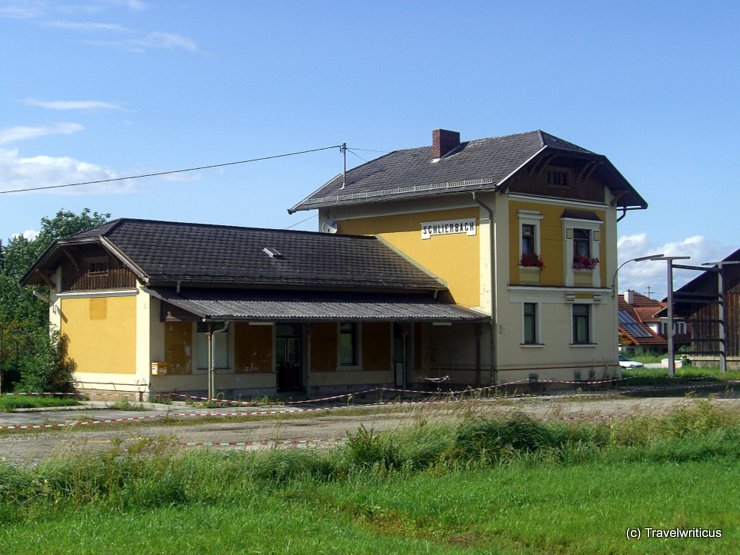
On my way to Schlierbach Abbey, I came across the abandoned railway station of Schlierbach. Austrian railway stations dating back to the monarchy are very typical. One can recognise them even after 100 years.
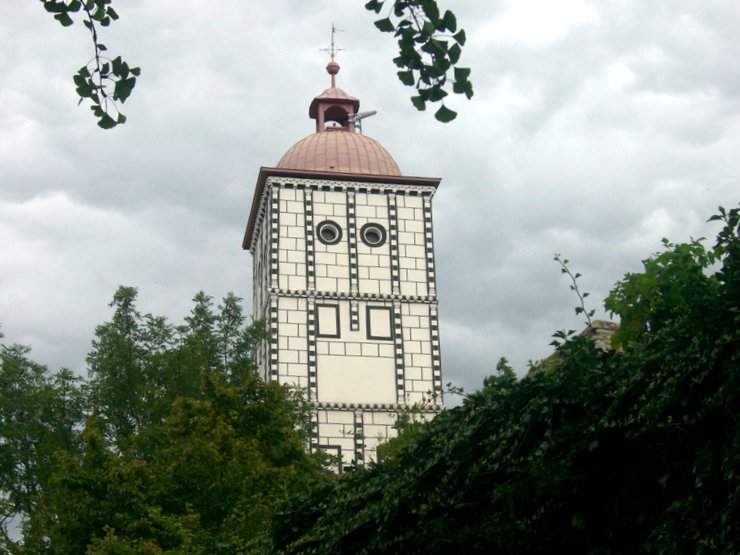
While approaching Schallaburg Castle on foot, you first see this tower. It gives an impression of the beauty of this Renaissance palace in the Austrian state of Lower Austria (Niederösterreich). Today, the castle is known for remarkable exhibitions every year.
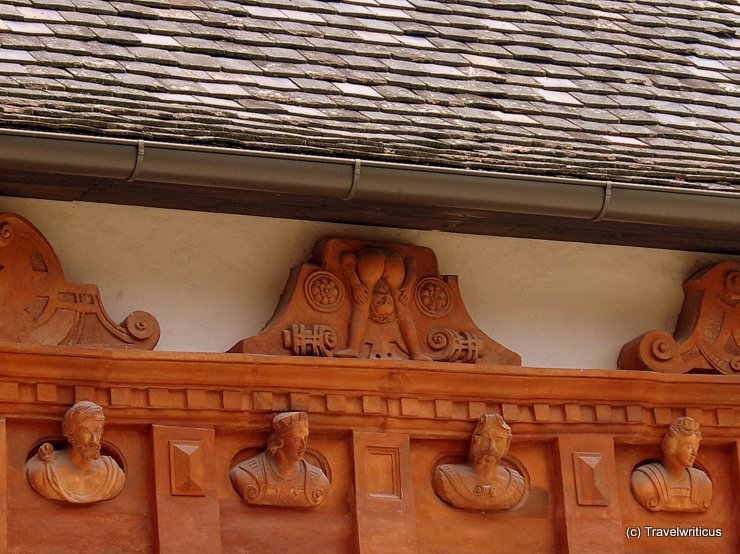
You find this peculiar detail at Schallaburg Castle (Schallaburg): A sculpture of a man showing his bottom. Such sculptures served as a defence against harm and evil spirits. Together with the Dog Lady, it is one of the most fascinating sculptures in this palace.
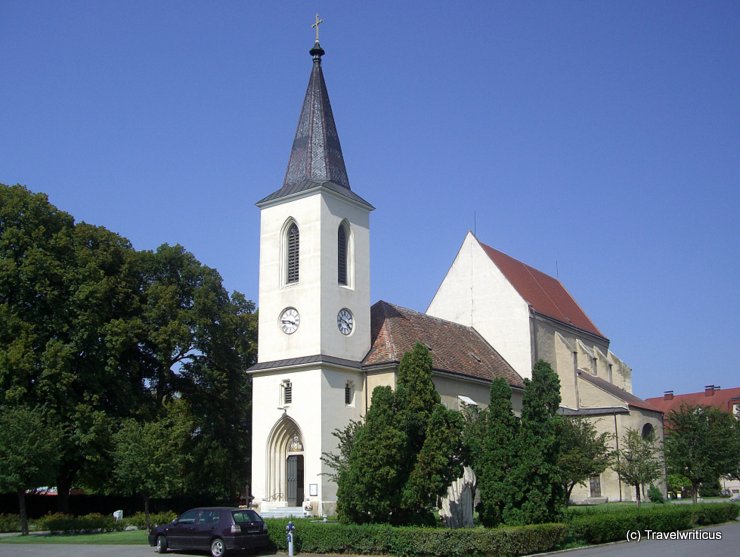
In the 13th century, King Ottokar II of Bohemia founded this church as a cathedral. After his death, the building’s meaning lowered to a parish church. Today, the church dedicated to St. Margaret of Antioch still provides the architecture of two different intentions.
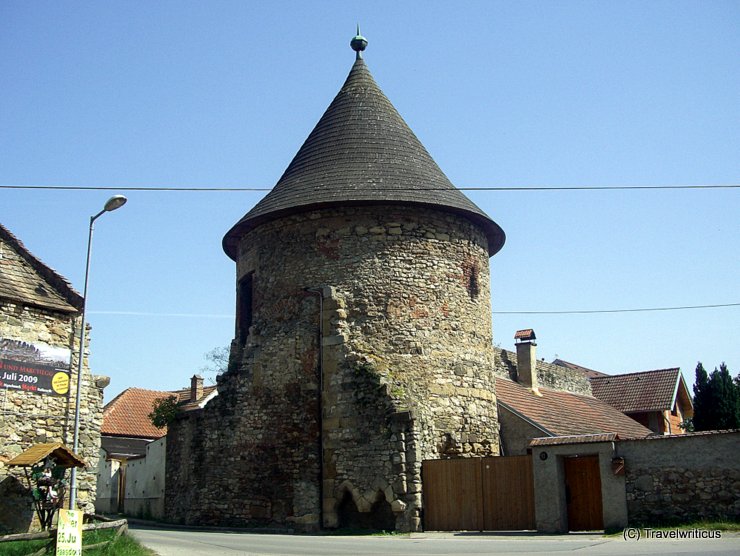
Marchegg was founded as a planned city by Ottokar II of Bohemia in 13th century. Taking the historic trail gives a good impression how large this city was intended. From the medieval gates the Gate to Vienna (Wienertor) dating back to 1268 is the best-preserved one. [German]
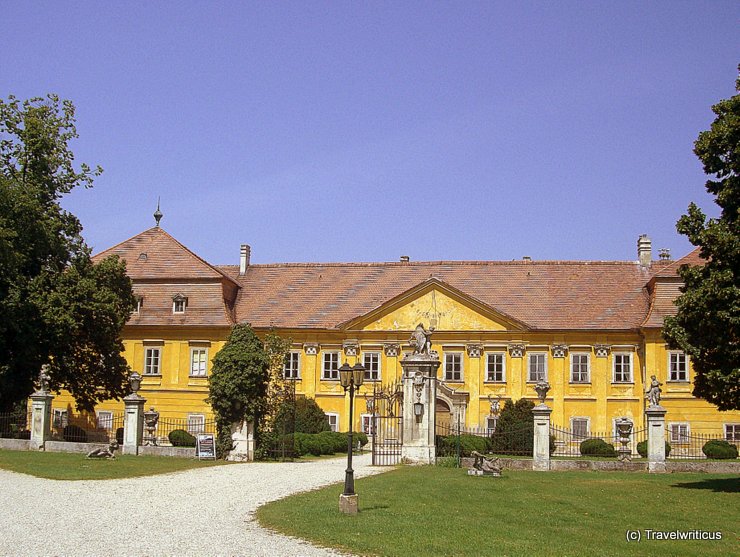
Marchegg Palace (Schloss Marchegg) is a palace near the March river in the east of Austria. Besides its Baroque style it is also worth a visit because of a large stork population in the nearby WWF nature reserve Marchegg.
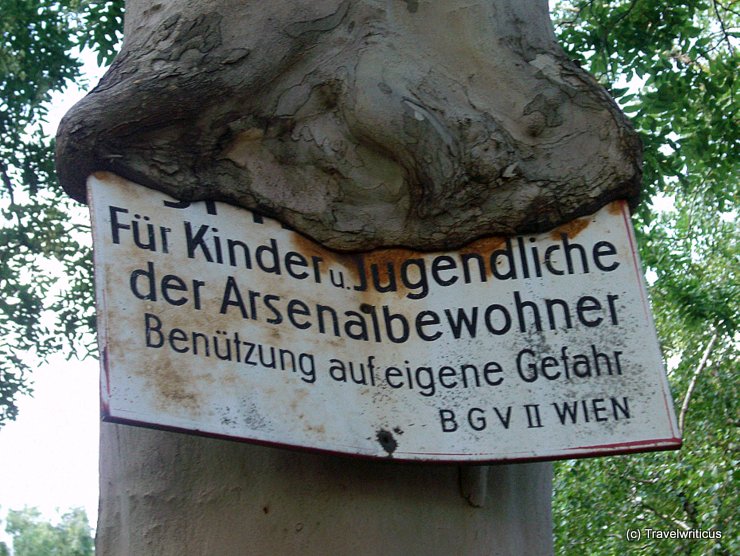
I saw this sign next to the Heeresgeschichtliches Museum (Museum of Military History) in Vienna. The bark of the tree made me think the sign was pretty old.
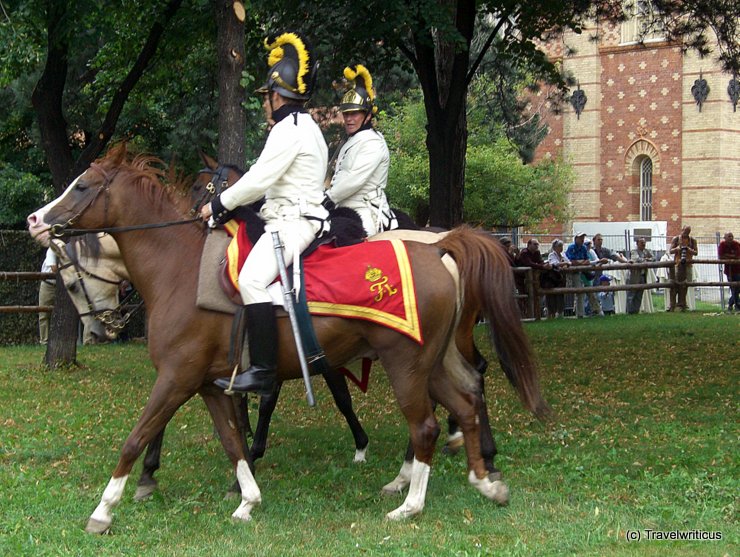
During a historical festival next to the Museum of Military History (Heeresgeschichtliches Museum), I saw a performance of some horsemen in the uniforms of former Austrian dragoons. It was interesting to see how the soldiers used to train horses to stay calm in battle.
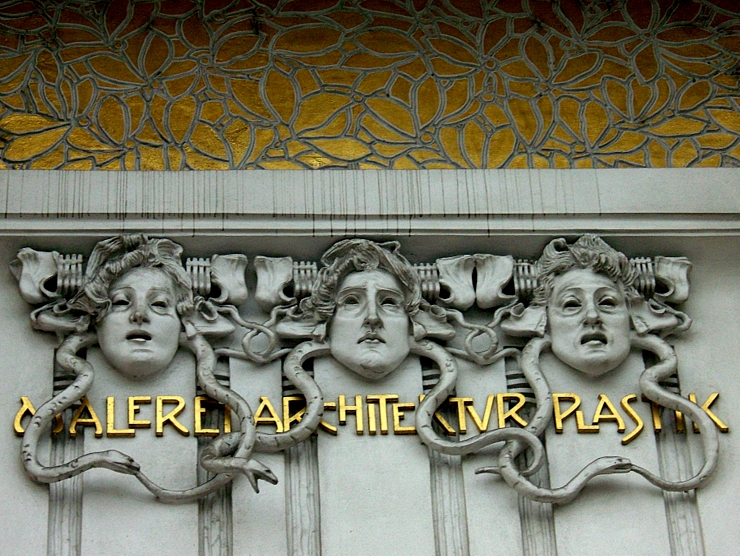
The three gorgons at the Secession Building in Vienna represent the three arts: painting (Malerei), architecture (Architektur) and sculpture (Plastik). The Secession Building (Wiener Secessionsgebäude) is an exhibition hall built as an architectural manifesto for the Vienna Secession.
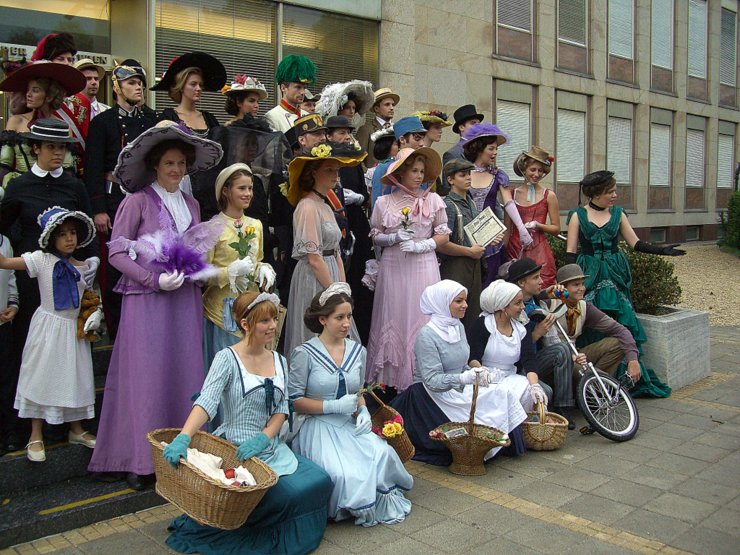
An interesting item on the program of the Karlstag 2009 was a Tableau Vivant. A group of people walked in the dresses of the time before 1900 around the Karlsplatz.
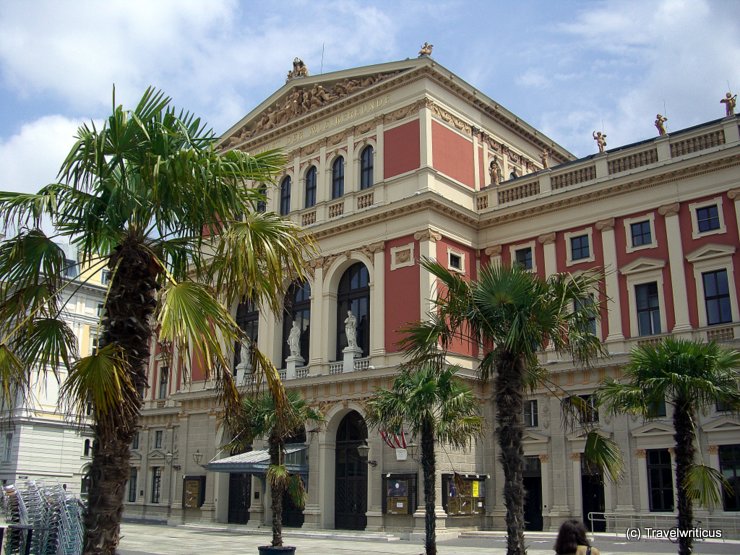
At the Musikverein Building, the Vienna New Year’s Concert takes place. Taking a guided tour, I had the chance to get explained all the architectural details and sculptures of the large concert hall, which is known worldwide by the annual TV broadcast of this concert.