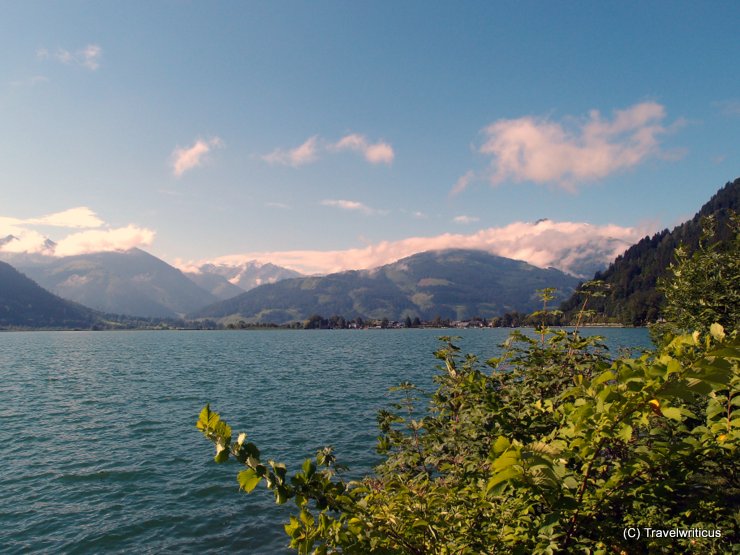
In cooperation with 50+ Hotels Österreich I started to discover Austria in mid June. The visited hotels are mentioned below.
You only see what you know (Goethe)
In cooperation with 50+ Hotels Österreich I started to discover Austria in mid June. The visited hotels are mentioned below.
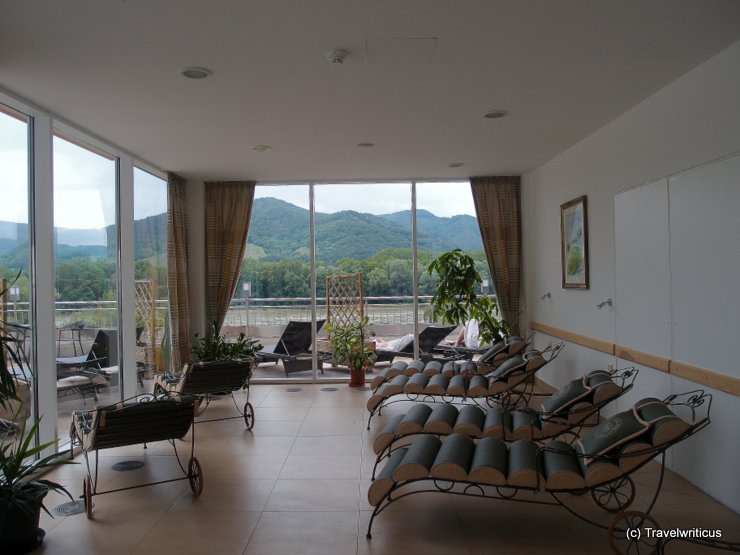
After climbing up and down the hill of Dürnstein Castle I was ready for this relaxing room at Hotel & Winery Pfeffel. The room even offered a view of Dürnstein Castle so I was able to put down these notes while looking at the castle ruins.
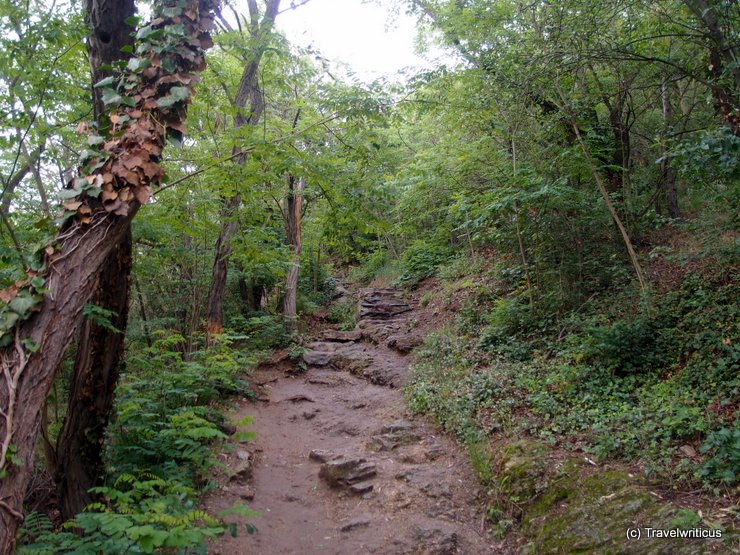
There are several paths up to Dürnstein Castle from the centre of the city. I took a more difficult one named donkey path.
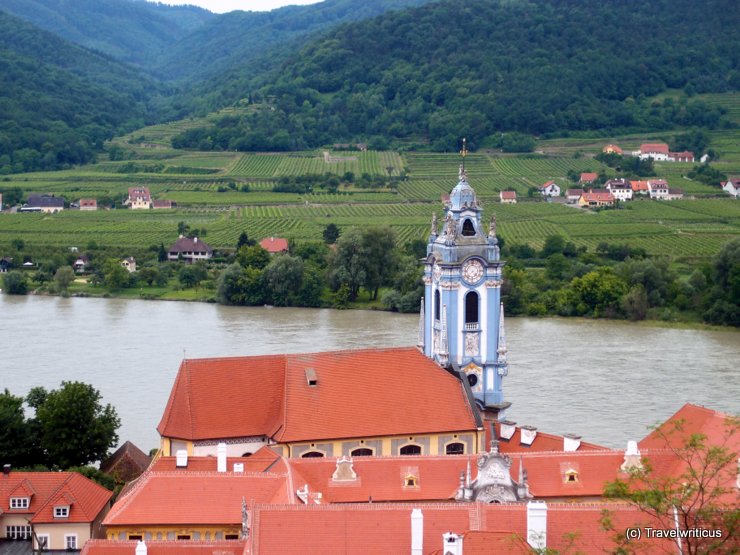
After reaching the walls of Dürnstein Castle (Burgruine Dürnstein), I had this view of Dürnstein Abbey (Stift Dürnstein). I guess some of you have already seen this church steeple while taking a river cruise ship?
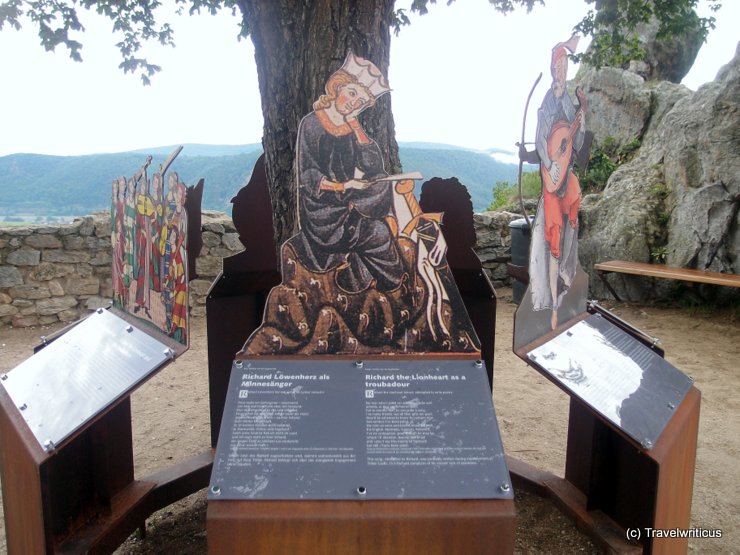
After climbing a steep trail up to Dürnstein Castle I came across a couple of information boards that told me some details about the life of Richard I of England also known as King Lionheart.
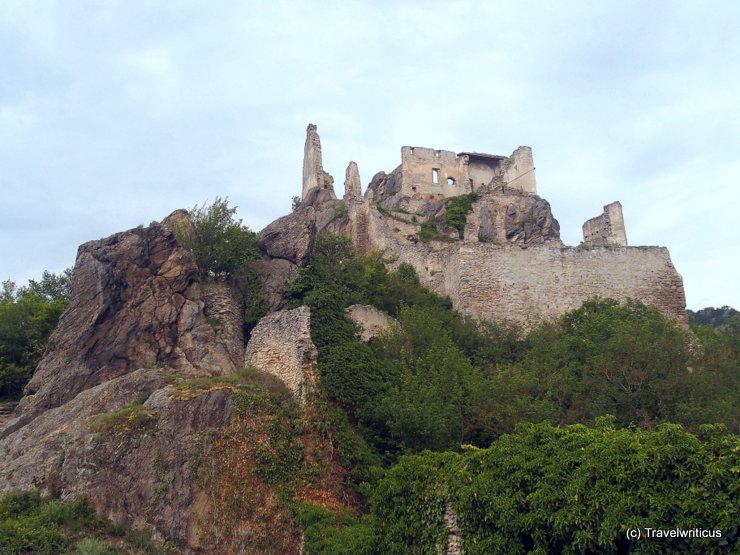
Dürnstein castle as seen after taking the trail up from Dürnstein. There is a story King Lionheart (Richard I of England) was imprisoned here for several months.
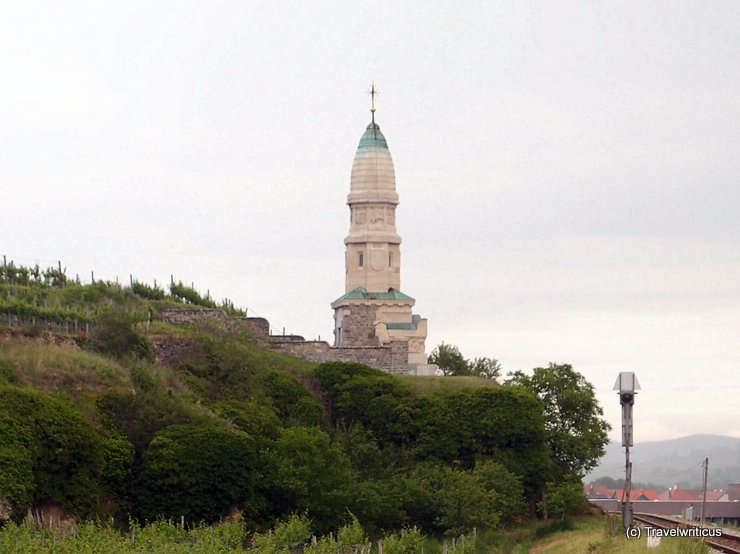
Riding the Wachau Railway I always wondered about the meaning of this big memorial just next to the tracks. After a visit to the Domäne Wachau, I had the chance to learn more about it: It is a memorial about an engagement between French, Austrian and Russian troops during the Napoleonic Wars on Nov 11th, 1805.
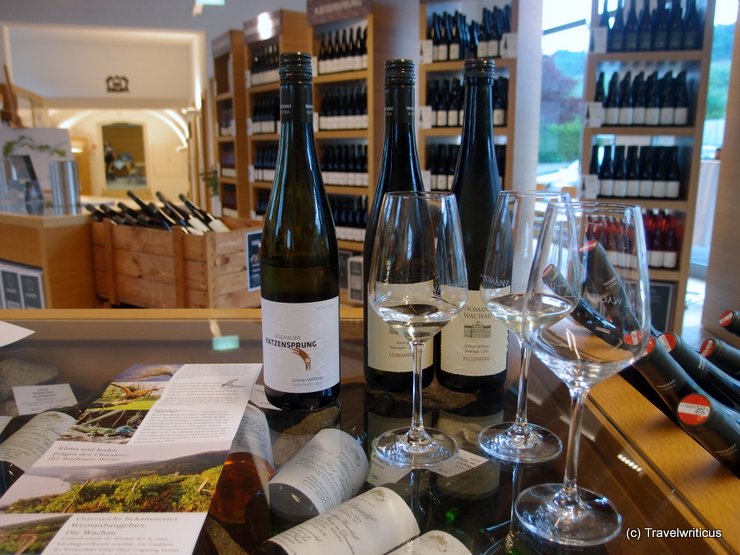
At the Domäne Wachau, I learned about a wine served during a significant moment in Austrian history. The wine label Katzensprung was proffered at the banquet celebrated after the signing of the Austrian Independent Treaty in 1955.
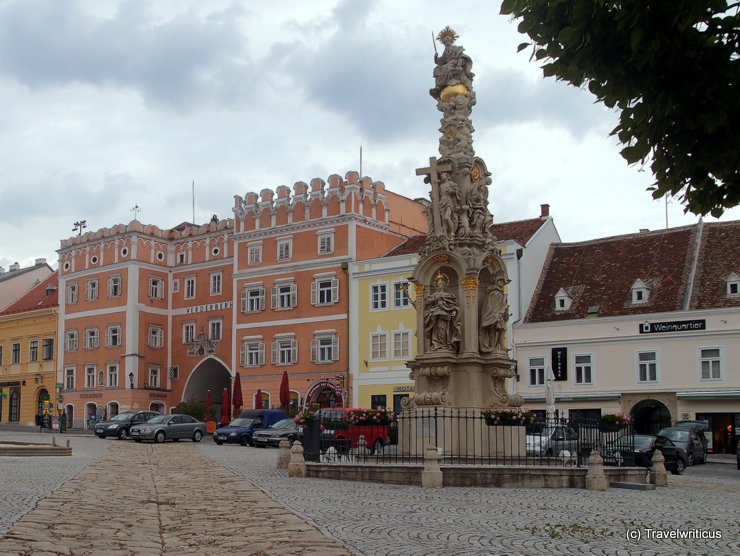
The Holy Trinity Column (Dreifaltigkeitssäule) stands on the central square of Retz. The column dates back to the years 1743 – 1745. In the background, one can see the Verderber – Haus.
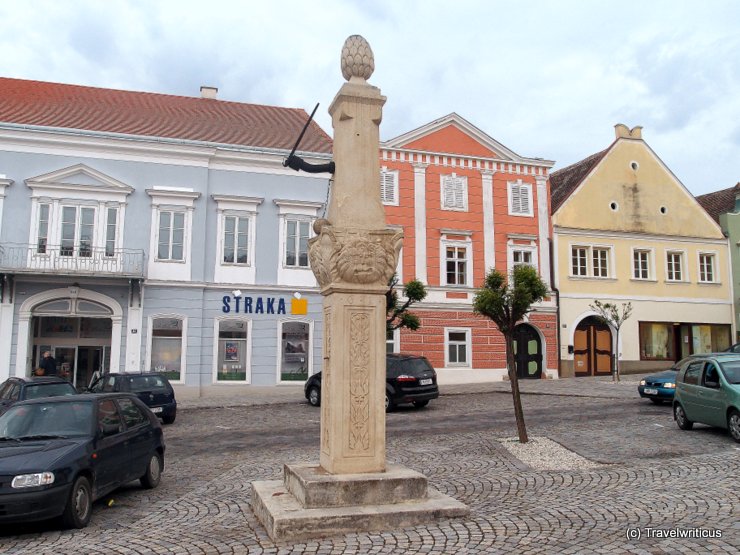
A pillory (German: Pranger) built in 1561. I was surprised to read that this pillory had been destroyed in 18th century but people of Retz were able to reconstruct the pillory in 1962 after finding the most parts in different places nearby.
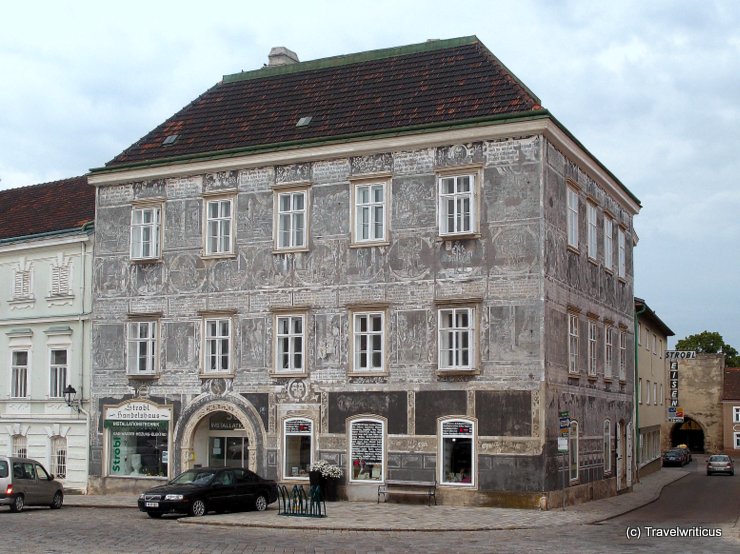
Built in 1576, Retz’s Sgraffito House tells stories without opening its doors. Its Renaissance façade layers biblical scenes, mythological figures, and symbolic life stages. Once hidden beneath paint, the rediscovered artwork now reveals the wealth, taste, and ambitions of a prosperous wine town.
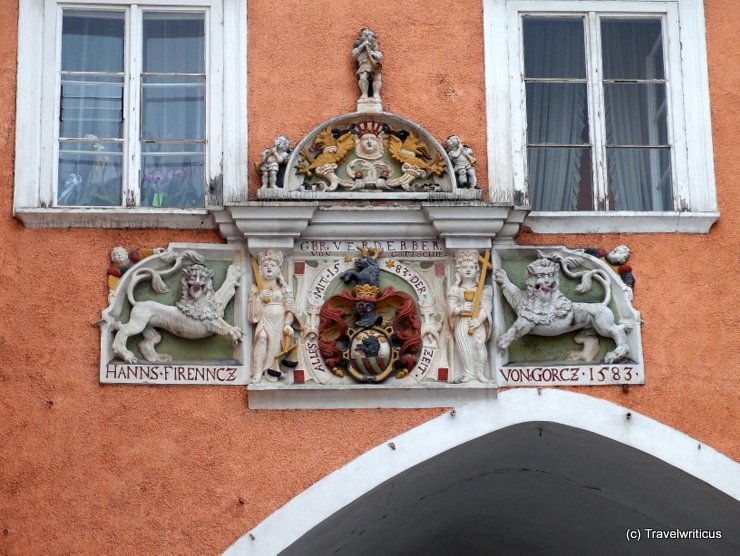
Relief with the coat of arms of Hannes Firenncz whose family came from Gorizia. I saw this relief at the walls of the Verderber – Haus. Which amazing reliefs do you know?