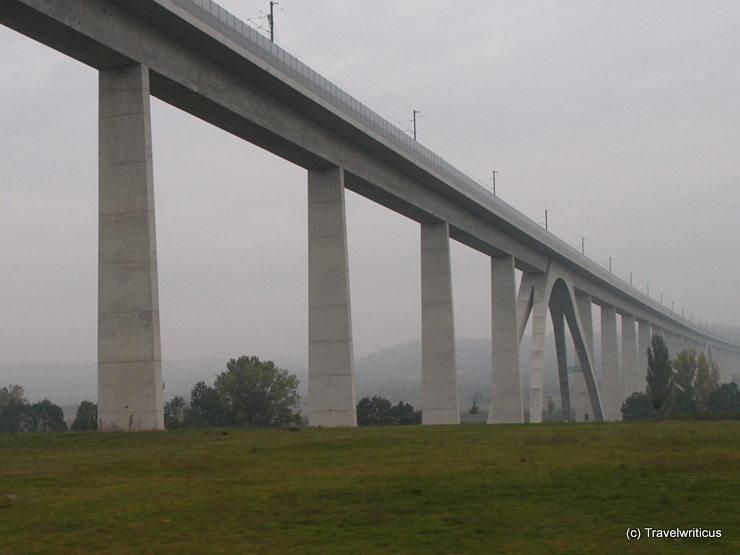
While travelling from Naumburg (Saale) to the Nebra Sky Disk visitor centre by bus, I got this view of the newly built Unstrut Viaduct. Serving for the high-speed line Berlin–Munich, it crosses the spacious Unstrut Valley. [German]
You only see what you know (Goethe)
While travelling from Naumburg (Saale) to the Nebra Sky Disk visitor centre by bus, I got this view of the newly built Unstrut Viaduct. Serving for the high-speed line Berlin–Munich, it crosses the spacious Unstrut Valley. [German]
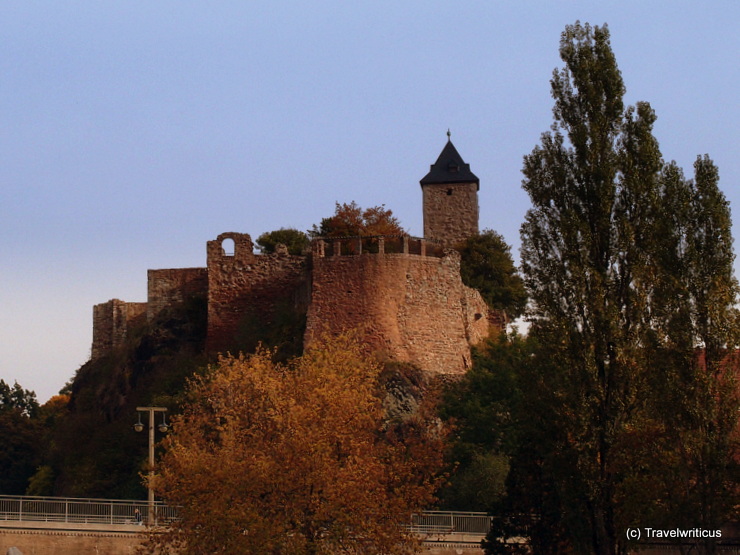
Giebichenstein Castle (Burg Giebichenstein) is a member of the Romanesque Road (Straße der Romanik). It served as a royal residence of Otto I for many years. Today, parts of the castle house a campus of the Kunsthochschule Halle.
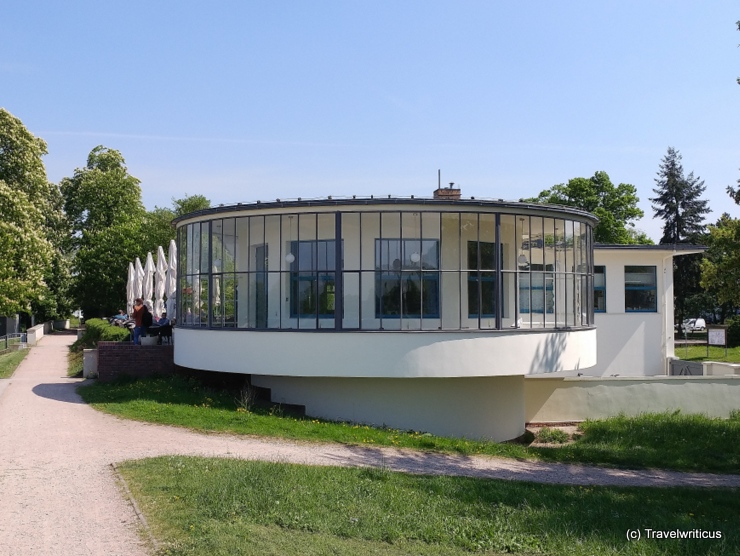
After a long walk along the Bauhaus architecture of Dessau, it was time for dinner. According to the day’s motto, we chose a building in Bauhaus style. The Restaurant Kornhaus was designed by the architect Carl Fieger in 1929/30. [German]
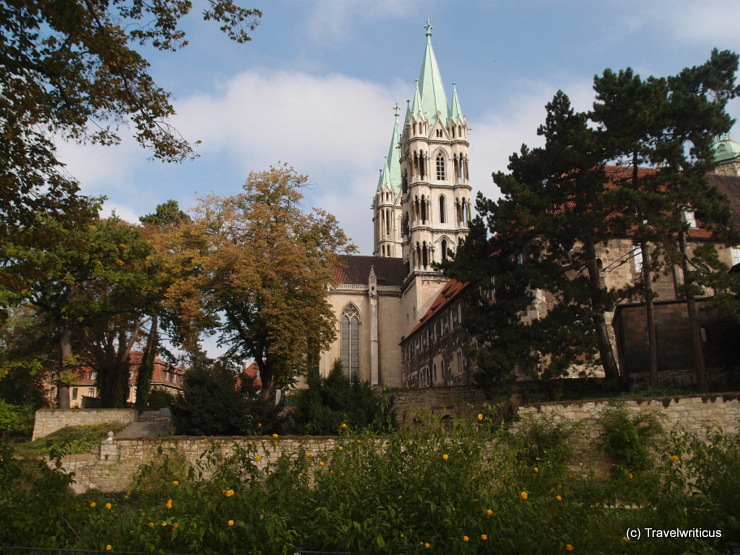
The Cathedral Garden in Naumburg (Saale) is part of the network Gartenträume (Garden Dreams), which comprises significant parks and gardens in the German state of Saxony-Anhalt.
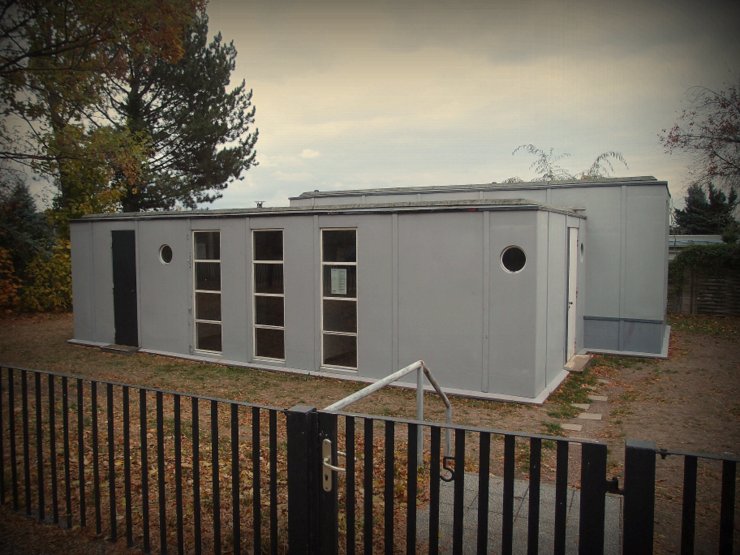
The Bauhaus movement not only experimented with light and colours; it also tested new materials. Could we build a house from steel? Georg Muche and Richard Paulick turned this vision into reality in Dessau-Roßlau. [German]
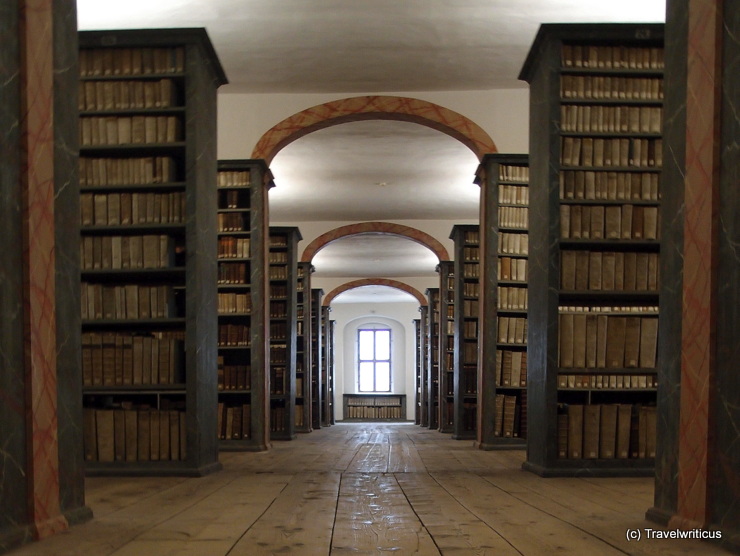
It was in Halle when I first heard the term Kulissenbibliothek. After I visited the Library Hall of the Francke Foundations, I understood the meaning of this word. The position of the bookshelves reminded me of the sceneries (Kulissen) in a theatre. [German]
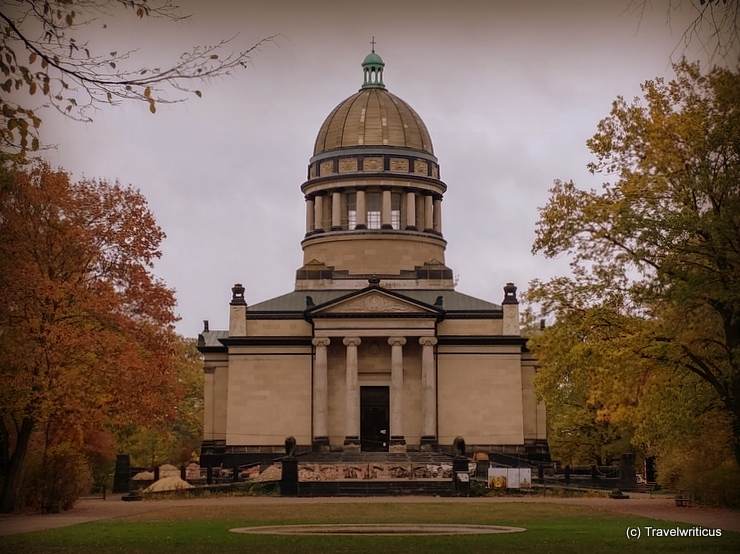
While exploring the Dessau-Wörlitz Garden Realm World Heritage Site, a Doric domed building may attract your attention. Then, you have found the former mausoleum of the Dukes of Anhalt in Dessau-Roßlau. [German]
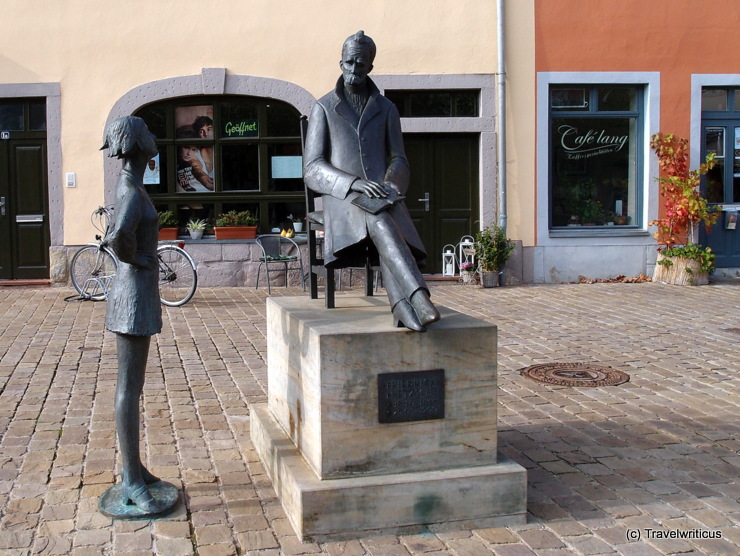
On my urban walk through Naumburg (Saale), a monument with two sculptures attracted me. A young girl stood in front of an old man with a huge moustache. The man obviously represented Friedrich Nietzsche. [German]
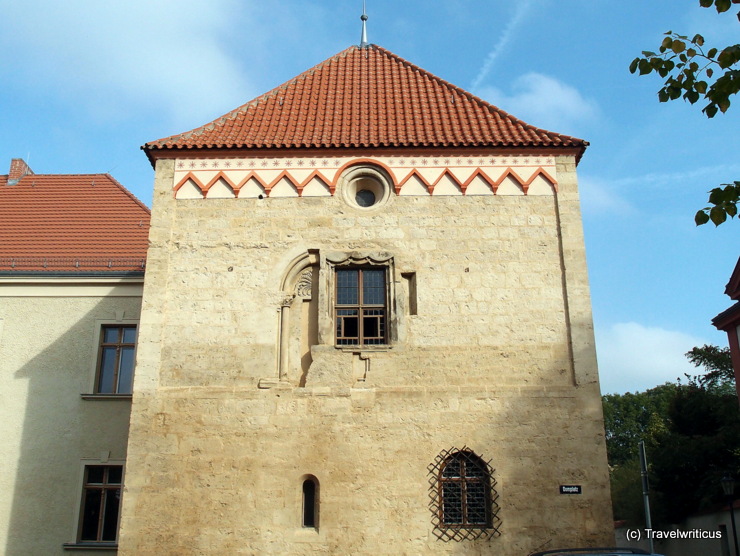
The Chapel of St Giles (Ägidienkapelle) in Naumburg was part of the medieval cathedral curia. Today, the 13th-century chapel forms a station along the Southern Route of the Romanesque Road (Straße der Romanik) in Saxony-Anhalt.
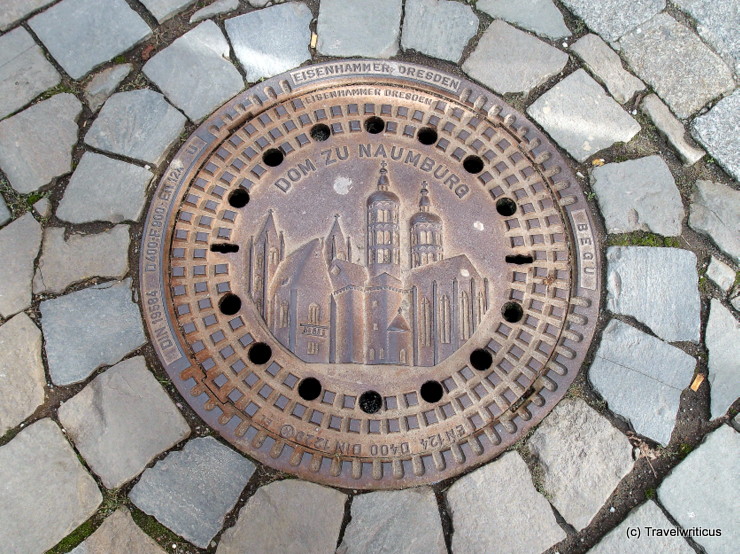
This manhole cover displays the cathedral of Naumburg (Saale). The German full name is Naumburger Dom St. Peter und St. Paul. The cathedral dates back to the 13th century and is part of the Romanesque Road (Straße der Romanik) in Saxony-Anhalt.
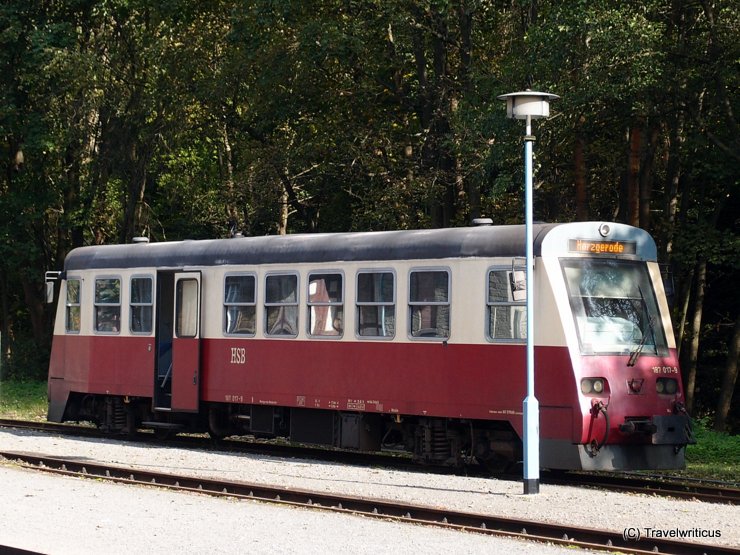
The Harzer Schmalspurbahnen (Harz Narrow Gauge Railways) are widely known for their steam trains running up and down the Harz Mountains. But they also offer diesel railbuses (Class 187) dating back to the 1990s.
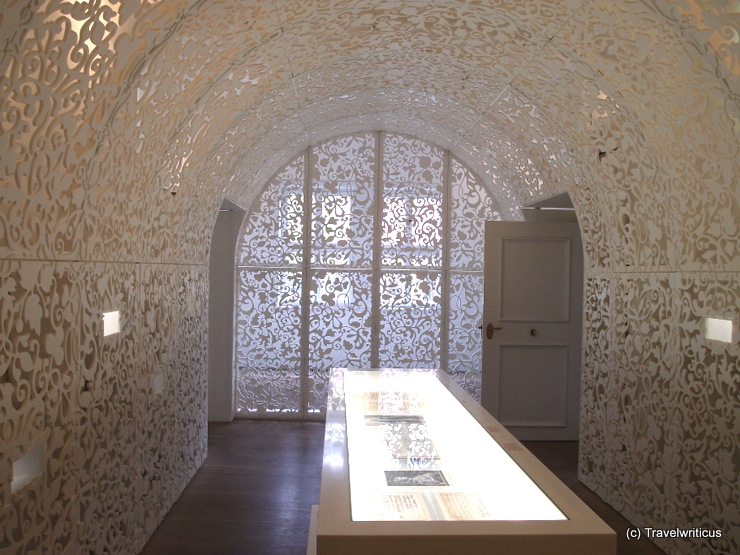
Georg Frideric Handel (Georg Friedrich Händel) was born in Halle (Saale) in 1685 and lived in this city for 18 years. Today, his birthplace houses an exhibition on the life and work of the composer. It is generally known as the Handel House (Händel-Haus). [German]