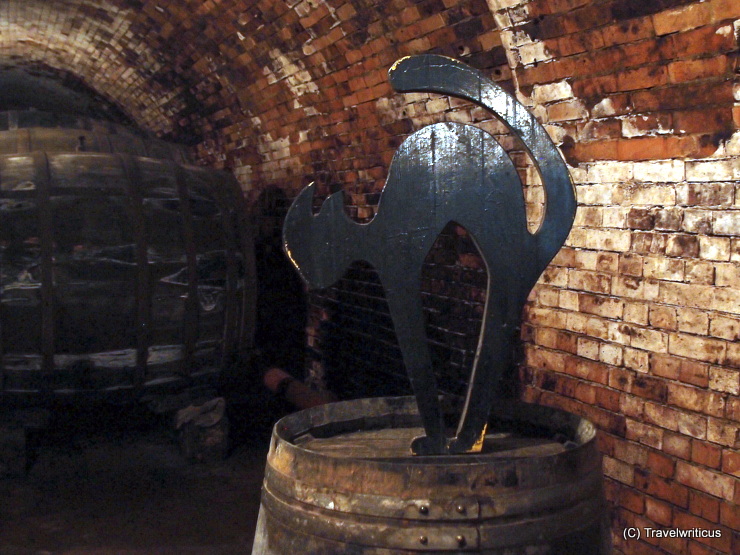
In the Austrian region of Weinviertel, you often see the model of a cat. This symbol is known as a cellar cat (Kellerkatze). Local people believe a cat living in a wine vault will always rest on the barrel with the best wine.
You only see what you know (Goethe)
In the Austrian region of Weinviertel, you often see the model of a cat. This symbol is known as a cellar cat (Kellerkatze). Local people believe a cat living in a wine vault will always rest on the barrel with the best wine.
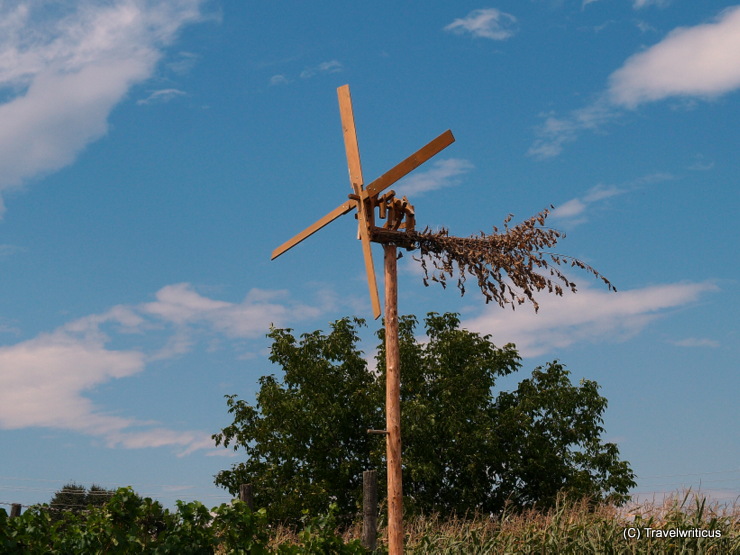
An iconic rural element in Slovenia is the Klopotec. It is a sort of bird-scaring rattle. You find it in many traditional Slovenian wine-growing areas. They are also common in some parts of Austria (esp. Styria) and Croatia (esp. Zagorje).
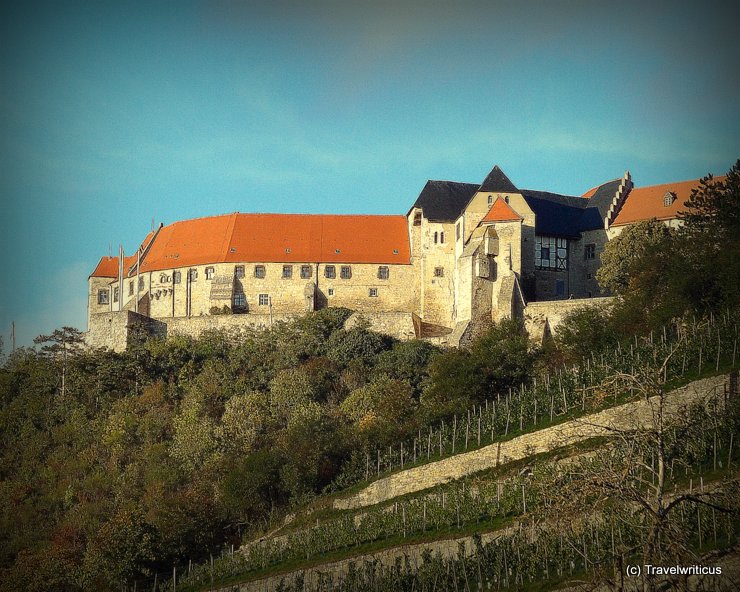
Neuenburg Castle (Schloss Neuenburg), located in the wine-growing area of Saale-Unstrut, accommodates a wine museum. I took this photo while enjoying a boat trip on the Unstrut River.
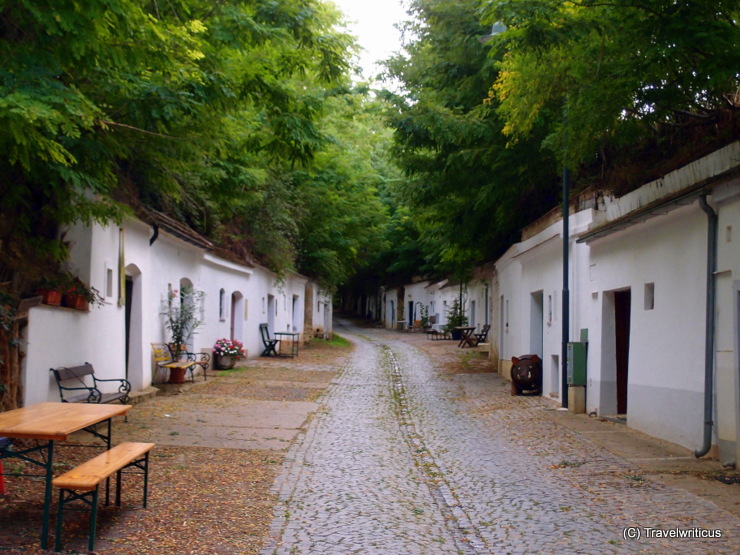
The Radyweg is considered the most extended wine cellar lane (Kellergasse) of Poysdorf. In earlier times, the buildings along the path formed wine cellars or press houses. A tour guide told me the length of all cellar lanes in Poysdorf adds up to 60 kilometres!
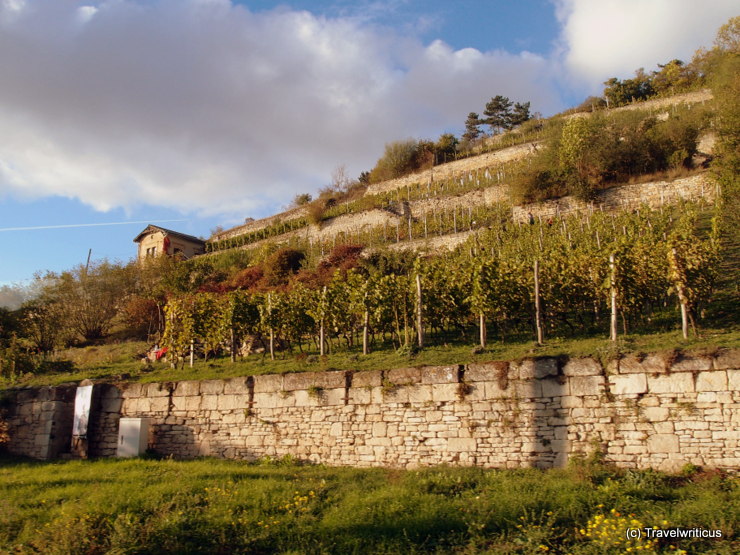
While travelling through the wine-growing area of Saale-Unstrut, one can see many steep terraces with centuries-old dry walls and romantic vineyard cottages. The region is open to many kinds of movement: hiking, cycling, and even canoeing.
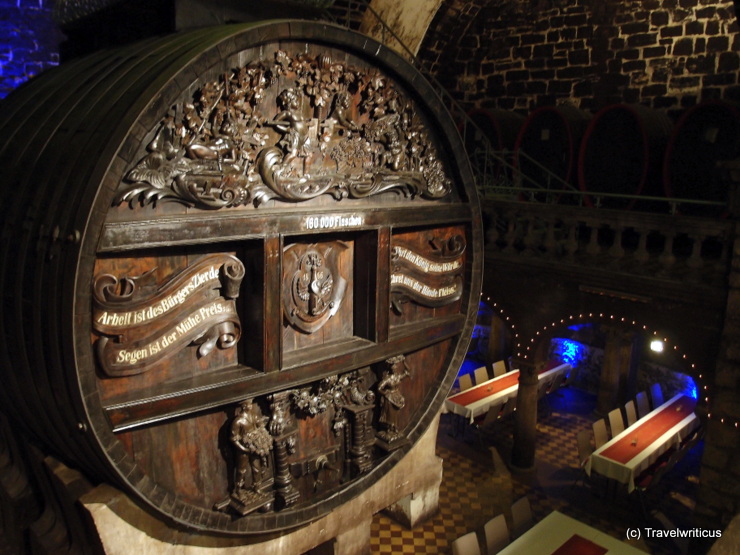
In the historic sparkling wine cellars of the Rotkäppchen winery in Freyburg (Unstrut), there is a huge wine cask for the cuvée. The barrel was built in 1897 and has a capacity of 120,000 litres.
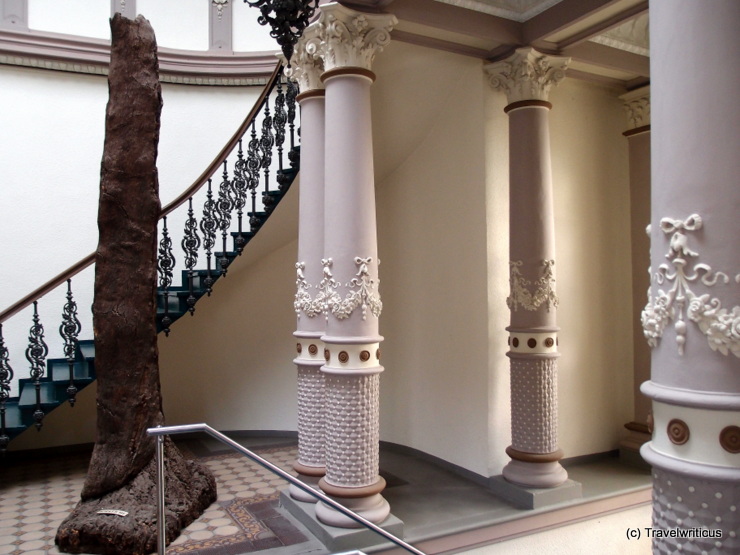
Standing in the Rotkäppchen winery stairwell, this cork oak (Quercus suber) reminds us that a fine bottle of sparkling wine is nothing without a good cork. Its rugged bark underscores how craftsmanship and nature come together to seal every celebratory moment in a bottle.
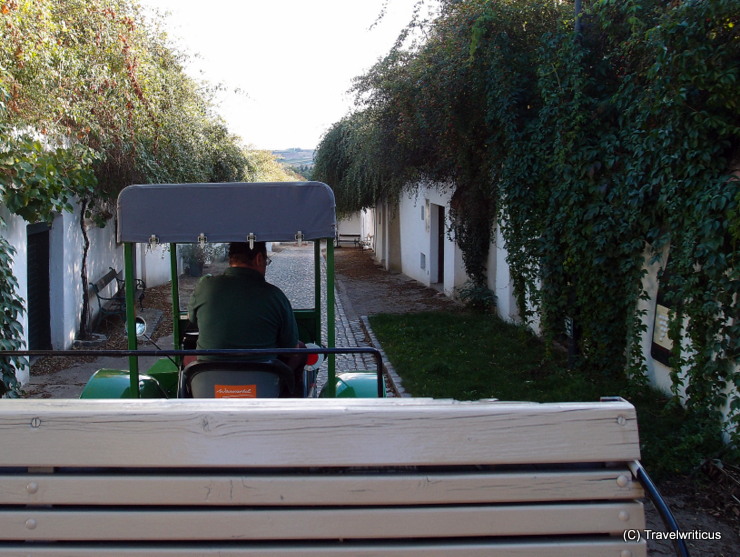
A fun way to explore the wine cellar lanes in Poysdorf and the vineyards in the surroundings is to join a guided tour on board of historical trailers drawn by classic farm tractors. On this pic, I just headed down a wine cellar lane (Kellergasse) named Rösselberg.
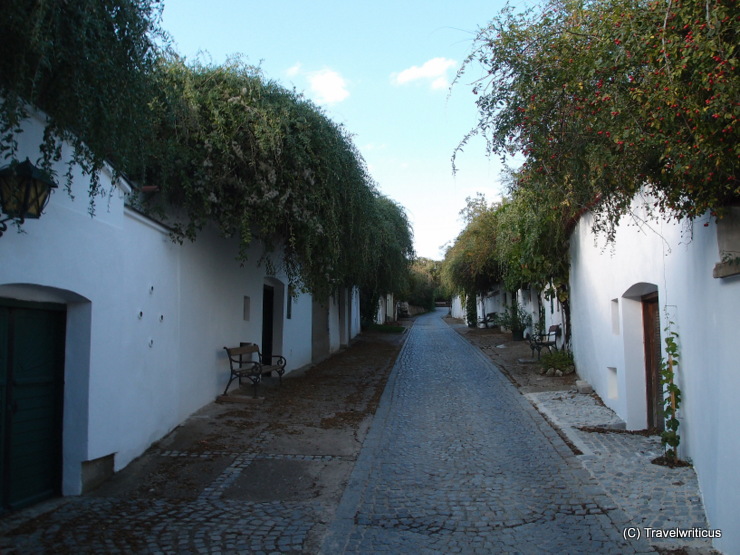
This lane is one of several wine cellar lanes (Kellergassen) in Poysdorf. It is actually a hollow-way with a couple of rooms built into a loess layer. These rooms have only a front façade, but no brick walls or a timbered roof.
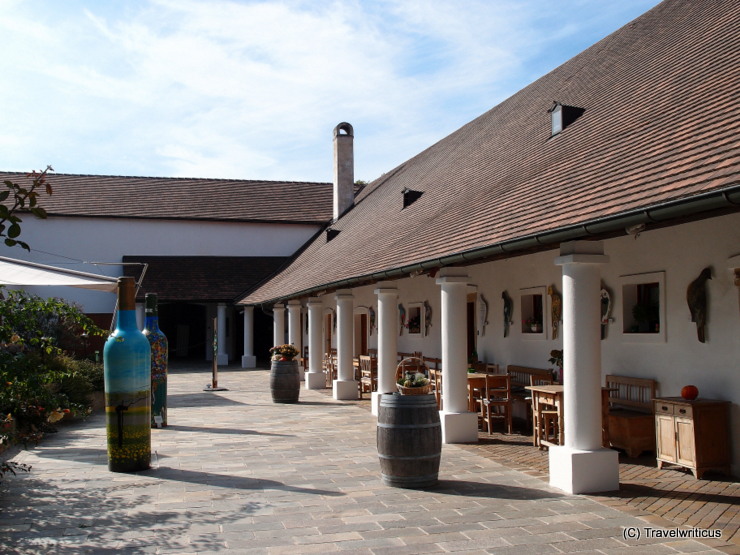
The Weingut Taubenschuss (Taubenschuss Wine Estate) offers wine tastings and guided tours through a compilation of contemporary art. An impressive attraction is the Gallery of Doves, where several artists created something artsy using a tablet shaped like a dove.
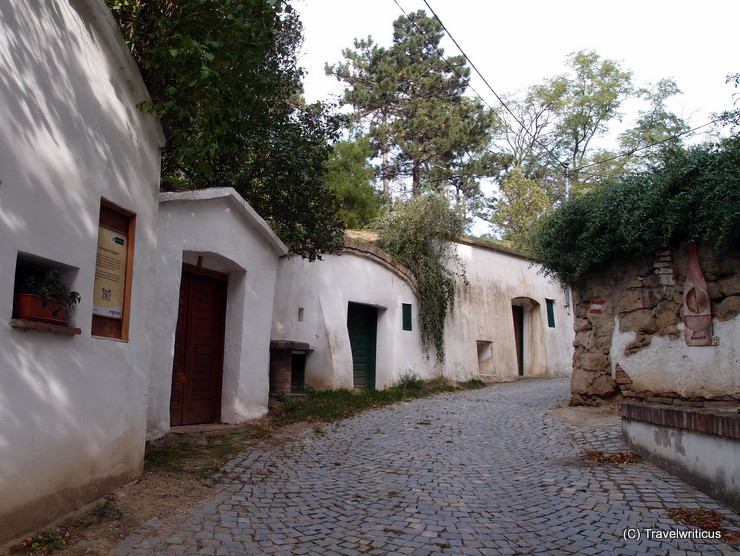
The wine cellar lane Kirchengasse next to the parish church of Poysdorf was originally not a hollow-way but a defensive ditch for the fortified church.
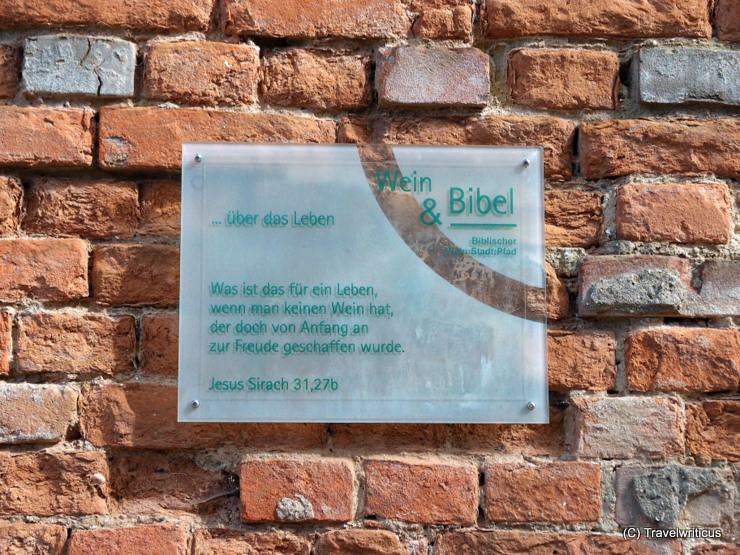
Along the walls next to the parish church of Poysdorf, there is a wine & bible trail displaying quotes from the bible mentioning wine. Walking along this trail gives you some great insights about the correct use of wine and probably some good points for buying more wine at the nearby wine store (Weinmarkt) of Poysdorf.