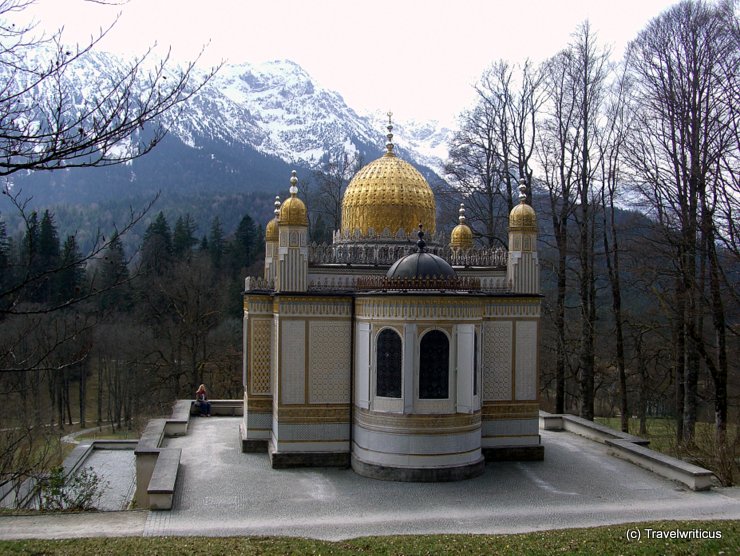
The Moorish Kiosk in the park of Linderhof Palace impresses with its place in front of the Alps. But its first location was in a big city. It originally served as the Prussian contribution at the Paris World Exhibition of 1867. [German]
You only see what you know (Goethe)
The Moorish Kiosk in the park of Linderhof Palace impresses with its place in front of the Alps. But its first location was in a big city. It originally served as the Prussian contribution at the Paris World Exhibition of 1867. [German]
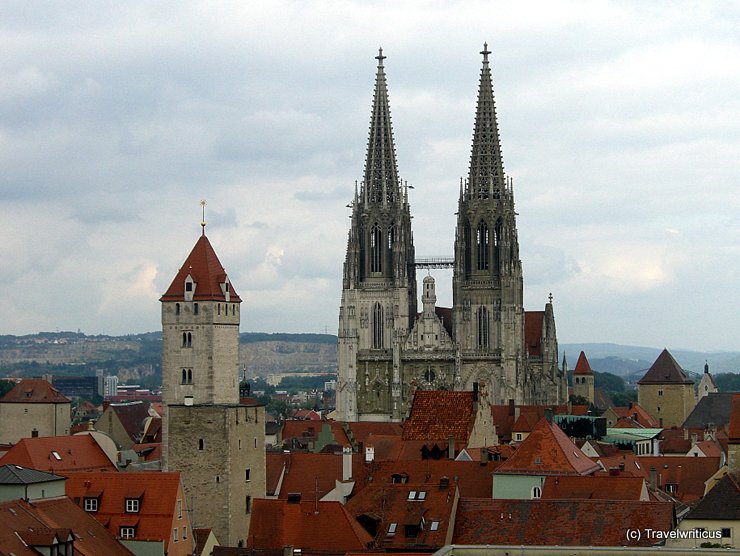
View of the Bavarian city Regensburg taken from the steeple of the Holy Trinity Church (Dreieinigkeitskirche). Regensburg is known for several family towers (Geschlechtertürme), similar to those in San Gimignano in Italy. [German]
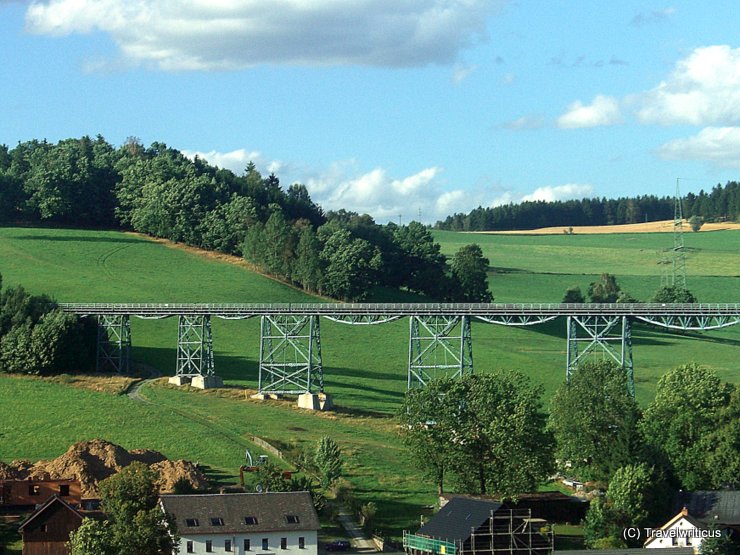
During a bus ride from Annaberg-Buchholz to Schwarzenberg, we pass the Markersbach Viaduct (Markersbacher Viadukt). Since 1889 it spans a side valley of the Große Mittweida in Saxony. Today it is part of a test track. [German]
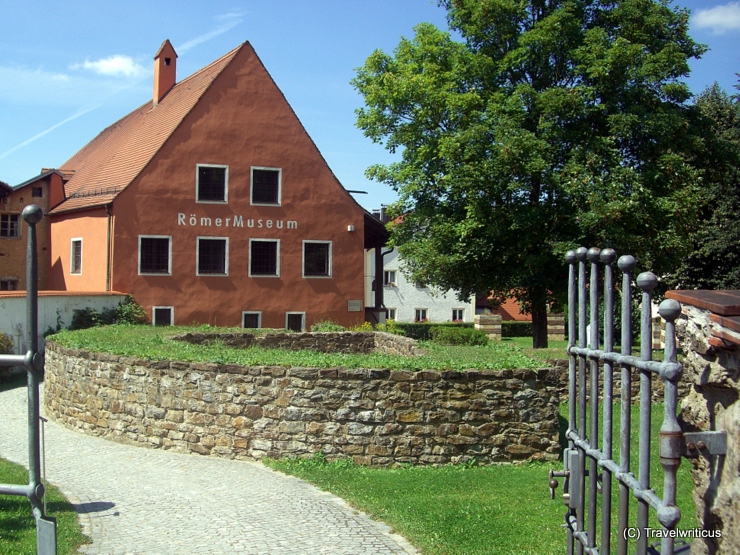
The Bavarian city of Passau has a rich Roman history. On the grounds of the Roman museum Boitro (Römermuseum Kastell Boitro), you still see parts of an ancient fort like the walls of a fan-shaped tower.
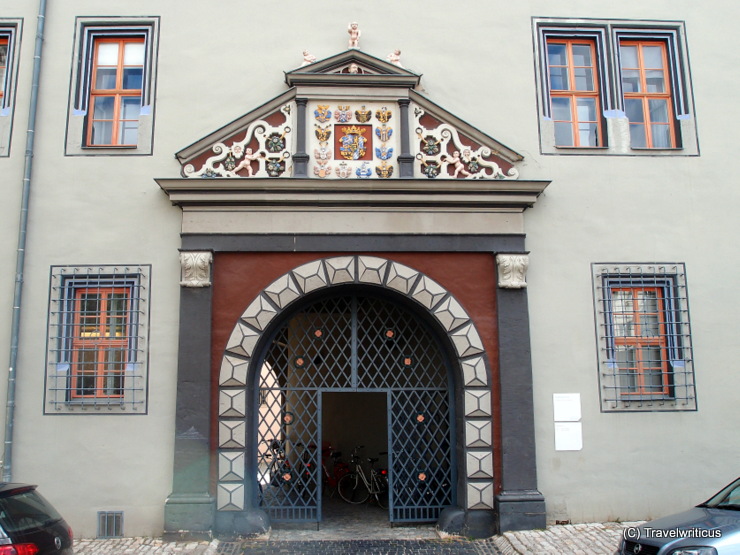
On the way from the Duchess Anna Amalia Library to the market, I pass a Renaissance portal with a strikingly large number of coats of arms. The windows have colourful lines like fresh make-up. [German]
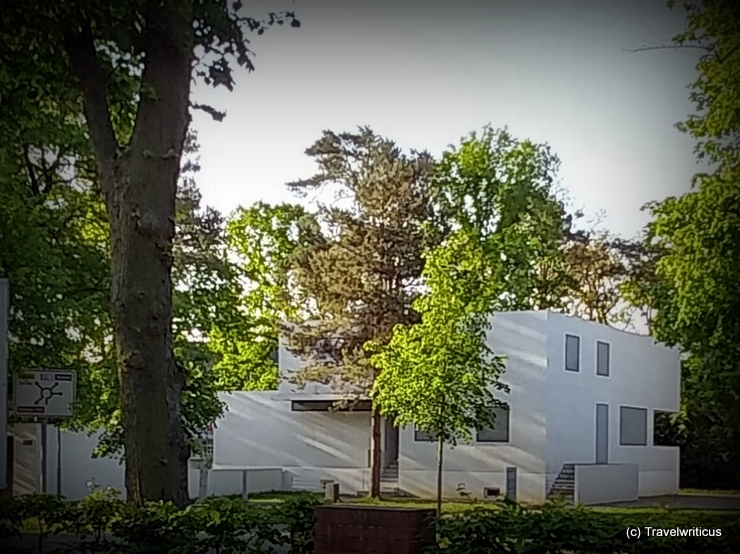
After Walter Gropius founded the Staatliche Bauhaus in Weimar, there was no time to mould his new ideas into a building. After his move to Dessau, he appeared as an architect on a site of the Bauhaus School. Here, the four Masters’ Houses form an ensemble. [German]
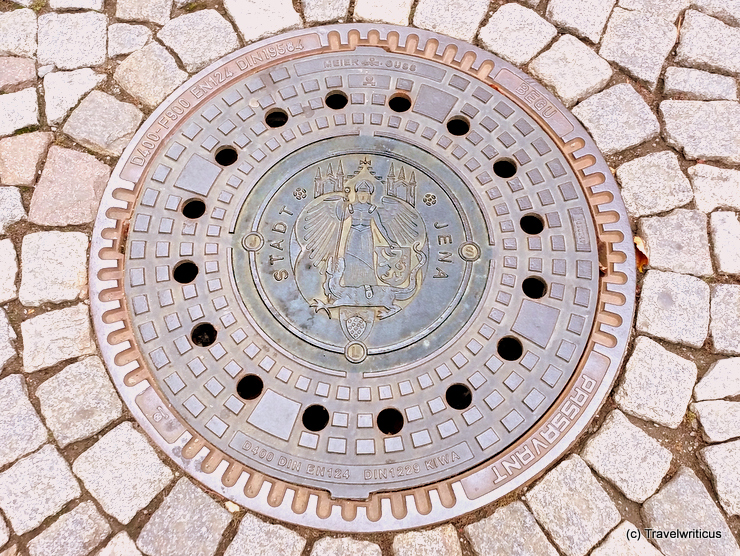
The manhole covers of Jena display the city arms. In the middle, archangel Michael pushes a lance into a dragon’s mouth. The upright black lion refers to the Margraves of Meissen. Noteworthy is the bunch of grapes below the dragon. [German]
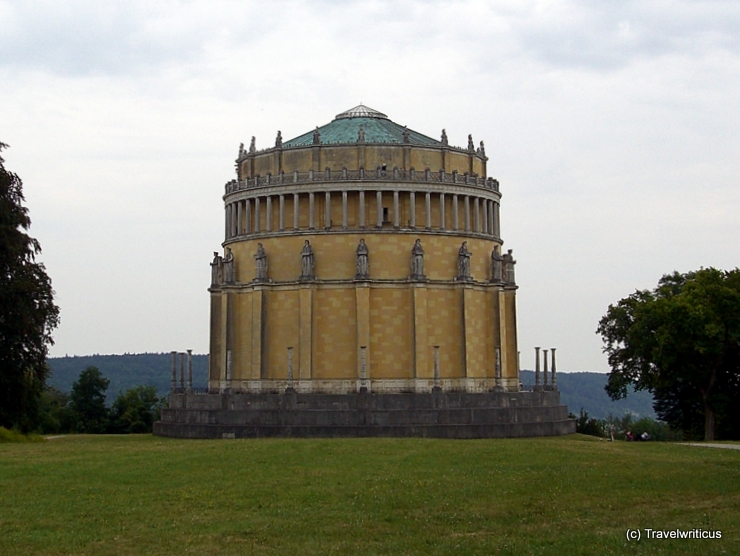
The Hall of Liberation (Befreiungshalle) is a Neoclassical monument on Michelsberg Hill near Kelheim. King Ludwig I of Bavaria commissioned this building to commemorate the victory over Napoleon in the German Campaign of 1813 (Befreiungskriege). [German]
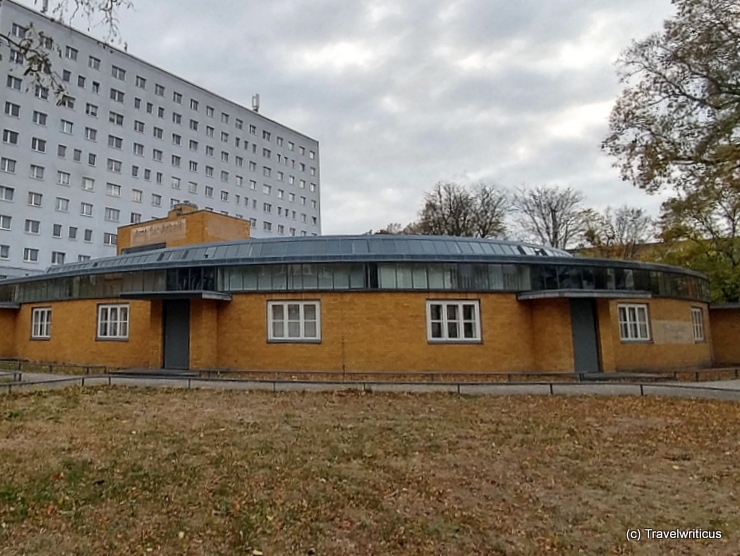
Walter Gropius planned this building in the years 1928/29. Its former function as an employment office can still be read by a fading inscription (“Amt für Arbeit”). The building is an impressive example of how to align architecture to a process. [German]
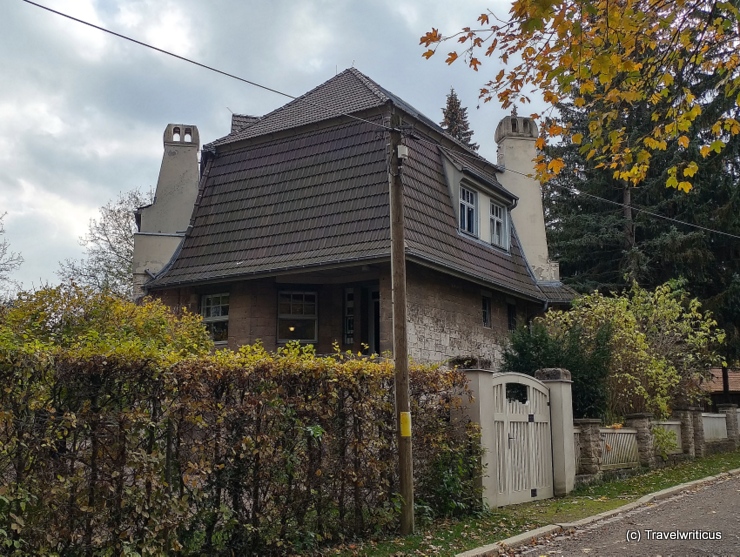
In this building, the Belgian architect Henry van de Velde lived from 1908 to 1917. House and furnishings were designed by himself. Allegedly, the layout of the building is designed like a ship. Together with the mast on the roadside, my pic reminds to an upside-down boat, at least. [German]
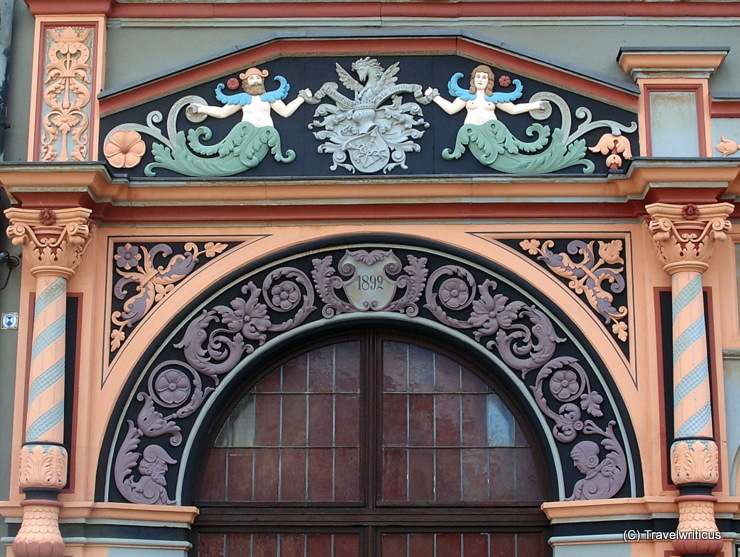
The Cranach House was built in the years 1547 to 1549 by the Renaissance master builder Nikolaus Gromann for the ducal chancellor Christian Brück. Its present name reminds us of the presence of the painter Lucas Cranach, the Elder. He spent his last months here. [German]
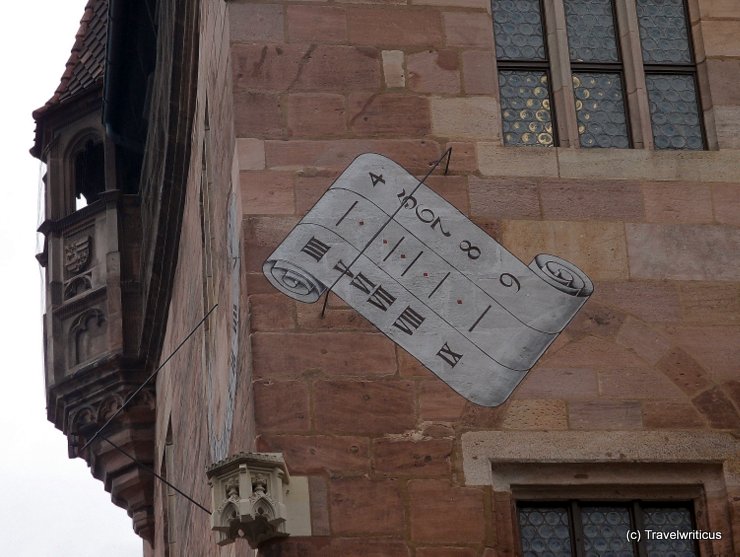
The Nassauer Haus is a medieval residential tower in the centre of Nuremberg. The name is misleading. The tower has nothing to do with the aristocratic dynasty House of Nassau. After a previous owner, the building is also known as Schlüsselfeldersches Stiftungshaus. [German]