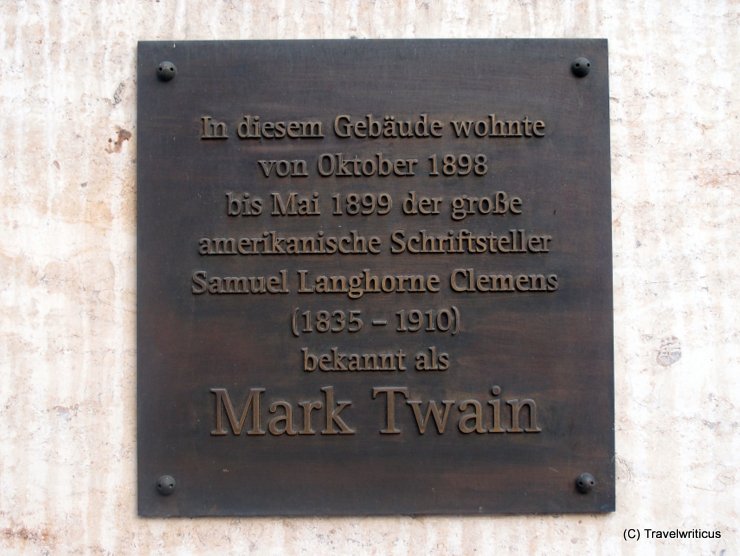
This memorial plaque for Samuel Langhorne Clemens, generally known as Mark Twain, is placed at that hotel in Vienna where he used to stay between October 1898 and May 1899. The hotel named Ambassador is still a prime address in Vienna.
You only see what you know (Goethe)
This memorial plaque for Samuel Langhorne Clemens, generally known as Mark Twain, is placed at that hotel in Vienna where he used to stay between October 1898 and May 1899. The hotel named Ambassador is still a prime address in Vienna.
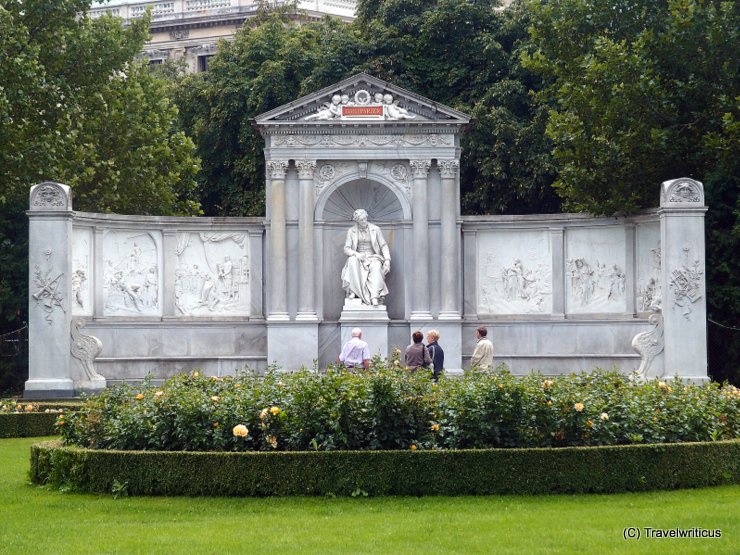
The monument to the Austrian writer Franz Grillparzer (1791-1872) was built in 1889 and displays scenes from his works. It is located in a public park of Vienna named Volksgarten, which is worth a visit, especially during the heyday of roses. [German]
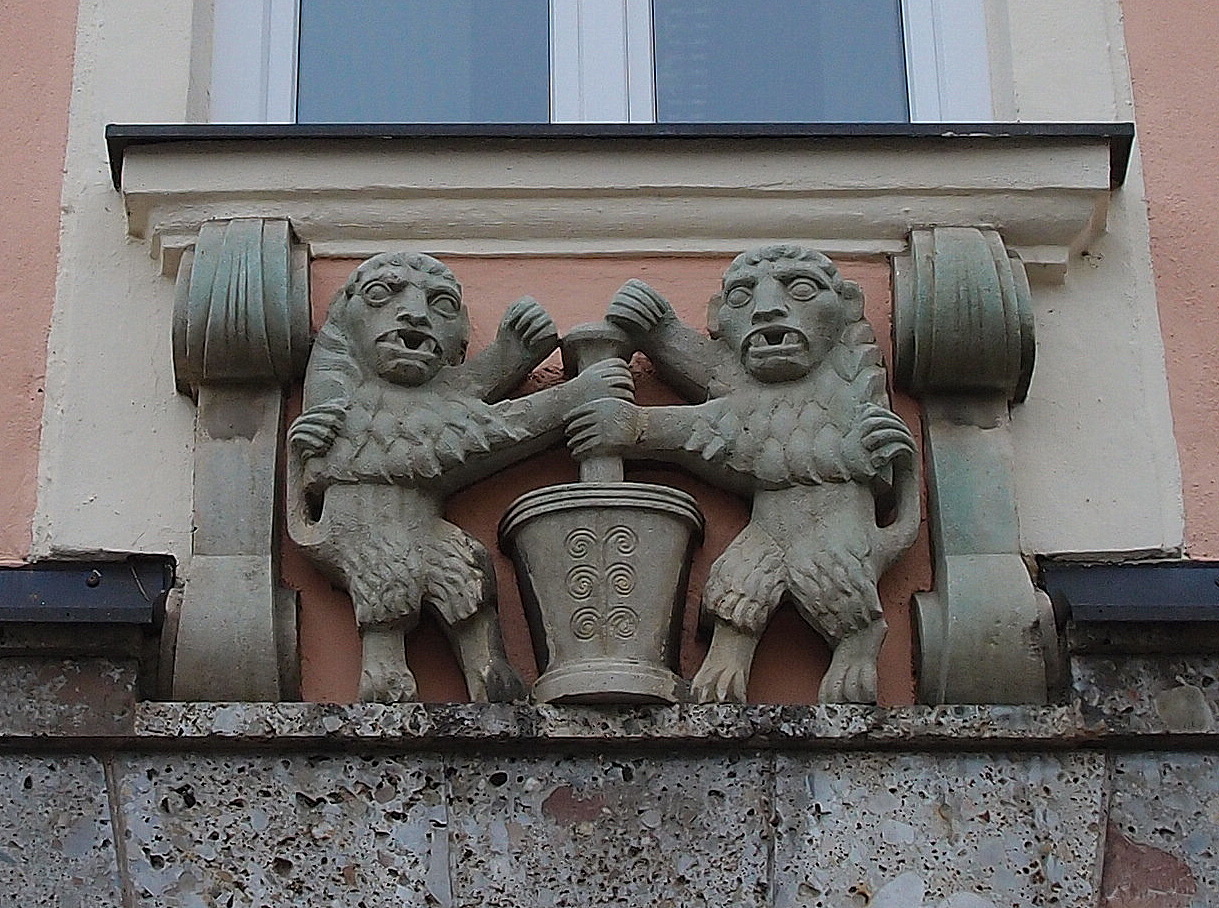
This house sign is located at the former location of the town pharmacy in the building Hauptplatz No. 10. Since 1674, a gingerbread baker has been proved here. A pharmacy started to run in 1841. The house sign dates from the 19th century. [German]
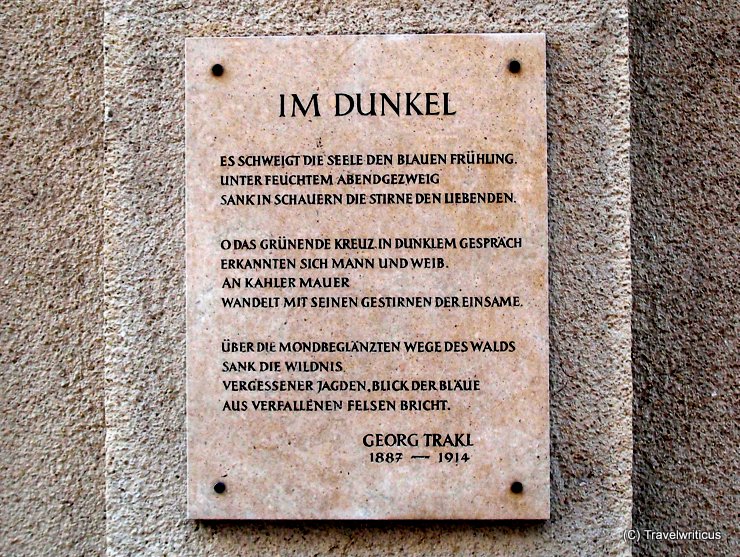
A famous son of Salzburg is not only Wolfgang Amadeus Mozart but also the poet Georg Trakl. The Salzburg-born author lived the first 21 years of his life in this city. You see boards with his poems scattered all over the central town.
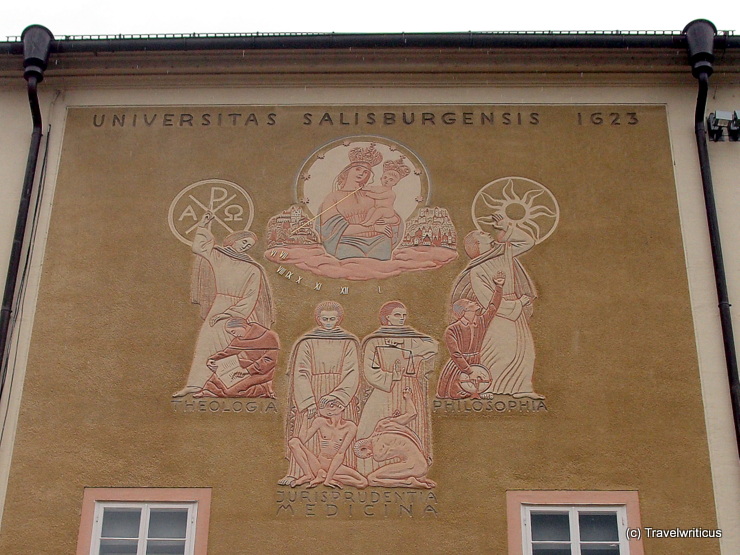
This fresco with a sundial is located on a wall of the old university at the Max-Reinhard-Platz. It was created by Georg Jung (1899-1957). The depictions refer to the university founded in 1622. [German]
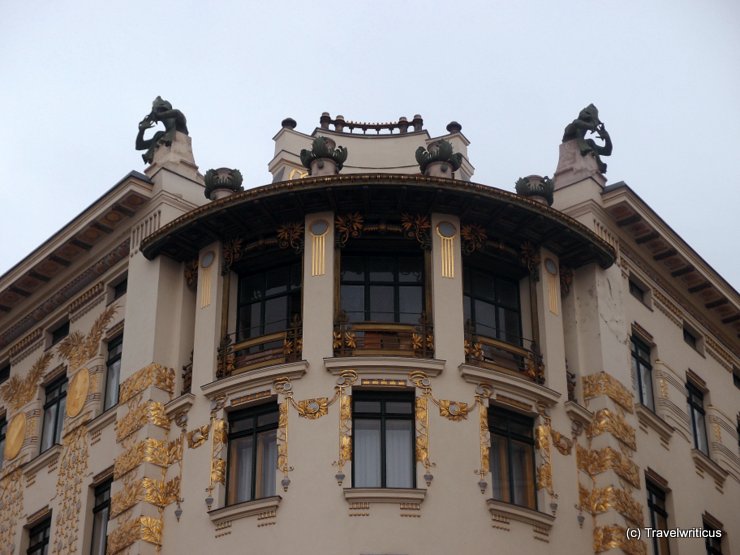
The building N° 38, situated on the Linke Wienzeile (6. District), was designed by Otto Wagner. Koloman Moser created the golden ornaments. You find this facade next to the Naschmarkt, one of the most popular markets in Vienna. [German]
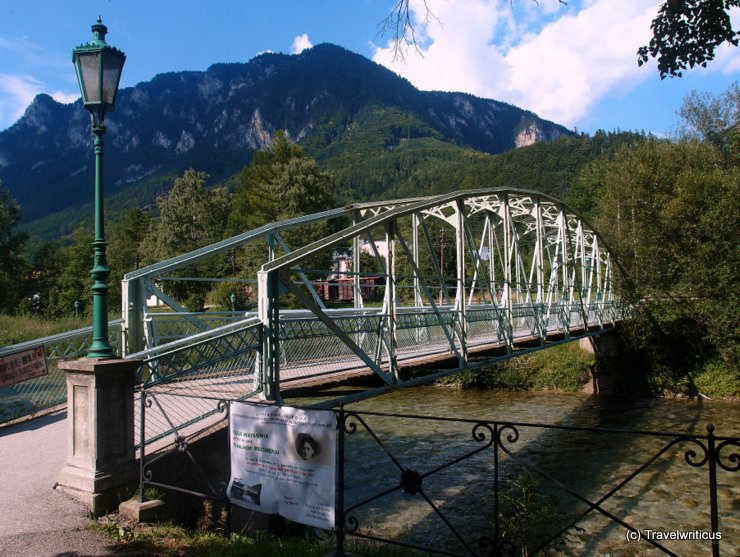
On my way to the Reichenau railway station, I crossed the Schwarza on a pedestrian bridge with filigree iron construction. The elegant lanterns reminded me that I walked on the grounds of a famous spa town in the era of the Austro-Hungarian Empire. [German]
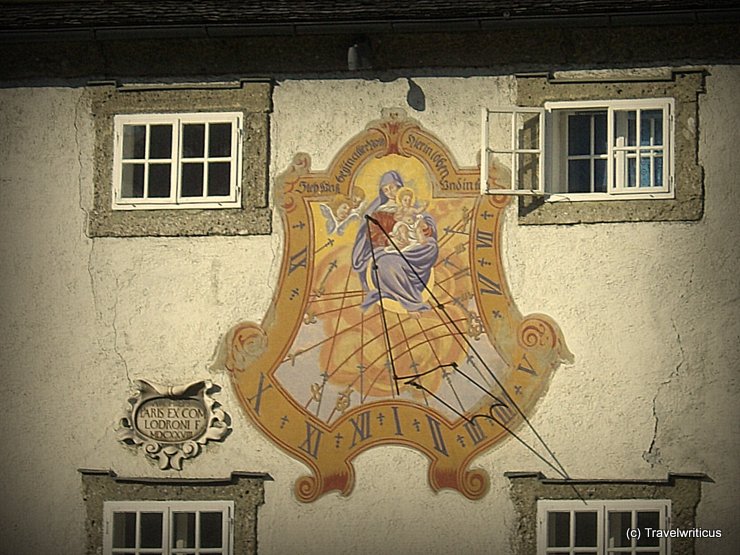
The Zeugwartstöckl in Salzburg is the surviving guardhouse of the demolished Michaelstor (Michael Gate). It stands between Mozartplatz and Rudolfskai. You see this sundial, dating back to 1628, on the facade facing Mozartplatz. [German]
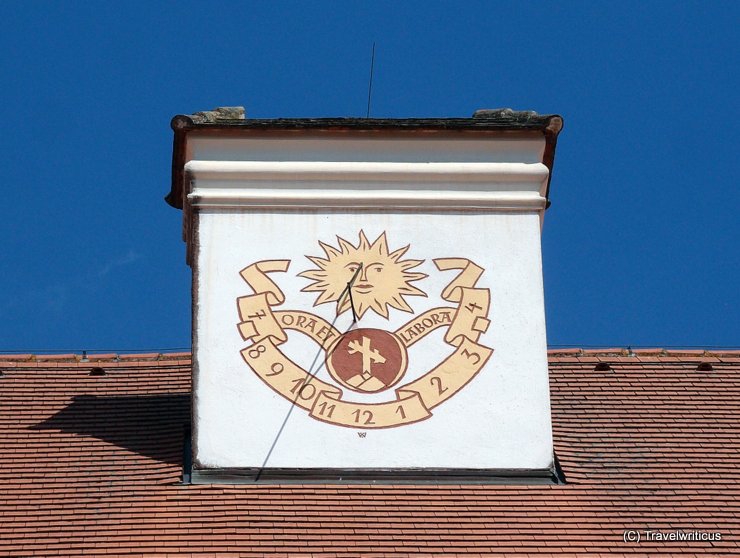
You find this sundial on a chimney of Seitenstetten Abbey (Stift Seitenstetten). This abbey is a large Benedictine monastery in the Austrian region of Mostviertel. The inscription “Ora et Labora” refers to the motto of the Benedictines. It translates into “Pray and Work”. [German]
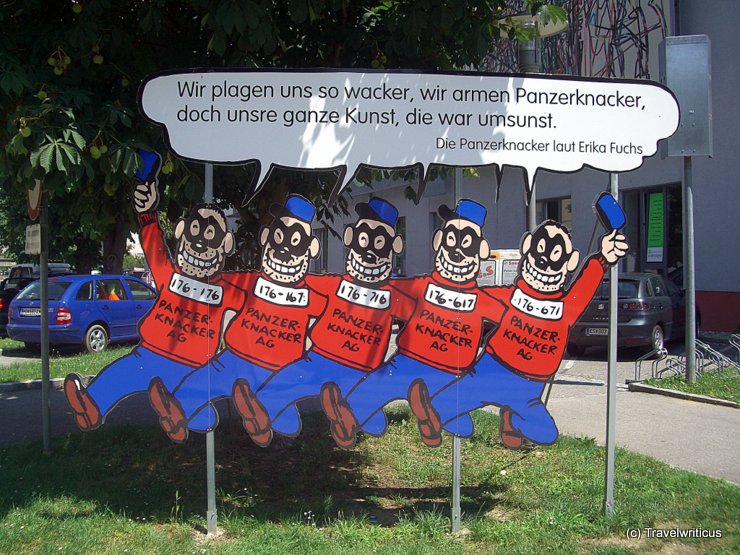
While heading to a Caricature Museum in Krems, I came across this depiction of the Beagle Boys. Its title mentioned Erika Fuchs, who became famous for translating comic stories. Fun fact: This piece stood opposite a jail. [German]
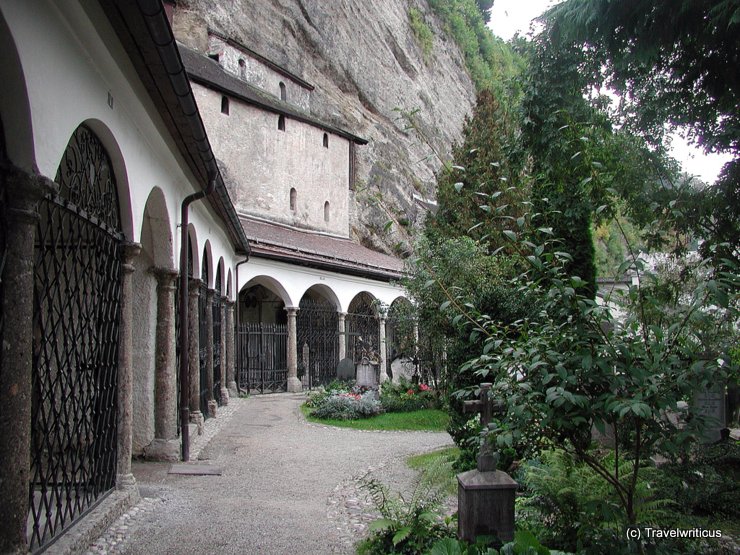
The cemetery of St. Peter (Petersfriedhof) is not only one of the oldest cemeteries of Salzburg but was also a set in the American movie ‘Sound of Music’. The small windows along the rock are part of the so-called catacombs.
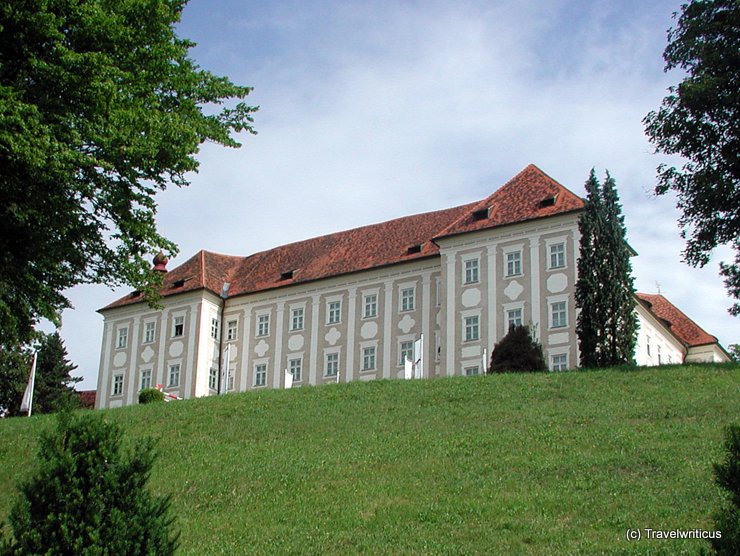
Piber Castle (Schloss Piber) is a palace in the Austrian state of Styria. It stands next to the Federal Stud Piber. The stud breeds the famous Lipizzan stallions performing at the Spanish Riding School in Vienna. [German]