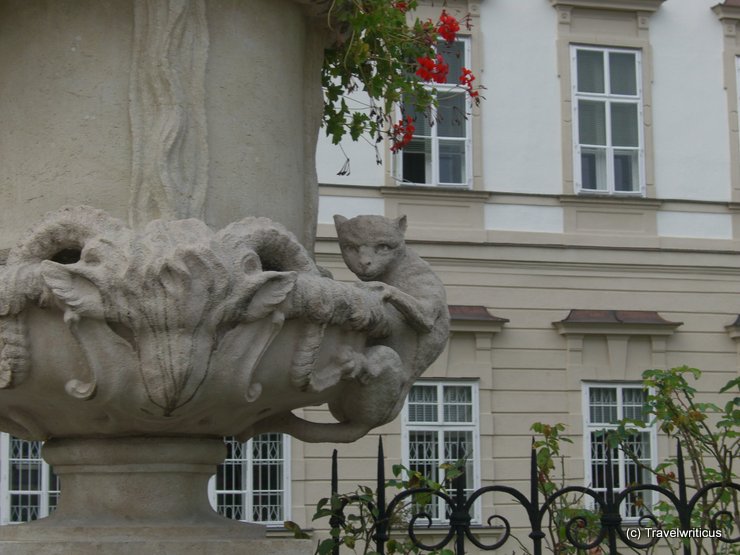
Sculpture of a cat seen near Mirabell Palace (Schloss Mirabell) in Salzburg City. This palace was built by Archbishop Wolf Dietrich Raitenau in 1606 and was dedicated to his secret wife Salome Alt and their 15 children.
You only see what you know (Goethe)
Sculpture of a cat seen near Mirabell Palace (Schloss Mirabell) in Salzburg City. This palace was built by Archbishop Wolf Dietrich Raitenau in 1606 and was dedicated to his secret wife Salome Alt and their 15 children.
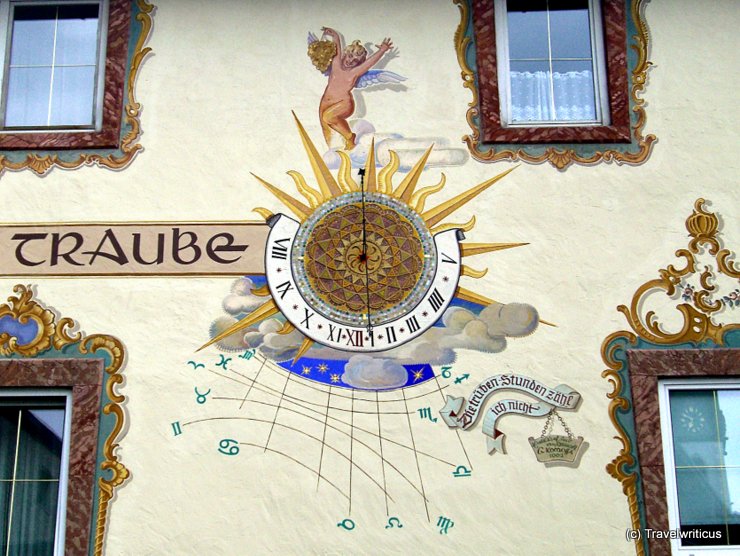
A sundial seen at an old inn located in a city called Golling an der Salzach. The saying in the right bottom corner tells that this clock is not counting the cloudy hours which is actually a pun. The German term trüb describes a weather condition as well as a mood. So the phrase invites people not to stick to a bad mood.
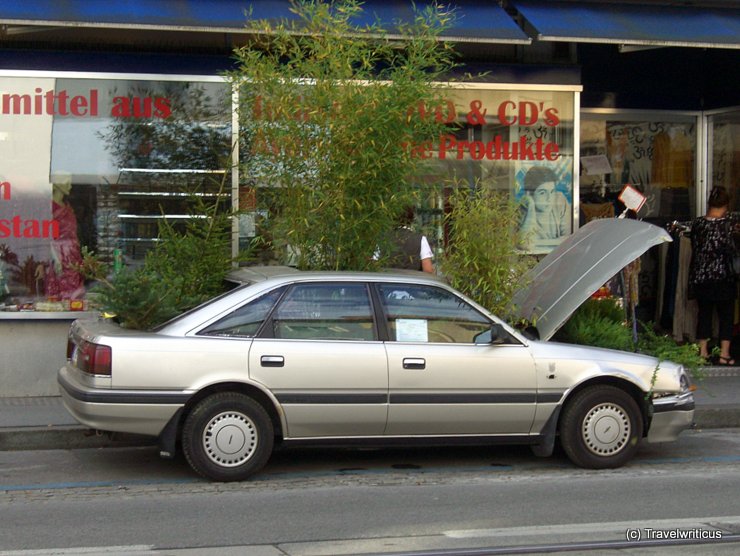
Well, what do you think if you suddenly see such a car in the streets of your city? If you think this is a sort of art work you are right. It is an urban intervention made by BijaRi, a group of architects and artists from São Paulo.
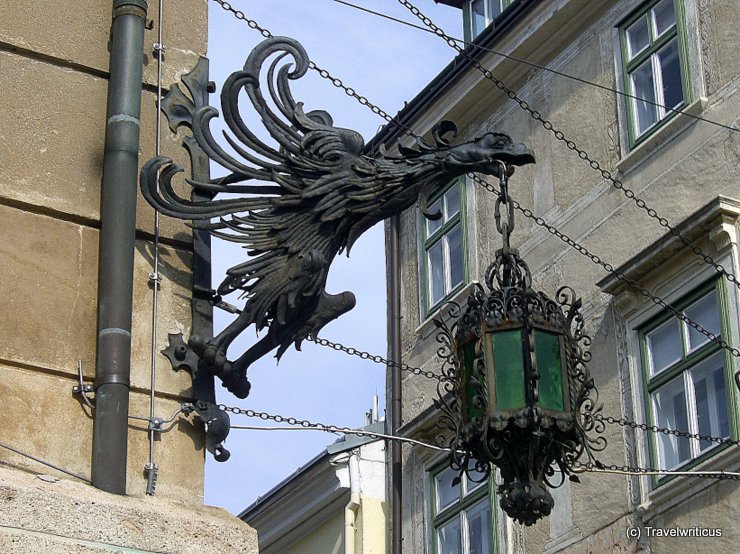
I saw this old-fashioned lantern in the streets of Wiener Neustadt. This planned town is located south of Vienna. I wonder why the eagle looks so plucked.
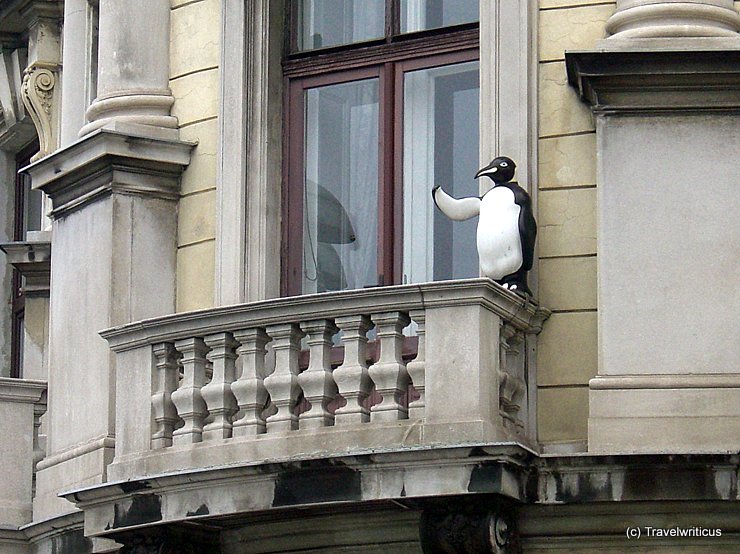
As I always say: The most interesting details of a city are not on the ground floor. E.g. this penguin seen on a balcony rail of a building in Vienna. I was told, the creator of this penguin, which had been used for a campaign by the Austrian tourism board, has put this figure on his balcony.
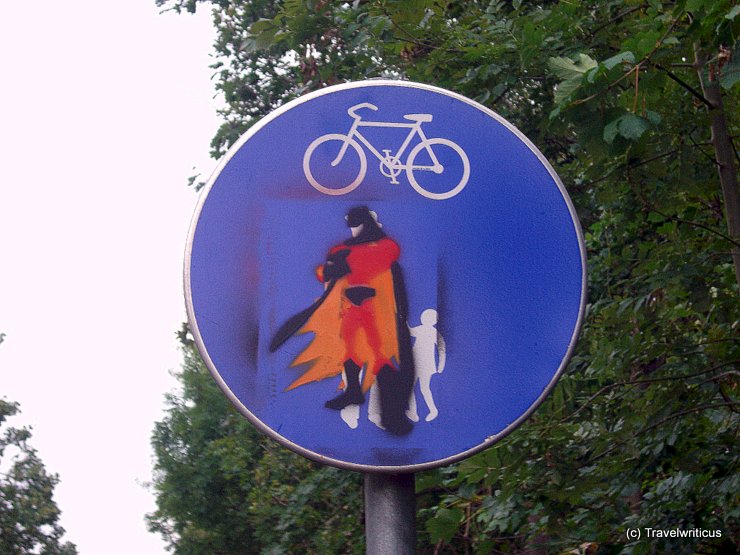
On an urban walk through Graz, I saw this manipulated traffic sign. Someone obviously thought there should be a separate pathway for Superman.
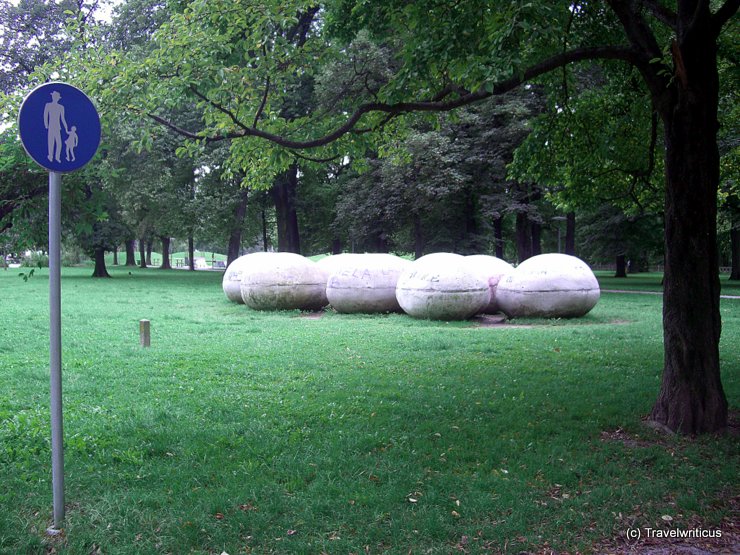
Some artwork in my city Graz. Well, I guess it is artwork. The pieces could also be eggs of dinosaurs. I’ll keep you informed! 🙂
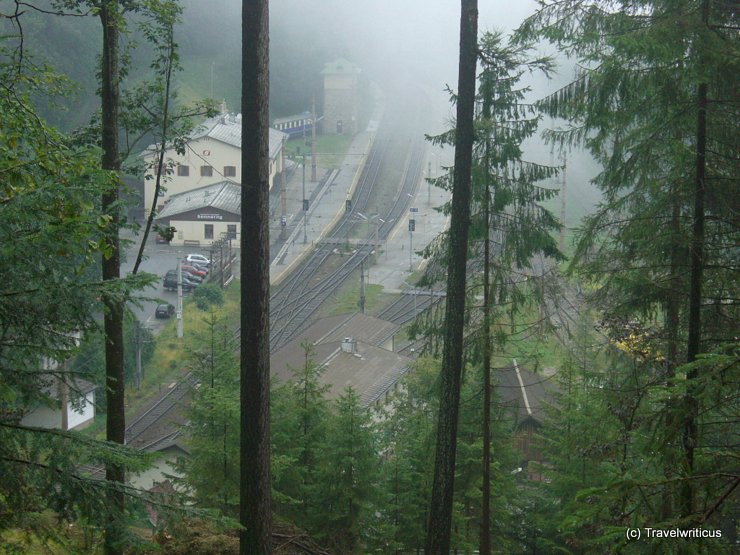
On my train trips to Vienna I often pass the railway station Semmering. Generally I see the station just from my train window. On a hiking tour I got this different view. Looks misty, doesn’t it? By the way the blue-white rail car in the background is a diesel rail car ÖBB 5144.
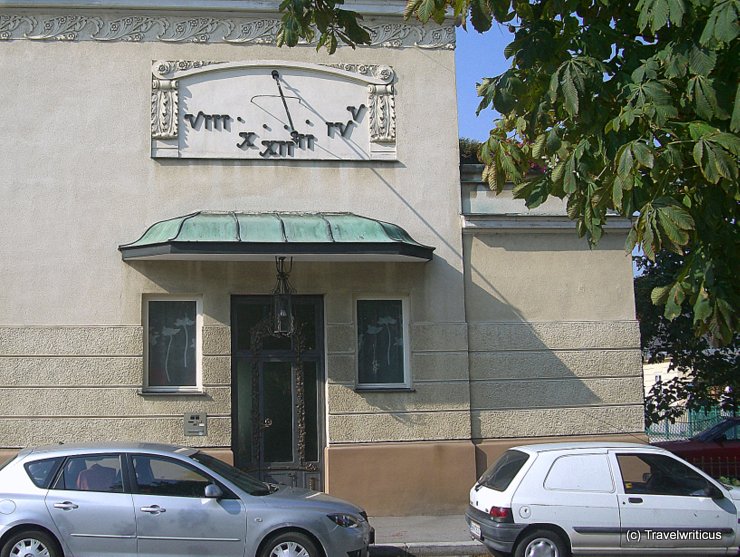
Time declared by the shadow meets a UNESCO World Heritage Site. In Baden bei Wien, there is a decorative sundial, possibly dating from the Art Nouveau period. It adorns a façade of he historic spa town, combining artistic elegance with functional craftsmanship.
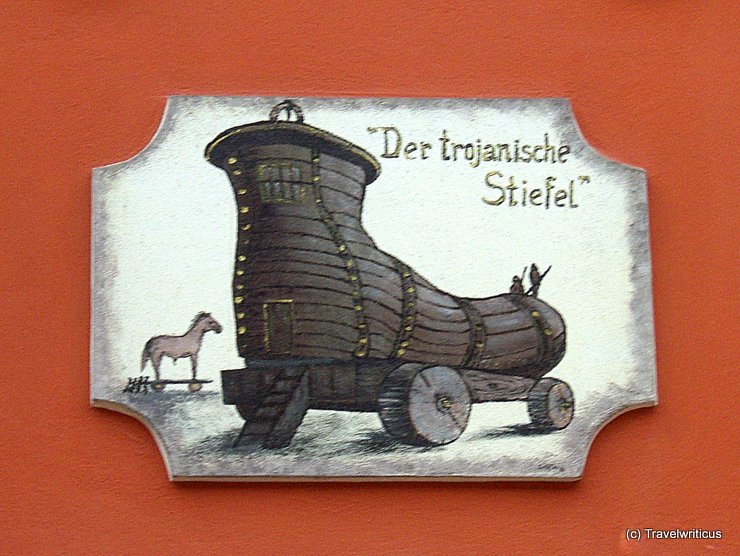
Encircled by one of Austria’s best-preserved medieval town walls, Friesach was heavily defended. Against that backdrop, this sign of a shoe shop feels entirely logical. Der trojanische Stiefel (Trojan Boot) is a playful nod to the idea of entering a fortified town by stealth rather than force.
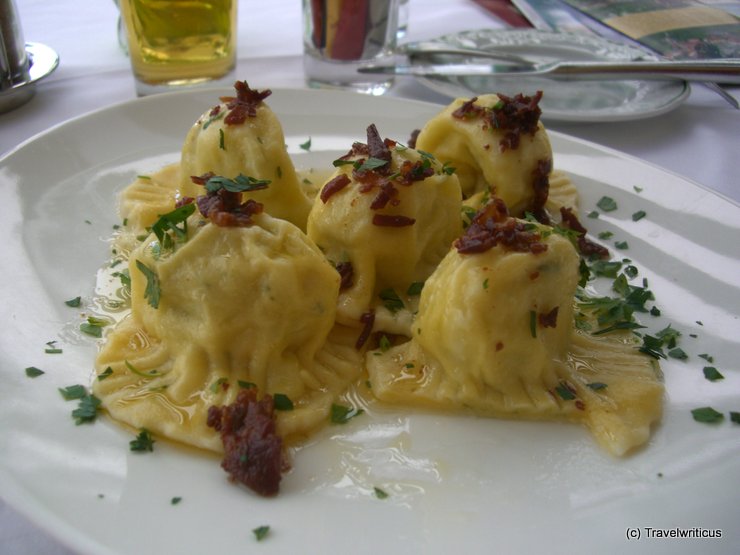
Before I joined a guided tour through the oldest city of Carinthia named Friesach I had a typical Carinthian dish: Kasnudeln. It was a thinly rolled noodle dough that was shaped into a pocket filled with quark and spiced with mint and chervil.
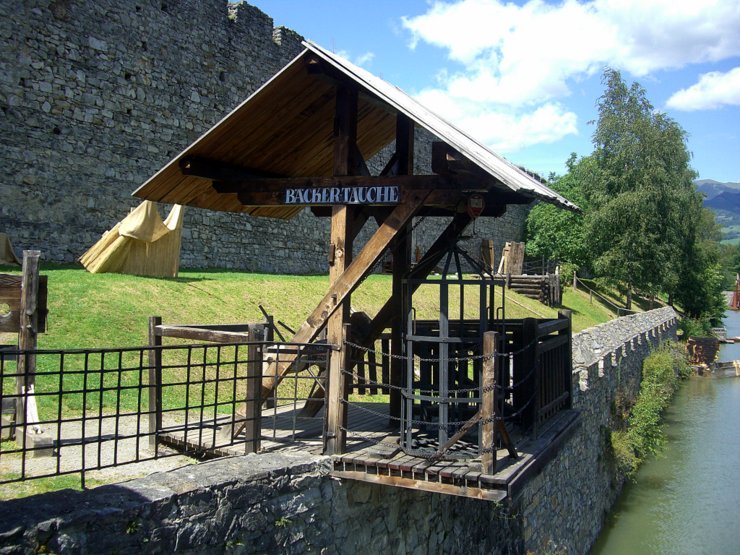
While walking along the city walls of Friesach, I came across this reconstruction of a medieval installation. The German inscription describes it as Bäckertauche. Literature told me this used to be a tool for punishment in earlier times.