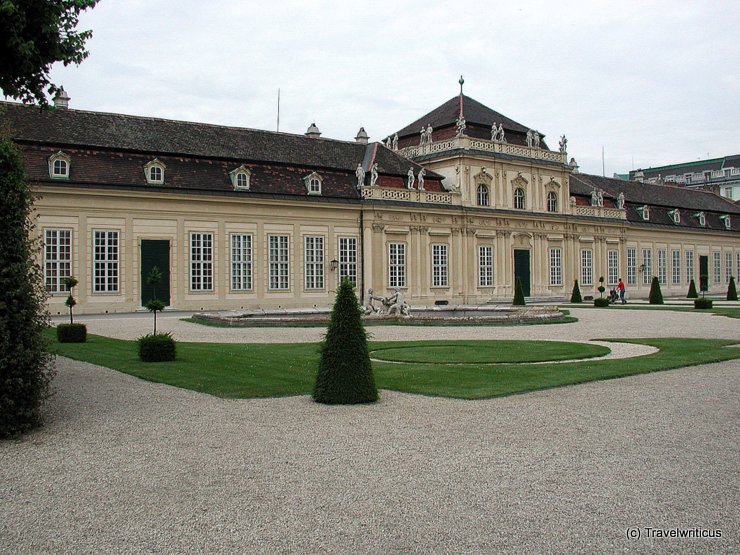
Lower Belvedere Palace (Unteres Belvedere) and Upper Belvedere Palace (Oberes Belvedere) constitute an ensemble near Vienna Central Station (Hauptbahnhof). In the beginning, the Lower Belvedere Palace served as the home of Prince Eugene of Savoy.
You only see what you know (Goethe)
Lower Belvedere Palace (Unteres Belvedere) and Upper Belvedere Palace (Oberes Belvedere) constitute an ensemble near Vienna Central Station (Hauptbahnhof). In the beginning, the Lower Belvedere Palace served as the home of Prince Eugene of Savoy.
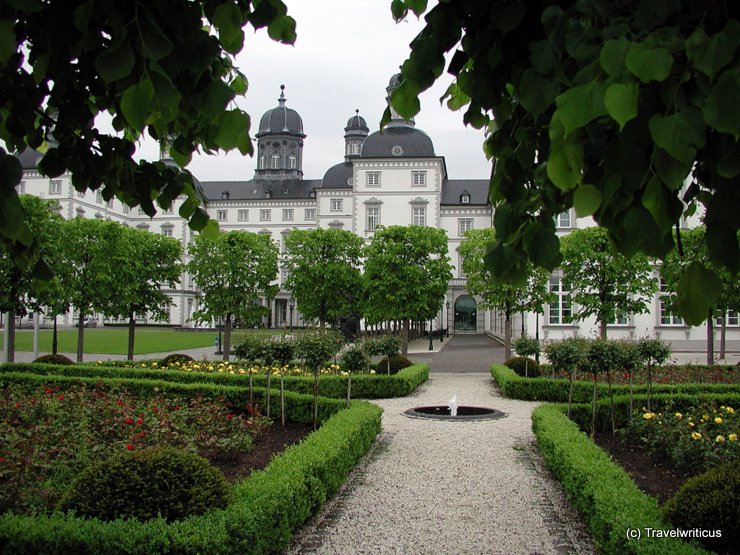
At the beginning of the 18th century, Italian Baroque architect Matteo Alberti designed Bensberg Palace (Schloss Bensberg). Today the former hunting lodge for the Counts Palatine of the Rhine houses a 5-Star Grand hotel. [German]
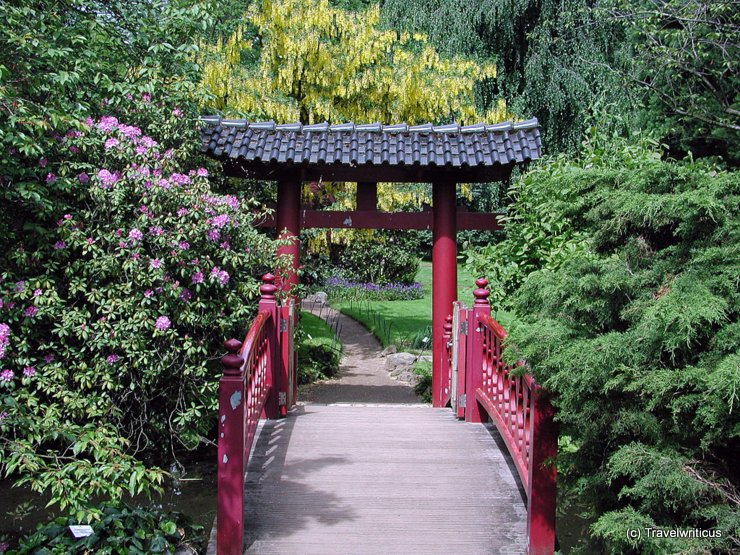
The Japanese garden of Leverkusen, founded by Carl Duisberg, is a 15,000 m² area open to the public. It is located near the BayKomm, an exhibition hall where one can learn about the products made by Bayer AG.
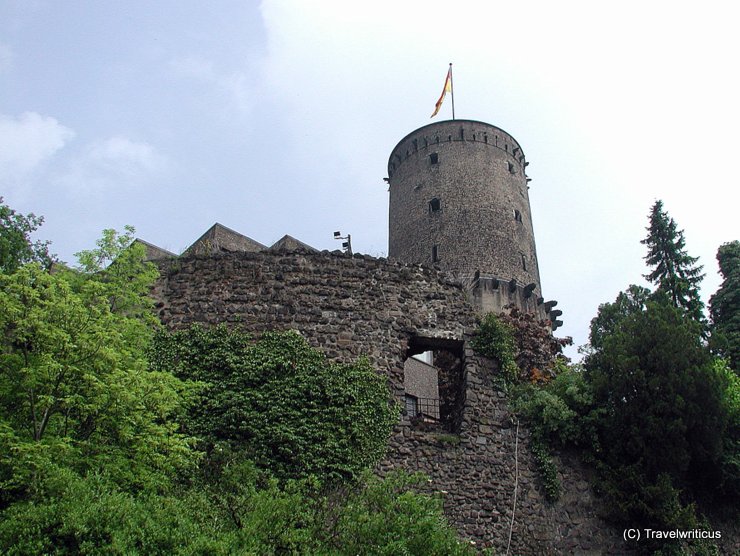
Godesburg Castle (Godesburg) stands on a hill in Bad Godesberg, a part of Bonn. It dates back to the 13th century. At the start of the Cologne War, the castle fell victim to a siege in 1583. Today it houses a restaurant and is known as a fine lookout. [German]
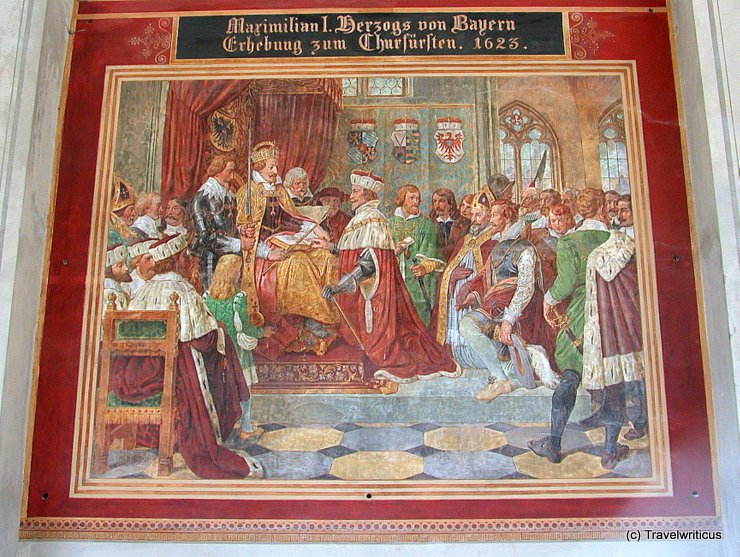
This is one example of several wall paintings I saw in the arcades of the Munich Court Garden (Münchner Hofgarten). The paintings display episodes in the history of the House of Wittelsbach. I was especially impressed by the fact that these paintings are publicly displayed. They are protected against wind and weather only by the arcades.
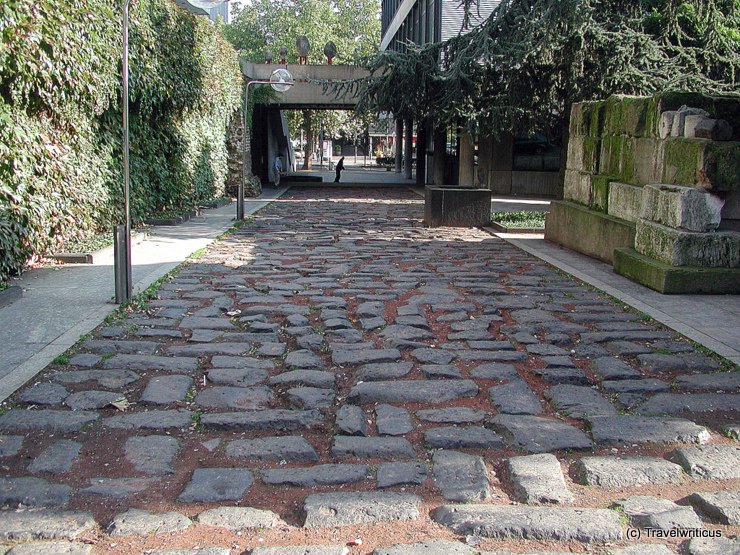
Near the Roman Museum, pedestrians see this reconstruction of an ancient street. The lane is known as Harbour Road, though it doesn’t lead to a port anymore. It isn’t an exact reconstruction of the former street, but the basalt stones are from Roman times.
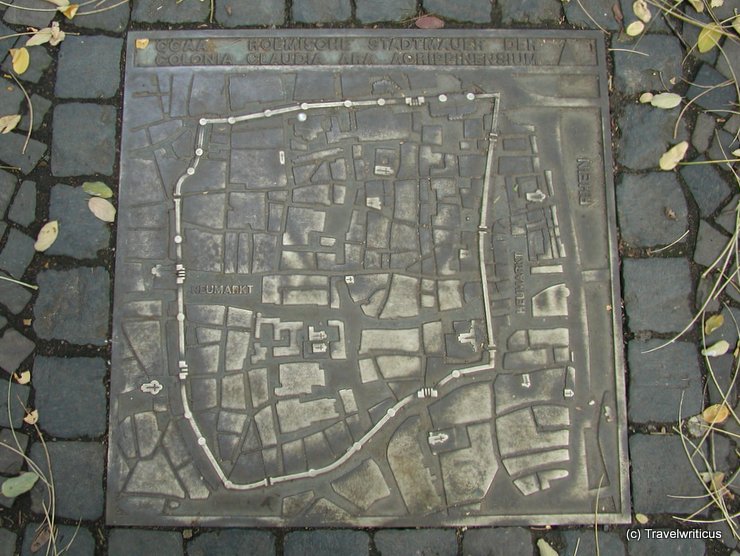
Near the historic Zeughaus in Cologne, I discovered this map on the pavement. It helped me to understand the course of the former Roman town wall.
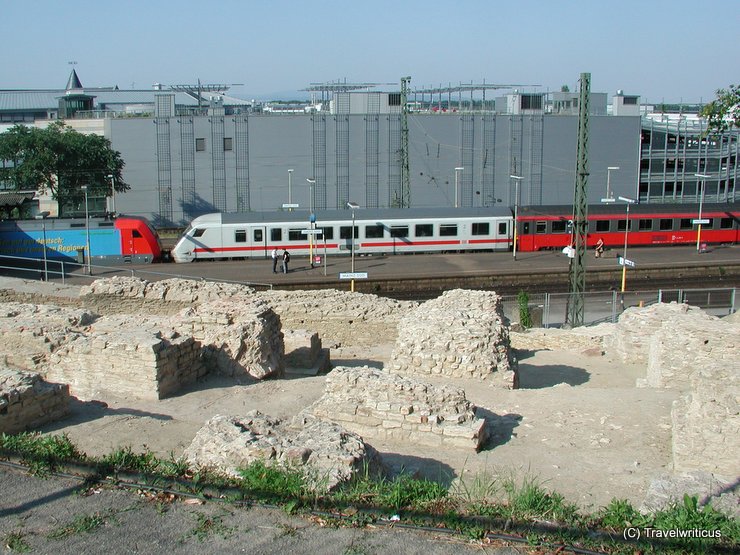
During ancient times, the name of Mainz was Mogontiacum. You still find several Roman remains in the city. For example, the ruins of the Roman theatre stand next to the railway station named Mainz Römisches Theater.
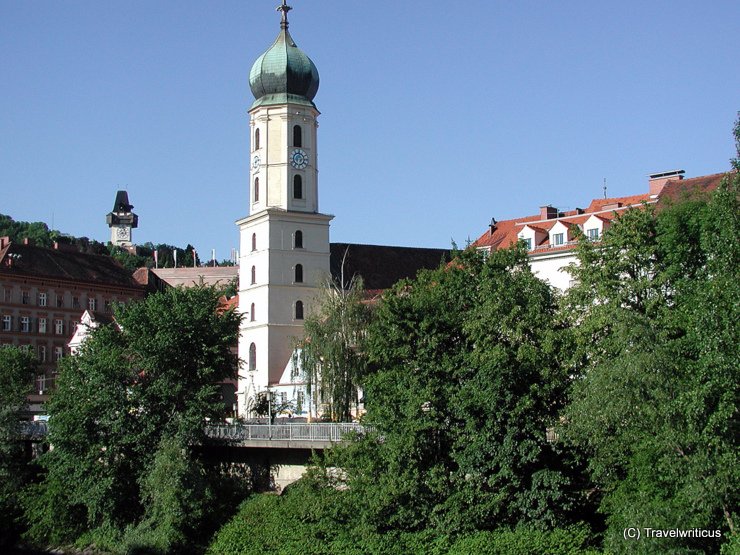
Two beauties of Graz: The landmark of Graz named Uhrturm in the background and the Franciscan Church (Franziskanerkirche) in the foreground. The church is part of the oldest monastery in the city. Sometimes I walk through the hidden cloister for relaxing from the hurly-burly of the shopping streets in Graz.
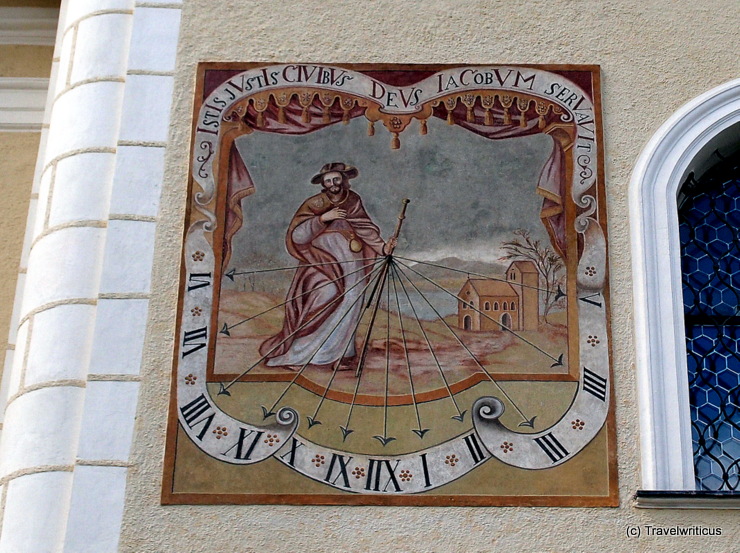
This sundial on the parish church of Tamsweg was created in 1741. It shows James, son of Zebedee (Jakobus, Sohn des Zebedäus) The saint is also known as James the Great (Jakobus, der Ältere). The depiction of this structure refers to the fact that James is the patron of the church. [German]
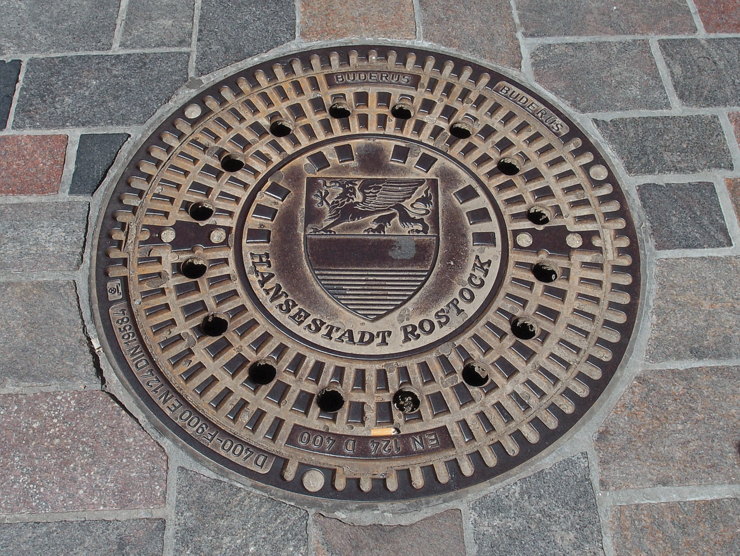
The manhole covers in Rostock display the city arms. The coat of arms dating back to 1367 depicts a golden gryphon of a blue field (representing the former princes of Rostock). Bars of silver and red represent the colours of the Hanseatic League. As a member of the Hanseatic League, the city is named Hansestadt Rostock. [German]
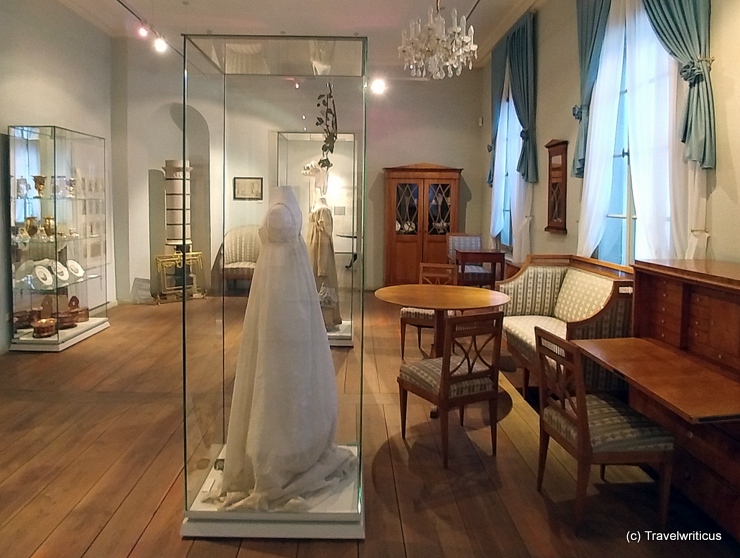
The municipal museum of Weimar is housed in the Bertuchhaus. This former residential and commercial building was built in the years 1780/1803 in classicistic style. Its name goes back to the then owner Friedrich Justin Bertuch, who worked as a writer and publisher. [German]