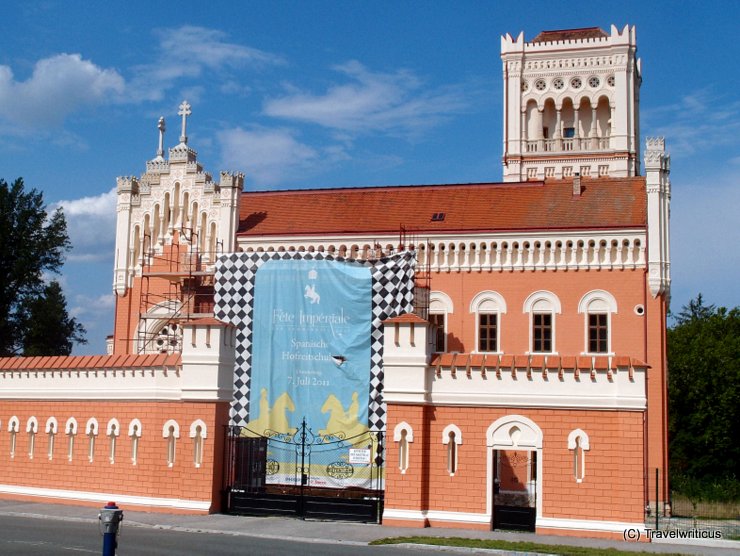
Rotenturm Manor (Schloss Rotenturm), a romantic-eclectic building with Moorish forms in Rotenturm an der Pinka, was built by architect Antal Weber for Stephan Graf Erdődy in the years 1862/64. [German]
You only see what you know (Goethe)
Rotenturm Manor (Schloss Rotenturm), a romantic-eclectic building with Moorish forms in Rotenturm an der Pinka, was built by architect Antal Weber for Stephan Graf Erdődy in the years 1862/64. [German]
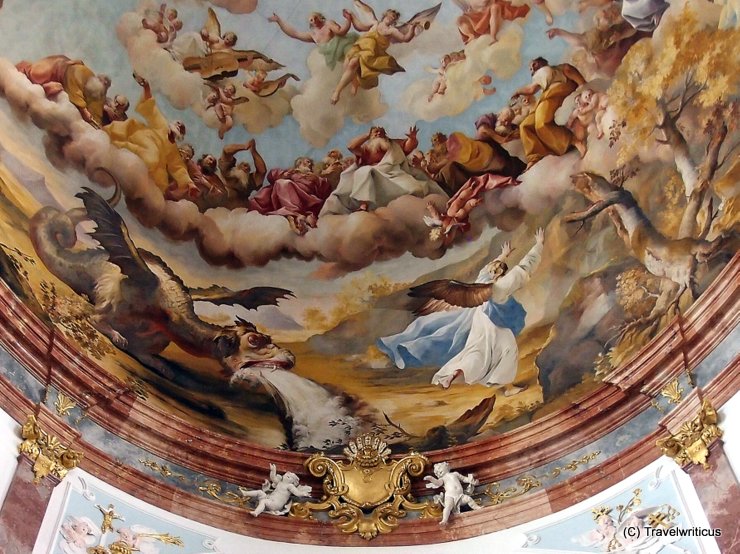
To my surprise, one of the frescoes at the church of Altenburg Abbey (Stift Altenburg) includes a dragon. The creator of these frescoes was Paul Troger.
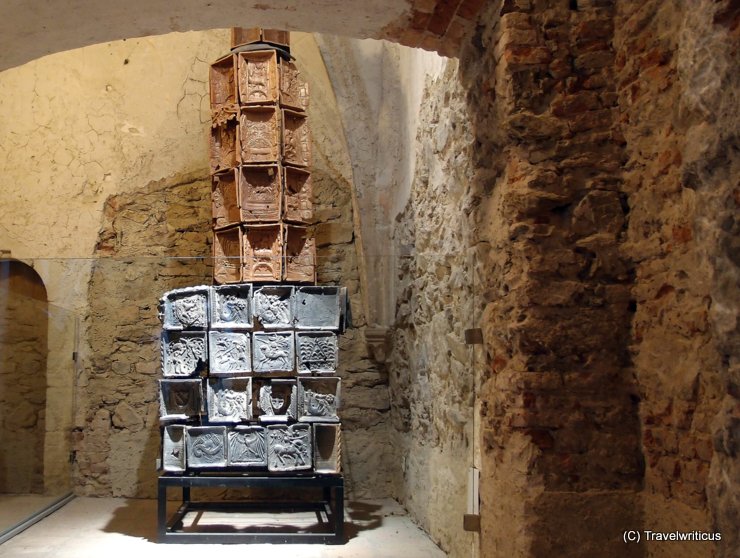
On my walk through the basement vaults of Altenburg Abbey I came across this reconstruction of a Gothic tower stove. While unearthing the old monastery, the workers discovered 62 tiles showing Bible stories, saints, emblems and symbols. They were probably created in the years between 1480 and 1510.
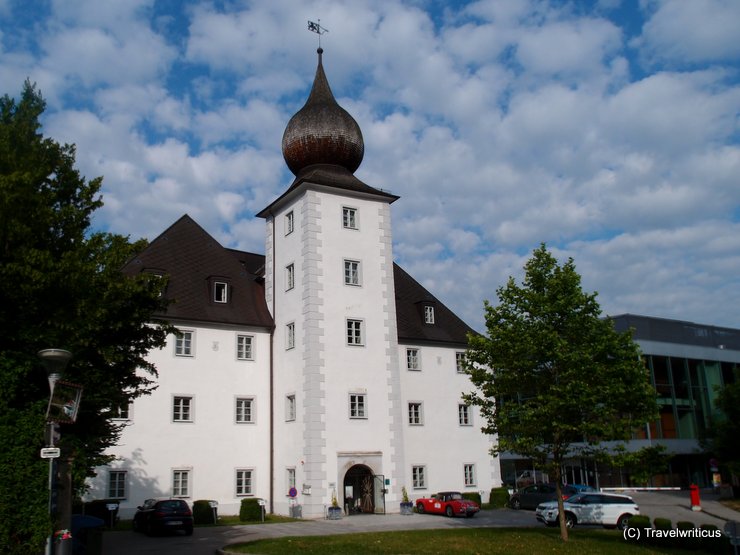
The former Zell Manor (Schloss Zell) houses a hotel today: “Das Schloss an der Eisenstrasse“. The hotel name refers to the region’s history, where many ironworking plants settled along the main road.
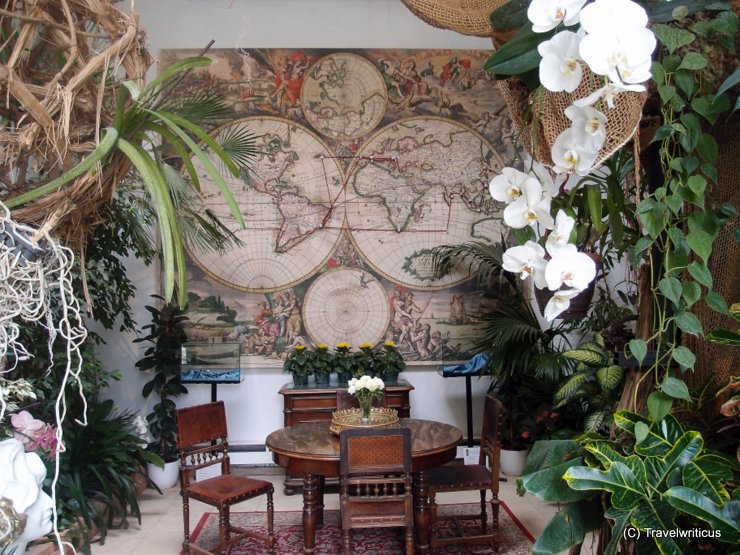
After a walk through the seven gardens of Klosterneuburg Monastery (Stift Klosterneuburg) near Vienna, I also visited the orangery of the monastery. Inside, an old world map surprised me. It showed an expedition route of the Austrian ship ‘SMS Novara’.
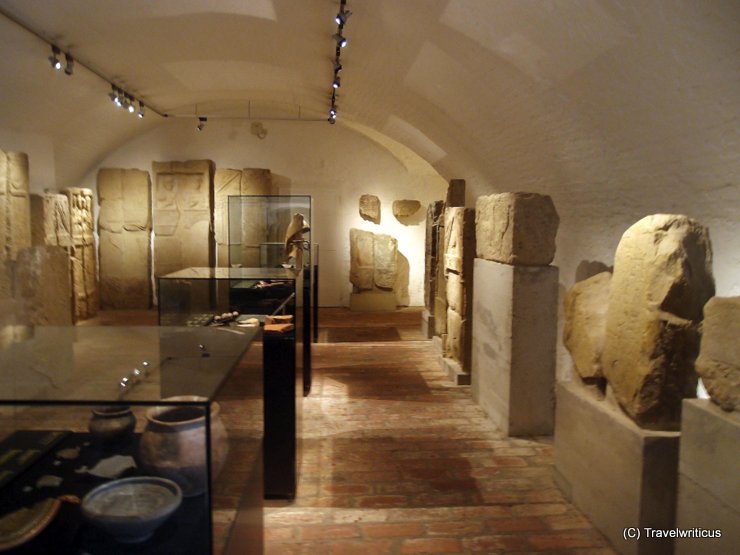
This exhibition room of Stift Klosterneuburg (Klosterneuburg Monastery) displays ancient Roman pieces. They are from an ancient predecessor settlement of today’s Klosterneuburg. The name of the Roman place is uncertain. Suggestions are Arrianis, Asturis, Cannabiaca or Quadriburgium.
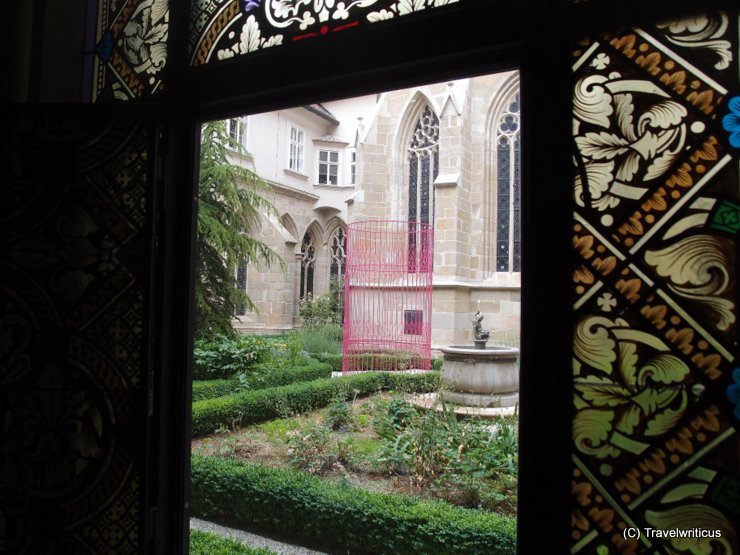
While my visit to Stift Klosterneuburg (Klosterneuburg Monastery) I came across several examples of contemporary art which were well hidden in the structures of the monastery. For example, I discovered this red ‘thing’ in the cloistered courtyard by glimpsing through an open window.
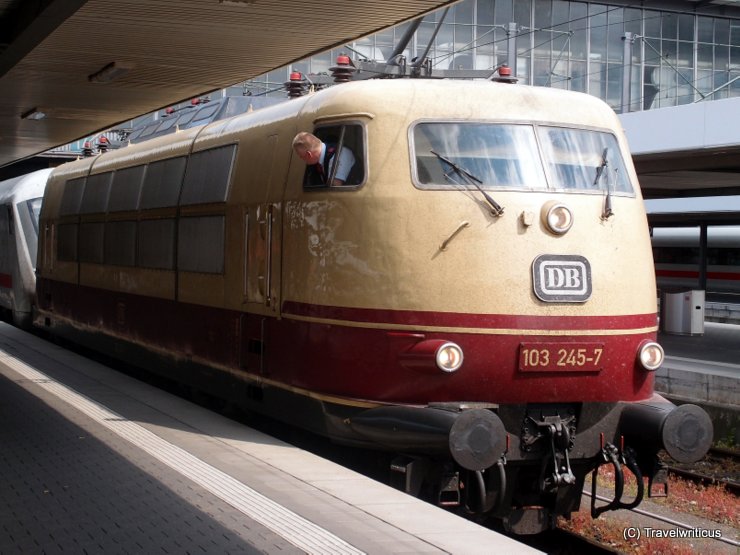
On my return trip from Constance (Konstanz) I came across this rare instance of a locomotive DB Class 103. At that time (Mai 2014) only three of them were still in use for regular trains. I especially love the design and the colour scheme of this classic locomotive class. [German]
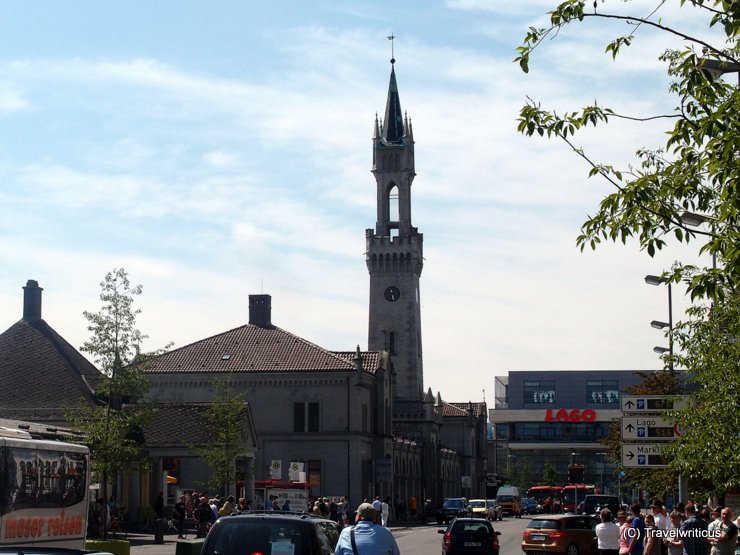
Konstanz Hauptbahnhof, the central station of Konstanz (Constance), opened to the public in 1863. The architecture consists of a mixture of neo-Gothic and Renaissance. The model for the tower was the Palazzo Vecchio in Florence. [German]
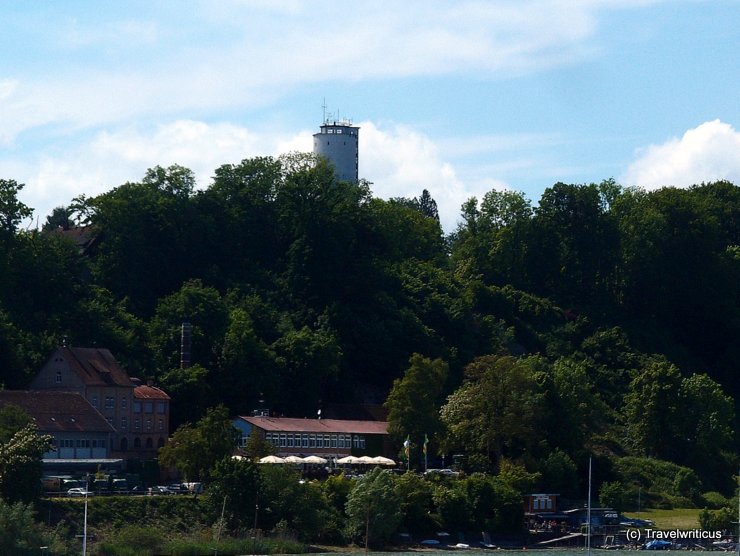
While crossing Lake Constance from Meersburg to Constance by boat, I took this photo of a conspicuous white-coloured tower named Otto-Moericke-Turm. It is a former water tower. Today, it houses a youth hostel.
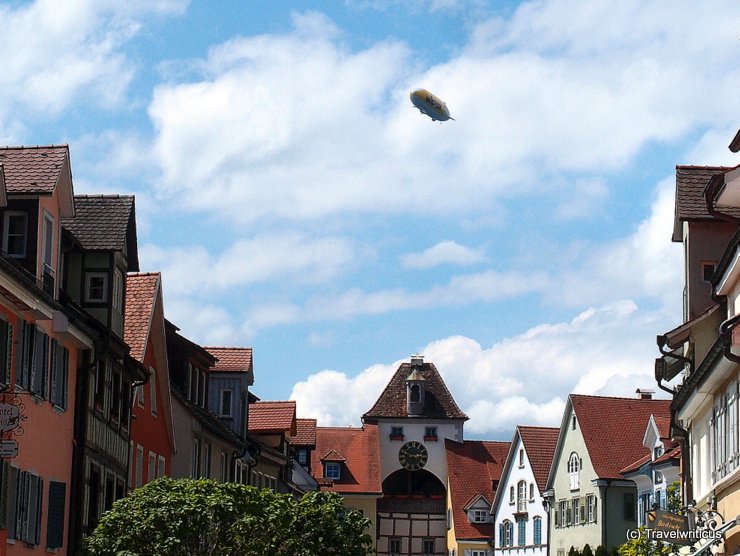
While walking through Meersburg, a modern airship suddenly appeared over the city’s roofs. I later learned that this was not an uncommon sight. Several nearby companies offer sightseeing flights over Lake Constance.
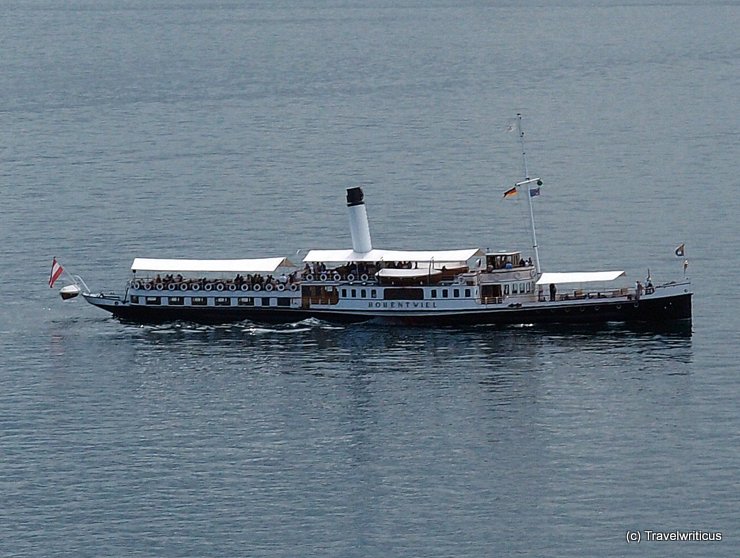
From Meersburg Castle I had this view of the Austrian paddle steamer Hohentwiel. Dating back to 1913, it is the only operational steamship and the oldest continuously operating passenger ship still in service on Lake Constance (Bodensee).