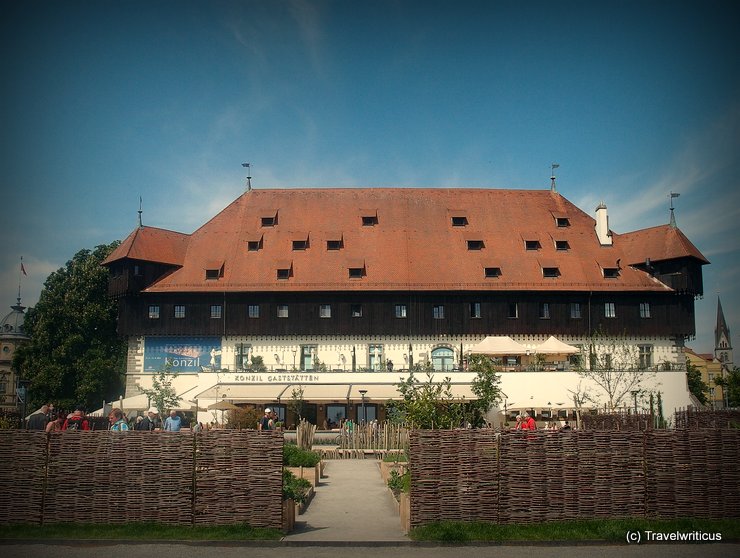
In the Council Building, the election of Pope Martin V took place in the year 1417. It was a crucial event during the Council of Constance (1414-1418). The German building name still reminds us of this event: Konzilgebäude or Konzil. [German]
You only see what you know (Goethe)
In the Council Building, the election of Pope Martin V took place in the year 1417. It was a crucial event during the Council of Constance (1414-1418). The German building name still reminds us of this event: Konzilgebäude or Konzil. [German]
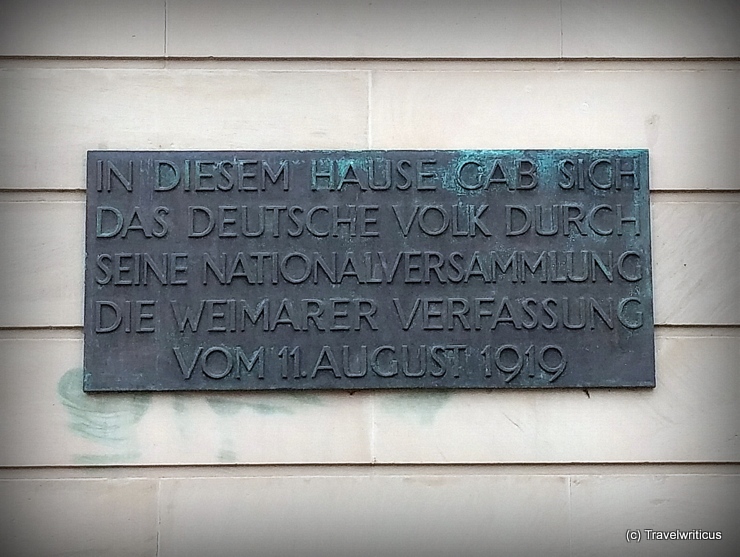
In 2019, the city of Weimar commemorates two anniversaries. On August 11, 1919, the Weimar Constitution was passed here. In the same year, the Bauhaus movement was created on the initiative of the architect Walter Gropius. An interesting intersection of both events forms this plaque, which commemorates the 11th of August, 1919: It was designed by Walter Gropius. [German]
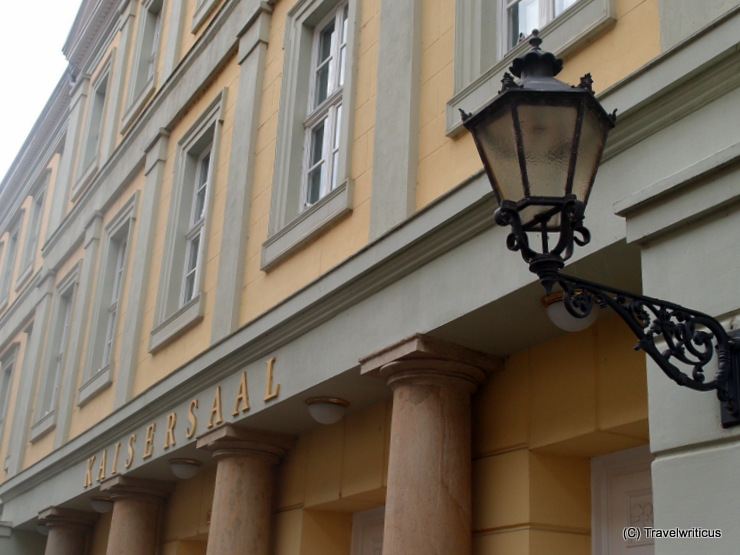
The Kaisersaal (Emperor’s Hall) in Erfurt forms a venue for conferences and cultural events. Its name originates from Emperor Napoleon I and Tsar Alexander I, who visited theatre performances in this building during the Congress of Erfurt (1808).
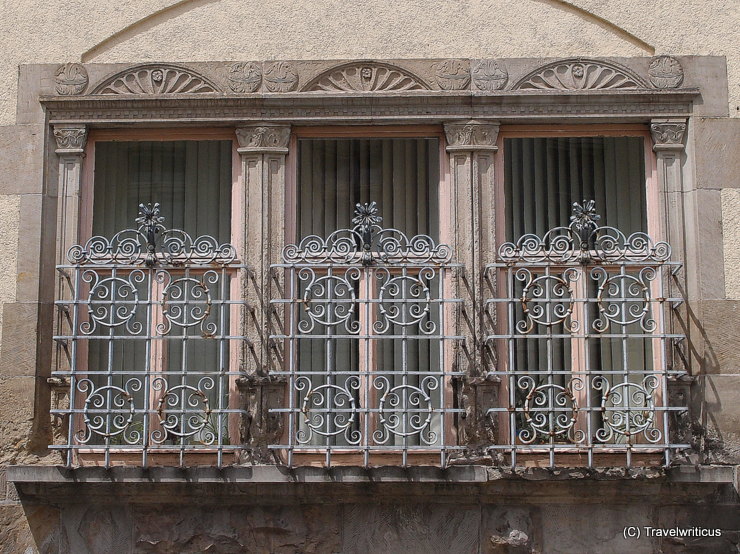
Smithery at the Johannes Lang House (Johannes-Lang-Haus), named after an important Protestant reformer and companion of Martin Luther. Today the building houses a venue for events and conferences.
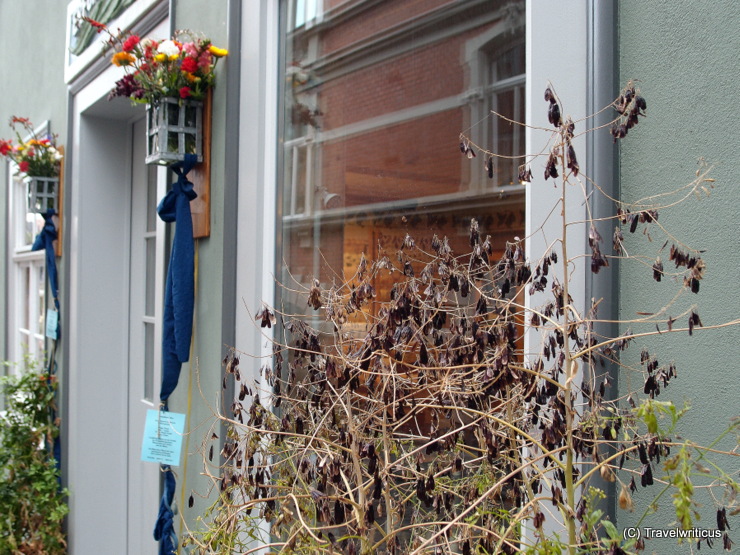
At the shop ‘Erfurter Blau‘ (Erfurt Blue) I learned more about the history of the trade in Dyer’s Woad. The prosperity of Erfurt is largely owing to the fact that this city was a big trading place for woad also known as Isatis tinctoria.
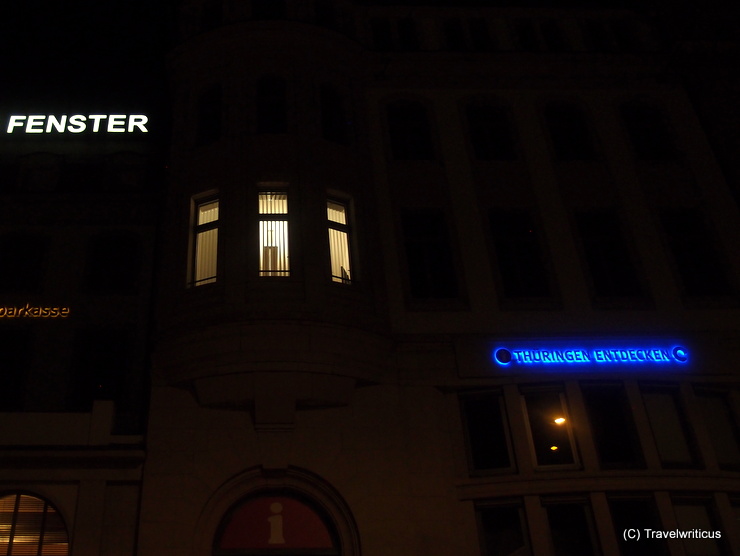
In 1970 West German politician Willy Brandt and East German politician Willi Stoph met in Erfurt. Willy Brandt stayed at Hotel Erfurter Hof in a room behind these windows. The first visit of a West German statesman in the GDR had a big impact into the memories of local people.
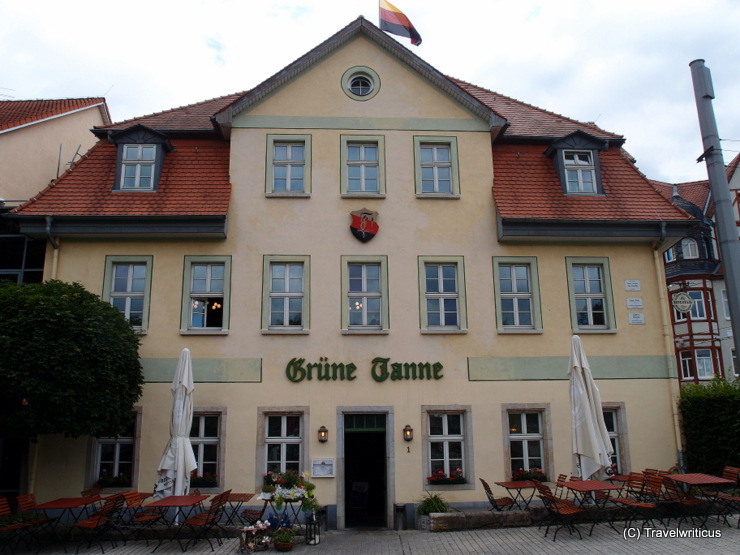
The first German student fraternity (Burschenschaft) was founded in this inn in 1815. Therefore, this Burschenschaft is also called Urburschenschaft. An interesting detail is the flag on top of the building. It shows an upside-down version of the modern German flag.
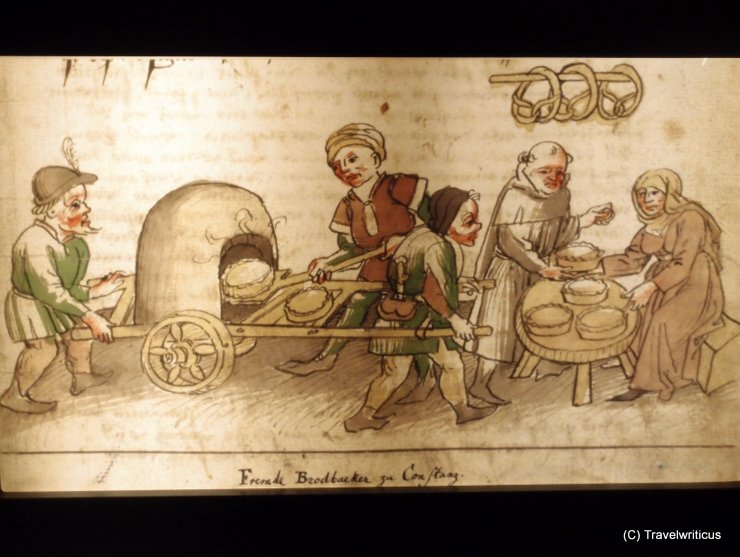
I found this depiction at the State Museum of Archaeology in Constance (Archäologisches Landesmuseum Baden-Württemberg). It shows a mobile baking oven which used to supply the crowds with bread during the Council of Constance (1414-1418).
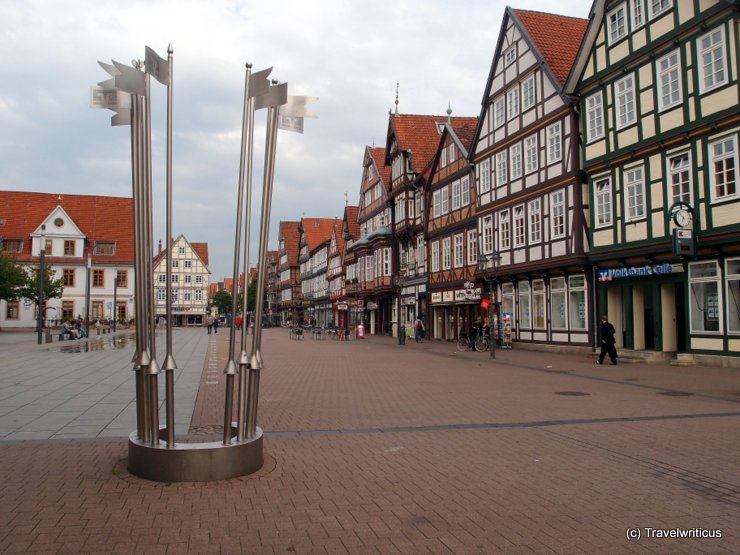
At the ‘Stechbahn’ of Celle. The former jousting field of the city was placed here. Though the sculpture is a kind of advertisement for a local bank I love the idea to portray the former use of this place by lances.
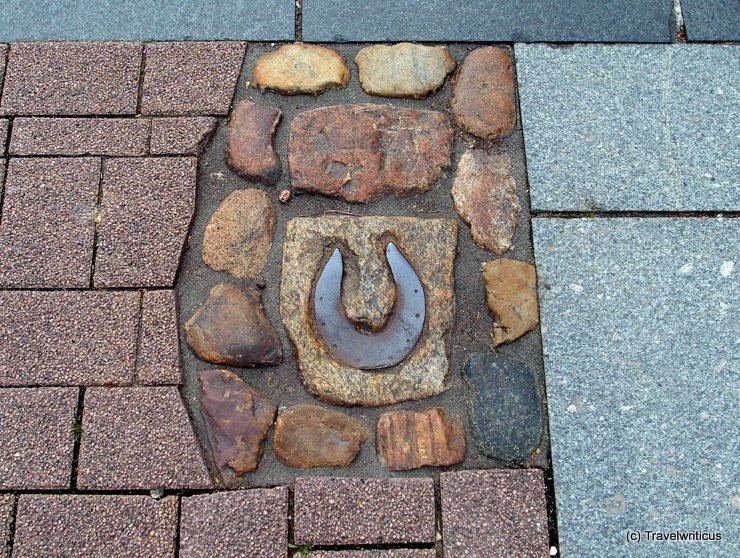
While walking through Celle I wondered what this horseshoe seen at the ‘Stechbahn‘ is indicating? Passersby told me it marks that place where Otto V, Duke of Brunswick-Lüneburg died at a tournament. Hmm, I always thought horseshoes are a sign of fortune? Obviously not in that case.
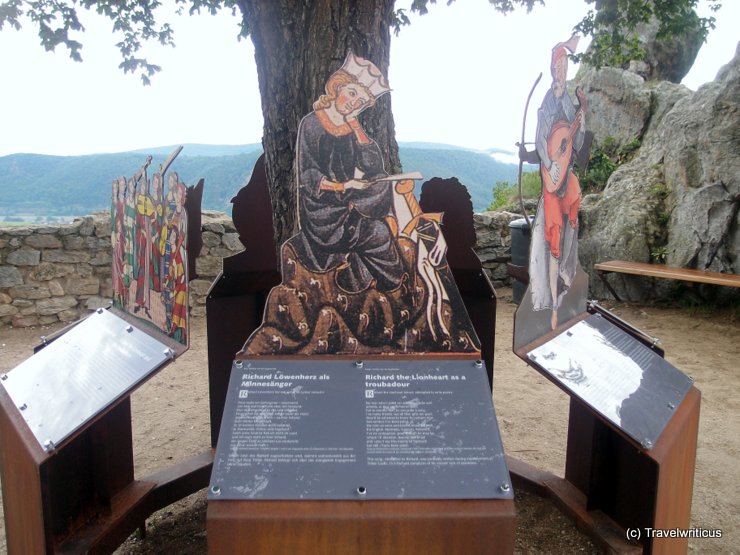
After climbing a steep trail up to Dürnstein Castle I came across a couple of information boards that told me some details about the life of Richard I of England also known as King Lionheart.
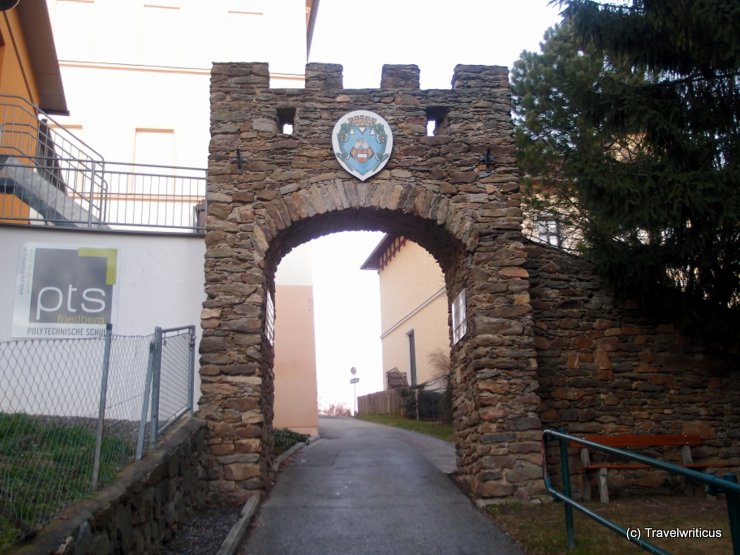
The walls of Friedberg were built with money from the ransom for Richard I of England (Richard the Lionheart). The gate depicted above is a reconstruction. It is known as Ungartor.