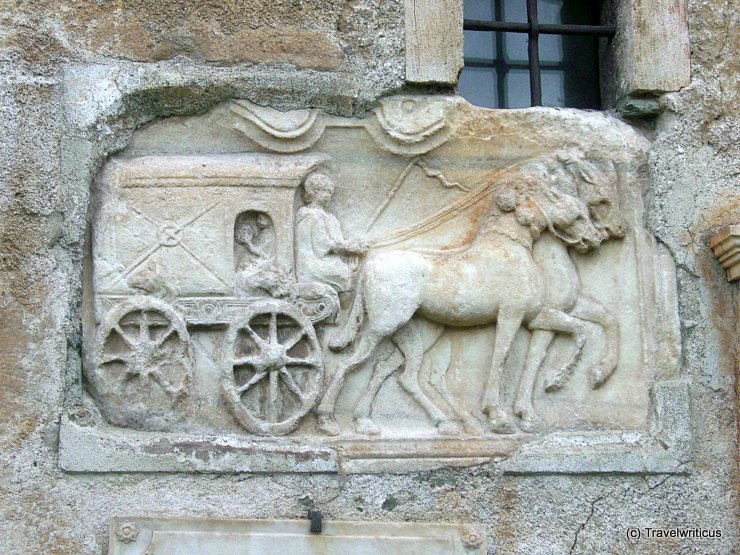
This piece is one of the most famous ancient Roman tombstones in Austria. It is the depiction of a coach. You find it in the wall of the Marienkirche, a church in Maria Saal. Though it doesn’t show a mail coach, it is sometimes called so.
You only see what you know (Goethe)
This piece is one of the most famous ancient Roman tombstones in Austria. It is the depiction of a coach. You find it in the wall of the Marienkirche, a church in Maria Saal. Though it doesn’t show a mail coach, it is sometimes called so.
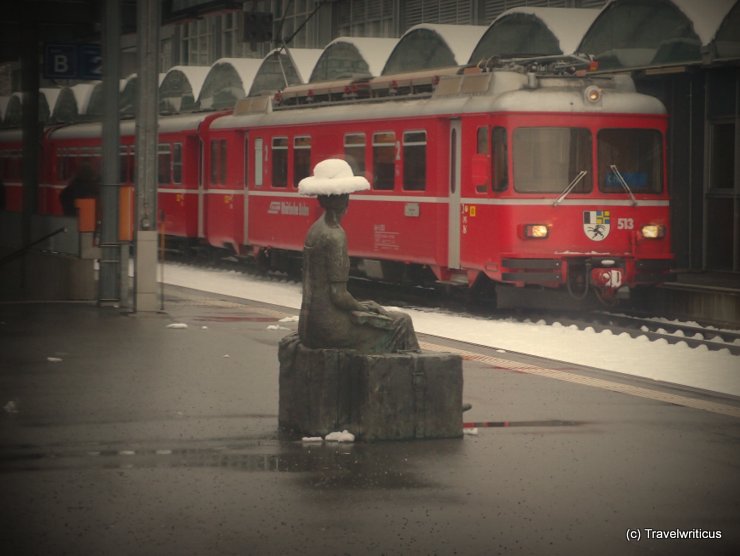
During a winter excursion on a UNESCO World Heritage route in Graubünden, my train stopped in Thusis. An elegant lady was sitting outside on the platform, waiting: “Die Reisende” (The Female Traveller), a work by the Swiss artist Robert Indermaur. [German]
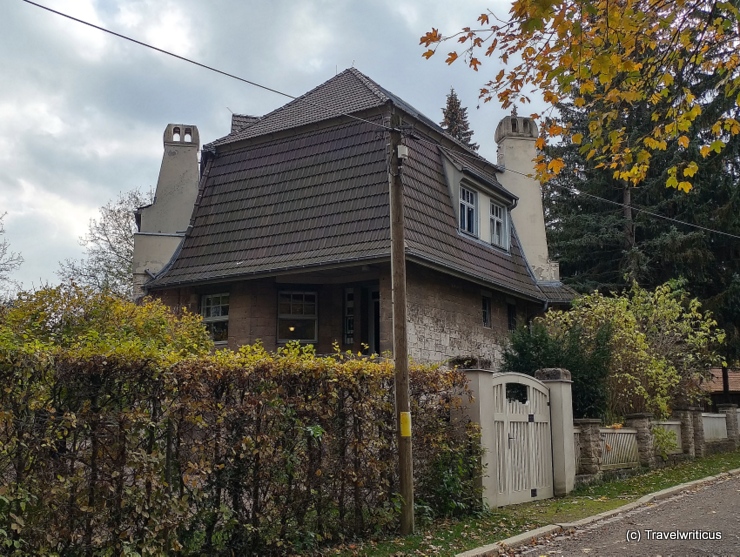
In this building, the Belgian architect Henry van de Velde lived from 1908 to 1917. House and furnishings were designed by himself. Allegedly, the layout of the building is designed like a ship. Together with the mast on the roadside, my pic reminds to an upside-down boat, at least. [German]
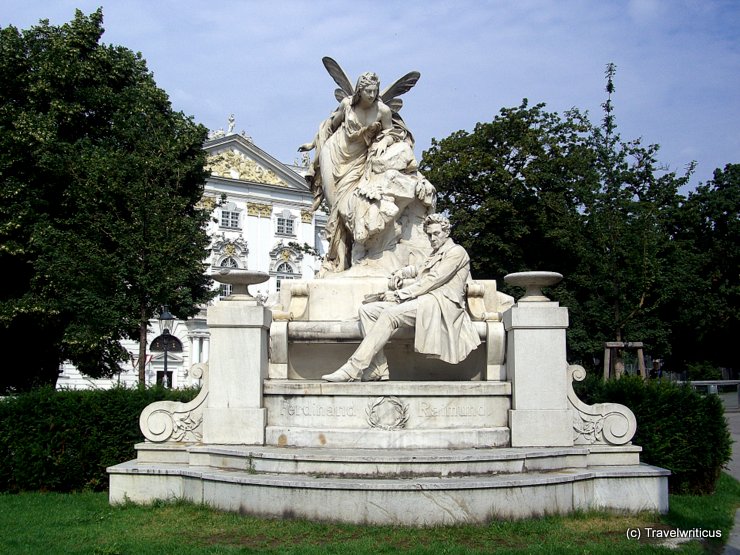
Ferdinand Raimund (1790-1836) was an Austrian actor/dramatist and a master of the Viennese Posse. Watching his plays give insights into the life of the first half of the 19th century in Vienna. [German]
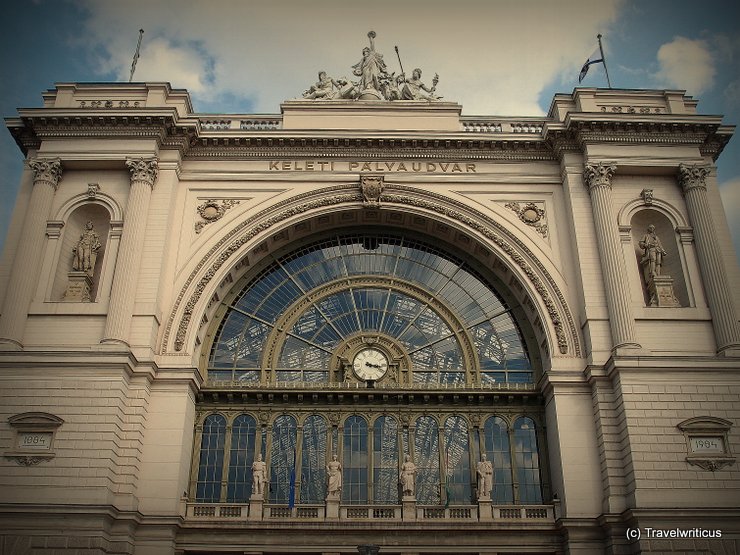
The Budapest Keleti pályaudvar railway station (abbreviated as Keleti pu) is the most important of the three major international stations in Budapest. It was built between 1881 and 1884 by János Feketeházy (railway engineer) and Gyula Rochlitz (architect).
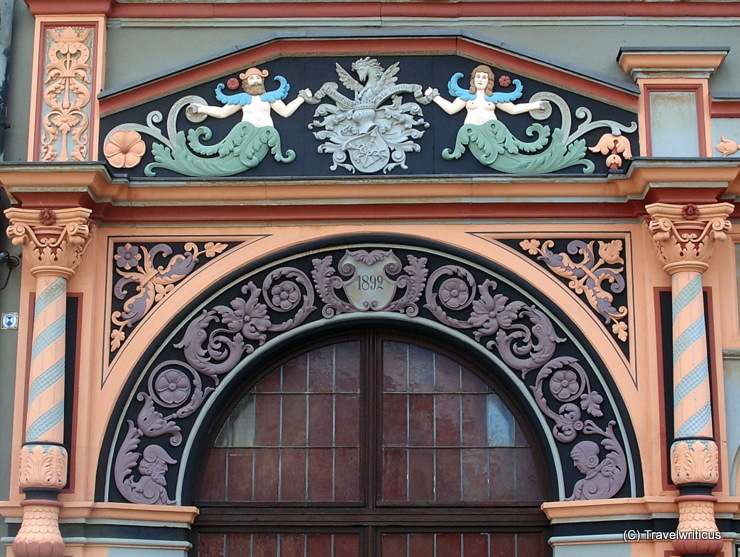
The Cranach House was built in the years 1547 to 1549 by the Renaissance master builder Nikolaus Gromann for the ducal chancellor Christian Brück. Its present name reminds us of the presence of the painter Lucas Cranach, the Elder. He spent his last months here. [German]
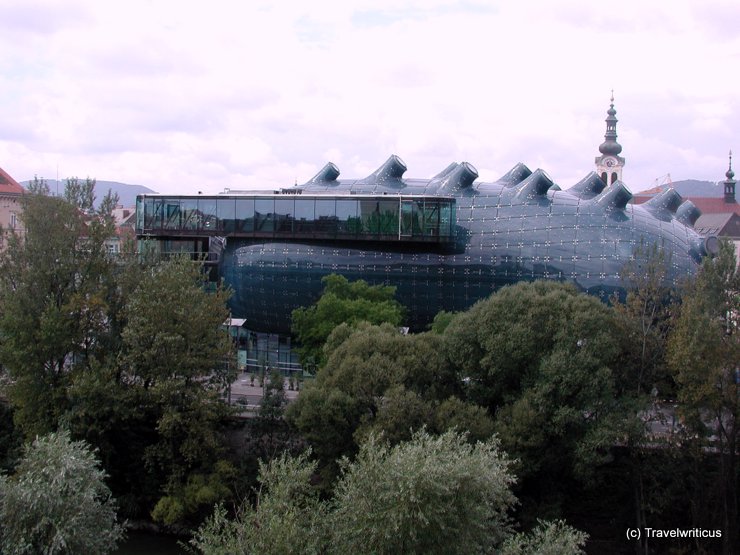
The Kunsthaus, dating back to 2003, shows exhibitions of contemporary art. Because of its architecture, it is generally known as the “Friendly Alien”. The form of an irregular bubble offers the possibility to enjoy bulky sculptures in an appropriate space. [German]
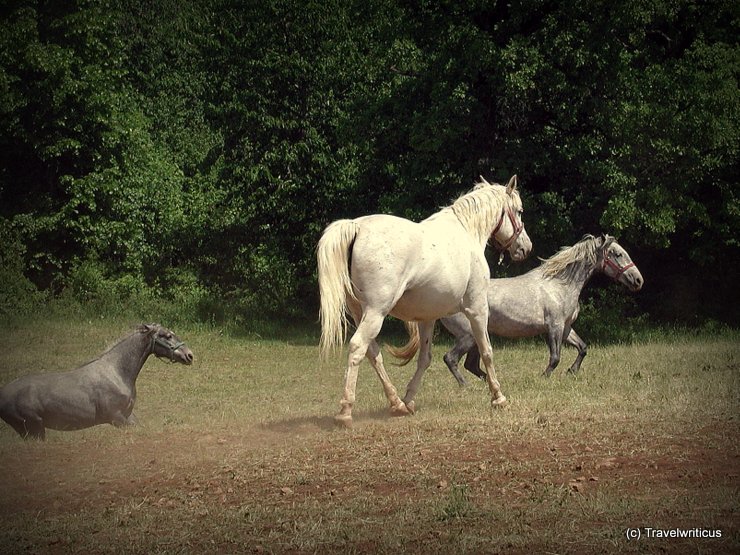
The Lipizzaner horses are most famous for performances at the Spanish Riding School in Vienna. The origin of their name is somewhat less well-known. It refers to the Lipica Stud Farm in present-day Slovenia. This stud farm is open for visits. [German]
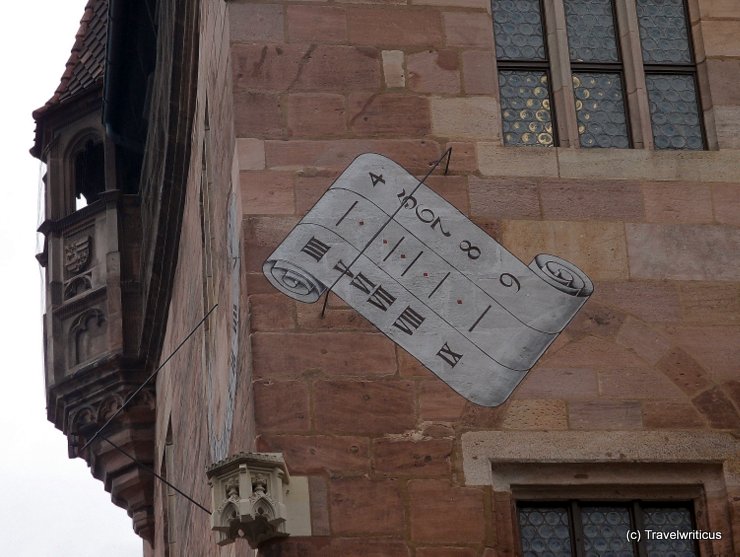
The Nassauer Haus is a medieval residential tower in the centre of Nuremberg. The name is misleading. The tower has nothing to do with the aristocratic dynasty House of Nassau. After a previous owner, the building is also known as Schlüsselfeldersches Stiftungshaus. [German]
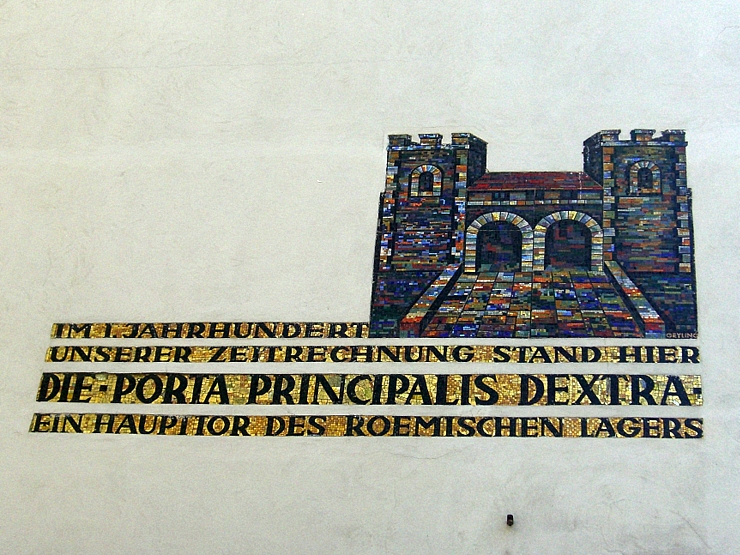
This mosaic at a building in Vienna reminds pedestrians of an ancient gate (porta principalis dextra) that stood here in the 1st century. It was part of the Roman fort Vindobona, the nucleus of modern Vienna.
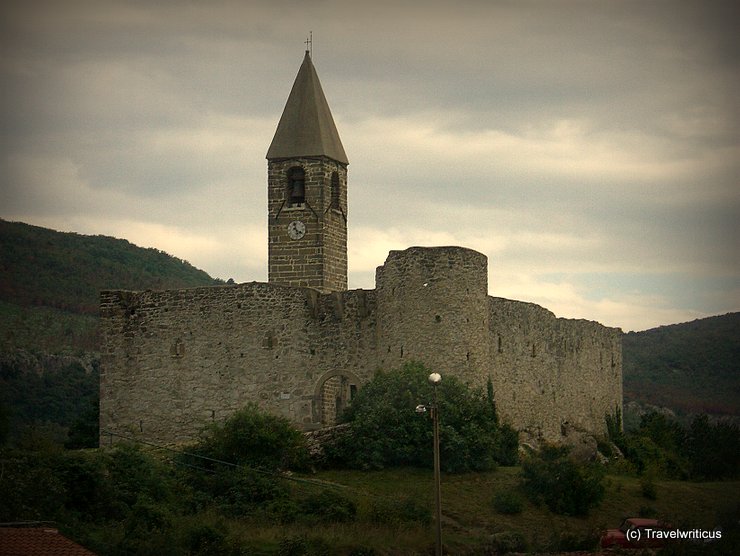
The Holy Trinity Church (cerkev sv. Trojice) in Hrastovlje formed a fortified church earlier. Today, it offers an outstanding range of frescoes inside. The depictions show both biblical events and a dance macabre. [German]
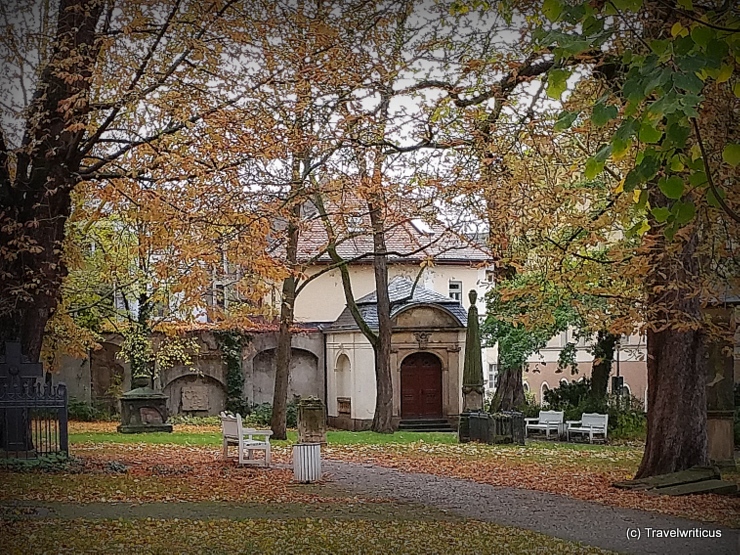
The original mausoleum was built as a family grave for Chamberlain Christoph Jenichsen in 1715. The name Kassengewölbe refers to the Landschaftskassendirektorium (provincial treasury), which became the owner of this place in 1742. [German]