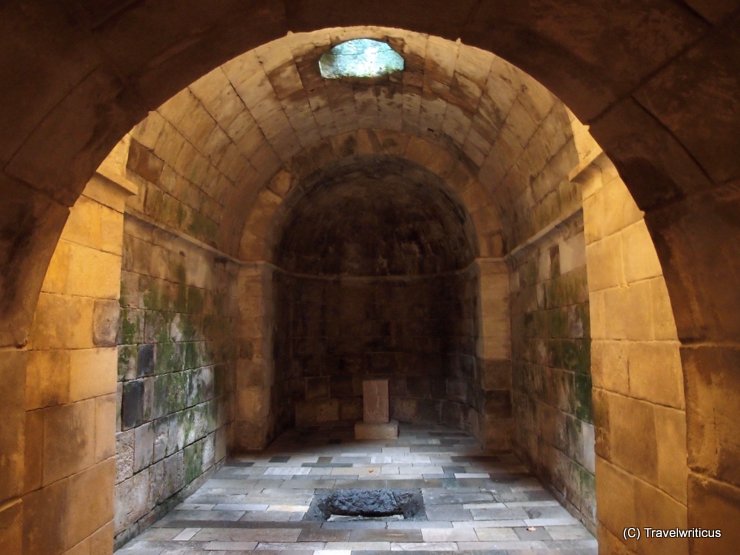
After walking through the Templar museum at Lockenhaus Castle, I came across this mysterious room. It is said to be a sacred site of the Templars. Other voices say it is just a cistern.
You only see what you know (Goethe)
After walking through the Templar museum at Lockenhaus Castle, I came across this mysterious room. It is said to be a sacred site of the Templars. Other voices say it is just a cistern.
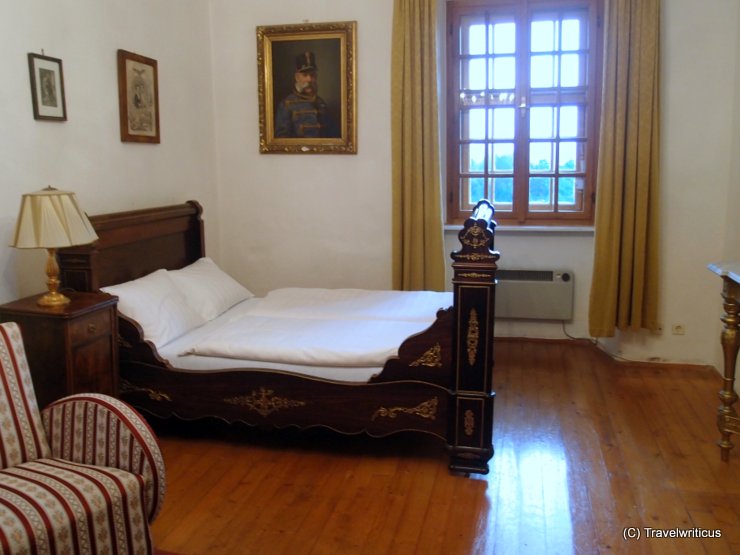
At Lockenhaus Castle, I stayed in the room “Elisabeth”. Whereas the room was old-fashioned furnished, the bathroom was pretty modern. It was a corner room, so I had a great view of the place of Lockenhaus and parts of the castle itself.
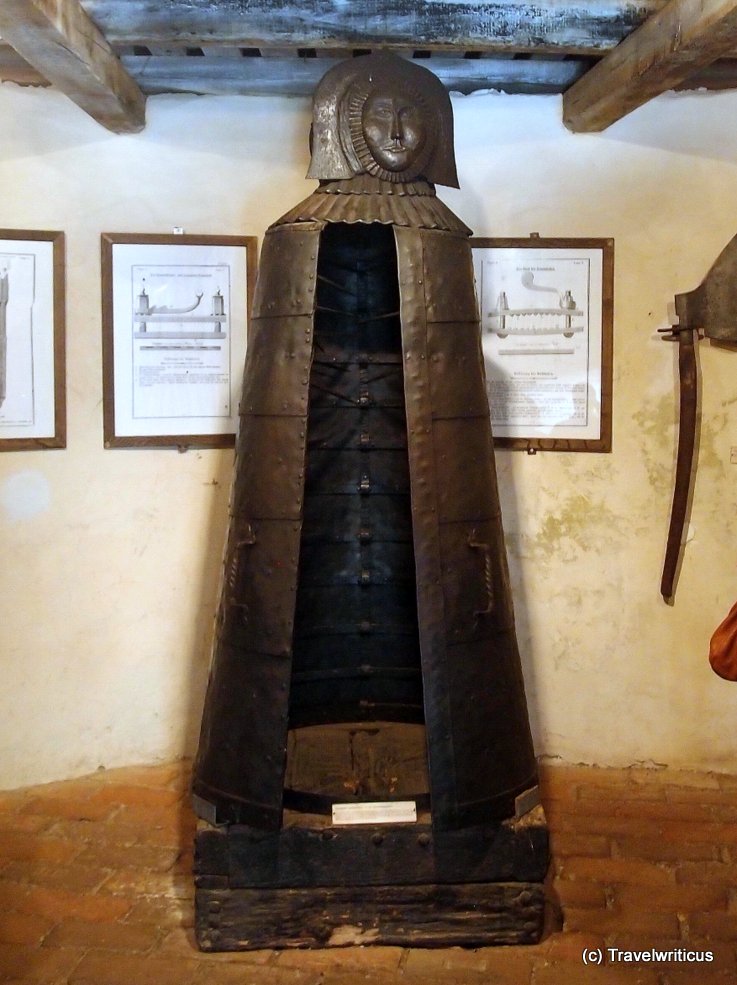
A ‘Eiserne Jungfrau’ (Iron Maiden) seen at Lockenhaus Castle. Though such devices are often shown at castles they are supposed not had been used at all. Probably they were just show pieces inspired by another device called ‘Schandmantel’ (Spanish Coat).
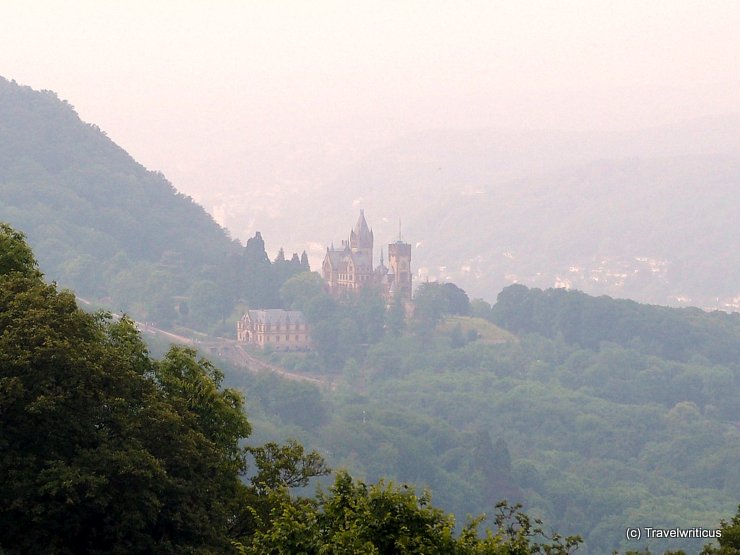
Drachenburg Castle (Schloss Drachenburg) is a late 19th-century building in the style of a fairy-tale palace. Its founder was Baron Stephan von Sarter (1833–1902), a broker and banker. I took the photo above from the terrace of the nearby Petersberg Grand Hotel.
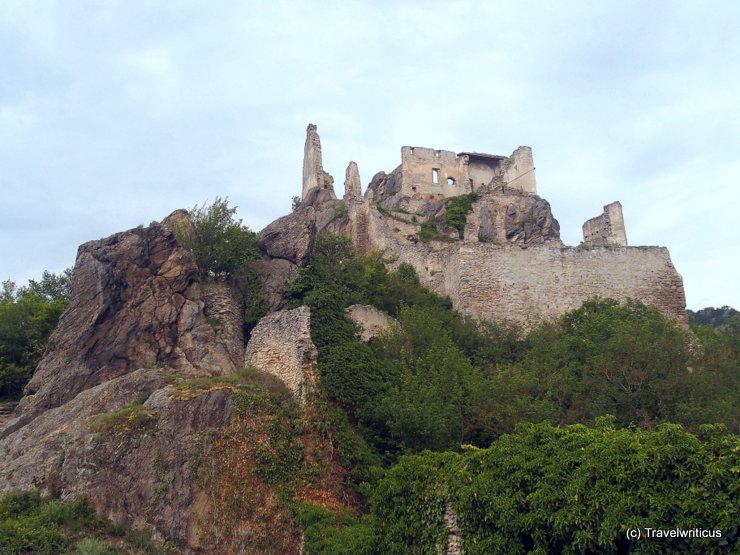
Dürnstein castle as seen after taking the trail up from Dürnstein. There is a story King Lionheart (Richard I of England) was imprisoned here for several months.
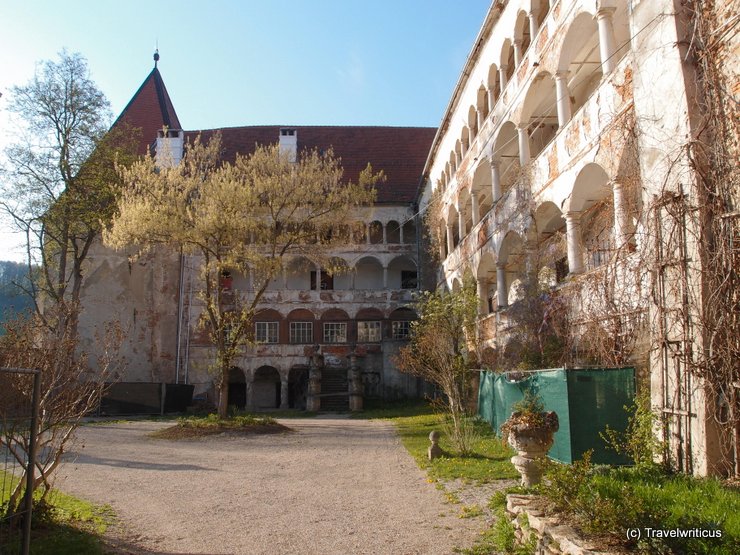
Spielfeld Castle (Schloss Spielfeld) is located near the railway station of Spielfeld. This photo was taken before the latest reconstruction works.
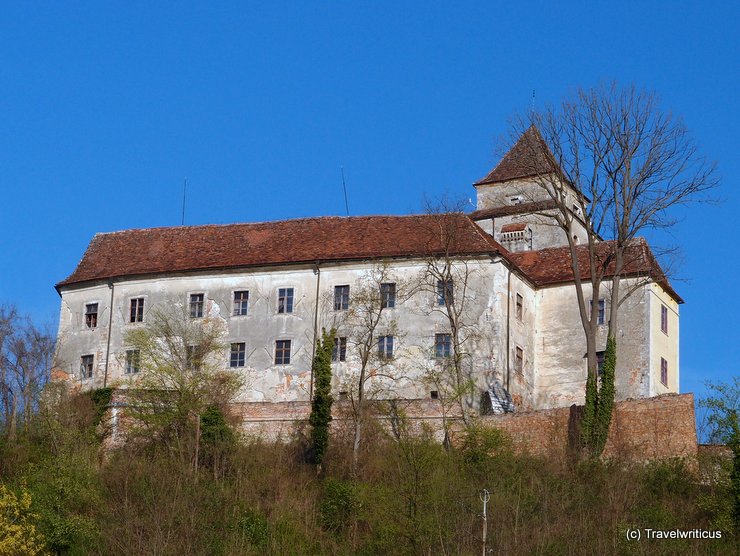
While passing the railway station of Ehrenhausen, I have a great view of Ehrenhausen Castle (Schloss Ehrenhausen) high over the city.
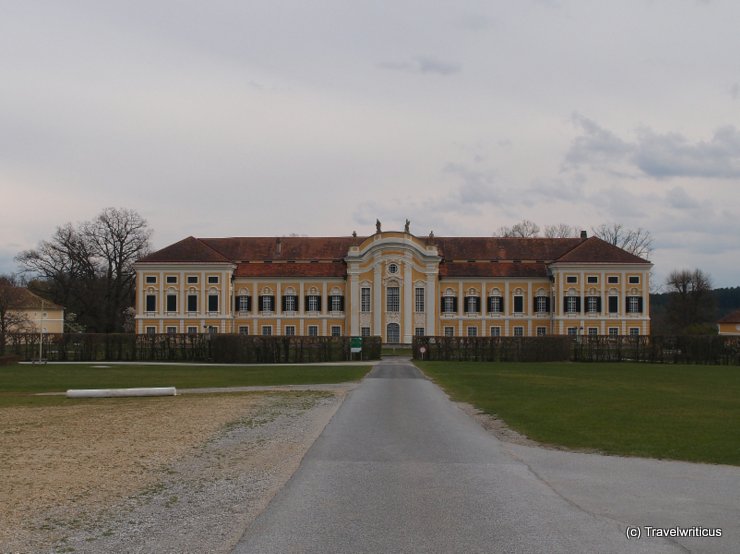
Schloss Schielleiten is a palace near Stubenberg in the Austrian province of Styria. Today it is used as national sports and recreation centre.
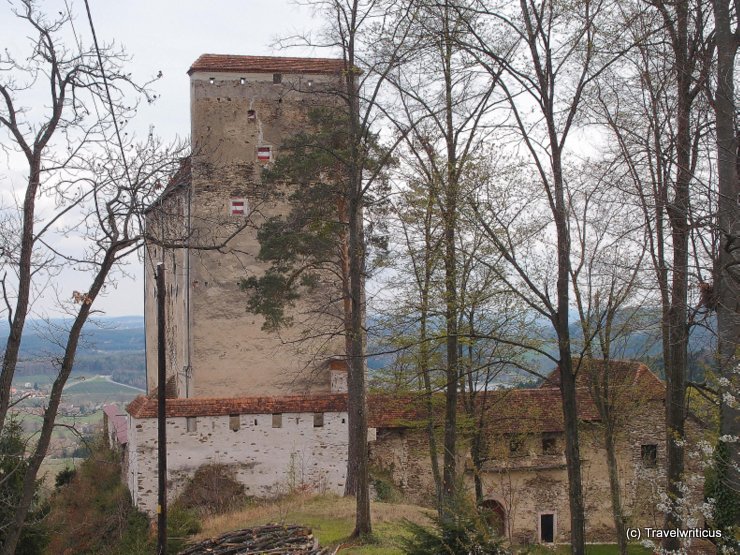
Neuhaus Castle (Burg Neuhaus) stands in a forest near the Styrian place of Stubenberg am See. The owner offers tower apartments for holidays near Stubenberg Lake.
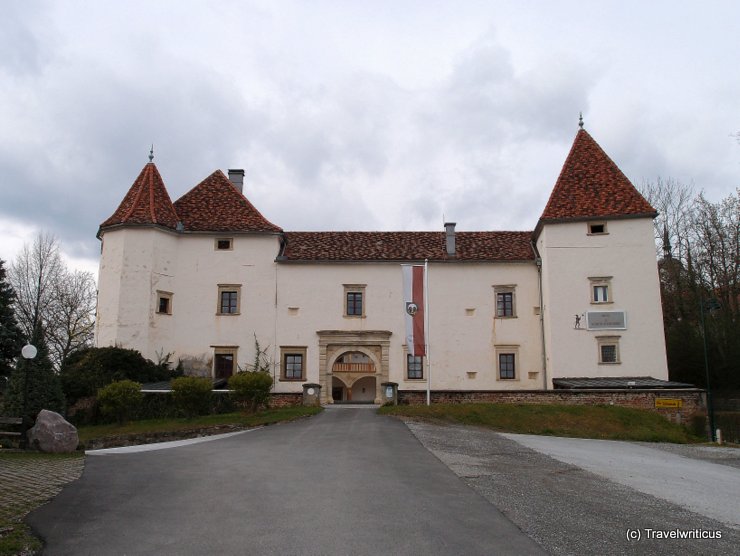
The name of the castle originates from the powerful Stubenberg family. Five members of this house occupied the office of governor (Landeshauptmann) in the Duchy of Styria.
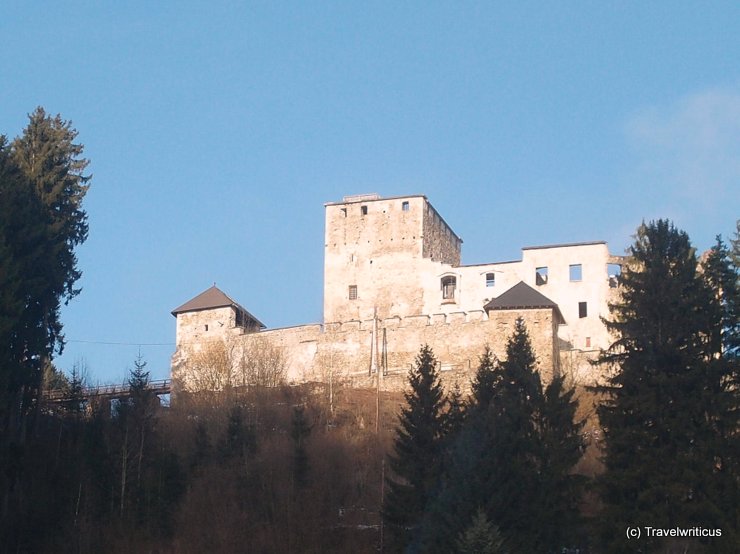
Photo of Castle Ruin Lichtenegg in Styria taken on a train ride from Bruck/Mur to Mürzzuschlag.
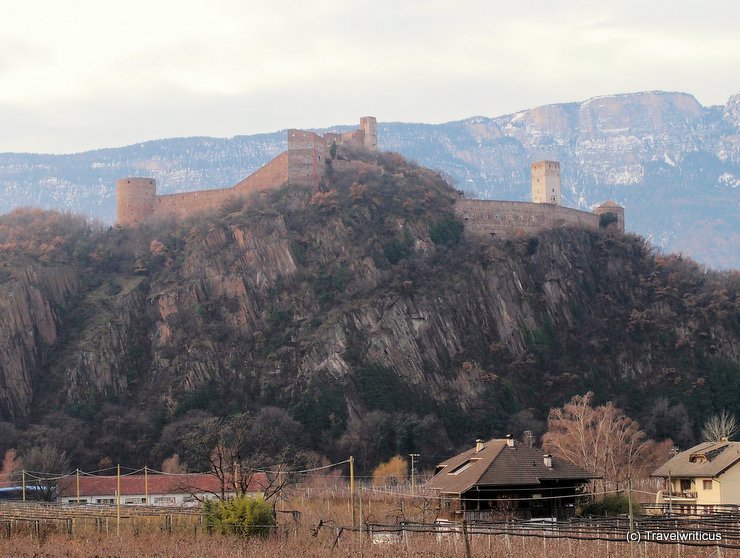
Photo of Sigmundskron Castle taken on a train trip from Bolzano to Meran. It saw its first mention as Formicaria in 945. Around 1473, Duke Sigmund the Wealthy converted it into a fortress and changed its name to Sigmundskron. Today, it houses a part of the Messner Mountain Museum.