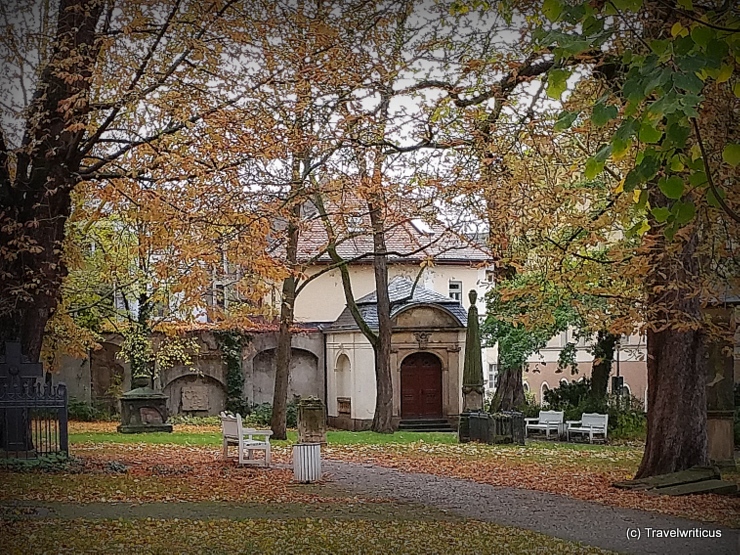
The original mausoleum was built as a family grave for Chamberlain Christoph Jenichsen in 1715. The name Kassengewölbe refers to the Landschaftskassendirektorium (provincial treasury), which became the owner of this place in 1742. [German]
You only see what you know (Goethe)
The original mausoleum was built as a family grave for Chamberlain Christoph Jenichsen in 1715. The name Kassengewölbe refers to the Landschaftskassendirektorium (provincial treasury), which became the owner of this place in 1742. [German]
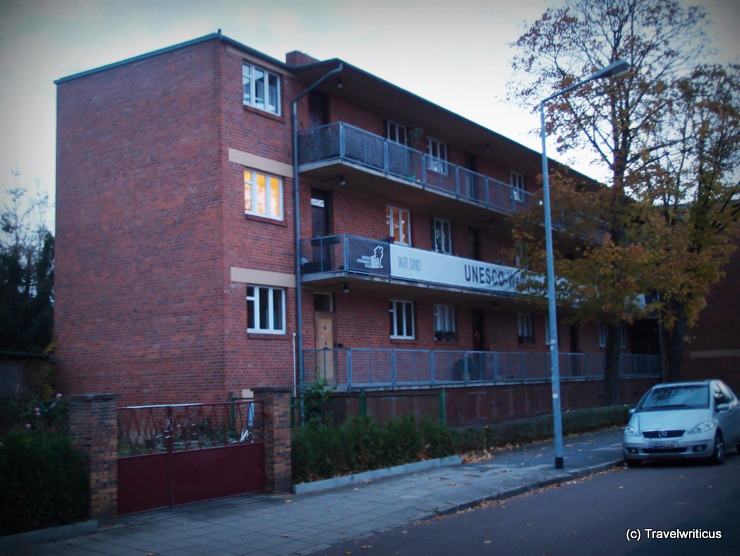
The houses with balcony access (Laubenganghäuser) were built in 1929/30 according to plans by Hannes Meyer. He translated his motto Volksbedarf statt Luxusbedarf” (People’s necessities, not luxuries) into a multitude of small apartments, which are connected to the staircase via an arcade. [German]
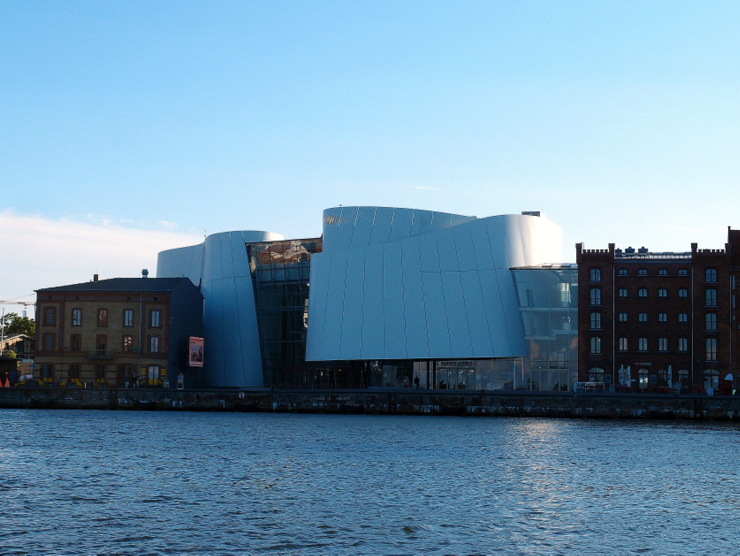
The Ozeanum is a public aquarium located in the historical harbour of Stralsund. It is part of the German Oceanographic Museum (Deutsches Meeresmuseum) and displays primarily sea life of the North Sea and the Baltic Sea.
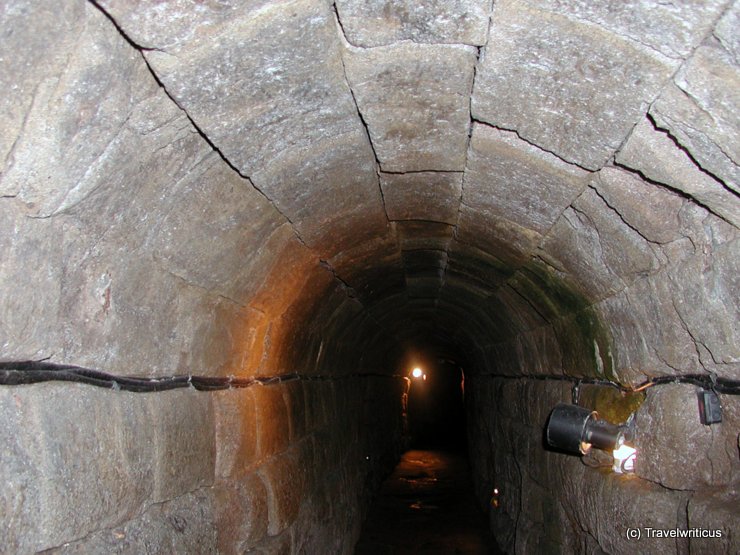
Below the Spanische Bau in Cologne, fans of Roman architecture find the remains of the ancient Roman Praetorium. Right next to these ruins, visitors have the chance to walk through a former Roman sewer below the streets of the modern city.
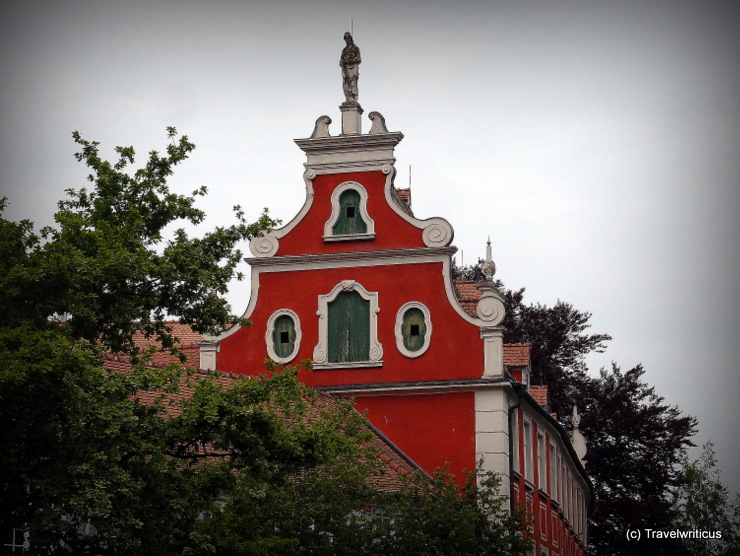
On my way from the Imperia statue to the Rhine Gate Tower (Rheintorturm), I notice a striking red facade. Around 1300 the St. Konrad Hospital was built in this place, which integrated an existing chapel. The hospital later changed into the Dompropstei of Constance. [German]
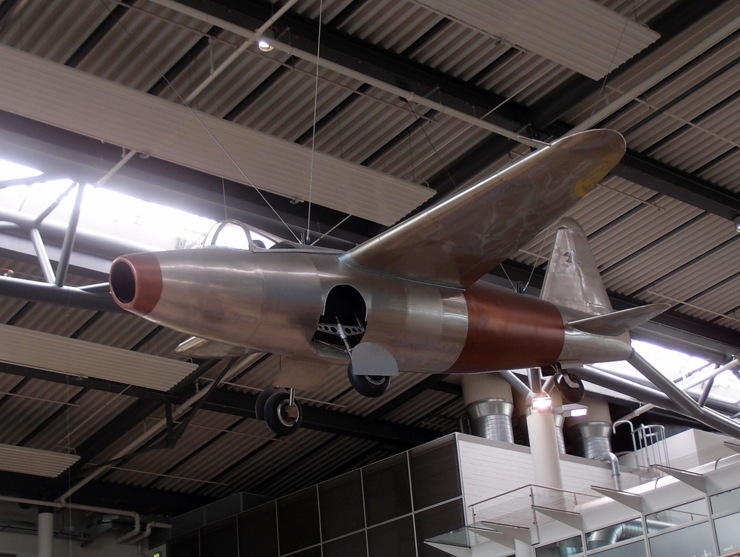
On 27 August 1939, the first aircraft with a jet engine completed its maiden flight. The machine was developed by Ernst Heinkel Flugzeugwerke and bore the type designation He 178. [German]
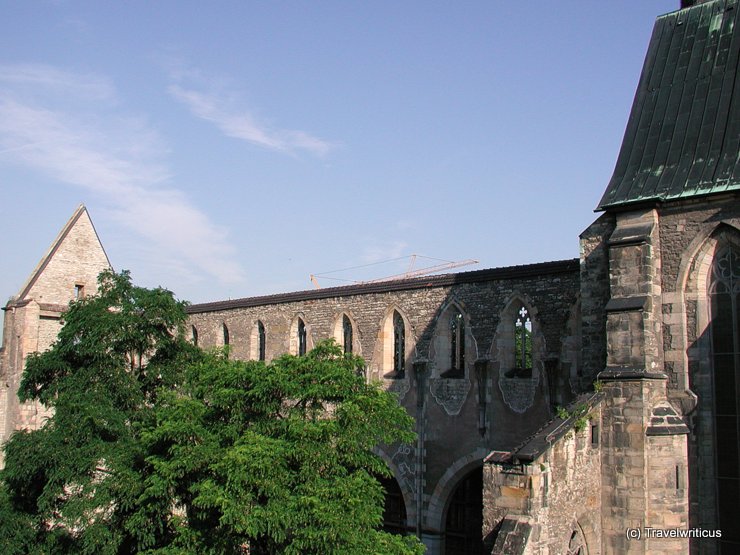
During a stay at an IBIS hotel in Erfurt, I had this view from my room: It shows the ruins of the Barfüsserkirche, a church named after an order of the Franciscan (Barfüsser). A bombing raid destroyed the building in 1944.
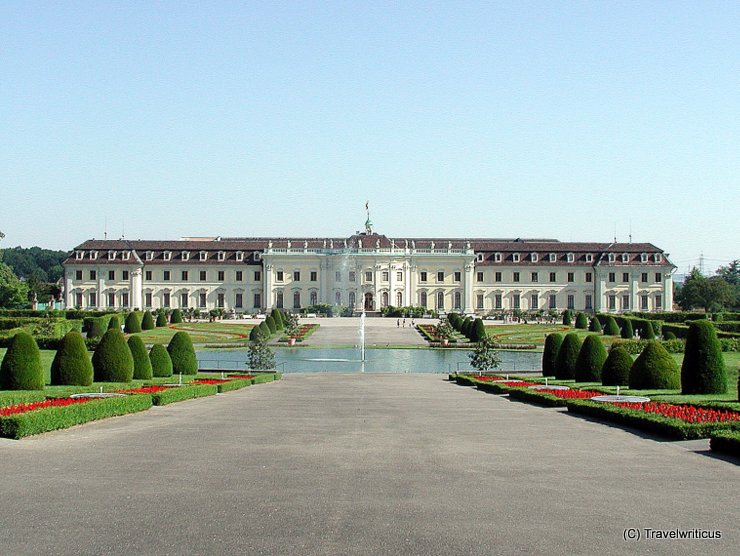
The Residential Palace of Ludwigsburg (Residenzschloss Ludwigsburg) is one of the largest Baroque complexes among the castles of Baden-Württemberg. A park behind the palace shows scenes from well-known children’s fairy tales with elaborate buildings. [German]
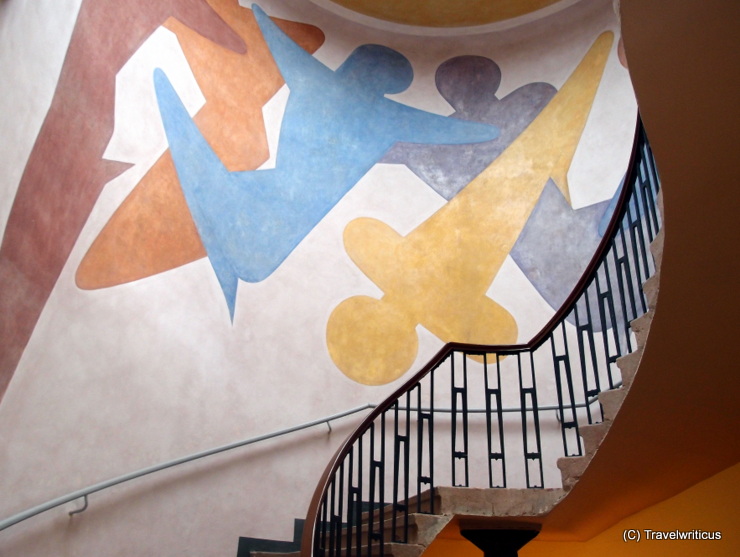
The Van de Velde Building was designed by Henry van de Velde for the Grand Ducal Saxon School of Arts and Crafts. Today it houses the Faculty of Art and Design of the Bauhaus-Universität Weimar. At the central staircase you can see a restored mural, originally made by Oskar Schlemmer.
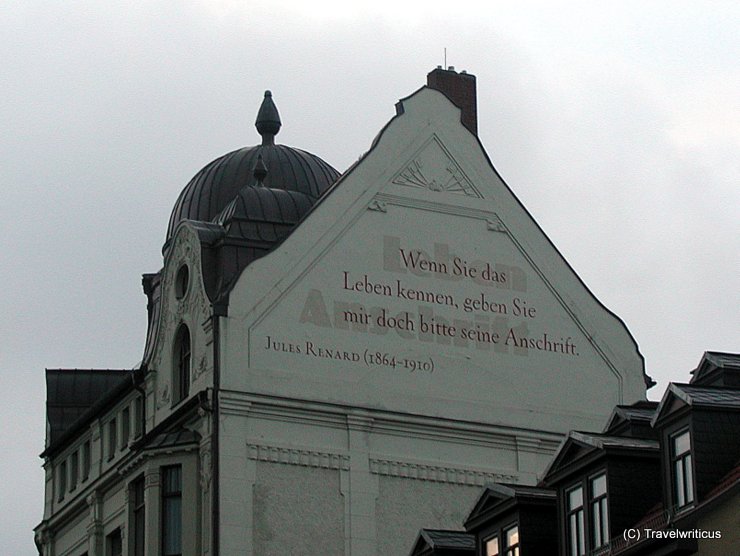
The quotes on the house walls of Weimar are a challenge for attentive walks. They inspire not only to look at gable ends but also to reflect. This quote from Jules Renard made me pensive: “If you know life, please give me its address”. [German]
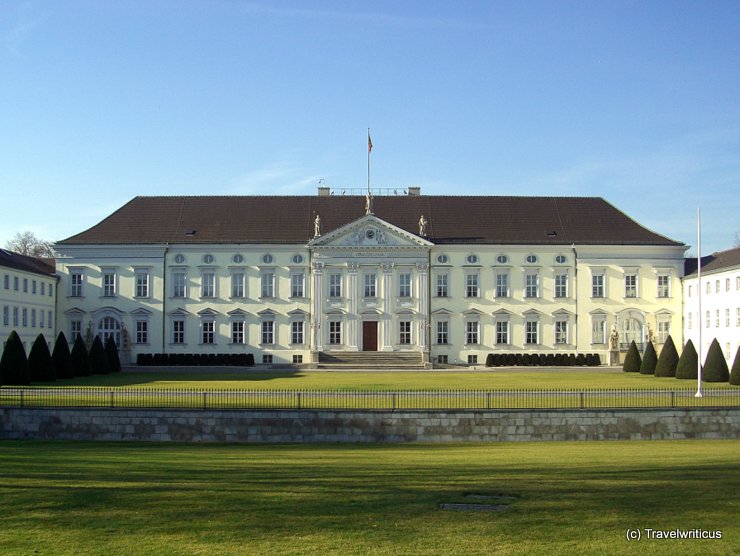
Designed by architect Michael Philipp Boumann, Bellevue Palace (Schloss Bellevue) was erected in 1786 as a summer residence for Prince Augustus Ferdinand of Prussia. Since 1994, it is the official residence of the Federal President of Germany.
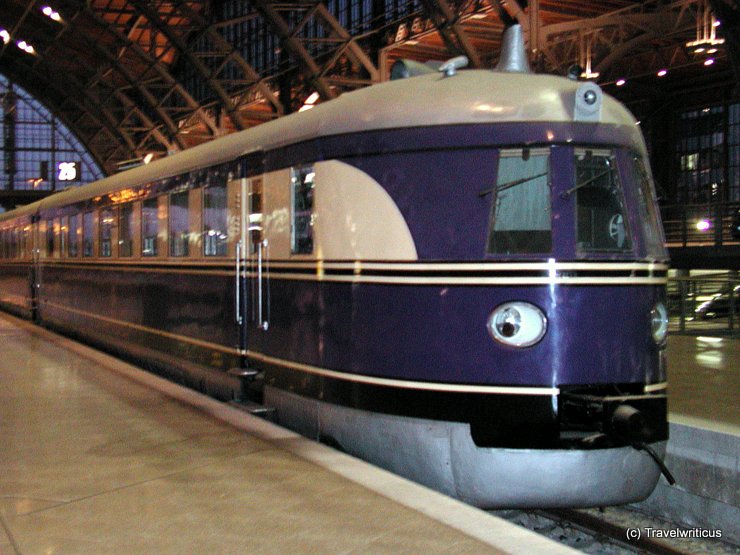
While waiting for my connection train, I came across this DMU (diesel multiple unit) dating back to 1935. Before WWII, it ran as one of the first high-speed trains in Germany. After 1945, the train depicted above (SVT 137 225) operated for the GDR government.