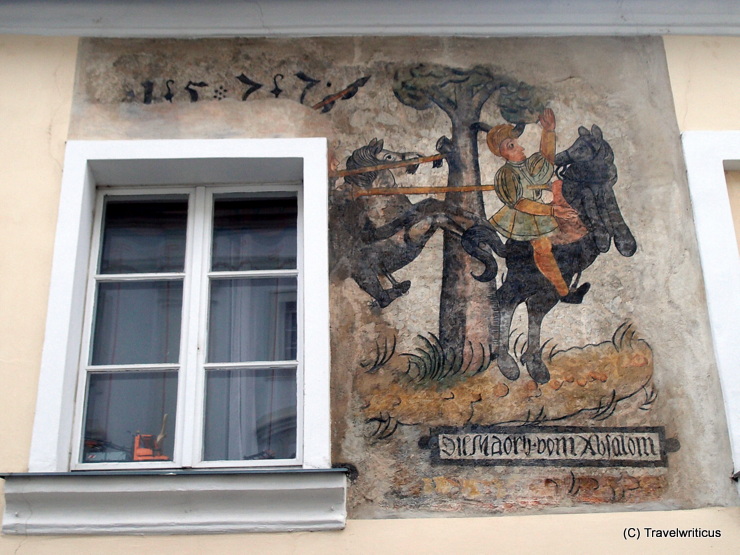
Renaissance fresco dated with 1577 seen at a building in the old part of Melk.
You only see what you know (Goethe)
Renaissance fresco dated with 1577 seen at a building in the old part of Melk.
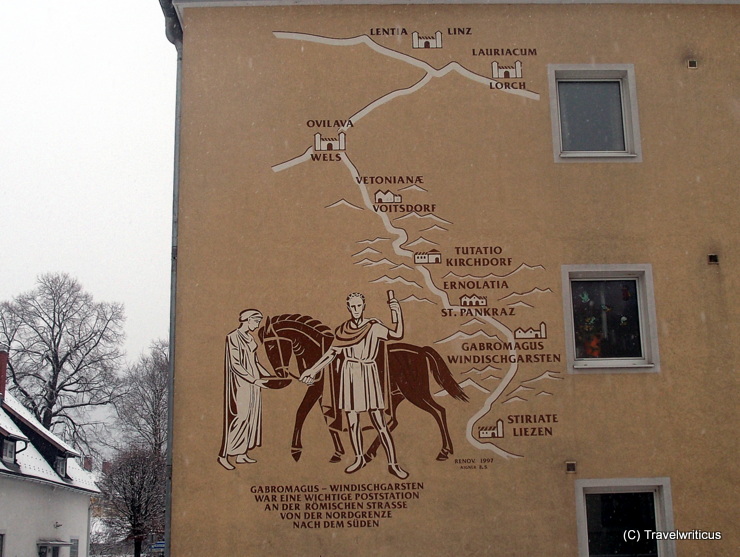
This mural at a building in Windischgarsten shows some ancient Roman places along a local part of the Via Norica. During Roman times Windischgarsten was a stopping place (mansio) at this road named Gabromagus or Gabromagi.
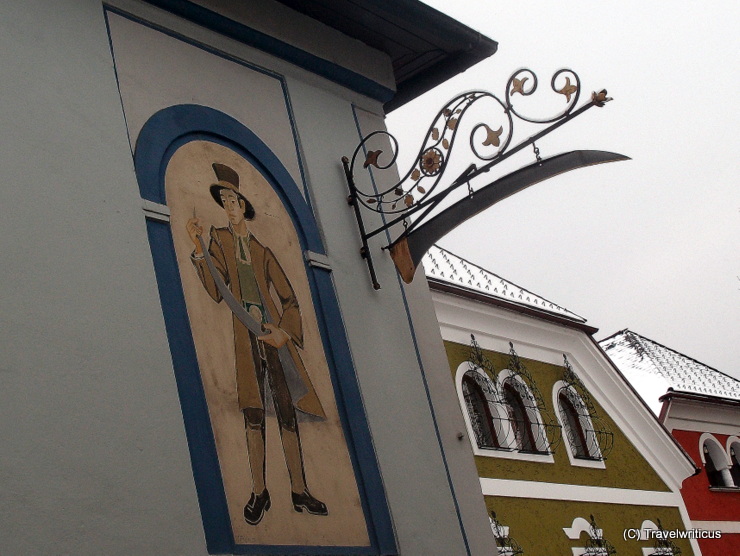
Inn sign and wall painting of the Blue Scythe Inn (Gasthof zur Blauen Sense) in Windischgarsten.
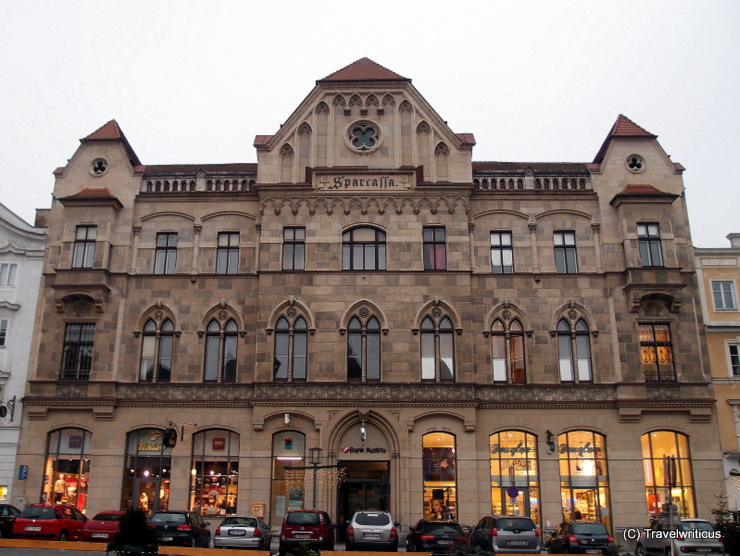
This building of a mutual savings bank (Sparkasse) was built in 1900 in the style of neo-Gothic. For this reason two older houses were demolished, e.g. the Reichlhaus. An interesting details is the writing on top of it, which uses the outdated term Sparcassa.
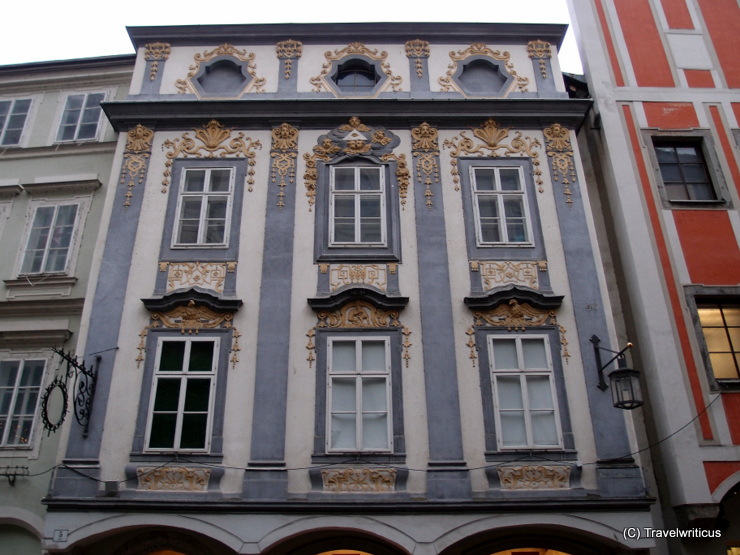
The building with the address Enge Gasse 5 has late Gothic origins and a Baroque facade created in the second quarter of the 18th century. It is generally known as the ‘Zum Andreas Hofer’ inn (Gasthaus ‘Zum Andreas Hofer’).
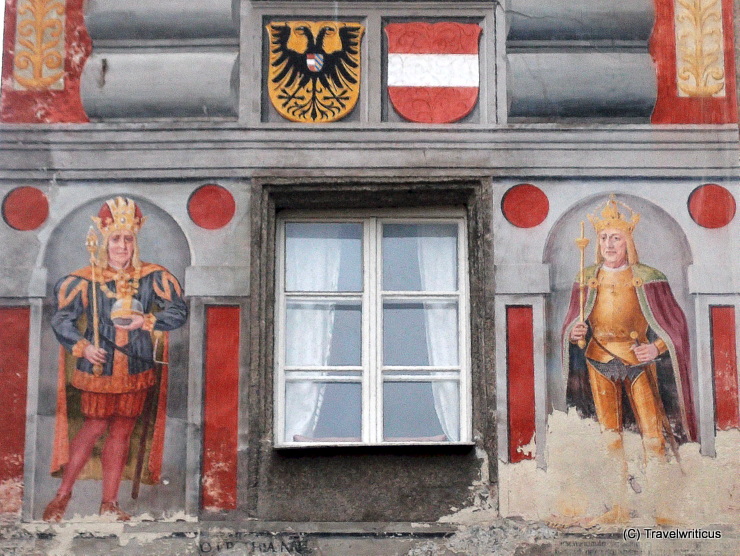
This wall painting located at the northern side of the Blumauerhaus in the city of Steyr shows emperor Frederick III (Friedrich III.) and his son Maximilian I. The building is named after Aloys Blumauer who was born there in 1755.
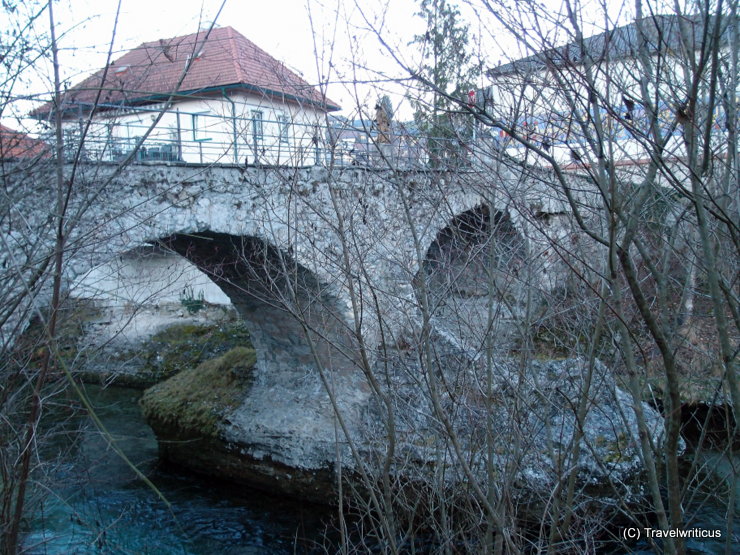
This stone bridge in Scheibbs was built in 1554 by Valentin Staudinger. The bridge using a rock in the middle of the river is considered the oldest still existing one crossing the Erlauf River.
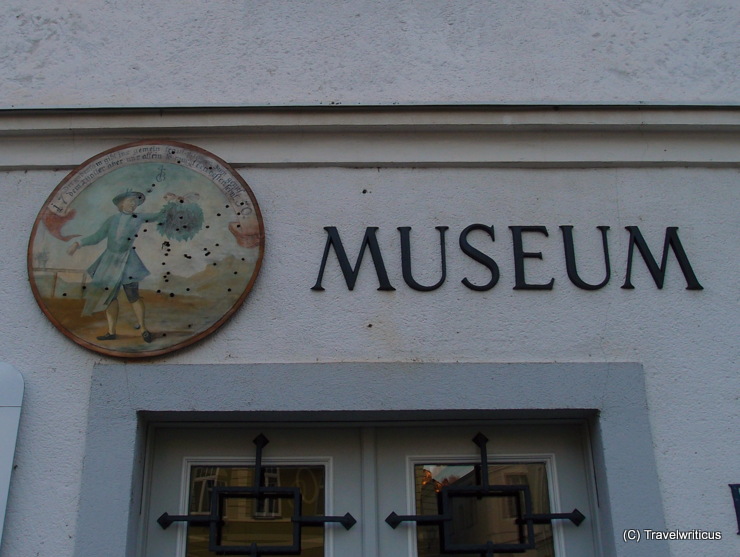
The museum of historical targets displays a collection of target boards (Schützenscheiben) dating from 1670 up to 1941 used by the local rifle club (Schützenverein). In general, these boards display scenes of daily life, local events and even important persons of history.
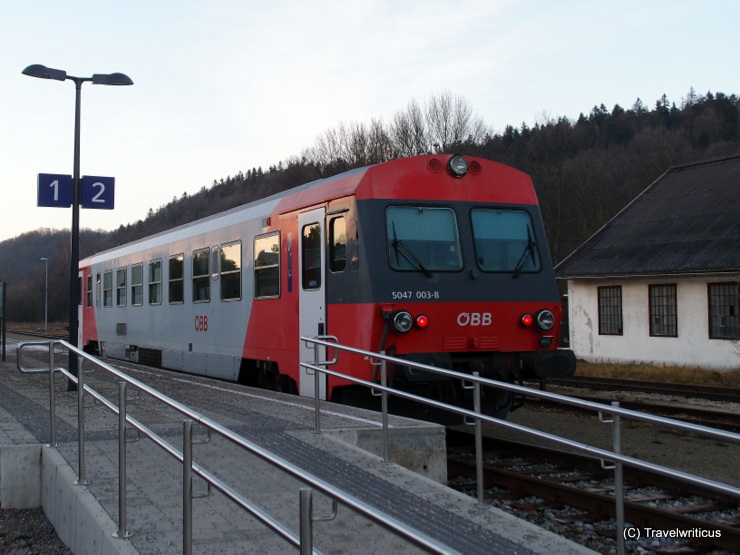
The diesel railcar ÖBB 5047 was produced by the Tyrolean Jenbacher Werke in the years 1987-1995. It replaced several older railcars such as the ÖBB 5144. I few of them were sold to competitors of the ÖBB, e.g. to the Hugarian-Austrian Raaberbahn AG.
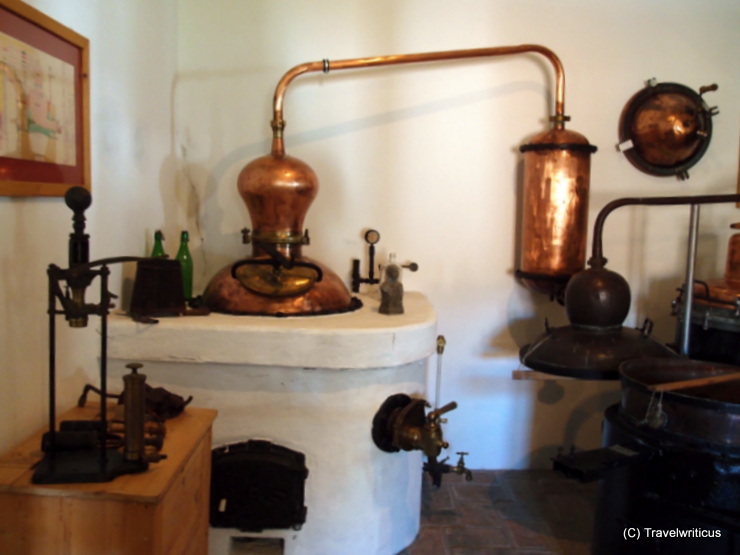
The distillery museum located in the vineyard estate and distillery Heger (Weingut & Destillerie Heger) in Poysdorf focuses on explaining the differences between small distilleries and industrial distilleries regarding the quality of their products. The pic above shows pieces generally used in smaller stillhouses.
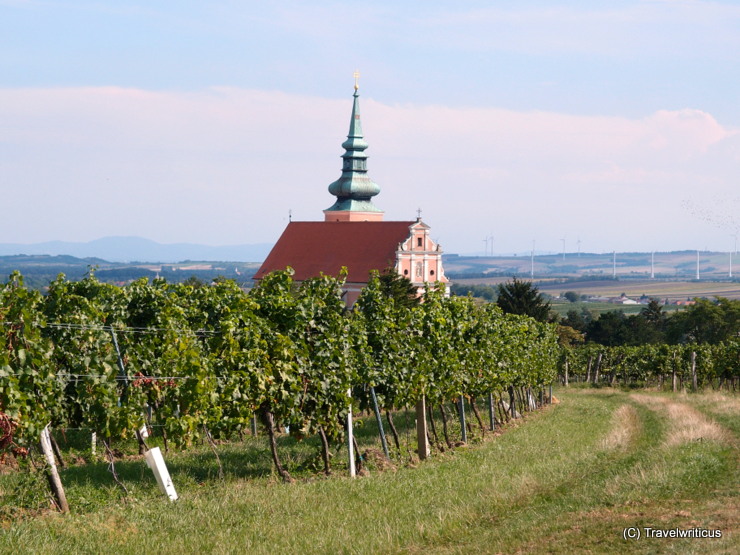
View of the parish church of Poysdorf (Pfarrkirche Poysdorf) taken from a nearby vineyard. I took this photo while joining a guided hiking tour through the vineyards of Poysdorf.
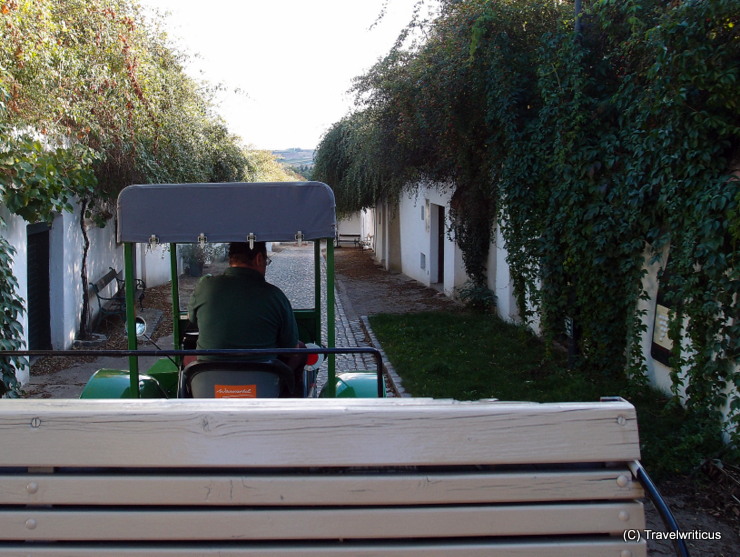
A fun way to explore the wine cellar lanes in Poysdorf and the vineyards in the surroundings is to join a guided tour on board of historical trailers drawn by classic farm tractors. On this pic, I just headed down a wine cellar lane (Kellergasse) named Rösselberg.