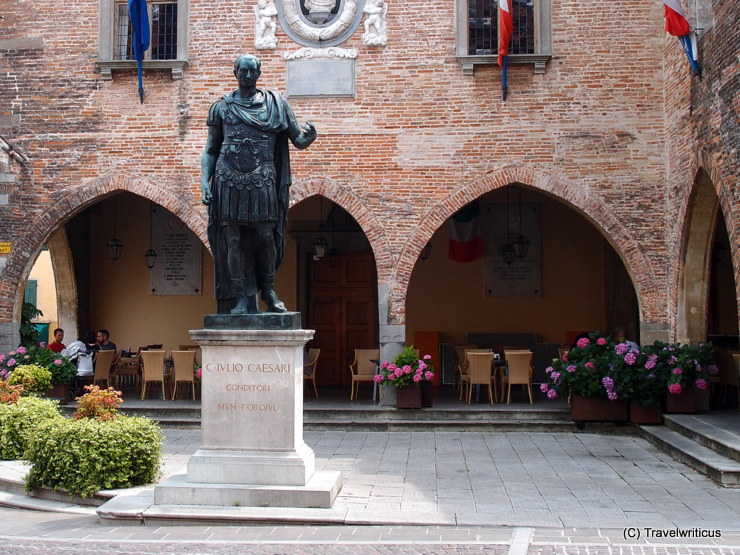
This monument in Cividale del Friuli reminds us of Julius Caesar, who founded the city in 50 BC. Its founding name was Forum Iulli. The name of the area of modern Friuli originates from this ancient city name. [German]
You only see what you know (Goethe)
This monument in Cividale del Friuli reminds us of Julius Caesar, who founded the city in 50 BC. Its founding name was Forum Iulli. The name of the area of modern Friuli originates from this ancient city name. [German]
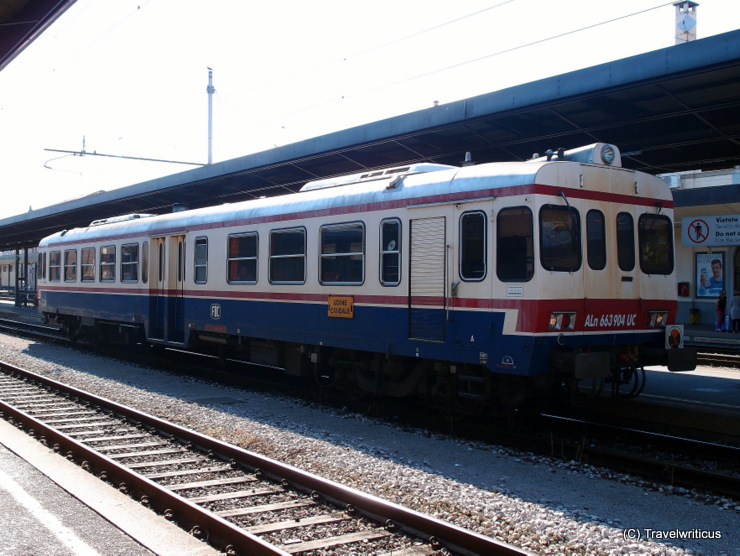
While I waited for my connection train in Udine, a classic diesel rail car stopped nearby. It was one of the Class FS ALn 663. Fiat Ferroviaria built these cars in the years 1983 – 1993. The depicted rail car ran for the line Udine – Cividale del Friuli.
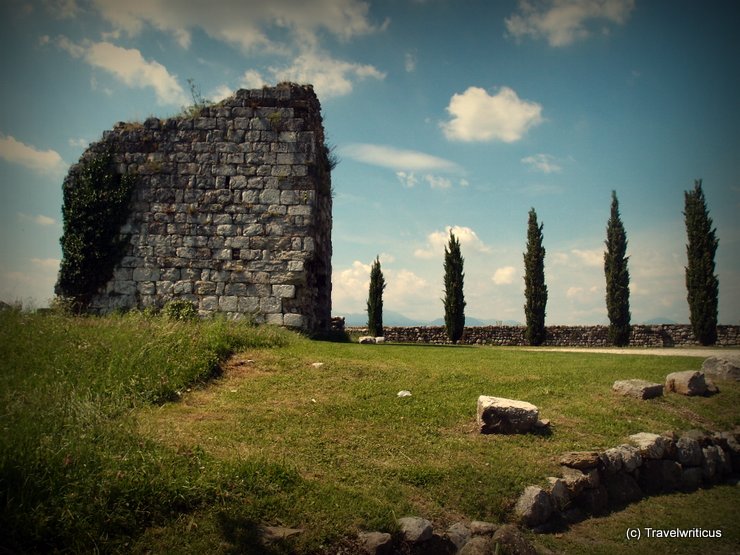
On our way from the Oasi dei Quadris Bird Park to the Cjase Cocel Museum, we stopped at the Castello di Fagagna. Almost nothing remained of the castle from the 10th century, but the view of the landscape invited us to linger. [German]
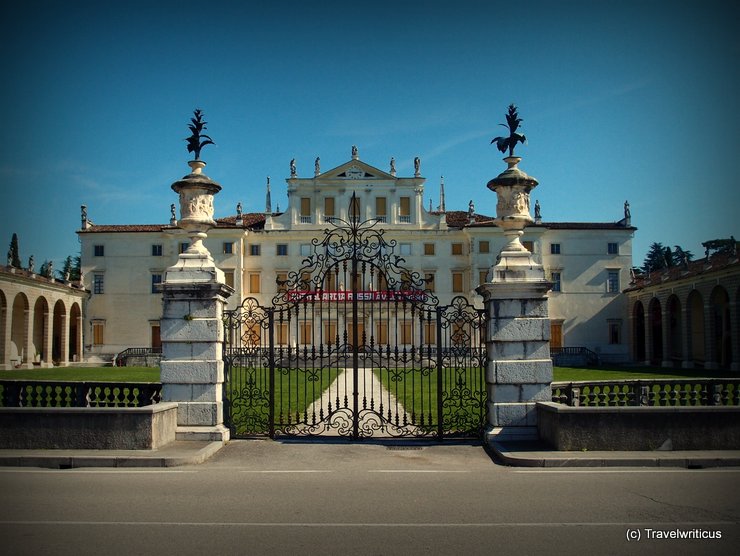
On 17 October 1797, France and Austria signed the Treaty of Campo Formio in this villa. This event ended the War of the First Coalition. Today, the estate houses a collection of antique carriages and an armoury. In addition, the villa is a popular venue. [German]
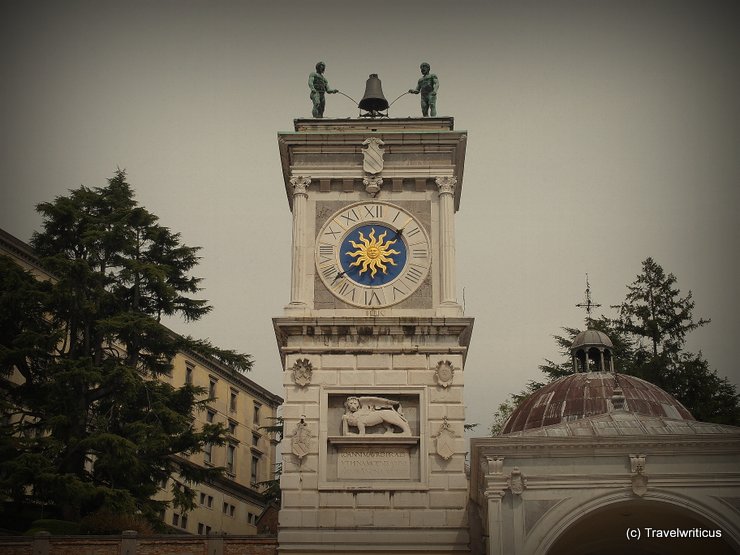
After lunch at a peaceful inner yard near the Duomo, I visited the iconic clock tower (Torre dell’Orologio) in Udine. The tower is part of the Loggia di San Giovanni at the Piazza della Libertà.
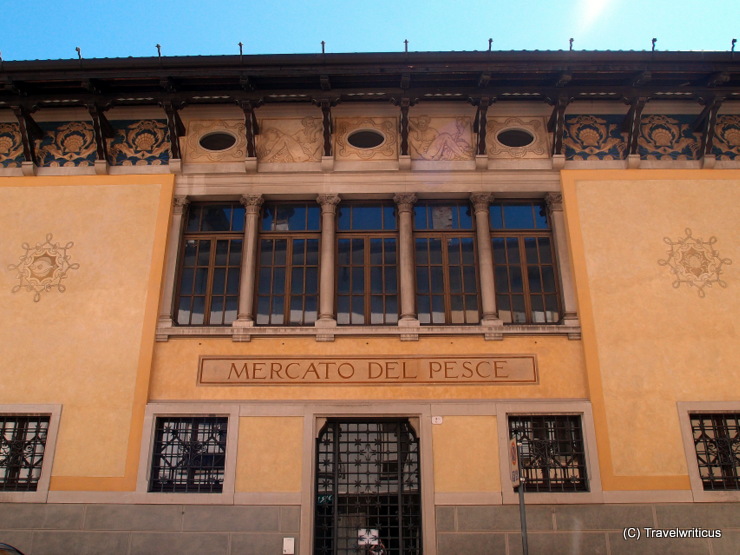
The former fish market hall of Udine offers both details I’m fond of Udine: Beautiful drawings below the roof and an artful smithery at the window and gates.
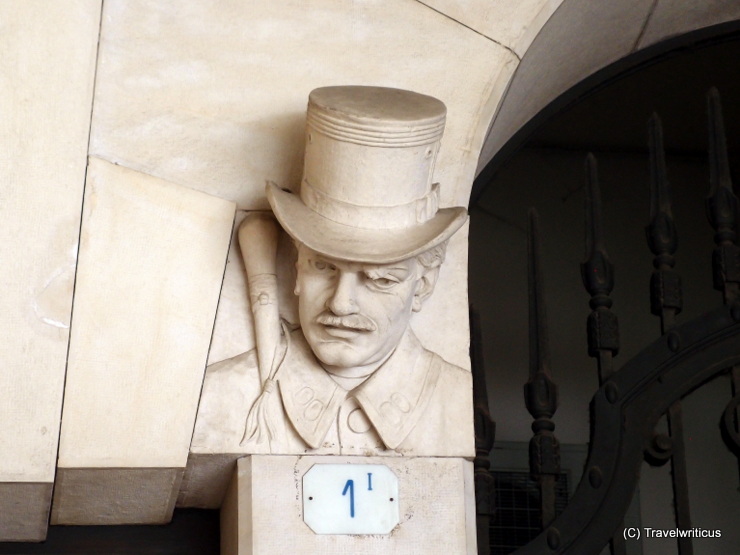
Fun head with hat seen at a building near Caffé Contarena in Udine, Italy.
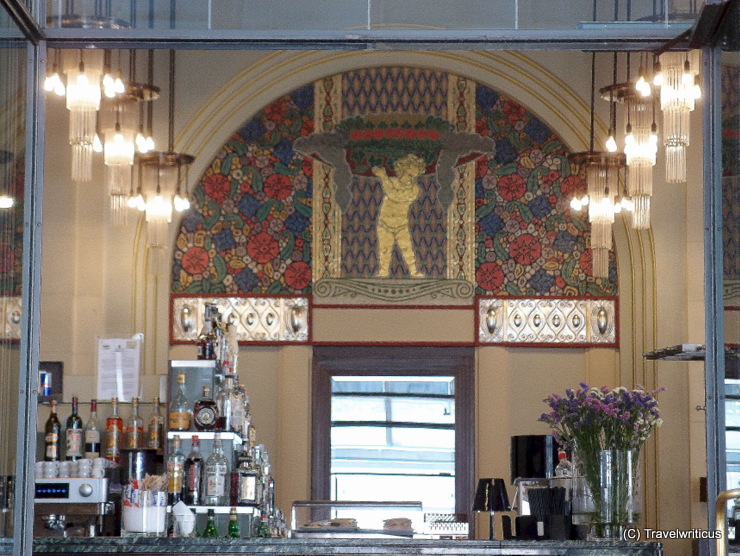
Inside a Belle Époque café of Udine: Caffé Contarena is located next to the Piazza Libertà and offers an impressive interior design made of colourful mosaics placed in the lunettes of the hall.
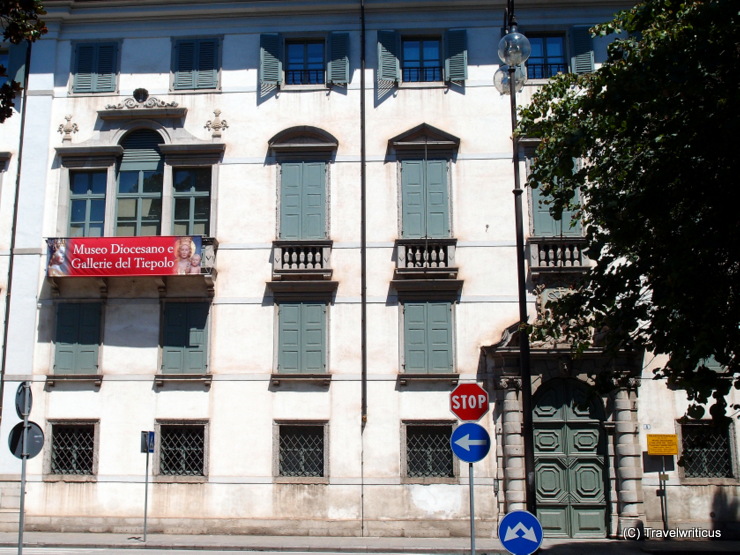
The Diocesan Museum of Udine (Museo Diocesano e Gallerie del Tiepolo) is housed in the Patriarchal palace, the former residence of the Patriarch of Aquileia and current seat of the Bishop of Udine. Many rooms are decorated by works done by Giambattista Tiepolo.
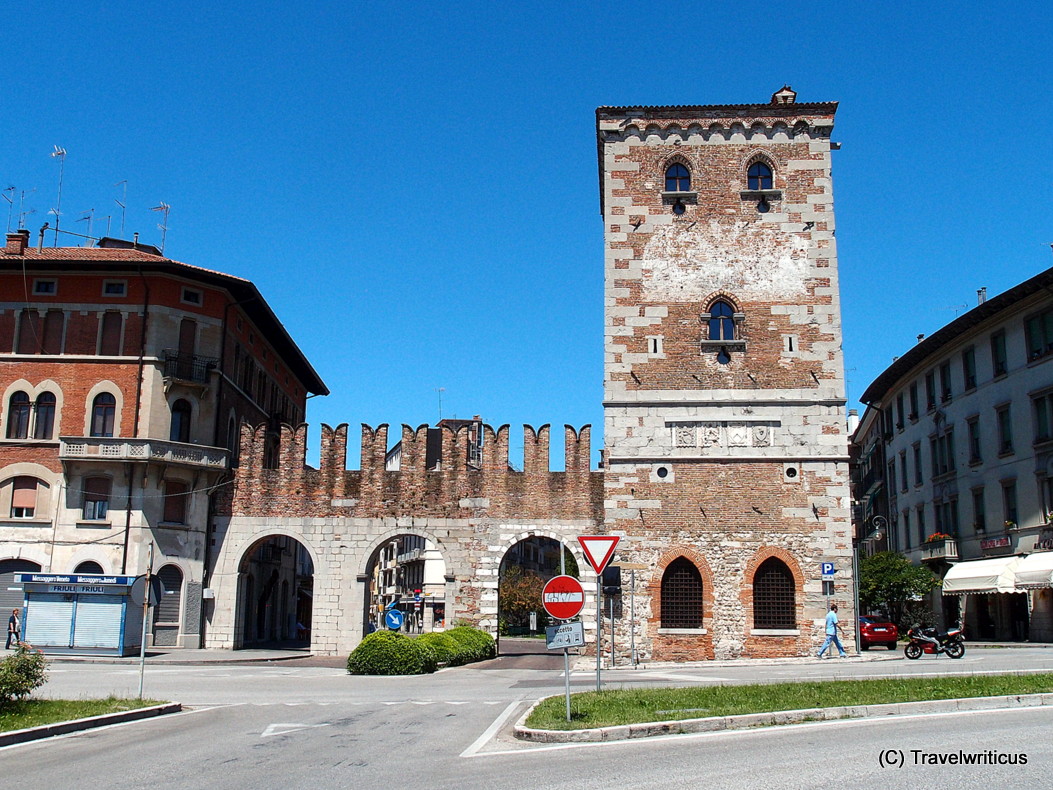
The Aquileia Gate (Porta Aquileia) was errected in 1436 as part of the fifth ring of city walls surrounding the city of Udine. Entering the city through this gate lead to Via Aquileia where you can walk along six old palaces dating back to the 17th-19th centuries.
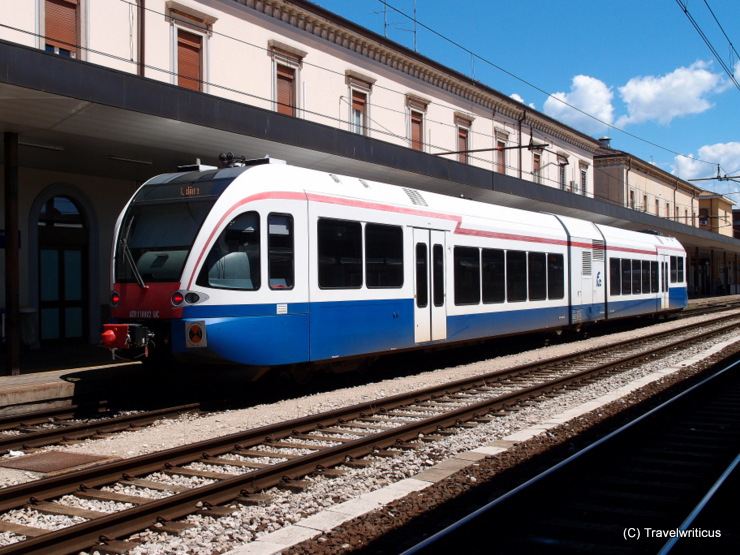
This diesel-electric articulated railcar GTW 2/6, built by Stadler Rail, is used by the Ferrovie Udine Cividale (FUC) for the line Udine – Cividale del Friuli. I took this pic at the railway station of Udine.
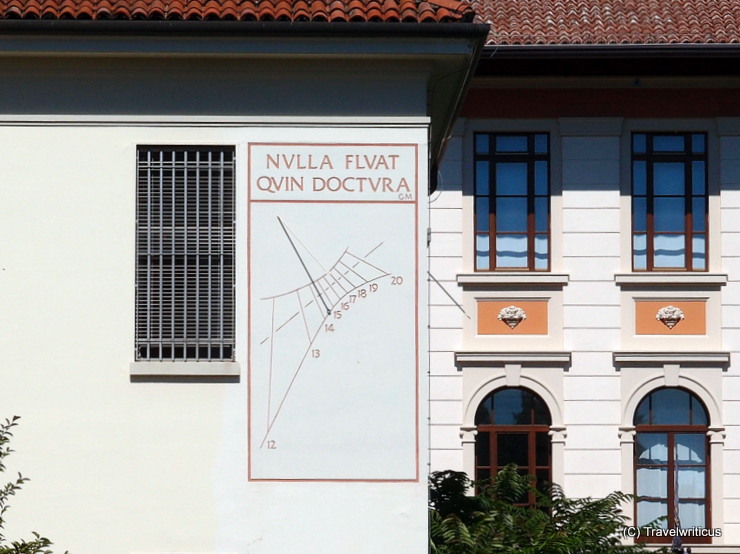
On my urban walk through Udine I come across this sundial. I like the modern style. Unfortunately I don’t know the meaning of Nulla Fluat Quin Doctura. It sounds like you should teach them, there is no flow. Which flow?