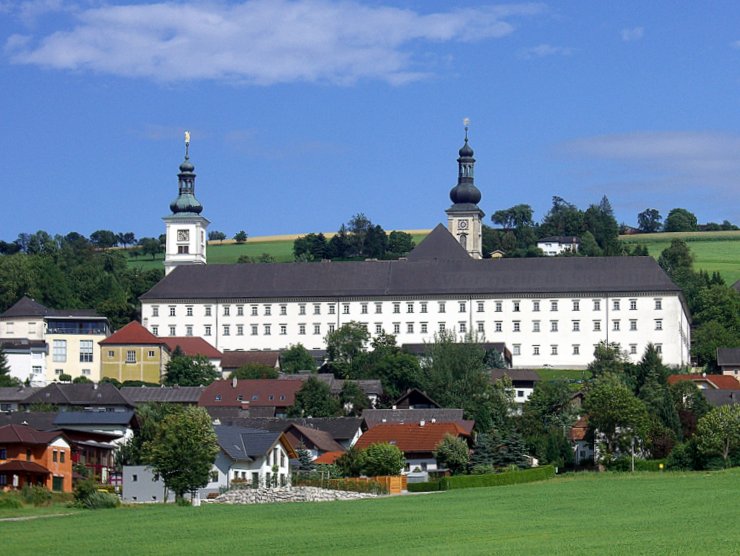
Photo of Schlierbach Abbey taken during a train ride from Graz to Linz. In July 2009, I saw an informative exhibition about the history and culture of meals. As the monastery is famous for its cheese, I also visited the cheese dairy there.
You only see what you know (Goethe)
Photo of Schlierbach Abbey taken during a train ride from Graz to Linz. In July 2009, I saw an informative exhibition about the history and culture of meals. As the monastery is famous for its cheese, I also visited the cheese dairy there.
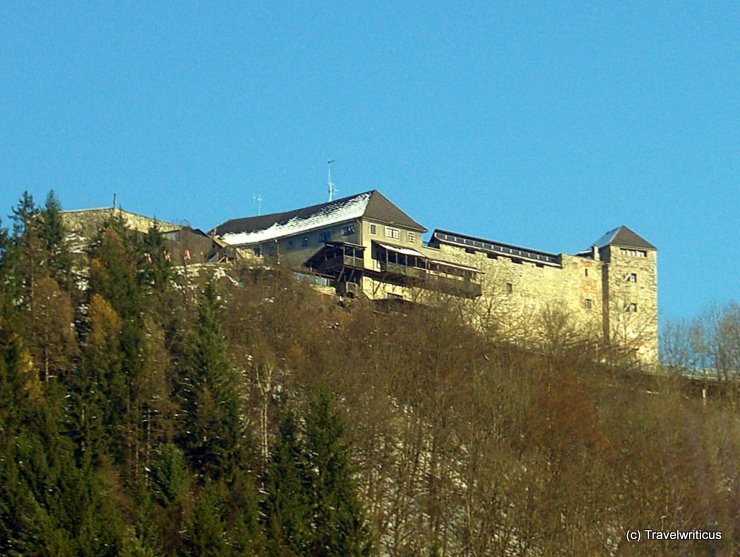
Oberkapfenberg Castle (Burg Oberkapfenberg) is located high over Kapfenberg, a place in the Austrian state of Styria (Steiermark). The castle was first mentioned in 1173 as Burg Chaffenberch. Today it is a venue for a big medieval festival every year. This photo was taken on a train journey from Graz to Vienna.
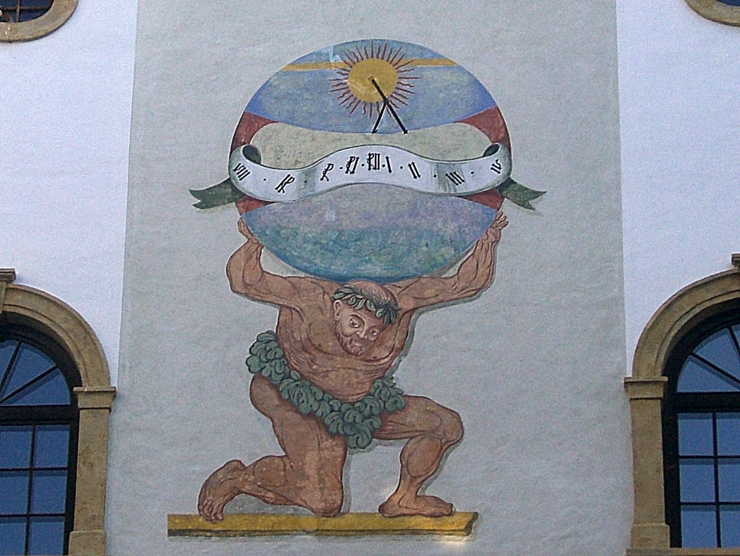
Sundial at Obermurau Castle (Schloss Obermurau) in Murau, a city in the Austrian state of Styria. The Renaissance castle was built in the years 1628 – 1643.
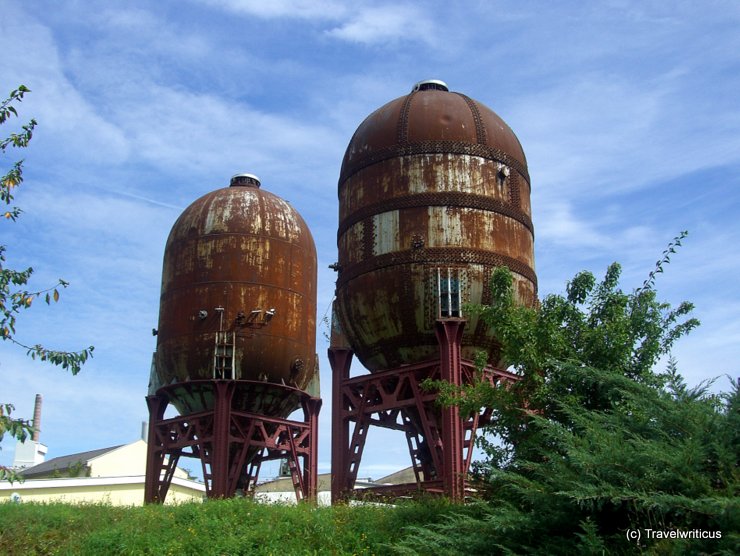
You find the Austrian Museum for Papermaking (Österreichisches Papiermachermuseum) in the halls of a former paper mill in Steyrermühl. There, you can learn about the different ways of papermaking, beginning with the papyrus of ancient Egypt and ending with the modern paper mills.
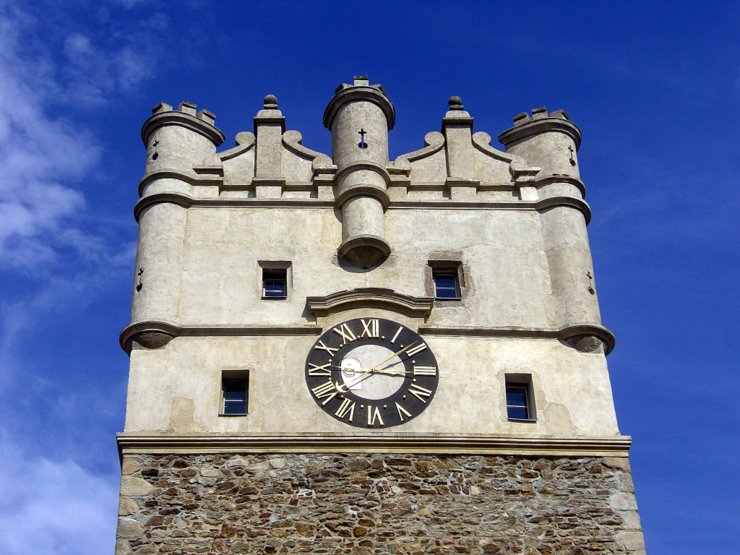
The Gate of Holy Mother (Brána Matky Boží) is the only one preserved from five medieval town portals in Jihlava. Its remarkable Renaissance crest was an add-on from 1564. Inside the gate, you’ll find an exhibition about the history of the Jihlava Fortress.
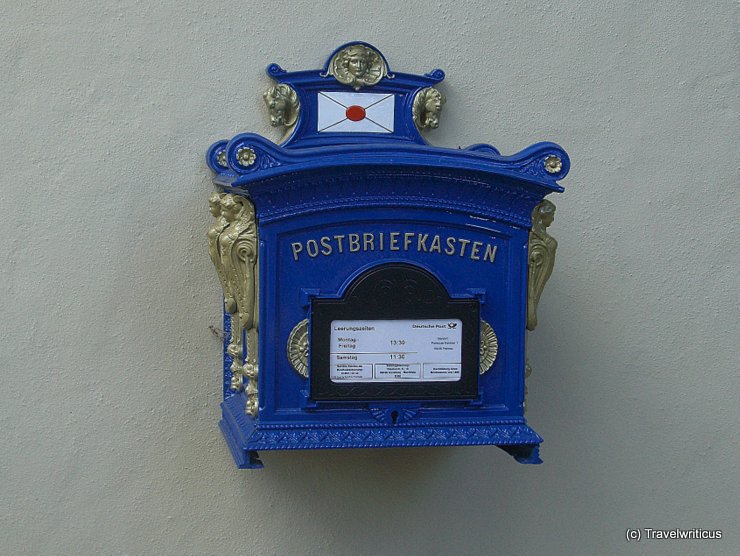
What a lovely piece! I came across this postbox in Frohnau, a village in the Annaberg-Buchholz municipality in Saxony. Its colour made me smile as it reminded me of Facebook.
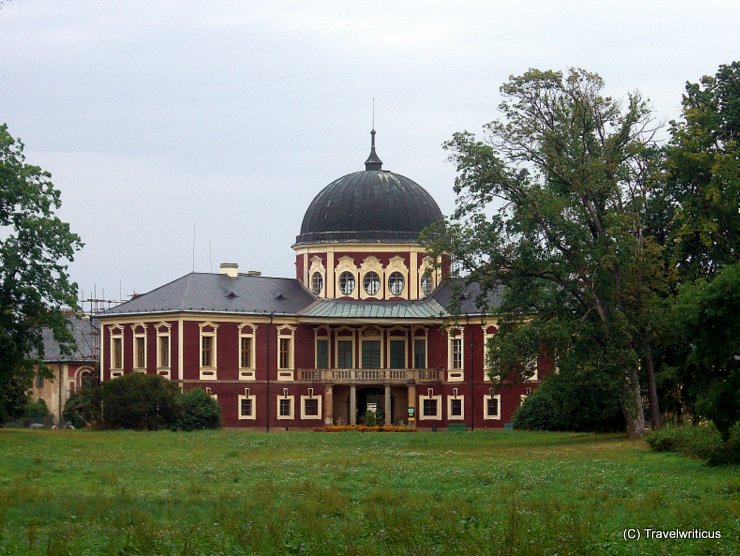
Veltrusy Mansion (Zámek Veltrusy) was built in 1716 for Václav Antonín Chotek of Chotkov and Vojnín in Baroque style. The castle is surrounded by a large park with Empire buildings, the rooms are decorated in Rococo style. [German]
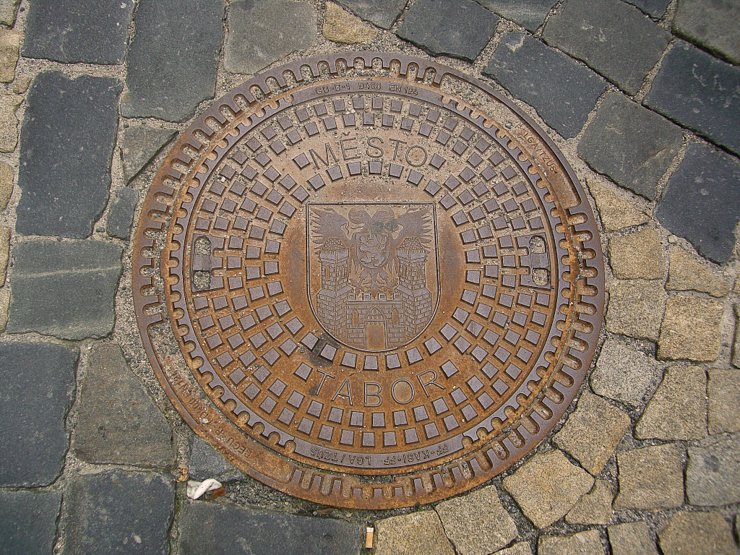
The manhole covers in Tabor show the city arms. The coat of arms dates back to 1437. In this year, Sigismund of Luxembourg granted these arms to Tabor. At that time, there was a Luxembourgian lion part of the arms. The Bohemian lion replaced it in the 16th century.
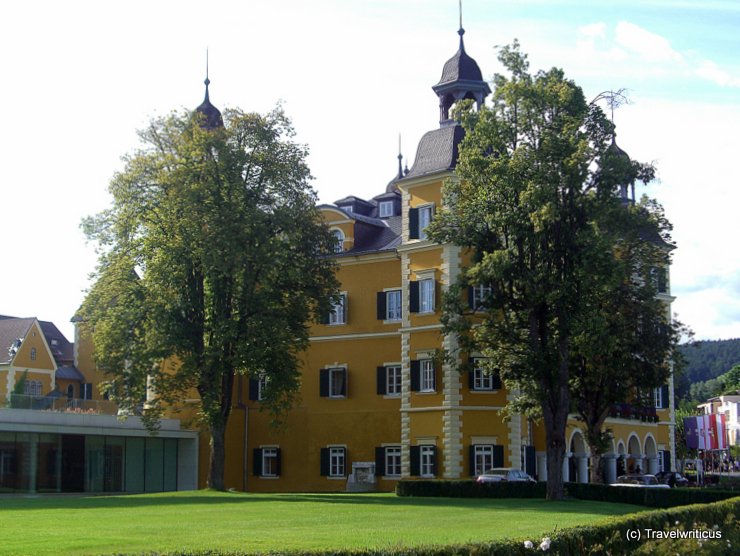
The palace, placed next to a lake named Wörthersee, was built at the end of the 16th century by Bartholomäus Khevenhüller. Since 1890, it has mainly been a hotel. In the 1990s, it became famous for being the set of the German TV series ‘Ein Schloss am Wörthersee’, aka ‘Lakeside Hotel’.
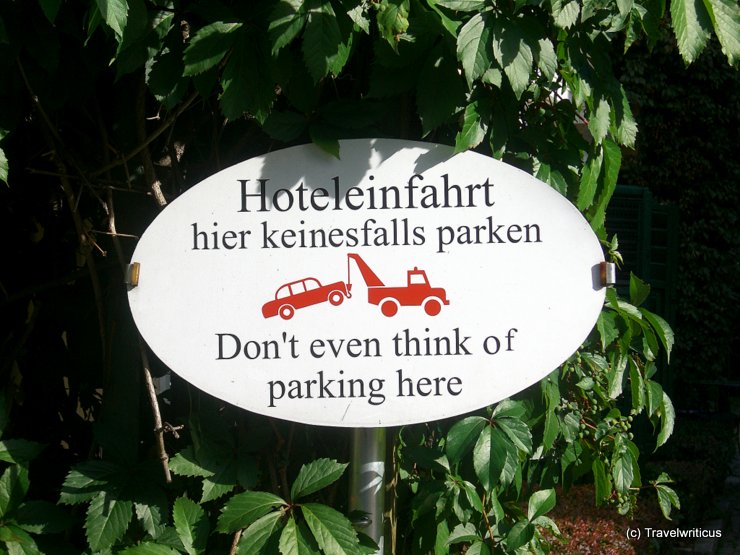
During my walk through Velden I came across this sign at the driveway of a hotel. I think the message drove the point home, didn’t it? 🙂
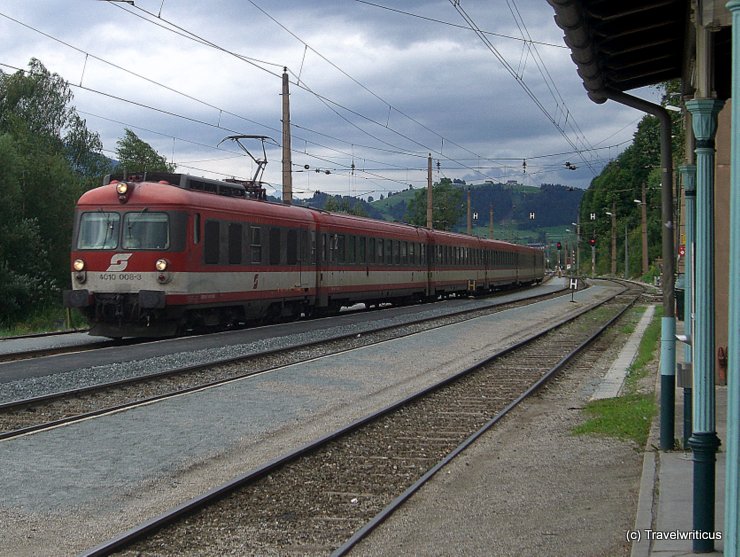
On my way back from Radstadt I took a train of the type ÖBB 4010 the last time. For about 20 years I used to travel with this train all over Austria. Sometimes working or reading, sometimes just sleeping. It was one of those old-fashioned trains where one could use two turned down seats as bed.
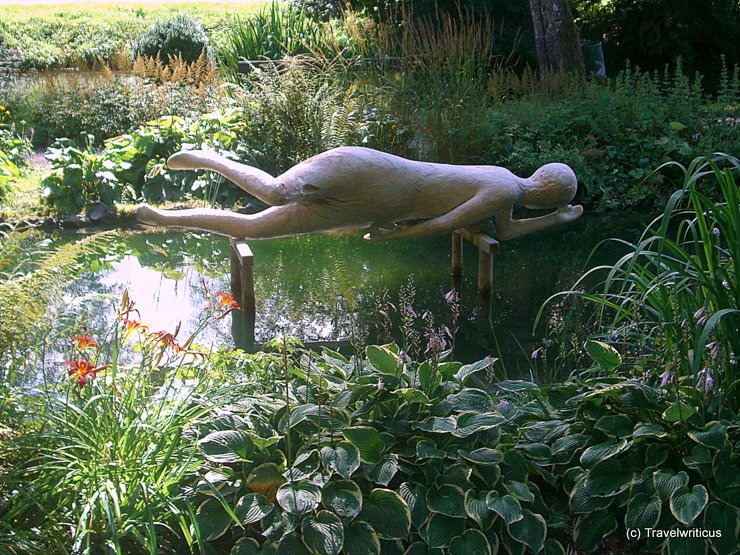
On my way back to the railway station of Bad Goisern I came across this sculpture in a small park. I don’t know the artist or the real meaning of that artwork but it seemed to be a piece of the “pre-planking’ period. 😉