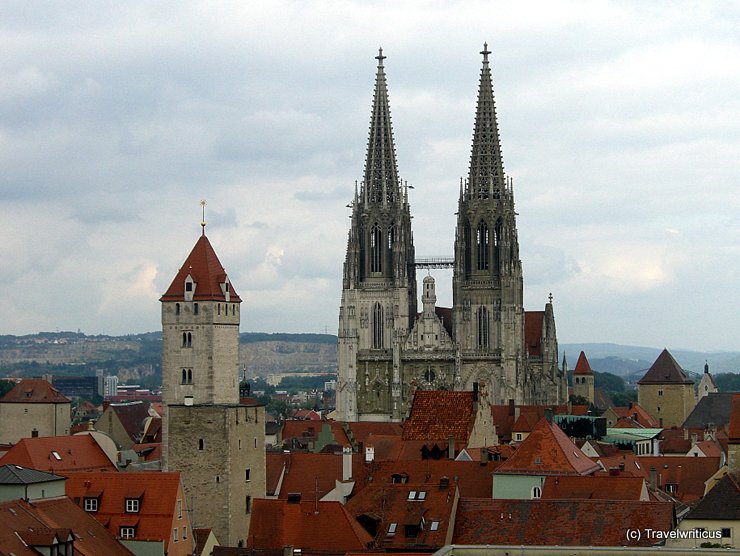
View of the Bavarian city Regensburg taken from the steeple of the Holy Trinity Church (Dreieinigkeitskirche). Regensburg is known for several family towers (Geschlechtertürme), similar to those in San Gimignano in Italy. [German]
You only see what you know (Goethe)
View of the Bavarian city Regensburg taken from the steeple of the Holy Trinity Church (Dreieinigkeitskirche). Regensburg is known for several family towers (Geschlechtertürme), similar to those in San Gimignano in Italy. [German]
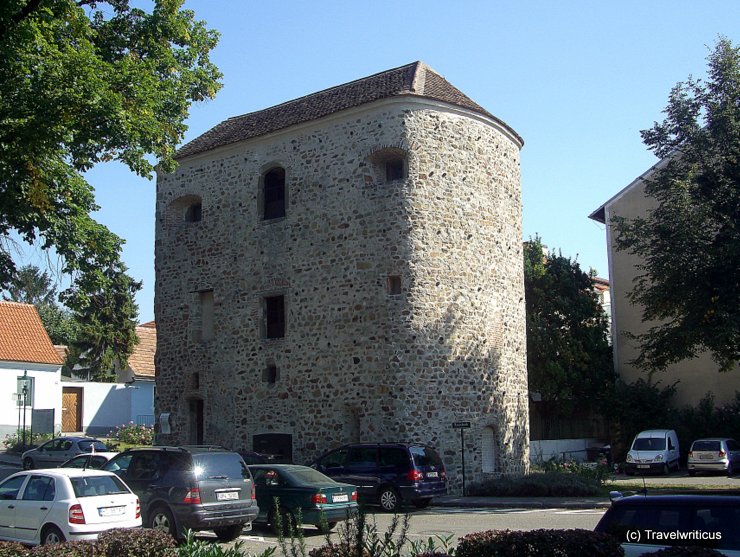
The Horseshoe Tower (Hufeisenturm) in Tulln remains from the ancient military camp Comagena. The Roman name originated from an equestrian unit descending from the region of Commagena.
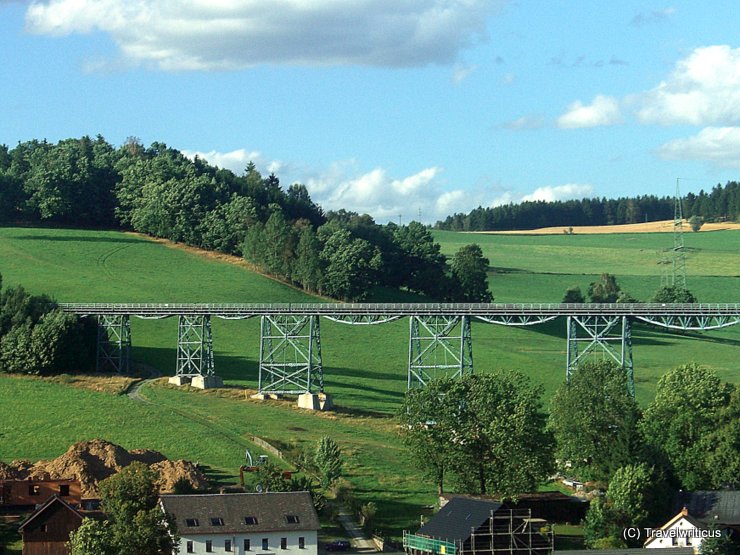
During a bus ride from Annaberg-Buchholz to Schwarzenberg, we pass the Markersbach Viaduct (Markersbacher Viadukt). Since 1889 it spans a side valley of the Große Mittweida in Saxony. Today it is part of a test track. [German]
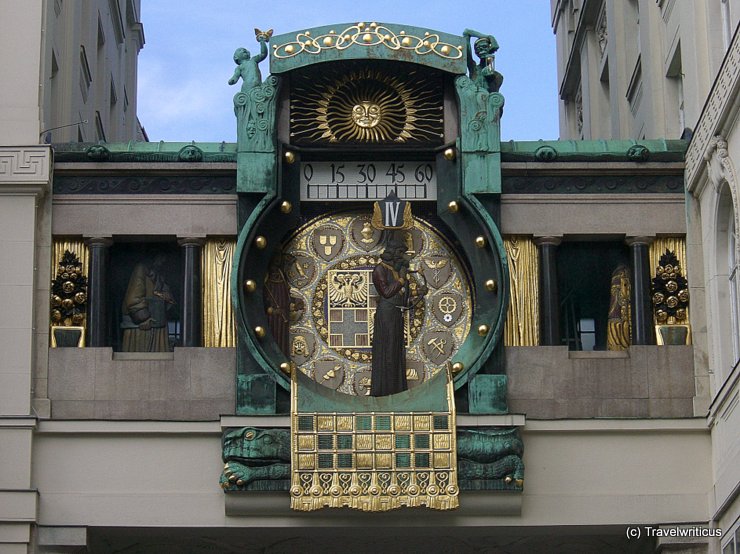
The Ankeruhr in Vienna is a clock in a gangway between two buildings on the Hoher Markt Square (1. District). It displays every hour a different personality who has played a role in the history of Vienna. [German]
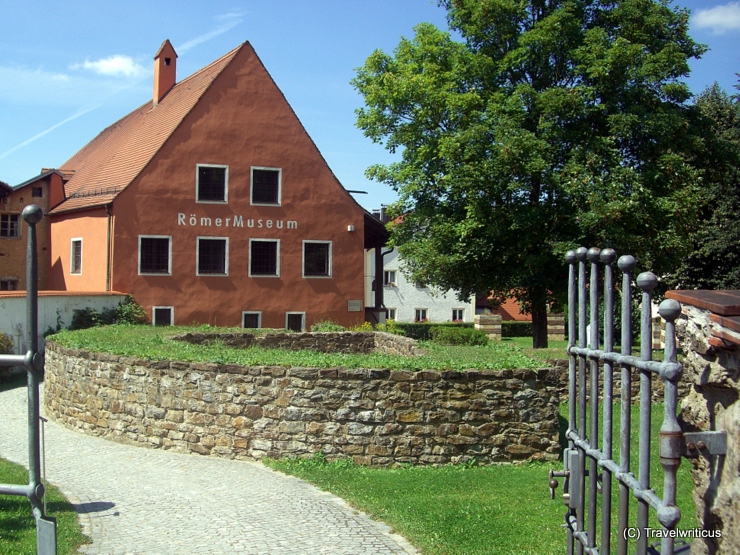
The Bavarian city of Passau has a rich Roman history. On the grounds of the Roman museum Boitro (Römermuseum Kastell Boitro), you still see parts of an ancient fort like the walls of a fan-shaped tower.
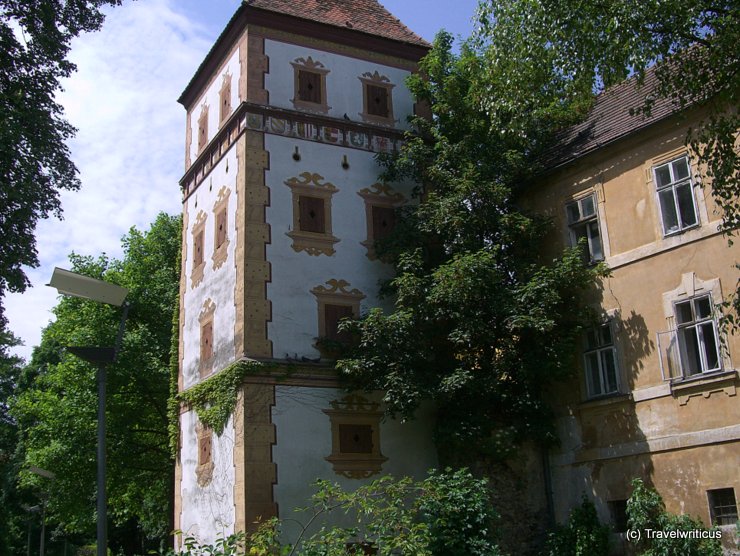
This water tower in Wels was built in 1577/1579 by Wolfgang Khranlachner. Watchmaker Clement Rench designed the water pump inside the tower. Artist Niclas Linkh created the colourful façade painting.
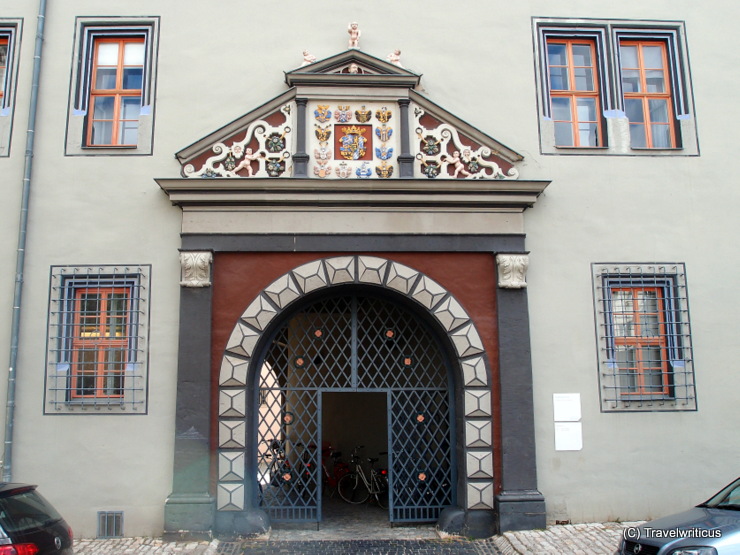
On the way from the Duchess Anna Amalia Library to the market, I pass a Renaissance portal with a strikingly large number of coats of arms. The windows have colourful lines like fresh make-up. [German]
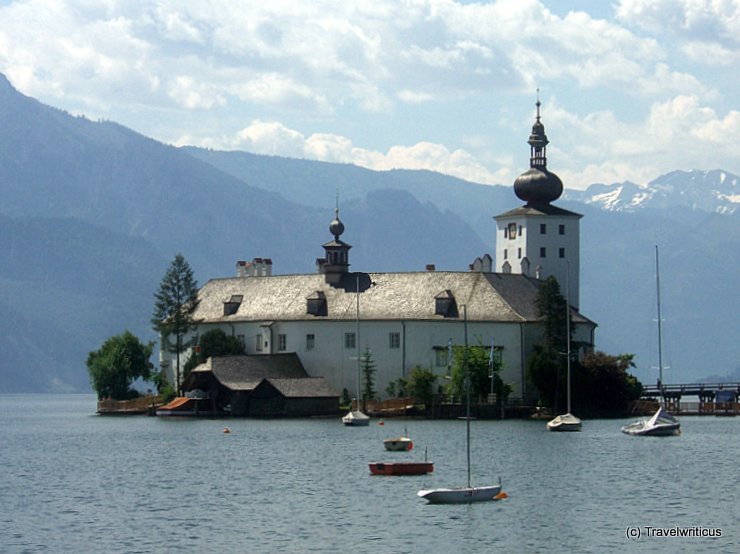
Seeschloss Ort impresses with its location on a tiny island in the Upper Austrian Traunsee Lake. The castle became known through a TV series and the mysterious disappearance of one of its owners. Today, it houses a restaurant visitors reach by a bridge. [German]
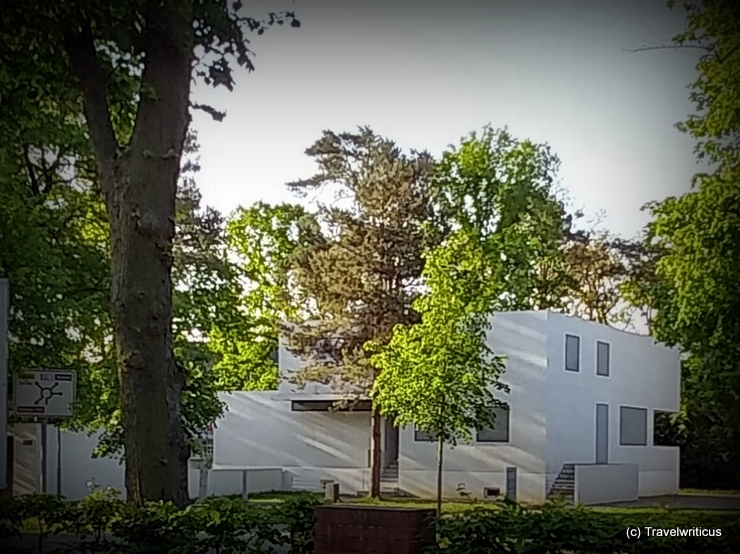
After Walter Gropius founded the Staatliche Bauhaus in Weimar, there was no time to mould his new ideas into a building. After his move to Dessau, he appeared as an architect on a site of the Bauhaus School. Here, the four Masters’ Houses form an ensemble. [German]
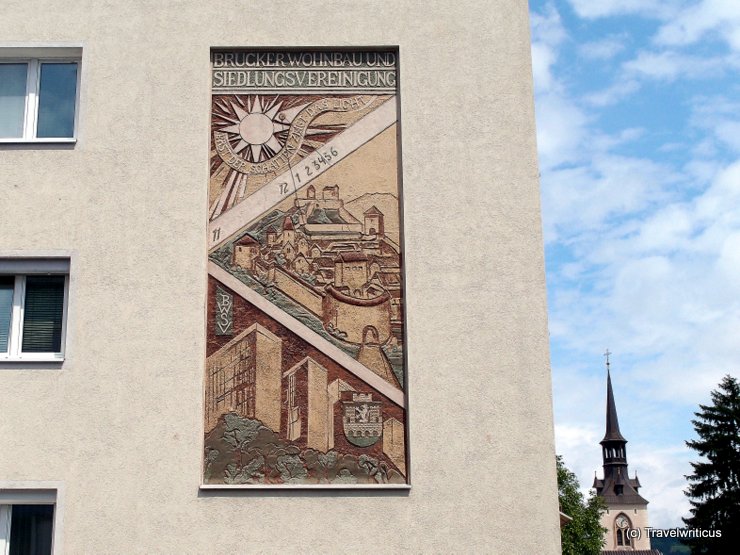
This sundial on a residential building shows two depictions of the Styrian city of Bruck an der Mur. In the upper part of the mural, you see Landskron Castle and the former city walls. [German]
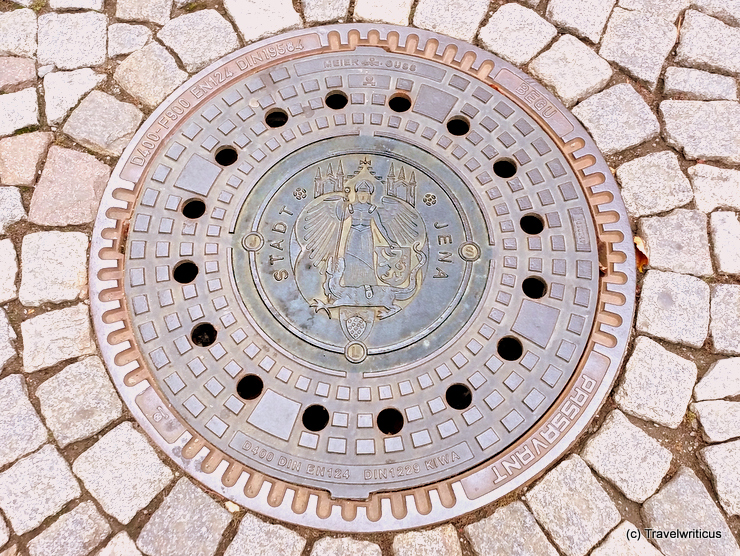
The manhole covers of Jena display the city arms. In the middle, archangel Michael pushes a lance into a dragon’s mouth. The upright black lion refers to the Margraves of Meissen. Noteworthy is the bunch of grapes below the dragon. [German]
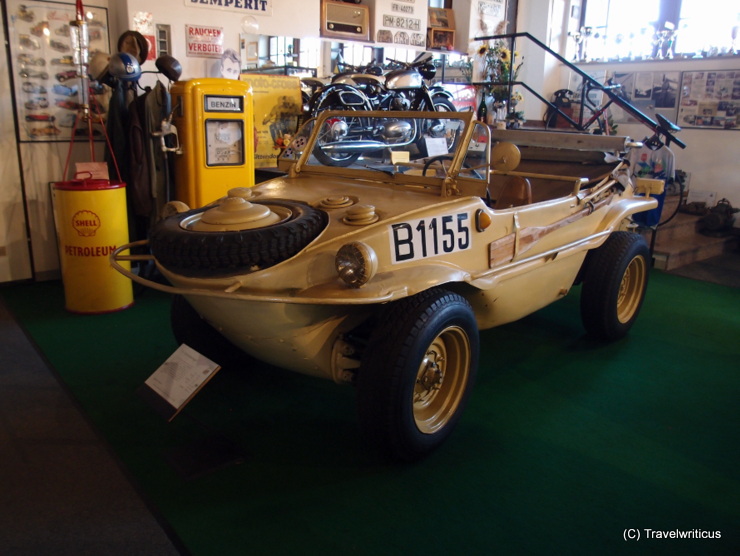
At the classic car museum in Poysdorf (Oldtimerclub Poysdorf), I saw this Volkswagen Schwimmwagen. The amphibious four-wheel drive off-roader dates back to 1943. At that time, it served the German Wehrmacht.