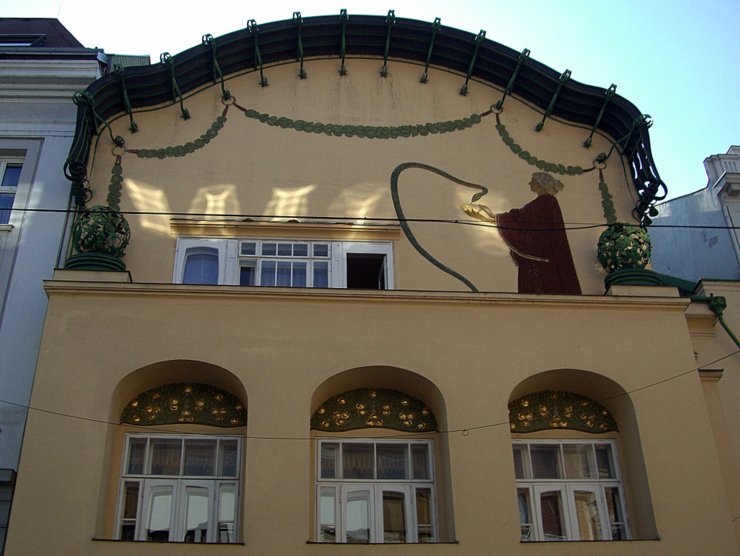
Near St. Pölten Central Station, my eyes fell on a building with a remarkable facade. A snake swooped up towards a woman. I stood before the Haus Stöhr, also known as Olbrich house. [German]
You only see what you know (Goethe)
Near St. Pölten Central Station, my eyes fell on a building with a remarkable facade. A snake swooped up towards a woman. I stood before the Haus Stöhr, also known as Olbrich house. [German]
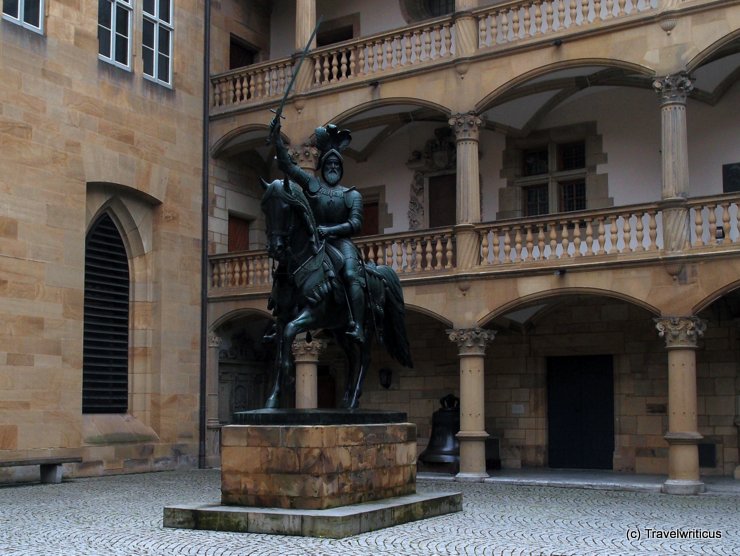
Eberhard I (1445-1496) is considered the first Duke of Württemberg. He is also known as Eberhard im Bart (Eberhard the Bearded). This equestrian statue made of bronze stands in the courtyard of the Altes Schloss (Old Palace) in Stuttgart. [German]
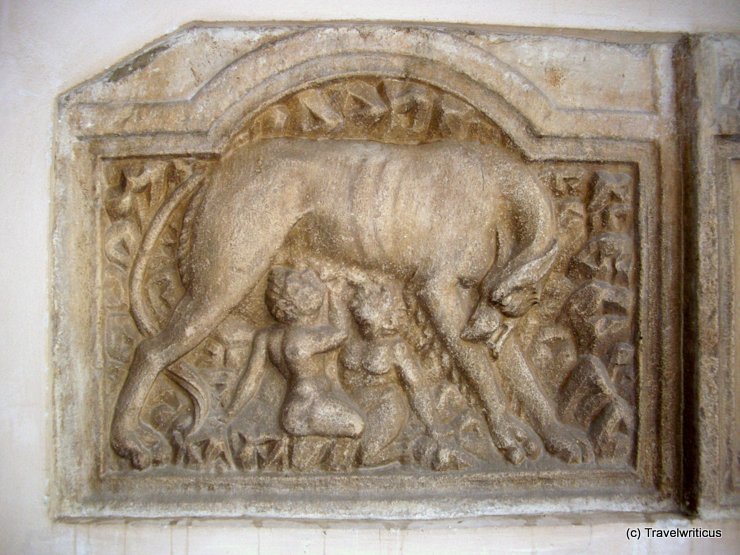
I only wanted to photograph the Roman stone with the “mail coach” in Maria Saal. But then I came across this intriguing relief stone in the entrance area of the Maria Saal Cathedral. It represented the Capitoline Wolf with Romulus and Remus.
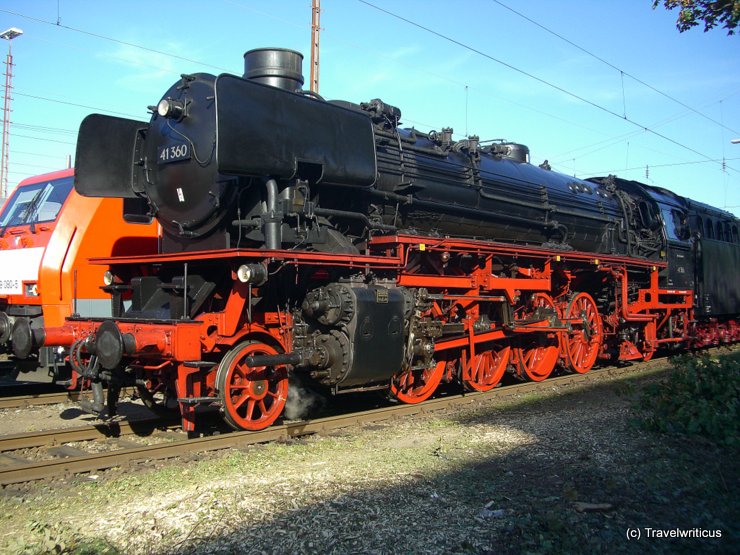
During a parade of historic locomotives in Fürth, this engine of the German Class 41 evoked my attention. Despite being built in 1940, the freight locomotive 41 360 seemed particularly juvenile and elegant to me.
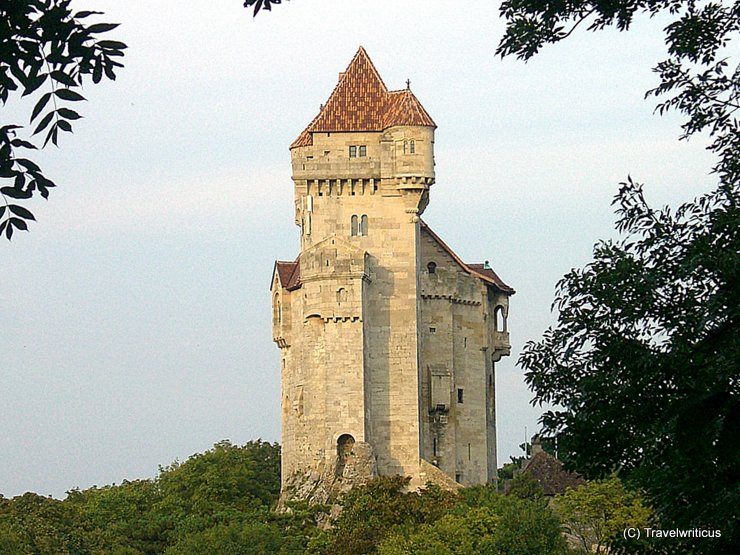
Liechtenstein Castle (Burg Liechtenstein) is the ancestral seat of the ruling house of the European state Liechtenstein. The castle was destroyed during the Ottoman wars and rebuilt in the 19th century. [German]
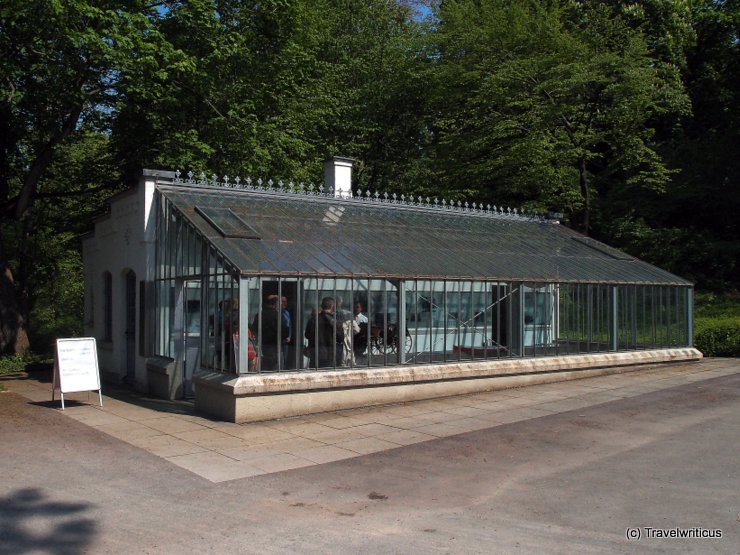
This garden house, owned by Gottlieb Daimler, housed the workshop and testing station where Gottlieb Daimler and Wilhelm Maybach used to work on their latest inventions.
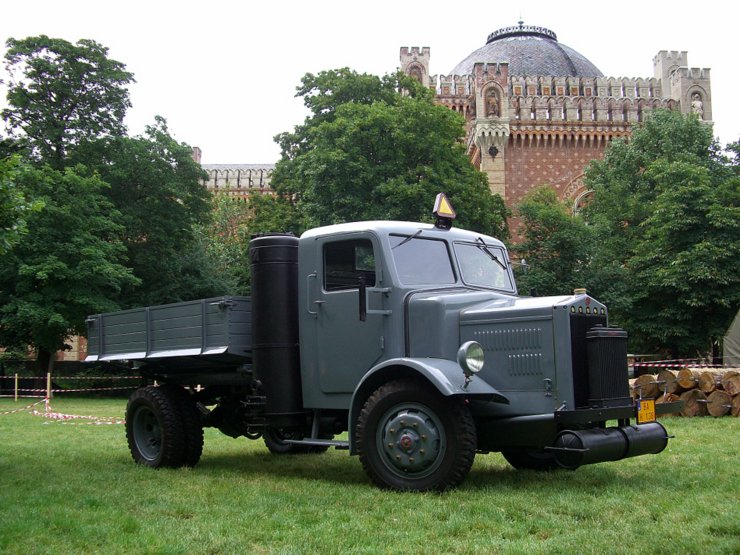
The idea of running an automobile with wood gas fascinated me even as a child. So I was particularly pleased to see this truck with a wood gasifier in Vienna. The lorry was part of a meeting of historic military vehicles. [German]
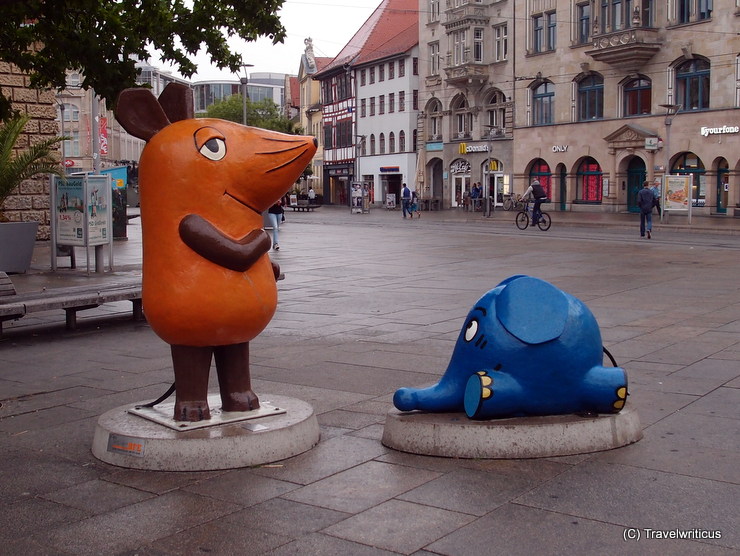
These sculptures in Erfurt show two protagonists from the children’s show ‘Die Sendung mit der Maus‘ (The Show with the Mouse). This TV series explains complex facts in easy-to-understand terms. Informative stories alternate with humourous clips. [German]
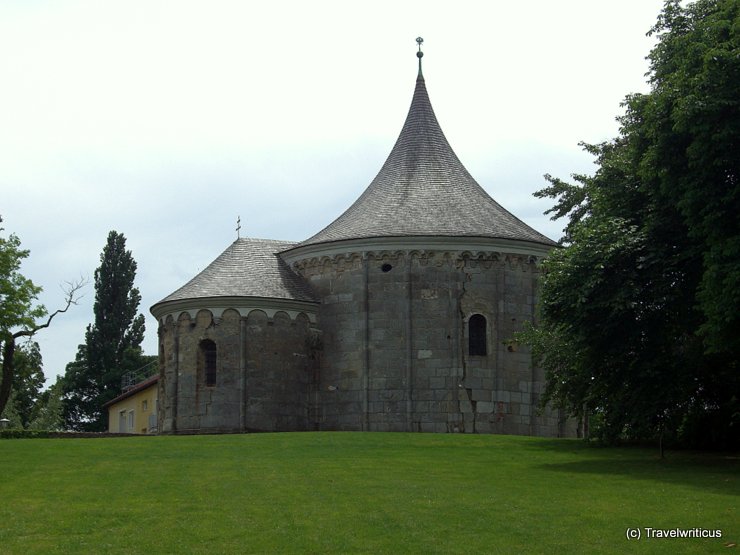
At least once a year, I visit the Carnuntum Archaeological Park in Lower Austria. On this occasion, I always love to make a detour to this Romanesque round chapel in Petronell-Carnuntum. [German]
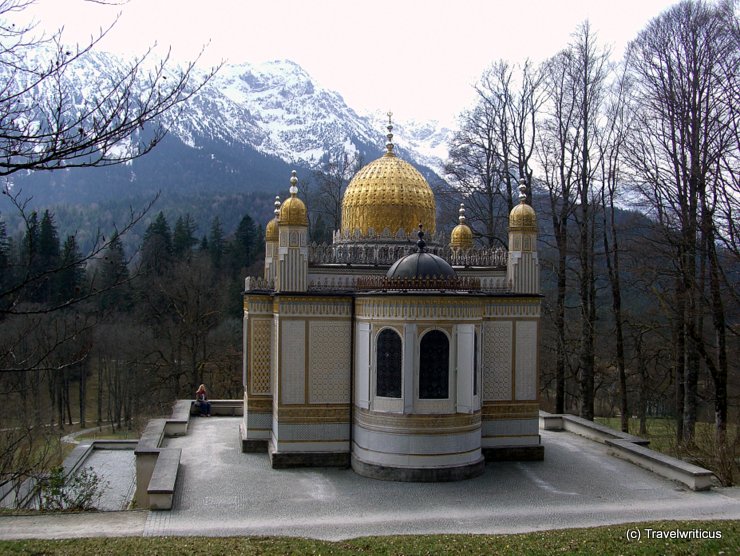
The Moorish Kiosk in the park of Linderhof Palace impresses with its place in front of the Alps. But its first location was in a big city. It originally served as the Prussian contribution at the Paris World Exhibition of 1867. [German]
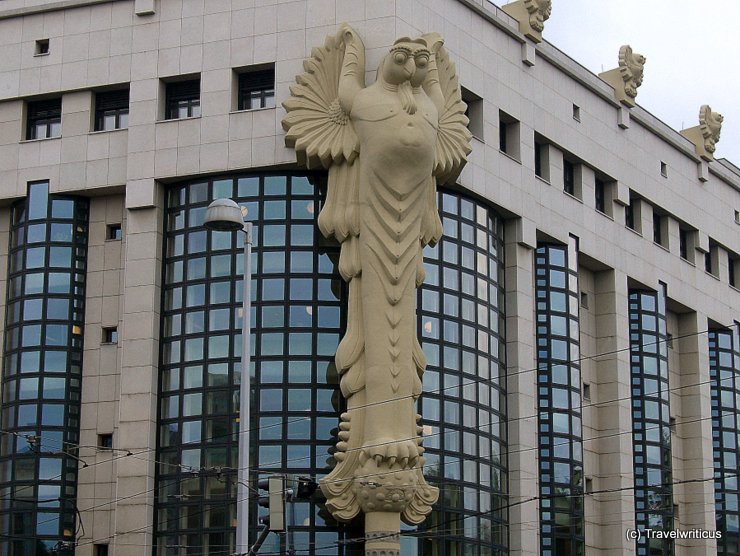
This owl is a decoration created by the Swiss artist and architect Bruno Weber. You find it at the Vienna University of Technology Library. The 18-metre-high sculpture and the 16 smaller owls along the attic make the building look like a place of wisdom. [German]
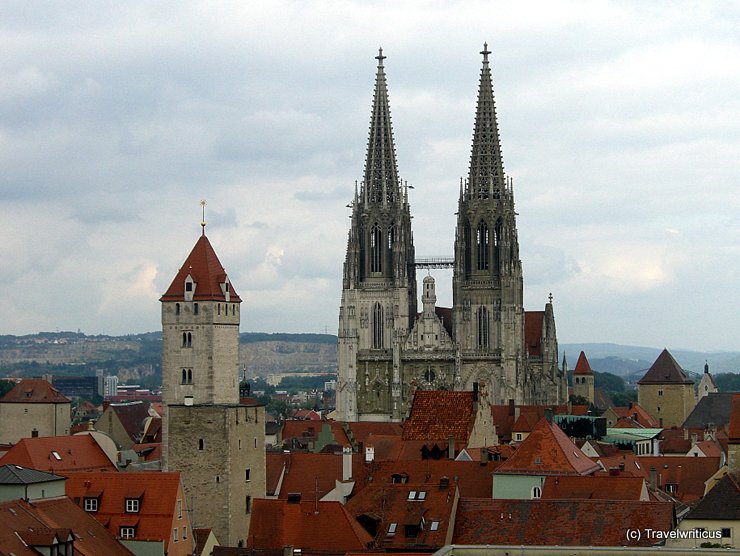
View of the Bavarian city Regensburg taken from the steeple of the Holy Trinity Church (Dreieinigkeitskirche). Regensburg is known for several family towers (Geschlechtertürme), similar to those in San Gimignano in Italy. [German]