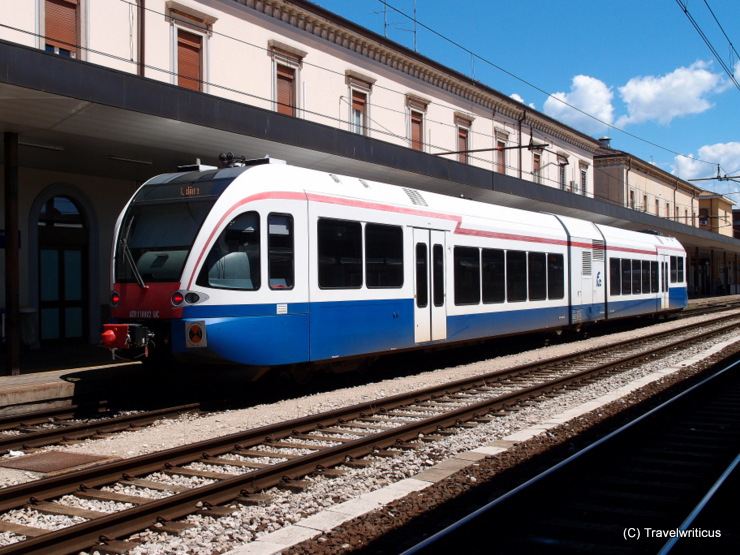
This diesel-electric articulated railcar GTW 2/6, built by Stadler Rail, is used by the Ferrovie Udine Cividale (FUC) for the line Udine – Cividale del Friuli. I took this pic at the railway station of Udine.
You only see what you know (Goethe)
This diesel-electric articulated railcar GTW 2/6, built by Stadler Rail, is used by the Ferrovie Udine Cividale (FUC) for the line Udine – Cividale del Friuli. I took this pic at the railway station of Udine.
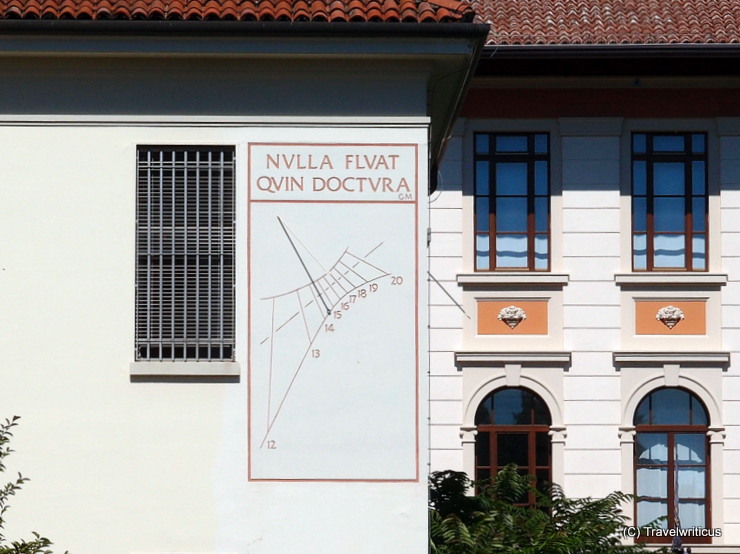
On my urban walk through Udine I come across this sundial. I like the modern style. Unfortunately I don’t know the meaning of Nulla Fluat Quin Doctura. It sounds like you should teach them, there is no flow. Which flow?
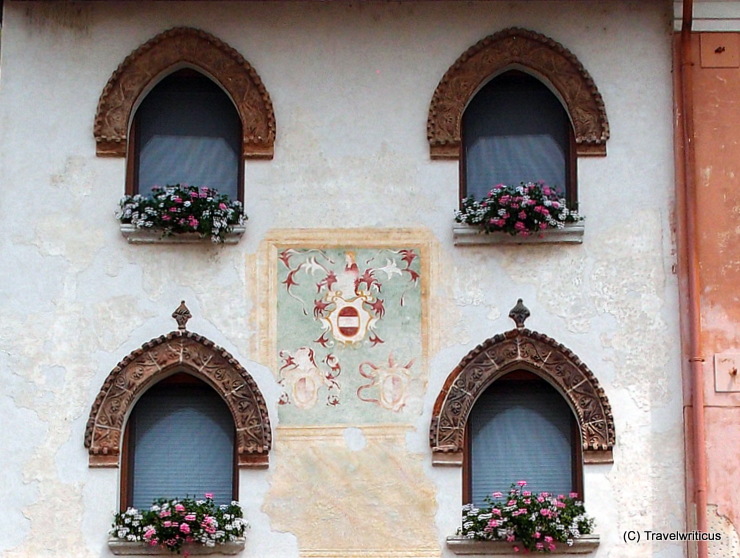
The emblem of Cividale del Friuli shown at a building near the centre of the city. At this place I was especially impressed by the lovely design of the windows.
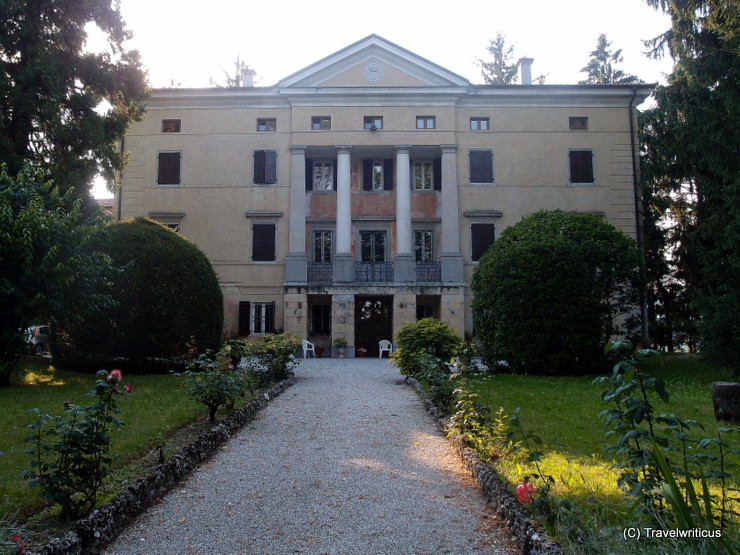
Villa Ticozzi de’ Concina is a building dating back to the 18th century built on top of a hill in the middle of San Danielle del Friuli.
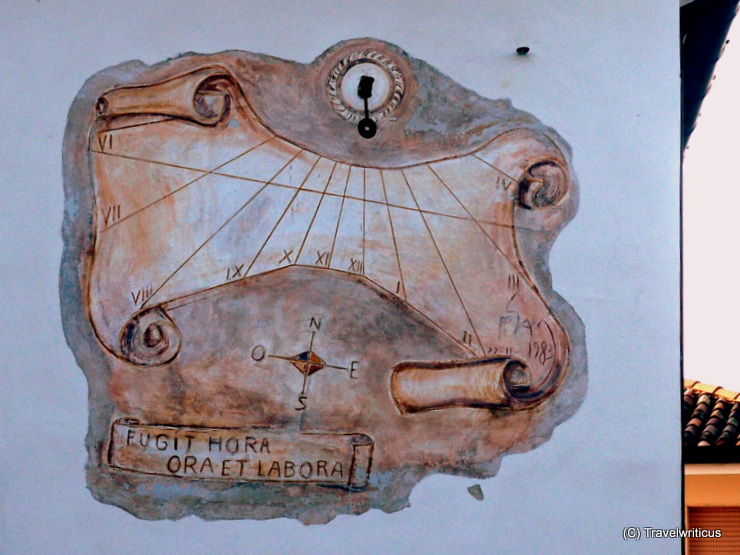
Sundial seen at the walls of Cathedral of San Michele Arcangelo in San Daniele del Friuli. This place is best known as the production center of the San Daniele prosciutto.
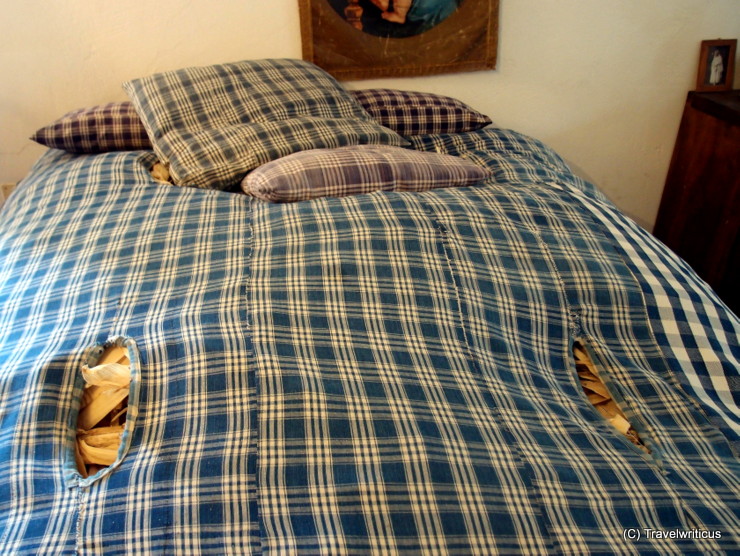
An interesting detail seen at the Friulian farmer’s life museum Cjase Cocel in Fagagna: In earliert times the duvets were filled with wood chippings.
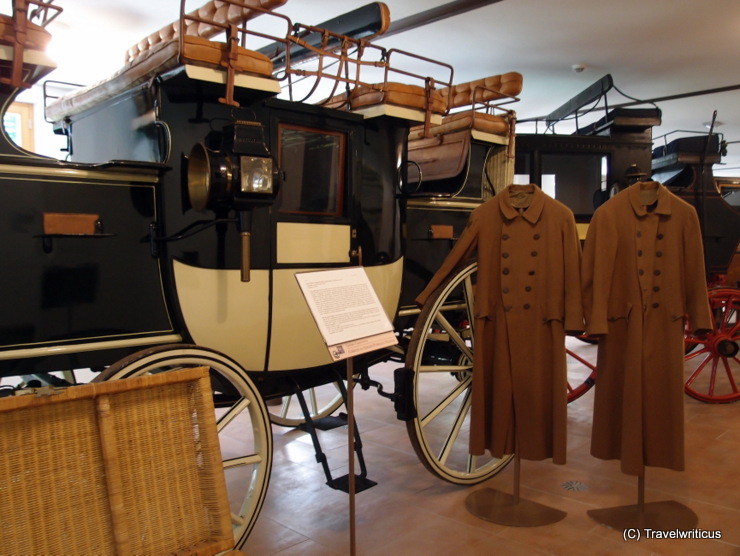
The Vintage Coaches Museum in Codroipo exhibits 44 restored historical carriages, including rural spider carriages, gala carriages, and mail coaches, some displayed with life-sized horse replicas. Additionally, the museum showcases a collection of toys from the 18th to 20th centuries.
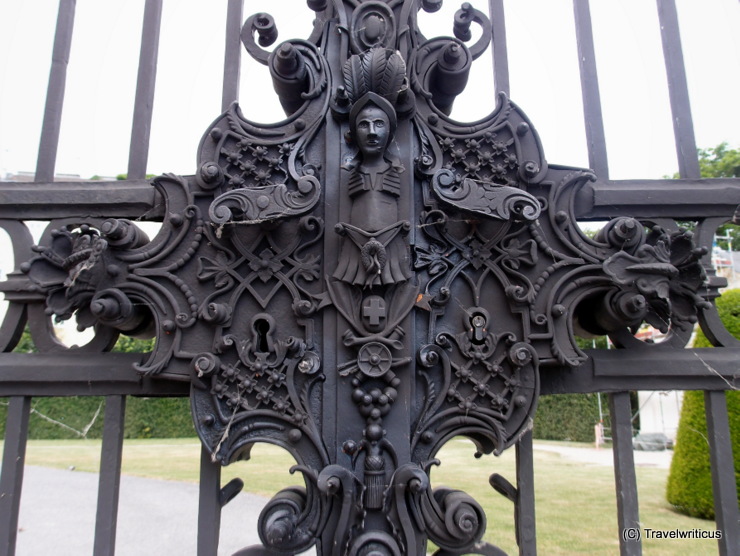
Artful lock of a garden gate seen at the Belvedere Gardens in Vienna. The figurine of a man situated in the middle of the lock made me think it could portray a Native American?
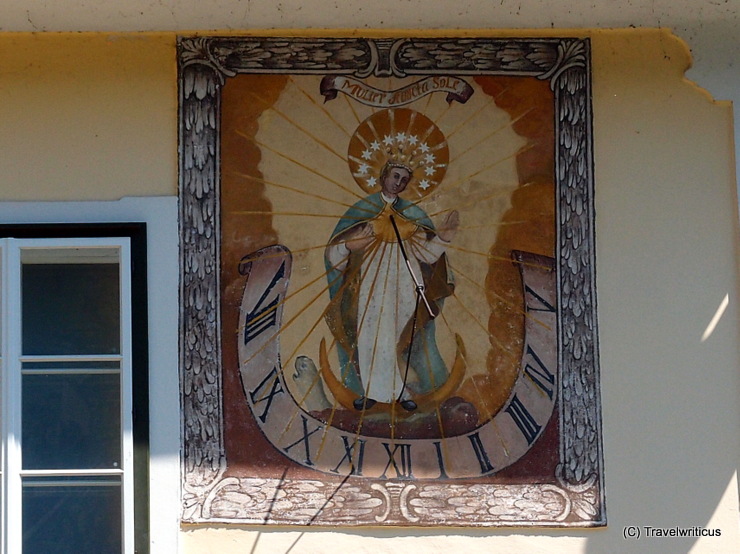
Sundial seen at the walls of Museum Hallstatt located in Hallstatt, a world heritage site in Austria. The museum presents the 2nd largest collection of pieces related to the Iron Age Hallstatt culture in Austria.
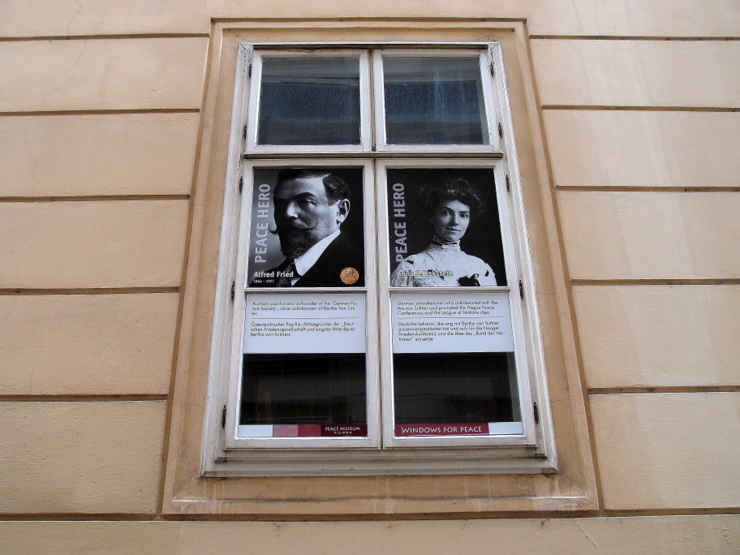
The project “Windows for Peace” shows 150+ peace heroes in the lanes next to the Museum of Peace. To be more exact, the biographies of these heroes are shown in the windows of the houses. You find the Museum of Peace in the Blutgasse 3, 1. District.
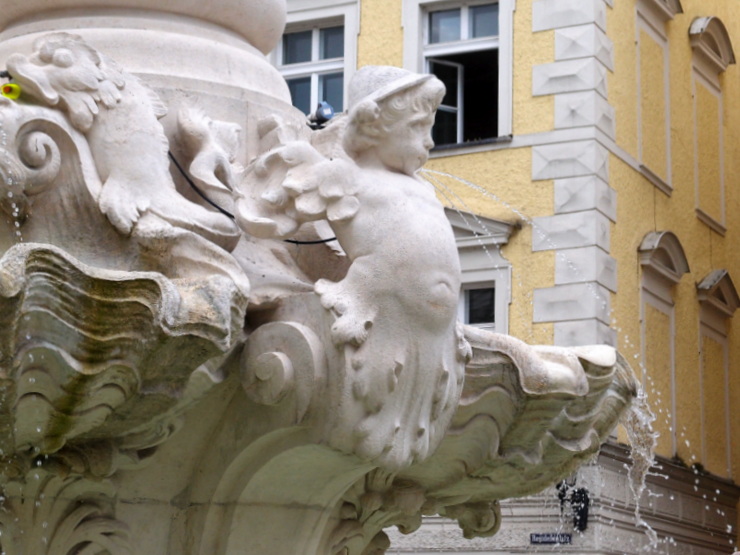
The Wittelsbach Fountain (Wittelsbacher Brunnen) attracted my attention by a sculpture of an angel wearing a Tyrolean hat. The fountain was created by Jacob Bradl. Three angels represents those three rivers Passau is known for: Danube, Inn, Ilz. E.g. the small Tyrolean guy represents the Inn river.
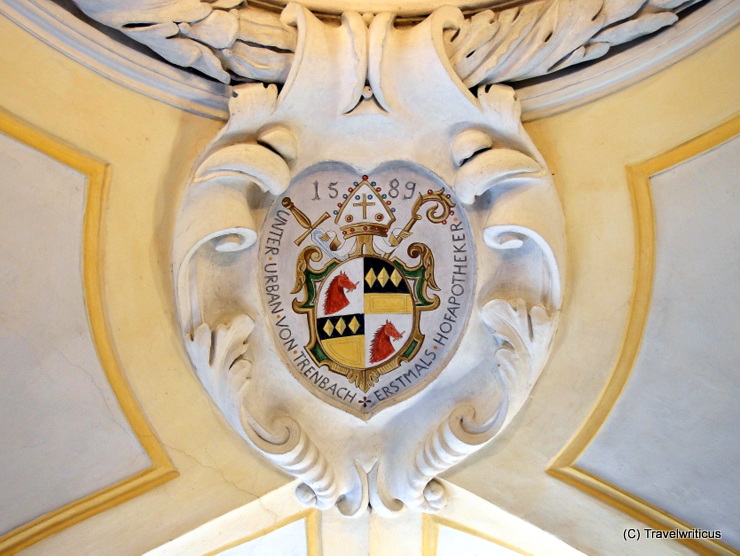
The former court pharmacy of Passau, generally known as Hofapotheke zum Schwarzen Adler, was first mentioned in 1384. It is considered the oldest pharmacy in Bavaria.