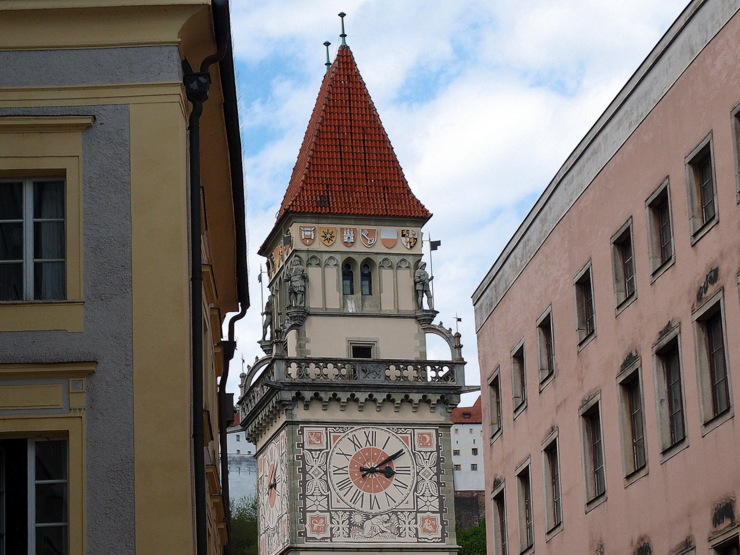
The tower of the Passau City Hall was erected between 1889 and 1892 by Heinrich Freiherr von Schmidt in the neo-Gothic style. The coats of arms below the roof represent the founding members of the German Empire in 1871.
You only see what you know (Goethe)
The tower of the Passau City Hall was erected between 1889 and 1892 by Heinrich Freiherr von Schmidt in the neo-Gothic style. The coats of arms below the roof represent the founding members of the German Empire in 1871.
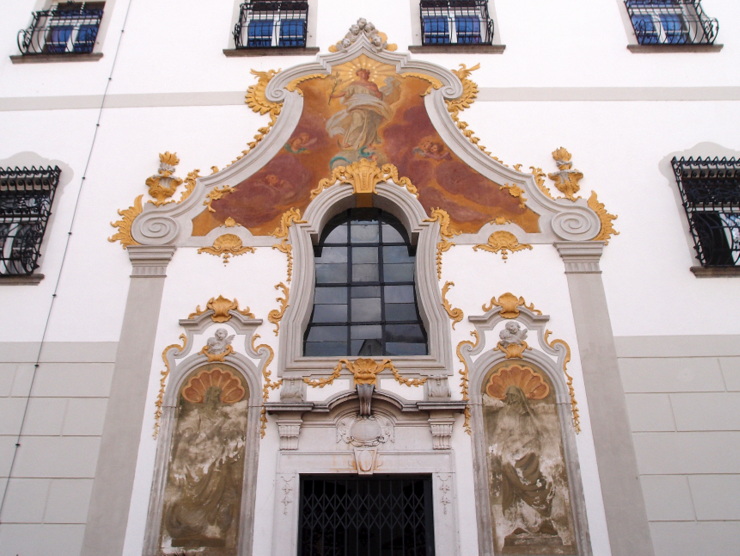
In 1749, innkeeper Lukas Kern donated an orphanage for at least twelve boys and twelve girls. The building, today known as Bürgerliches Waisenhaus or Lukas-Kern-Kinderheim, was erected by Johann Michael Schneitmann.
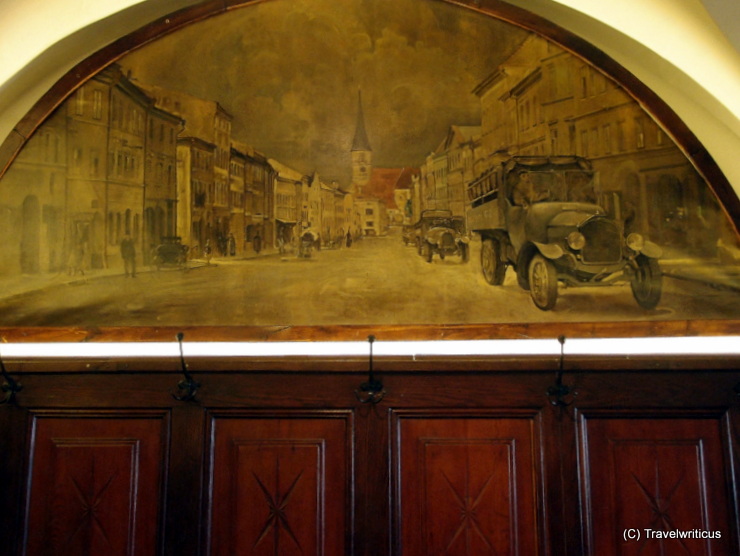
The Braumeisterstube is part of the Sternbräu Restaurant in Salzburg. This restaurant was first mentioned in 1542 and offers several old and modern rooms for having a glass of beer or a traditional meal. [German]
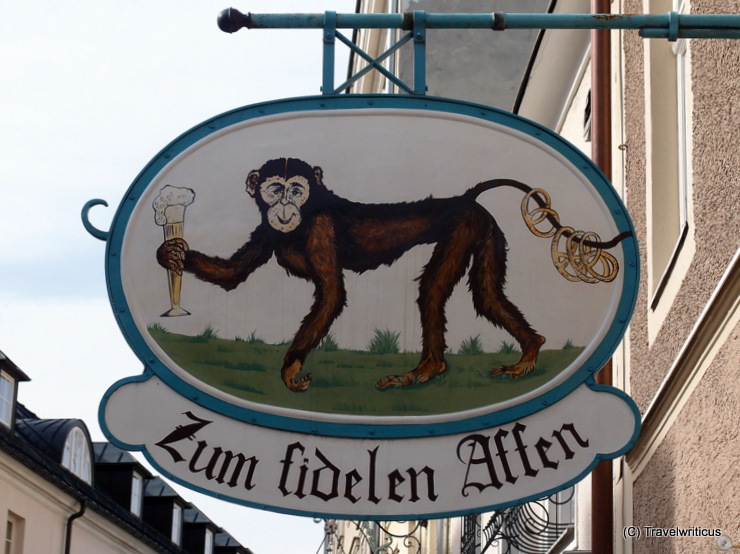
You find this inn sign on a traditional restaurant in Salzburg. The name “Zum fidelen Affen” literally means “Merry Monkey”.
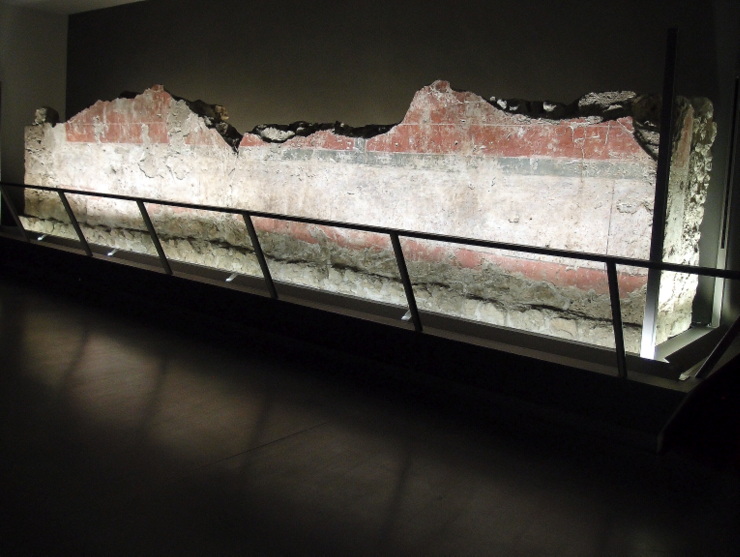
While walking from the Salzburg Museum to the Panorama Museum through the Panorama Passage, I came across the remains of an ancient Roman mural. It was discovered during an excavation in 2003.
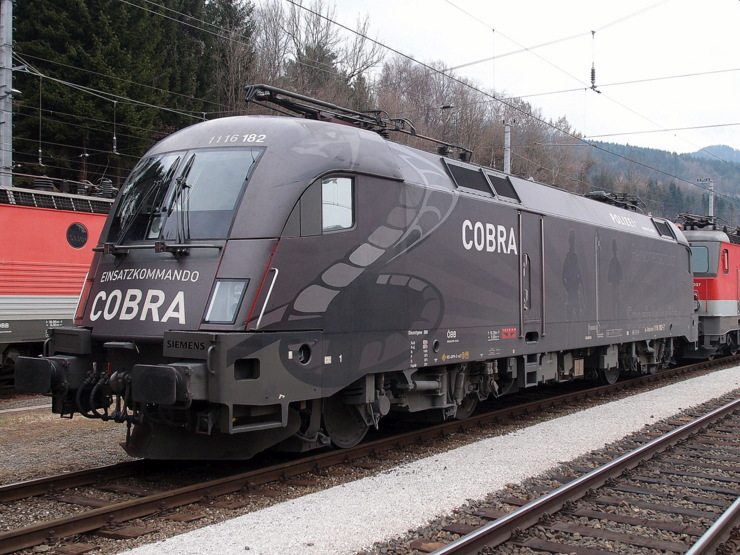
Locomotives of the Austrian Federal Railways (OBB) offer advertising space for companies and organisations. This locomotive seen in Leoben promotes EKO Cobra, Austria’s primary counter-terrorism unit. Mind the friendly snake in the front part of the loco!
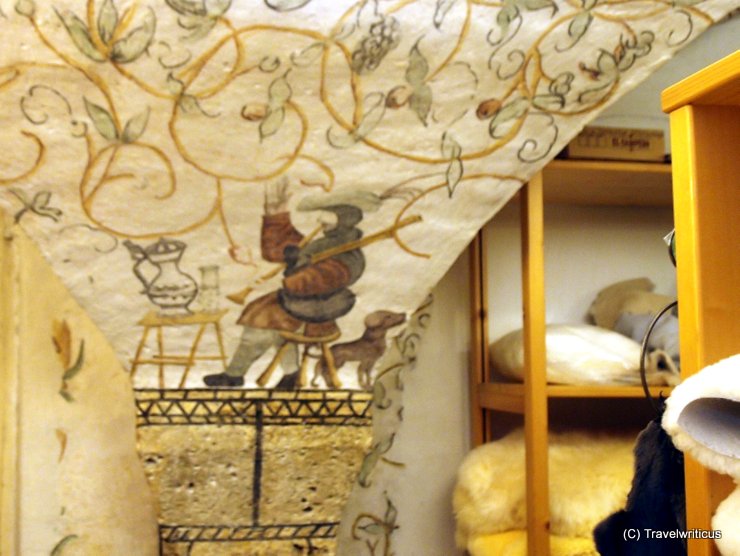
Since 1422, tanners have been working at the address Lederergasse 5 in Salzburg. At the same address, there is still a shop run by the family of Schliesselberger selling goods made of leather.
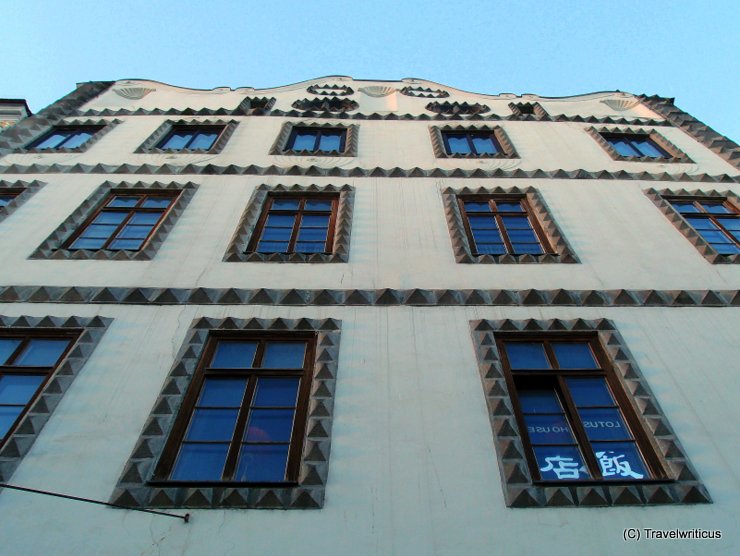
The Freihaus of Christoph Weiß was built at the end of the 16th century. The Renaissance building is especially known for its window frames made of diamond-shaped bossages.
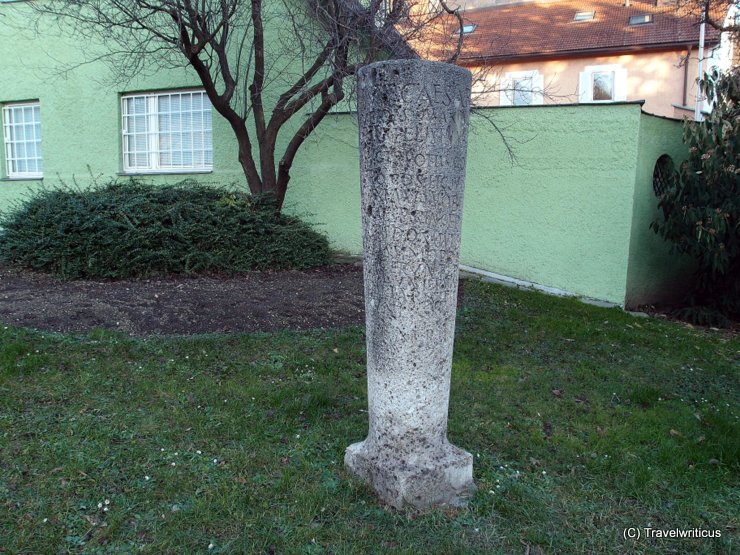
Roman millstone (3rd century) seen in Wels, Austria. The stone, also known as millarium, mentions Emperor Maximinus Thrax and tells about reconstructed streets and bridges after an invasion by the Alamanni.
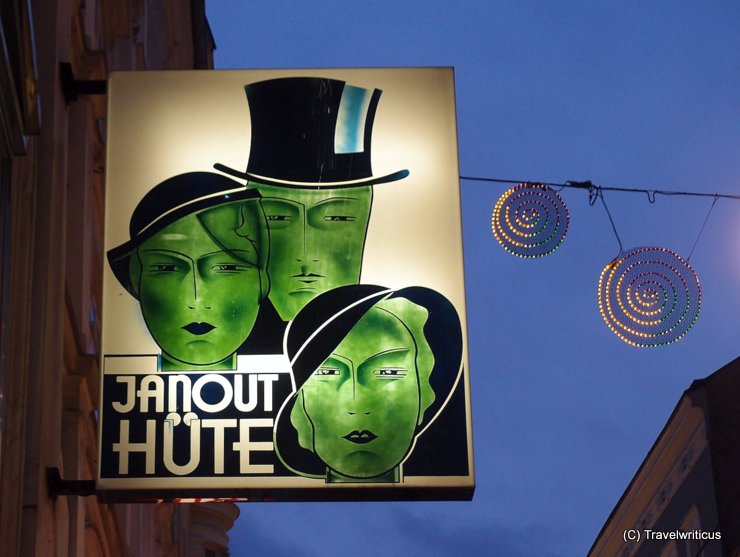
Shop sign of a hat shop in Linz. I’ve no idea why the faces are green but the green colour makes the sign even more remarkable. The decoration on the right side is part of the Christmas decoration 2014.
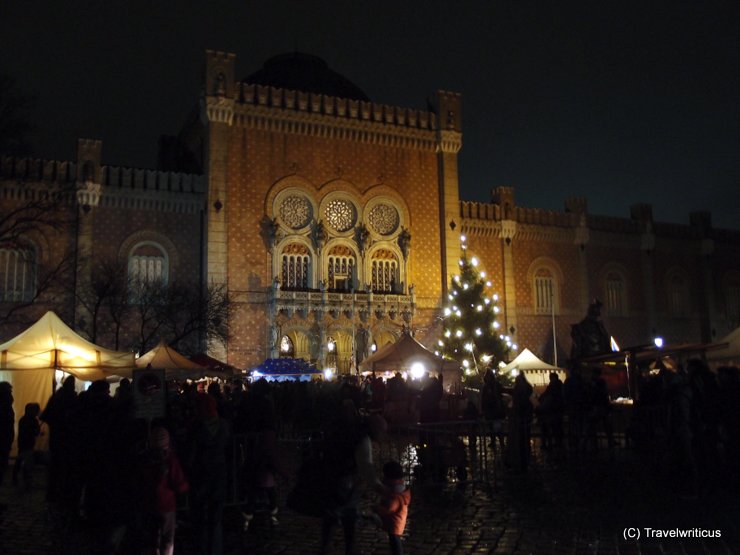
Every year in December, a medieval Christmas market takes place in front of the Museum of Military History (Heeresgeschichtlichs Museum) in Vienna. The market, which is generally named after the whole area (Arsenal), lasts only for a weekend. So, you should look for the exact date beforehand.
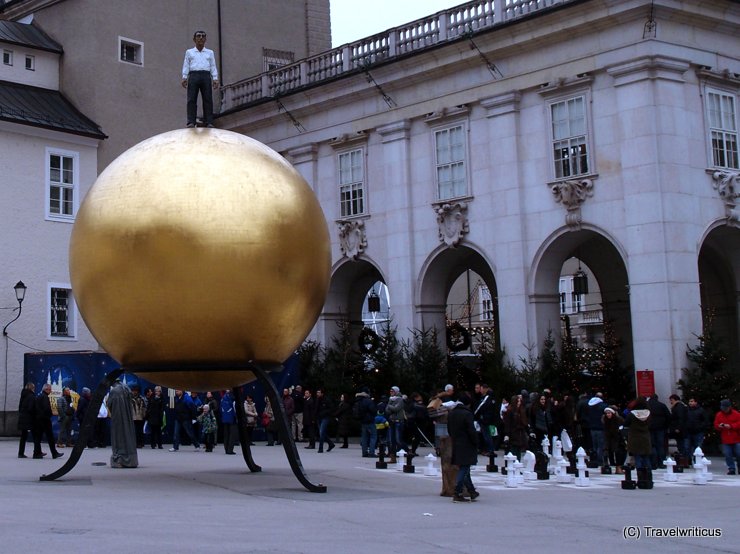
Memories! Years ago, I used to play chess with local people on the board depicted above. I am glad to see the public chessboard is still in use. By the way, the man on the sphere is a sculpture created by Stephan Balkenhol. The official name is ‘Sphaera’, but people call it ‘Mozartkugel’.