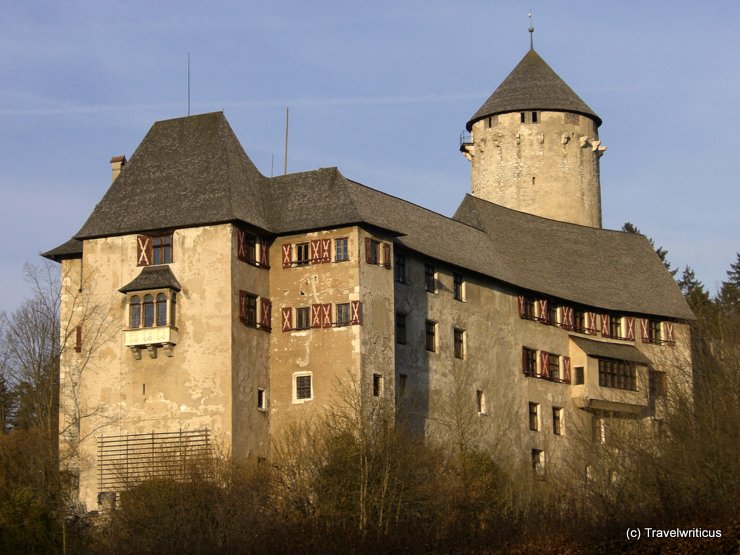
Matzen Castle in Reith was first mentioned in the 13th century. In earlier times, a settlement named Mascianum guarded a Roman street here. Today, the building houses a castle hotel. [German]
You only see what you know (Goethe)
Matzen Castle in Reith was first mentioned in the 13th century. In earlier times, a settlement named Mascianum guarded a Roman street here. Today, the building houses a castle hotel. [German]
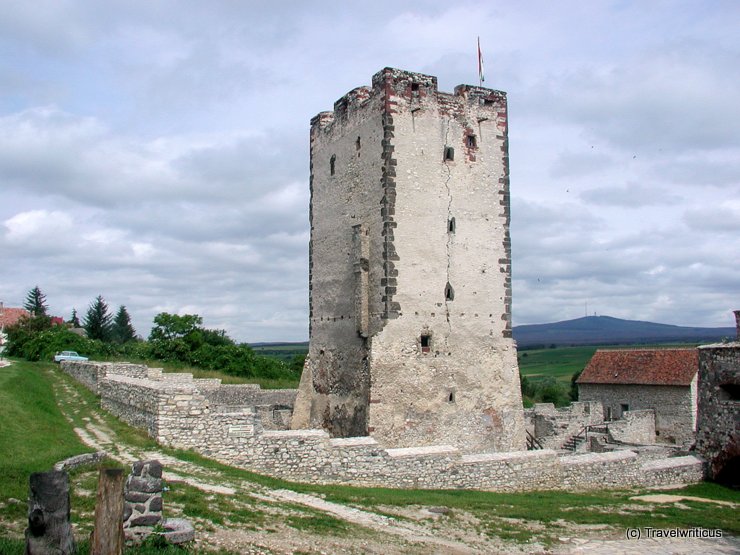
This tower is part of a former stronghold owned by the legendary Hungarian military leader Pál Kinizsi. By climbing up Kinizsi Castle (Kinizsi-vár), I learned something new about the interior of tower houses in the medieval ages. [German]
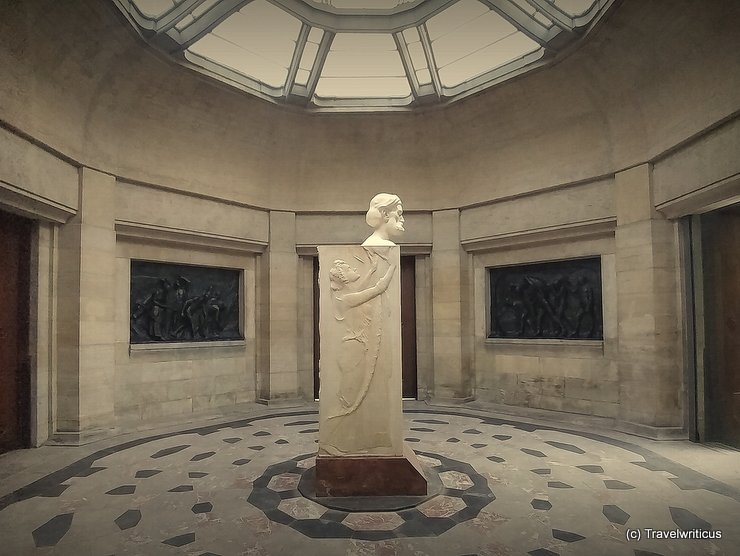
The memorial site to Ernst Abbe reminded me more of a temple than a simple monument. A look through the glass door increased the impression. The dainty image of the industrialist and social reformer Ernst Abbe rested on a massive herm. [German]
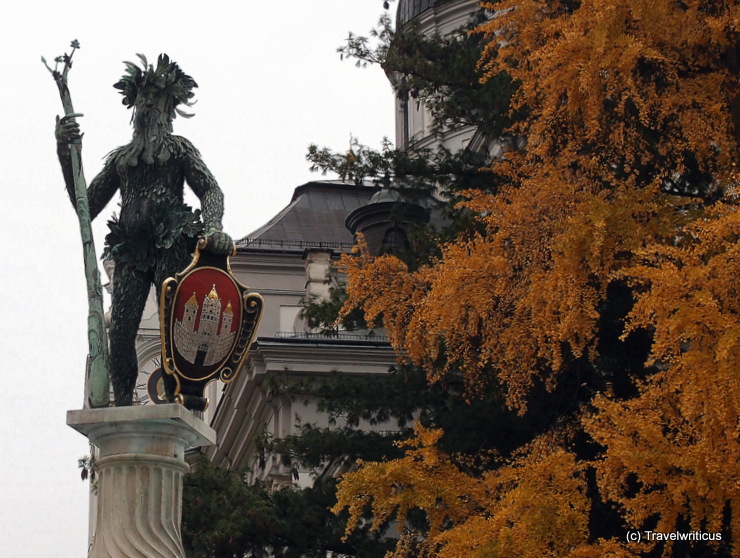
The Wild Man Fountain (Wilder-Mann-Brunnen) has existed since the beginning of the 17th century. Its water basins kept the fish fresh on the fish markets. Today, the fountain stands on the Max Reinhardt Square opposite the Grand Festival Hall. [German]
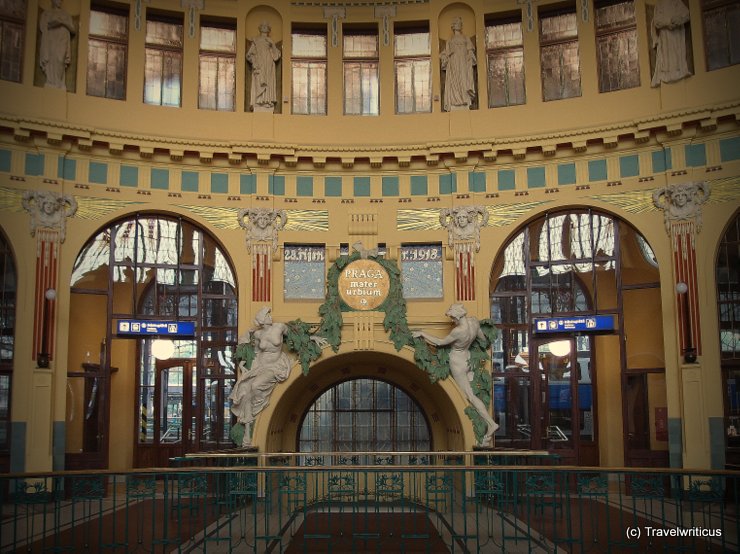
The Art Nouveau hall in Prague’s Central Station (Praha hlavní nádraží) gives a glimpse of the former splendour and glory of the Habsburg Empire. It was designed by Josef Fanta (1856-1954) and opened in 1909. [German]
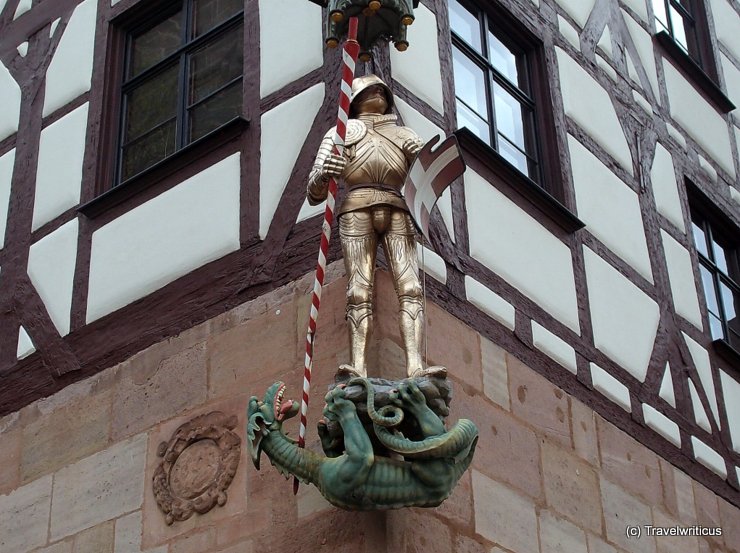
The house sign of the Pilatushaus in Nuremberg shows Saint George fighting the dragon. The motif fits well. The owner of this home was a Plattner (amorer), and George was the Saint of his craft guild.
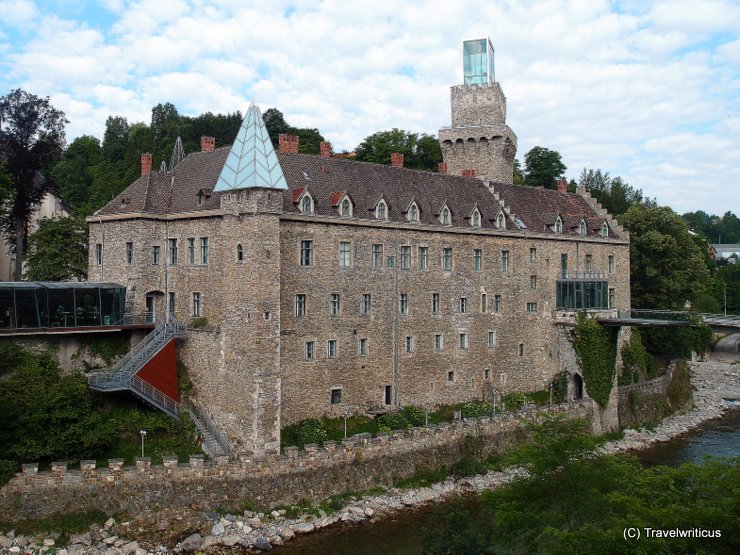
After staying a night at the former Zell Manor, I came across this castle on my morning walk. It is generally known as Rothschild Castle (Rothschildschloss) since it was rebuilt in Neo-Gothic style by Albert Salomon Anselm von Rothschild.
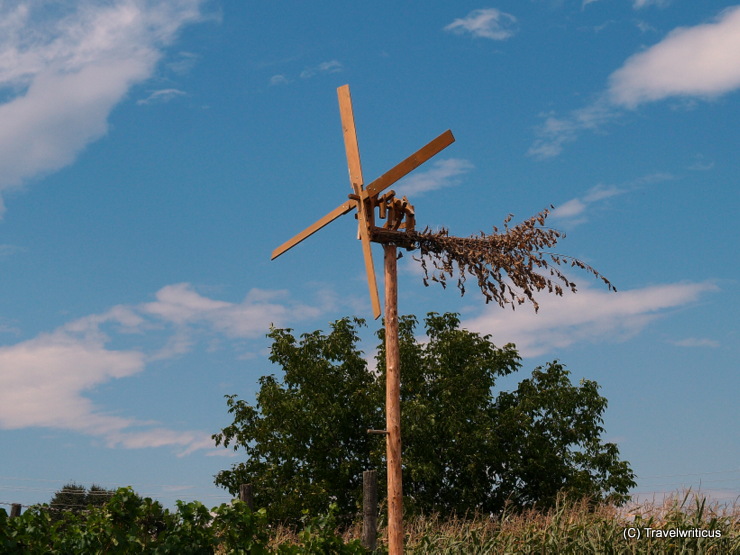
An iconic rural element in Slovenia is the Klopotec. It is a sort of bird-scaring rattle. You find it in many traditional Slovenian wine-growing areas. They are also common in some parts of Austria (esp. Styria) and Croatia (esp. Zagorje).
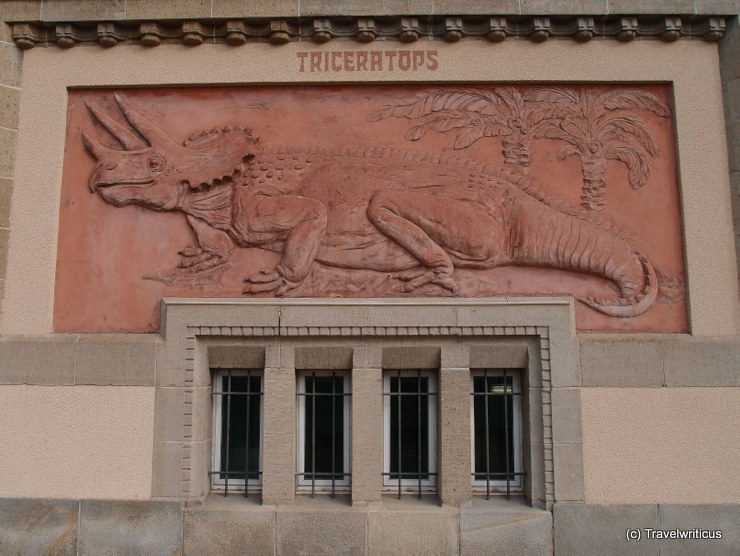
This illustration of a Triceratops by Heinrich Harder is one of several animal representations on the outer walls of the Aquarium Berlin. It forms an intriguing contrast to the colourful fishes inside.
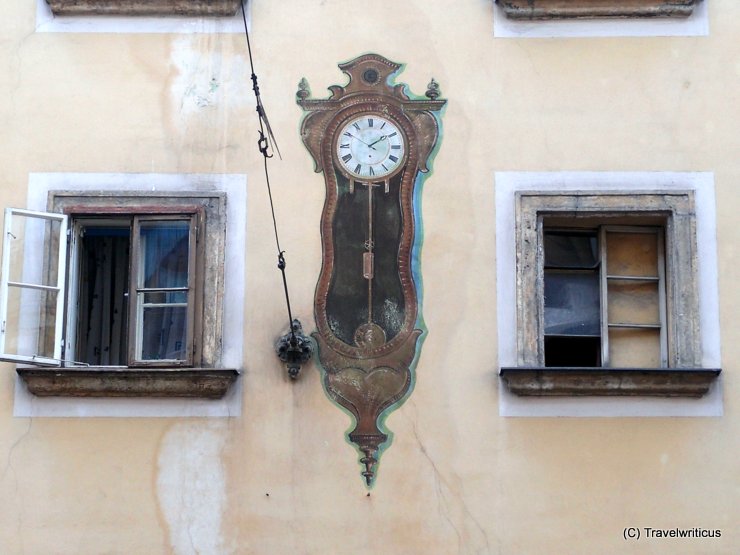
While walking through the lanes of Vienna, I came across this mural portraying a pendulum clock. I found it on the facade of a building that is considered the smallest one in Vienna.
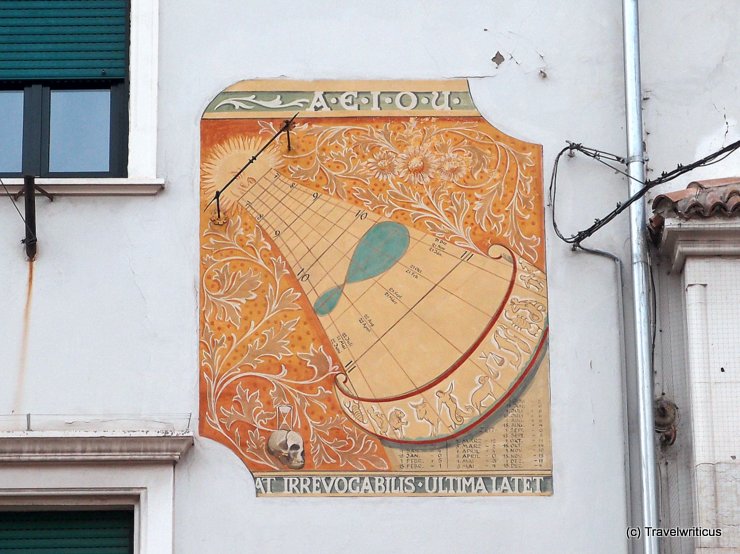
While I walked through Merano in Italy, I came across this sundial. I was impressed by how many elements and codes are compiled in this depiction. For example, you see the motto of Frederick III (A.E.I.O.U.) as well as a skull with an hourglass on top of it. [German]
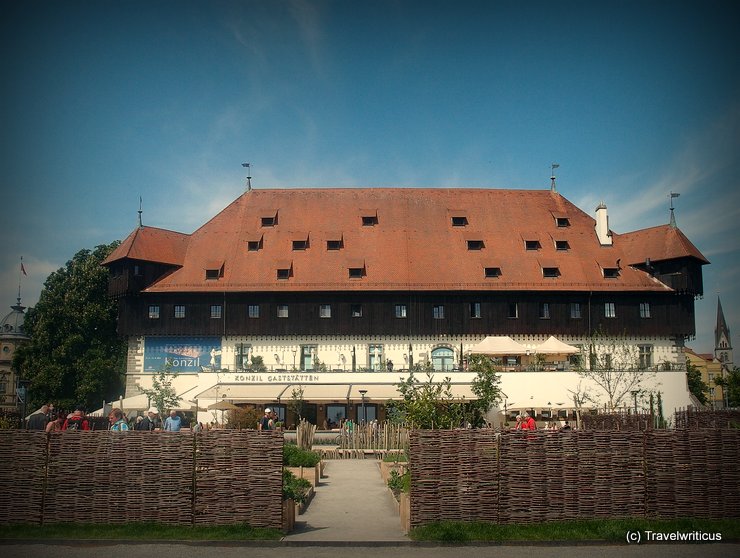
In the Council Building, the election of Pope Martin V took place in the year 1417. It was a crucial event during the Council of Constance (1414-1418). The German building name still reminds us of this event: Konzilgebäude or Konzil. [German]