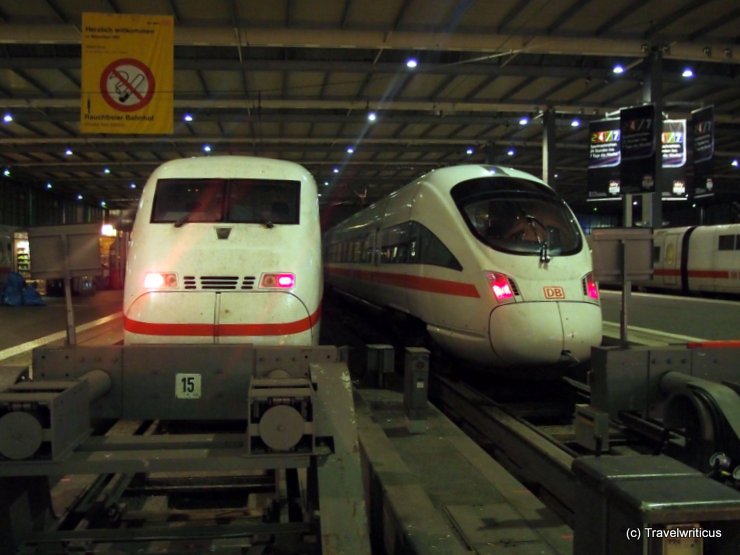
Before entering the Eurocity to Bregenz I came across these two generations of the great ICE trains. Reminds a bit of father (ICE 2) and daughter (ICE T), doesn’t it?
You only see what you know (Goethe)
Before entering the Eurocity to Bregenz I came across these two generations of the great ICE trains. Reminds a bit of father (ICE 2) and daughter (ICE T), doesn’t it?
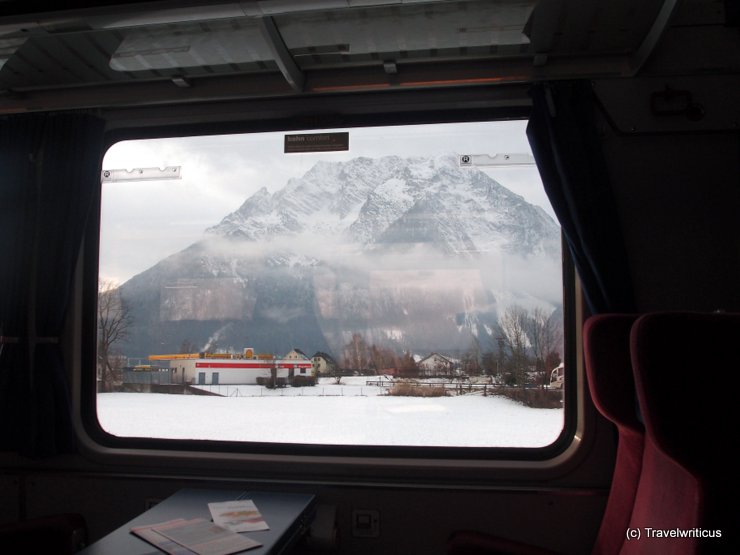
On a train journey through Styria (Austria) I took this photo of a mountain called Grimming. I love to call views through the window at the opposite side ‘Train TV’. It’s a bit like looking at a flat screen, isn’t it?
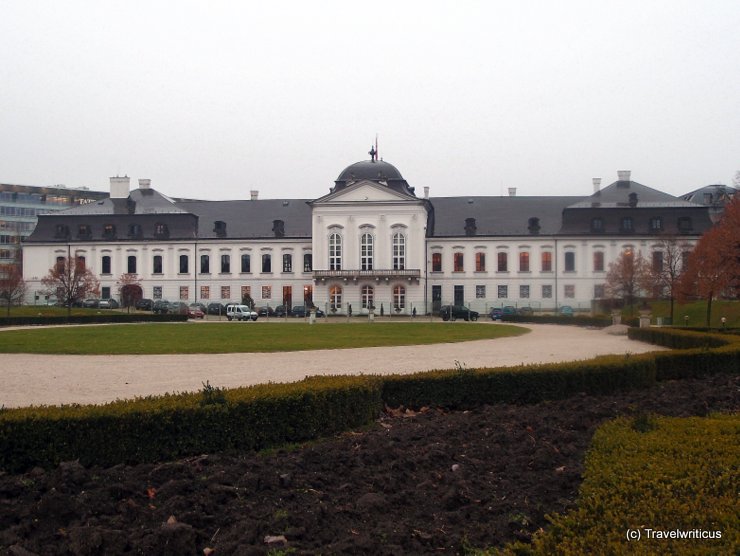
On my walk from the railway station to the town center I came across a park at the back of Grassalkovich Palace (Grasalkovičov palác). This palace is the residence of the Slovakian president.
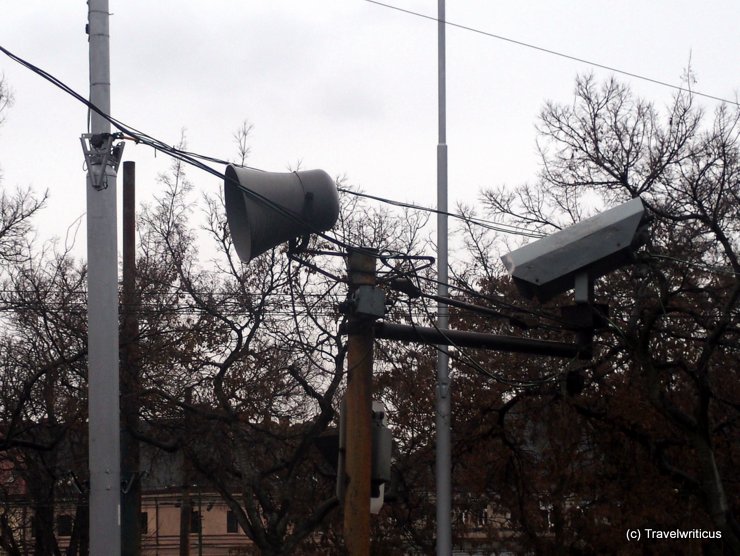
An interesting detail of Slovakia (and Czech Republic): There are more than usual loudspeakers in the streets. Not only in the main cities but also in the smaller ones. A kind of political information system? Which countries do you know where you can see many loudspeakers in the streets?
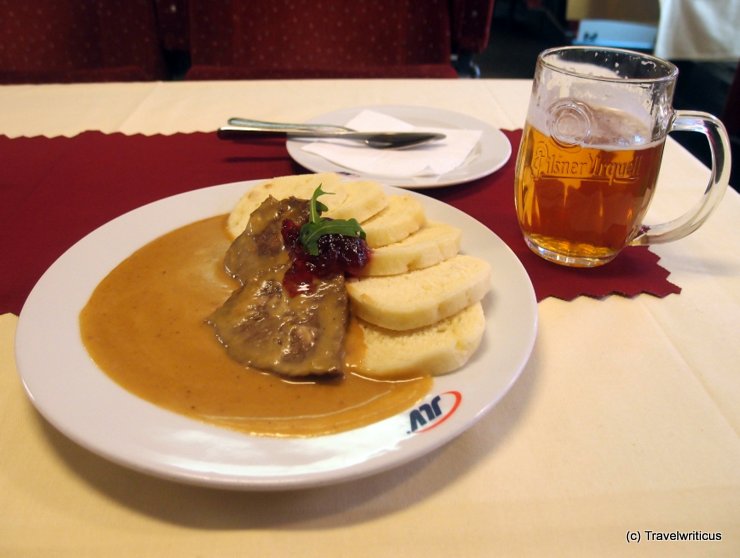
While planning my next day on my train journey in Dec 2011 some thoughts about dining cars came to my mind. Is it worth to think about which dining-car is on your planned train? Well, I think so …
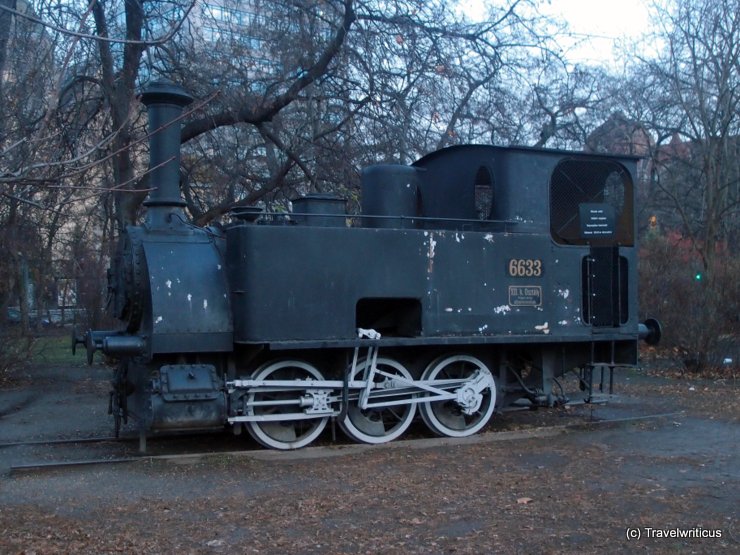
This steam locomotive NkNb 1-3, built in 1882, stands in front of the Transport Museum of Budapest. The locomotive was built for the railroad Nagykikinda–Nagybecskerek and was later changed into an industrial locomotive for a chemistry factory in Budapest.
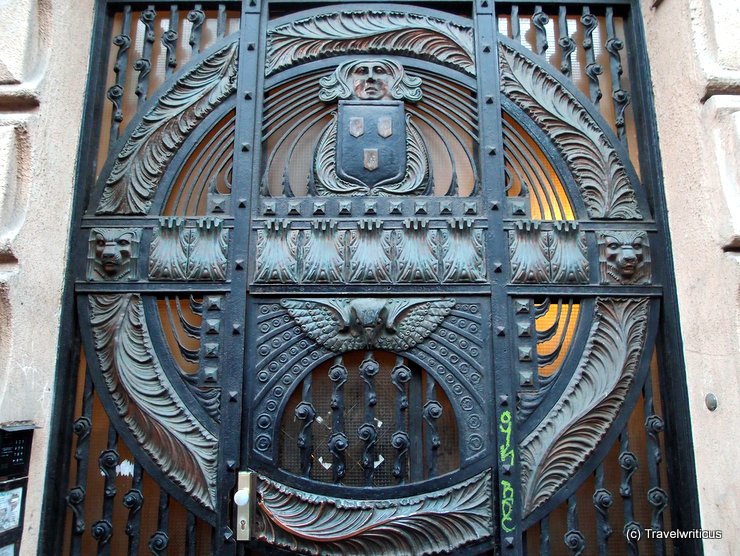
Generally tourists tend to leave a railway station as quick as they can. They hurry down to the metro or they are looking for a cheap bus or a quick taxi in order to get to their hotel.
On a walk around the quarter of the railway station Keleti Pu in Budapest I came across this amazing door. Quarters around railway stations are often worth a walk.
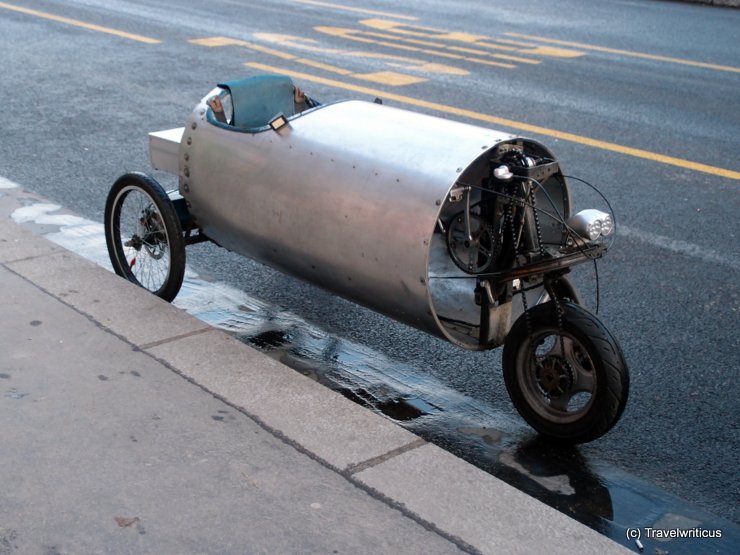
During my short walk around the railway station Keleti Pu I came across strange vehicles like this one at two different places. I wonder what the story of these vehicles is? Any ideas?
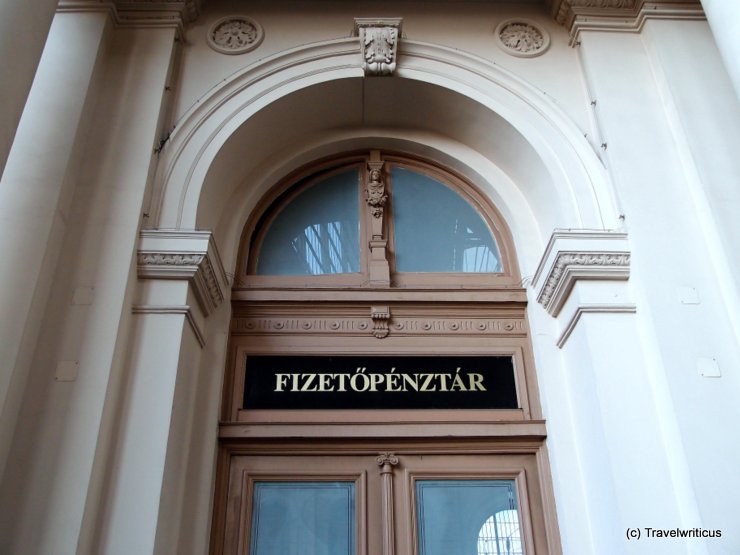
I speak German and English. I understand a bit Romance and Slavonic languages. I don’t understand Hungarian. Not a single word. But I loved to listen to the loudspeakers at the railway station Keleti Pu in Budapest. Listening to a completely foreign language is like listening to music, isn’t it?
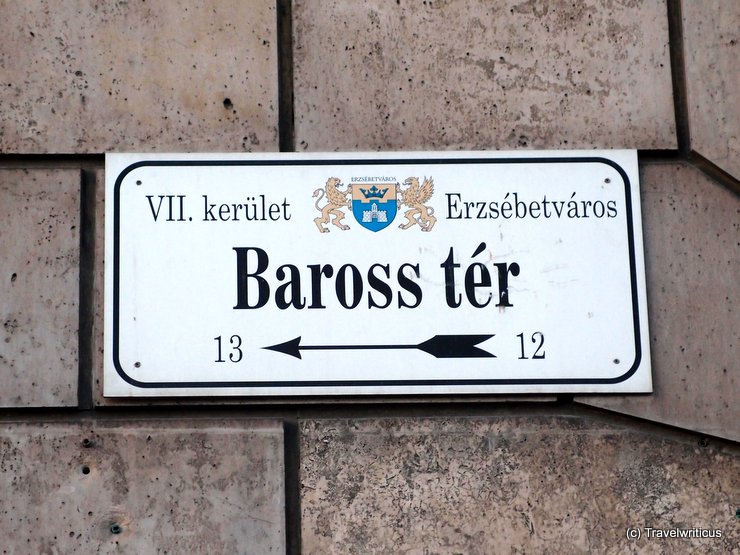
I came across this colourful street name sign next to the railway station Keleti Pu. I love such signs, which show more than just the street name.
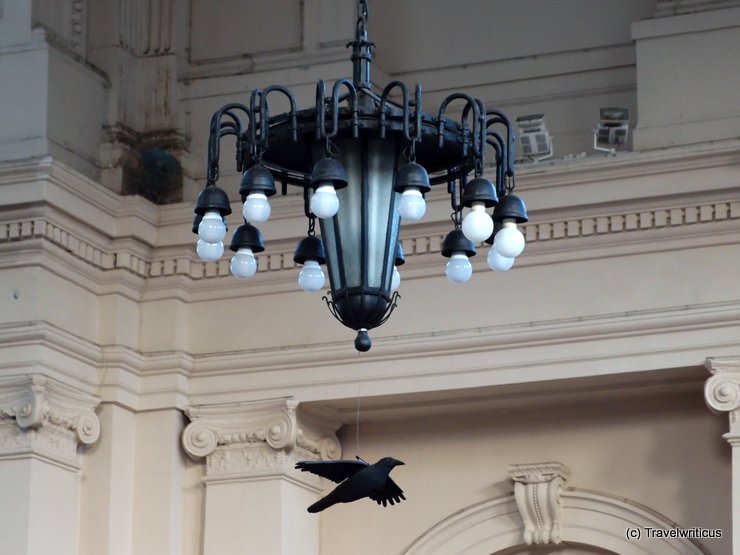
While walking through the railway station Keleti pályaudva ‘Keleti Pu’ I came across this chandalier. It was not the only one which was decorated with a crow. I guess, it is a method to scare the pigeons off. What do you think?