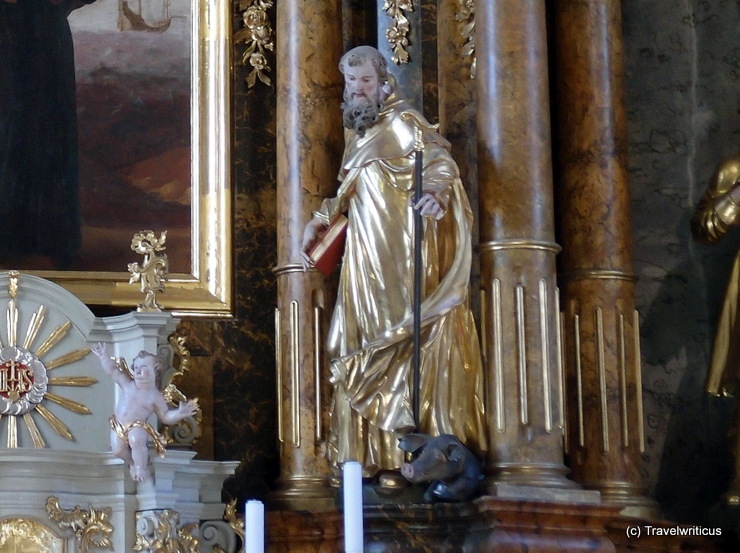
The Baroque church of Olimje castle offers not only a fine altarpiece. In a side chapel of the church, I discovered a statue dedicated to Saint Anthony the Great. One attribute of this saint is a pig, which appears at the feet of the saint.
You only see what you know (Goethe)
The Baroque church of Olimje castle offers not only a fine altarpiece. In a side chapel of the church, I discovered a statue dedicated to Saint Anthony the Great. One attribute of this saint is a pig, which appears at the feet of the saint.
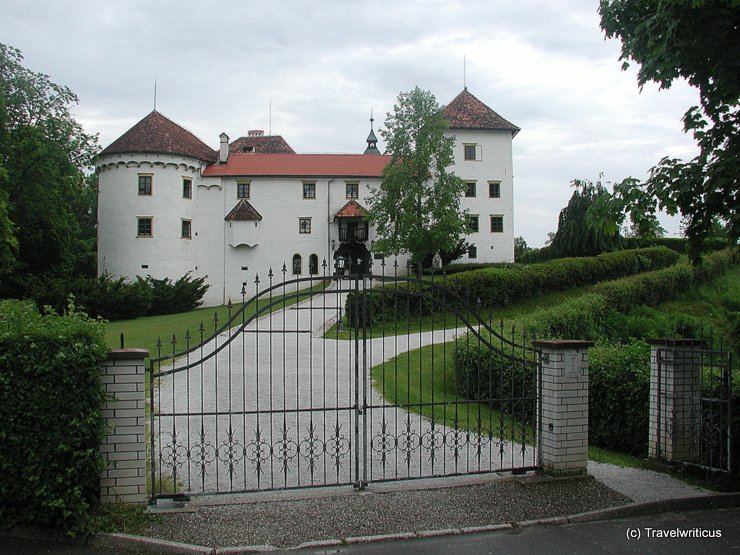
Bogenšperk Castle (Grad Bogenšperk) was the home of the natural historian and polymath Johann Weichard Valvasor (1641-1693). He became famous for publishing several books about topics like the Karst or the history of Carniola. [German]
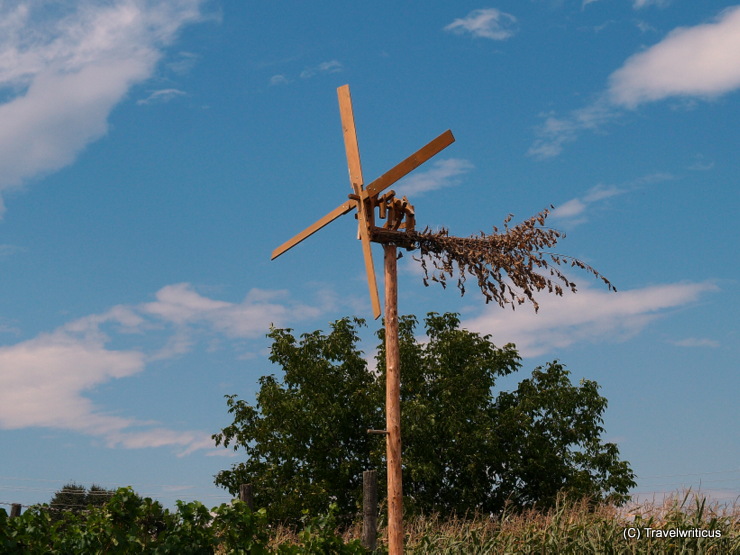
An iconic rural element in Slovenia is the Klopotec. It is a sort of bird-scaring rattle. You find it in many traditional Slovenian wine-growing areas. They are also common in some parts of Austria (esp. Styria) and Croatia (esp. Zagorje).
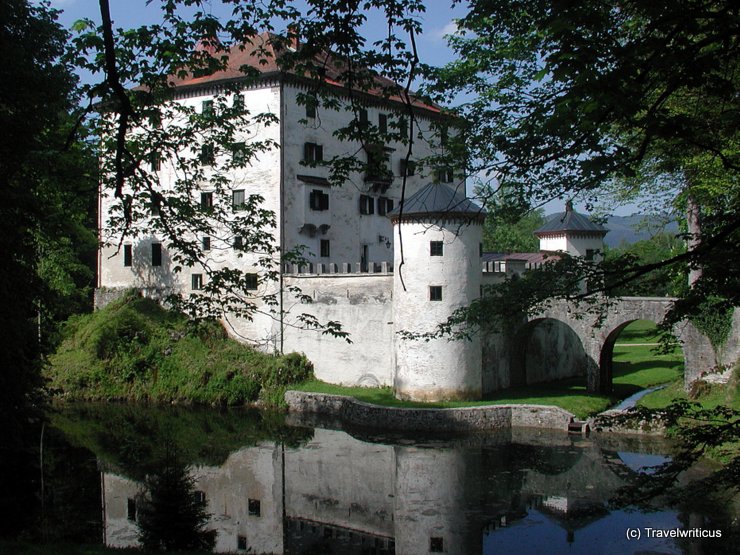
Snežnik Castle (Grad Snežnik) was first mentioned in 1268. I was especially impressed by the complete interior furnishing of the late 19th century. So, this place gave me a good impression of the noble lifestyle in that period. [German]
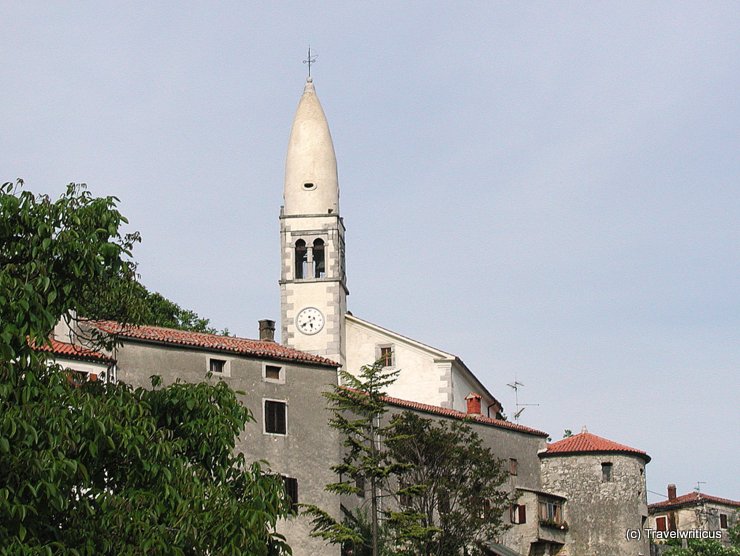
St Daniel’s Church in Štanjel was built in the 15th century as the burial vault of the Counts of Cobenzl. I especially like the church for the shape of its steeple. Štanjel also offers a beautiful garden named Ferrari Garden (Ferrarijev vrt). [German]
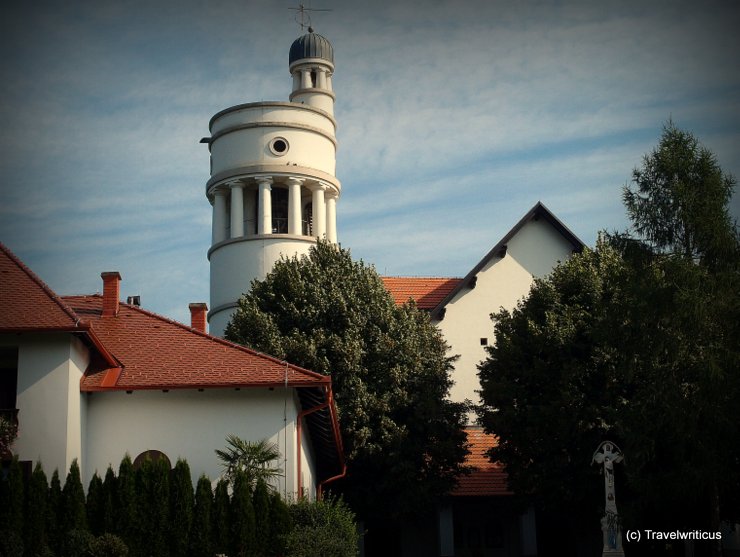
The Church of the Ascension (Župnijska cerkev Gospodovega vnebohoda) in Bogojina was built in the 1920s according to plans by Slovenian architect Jože Plečnik. The locals call the building Plečnik’s Church or White Dove (bela golobica). [German]
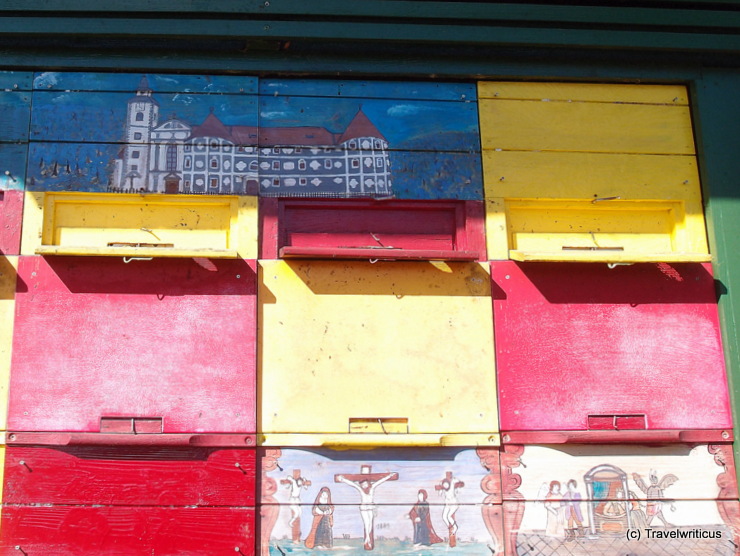
In the areas of Slovenian Styria (Slovenska Štajerska), Carniola (Kranjska)and the Austrian state of Carinthia (Kärnten), hikers find these traditionally painted bee boards (Panjske končnice). With the help of these paintings, beekeepers identify a particular hive.
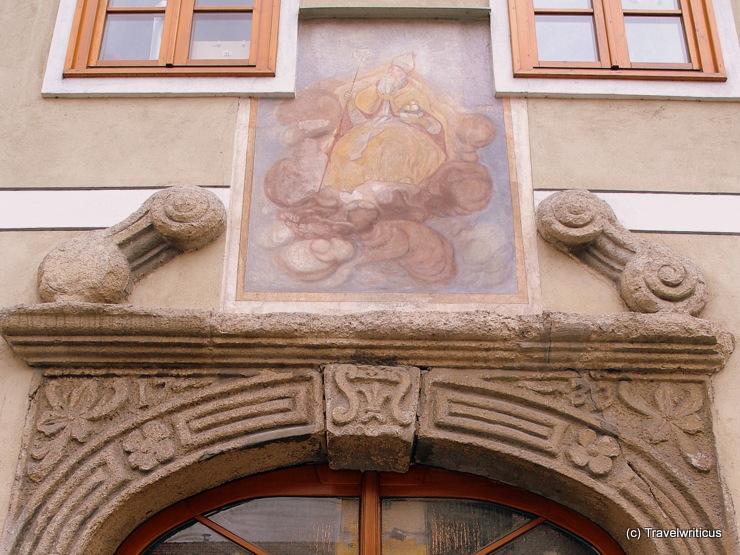
At first, I was surprised to see embrasures at this part of the former curacy. Later, I learned the Baroque building was erected on top of the walls of a former defence tower. The fresco above the richly ornamented portal depicts Saint Nicholas, to whom the nearby church is consecrated.
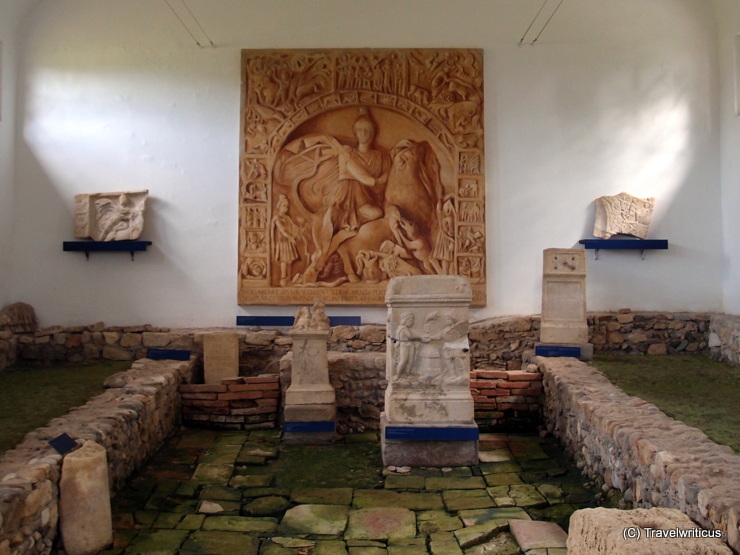
A protective building in the style of an ancient Roman sanctuary shelters the remains of the Mithras Shrine III in Ptuj. The shrine was erected in the sixties of the 3rd century by soldiers of the Legio XIII Gemina.
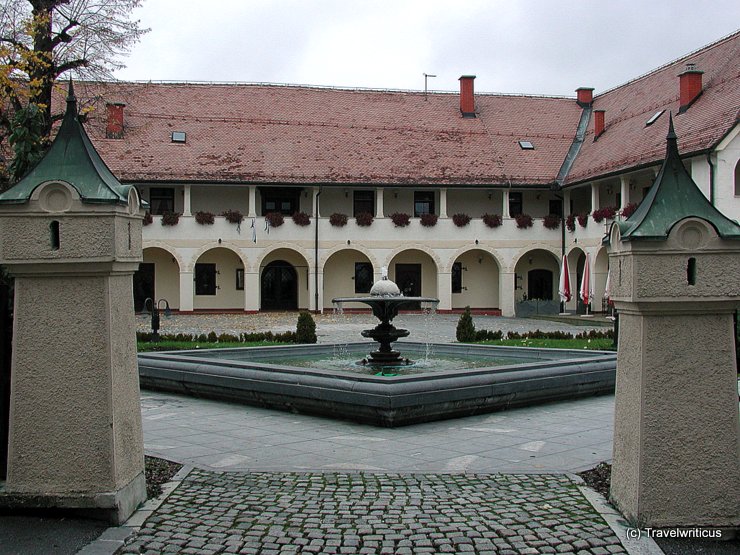
Rotenturn Manor (Dvorec Rotenturn) stands in the Slovenian city of Slovenj Gradec. It is one of the town’s most important venues for cultural events. [German]
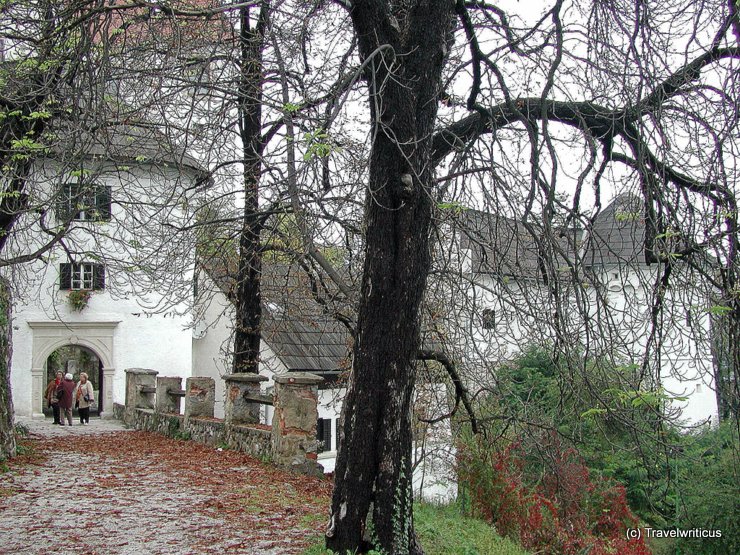
Velenje Castle (Velenjski grad) is a well-preserved castle high over the Slovenian city of Velenje. It offers an intriguing museum inside. For example, you see the reconstruction of an old grocery shop and the remains of two mastodons.
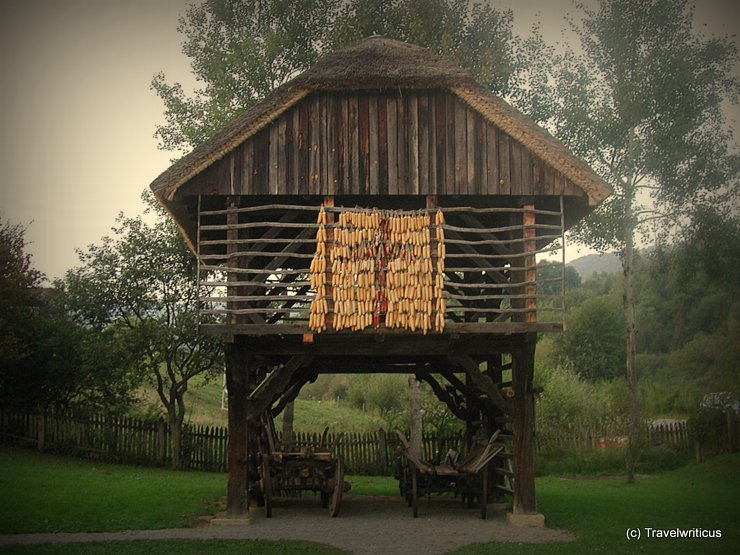
While travelling through Slovenia, I love to look for agricultural structures called Kozolec. These are traditional hayracks which are typical for this part of Europe. They are not only utilitarian but also known for artsy adornments.