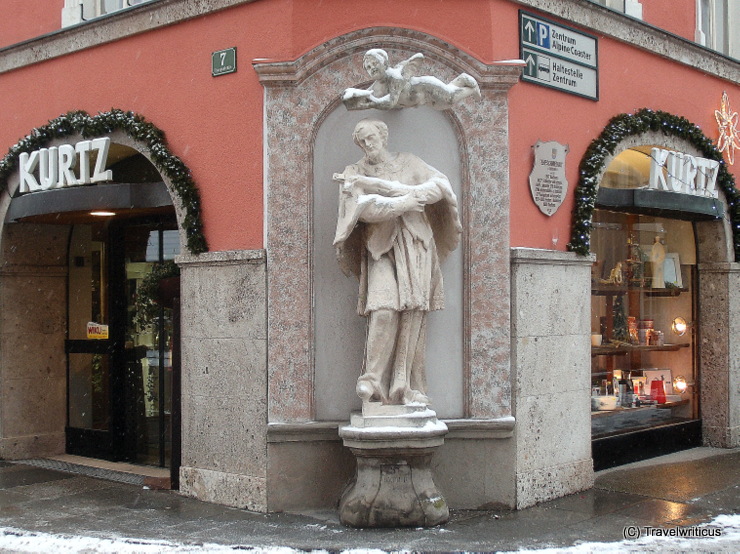
This statue of Saint John of Nepomuk stands at a building named Eheschmiedhaus. The building dates back to the 13th century. The sculpture saw its completion in the first half of the 18th century. I love the levitating angel above his head. [German]
You only see what you know (Goethe)
This statue of Saint John of Nepomuk stands at a building named Eheschmiedhaus. The building dates back to the 13th century. The sculpture saw its completion in the first half of the 18th century. I love the levitating angel above his head. [German]
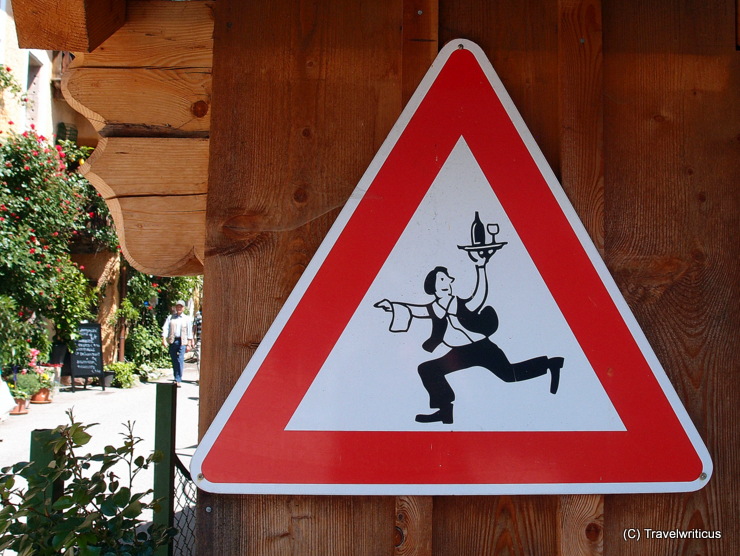
Beware of the dashing garçon! I saw this – probably unofficial – traffic sign in Hallstatt next to the famous Hallstatt Lake. It makes people aware of waitstaff crossing the street. A local restaurant and its open-air seating area occupy different sides of the lane.
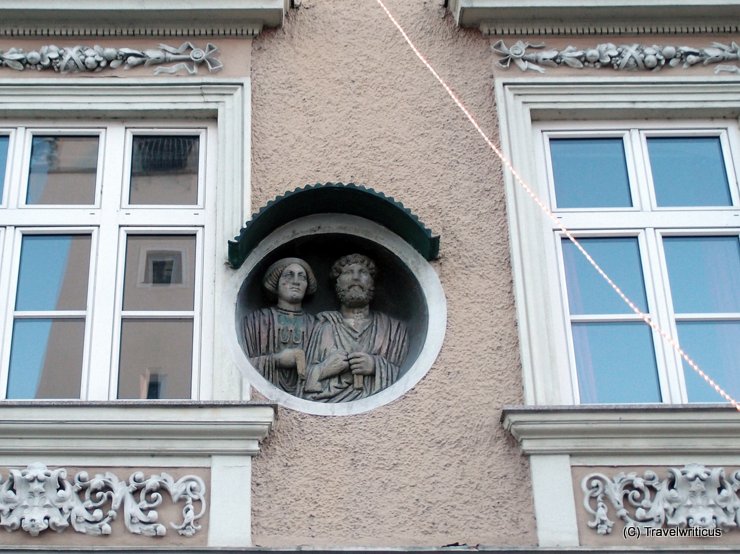
During the Roman era, the city of Wels was known as Ovilava and served as the capital of the province Noricum Ripense. Ancient remains are still visible in the cityscape. For example, this tombstone is part of a building in the town centre.
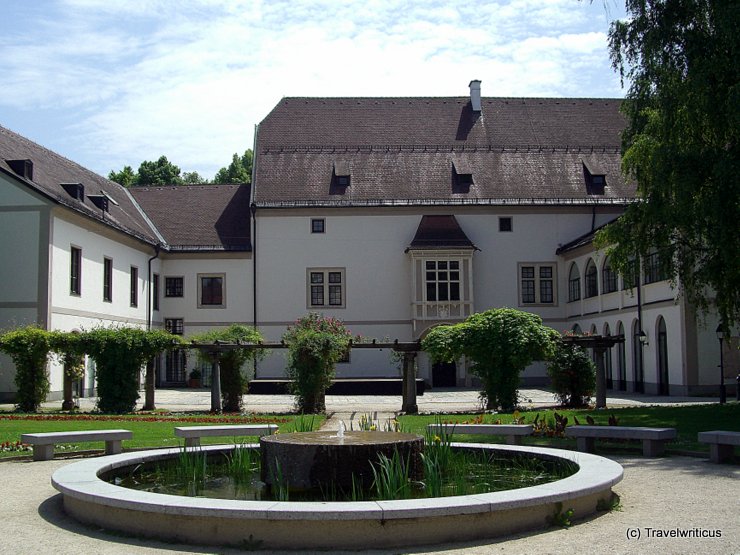
The castle in Wels is generally known as the Castle (Die Burg) or the Wels Castle (Die Welser Burg). It was first mentioned in 776. At that time, the site was just a wooden building with palisades. The construction in stone took place in the 12th or 13th century. [German]
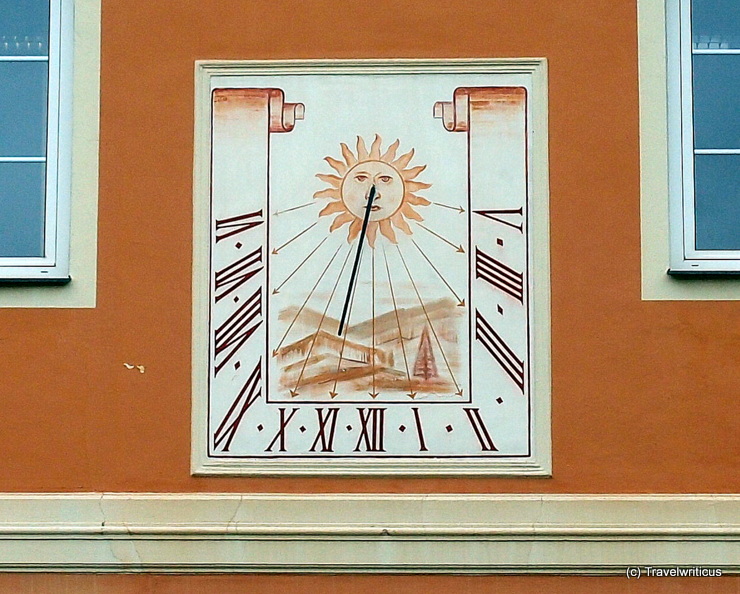
This sundial is located at a building generally known as Hofrichterstöckl. The 17th century edifice is covered with a hip roof and offers an early Baroque entrance portal labeled with the year of construction in 1640.
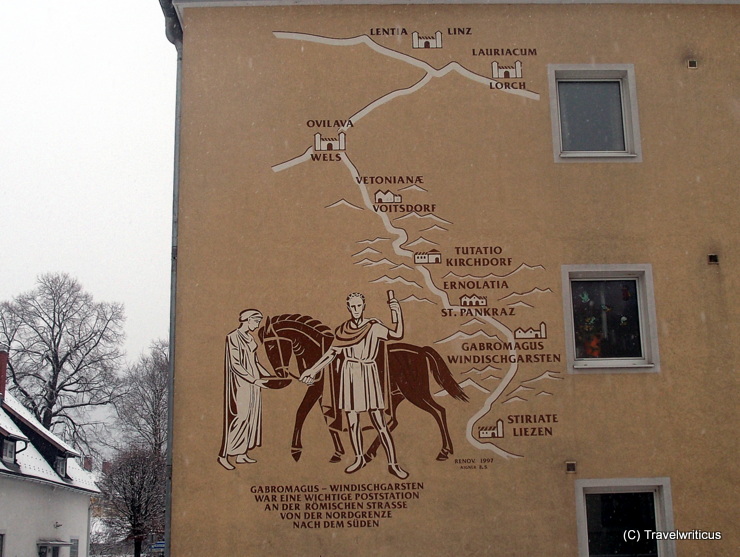
This mural at a building in Windischgarsten shows some ancient Roman places along a local part of the Via Norica. During Roman times Windischgarsten was a stopping place (mansio) at this road named Gabromagus or Gabromagi.
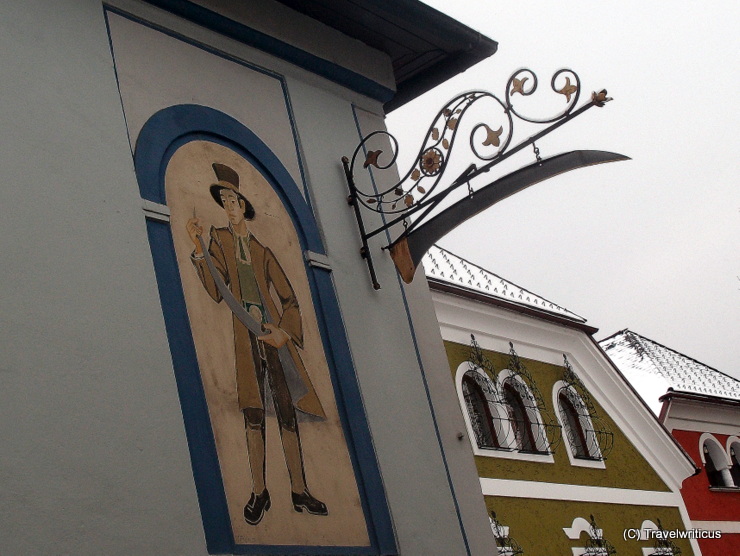
Inn sign and wall painting of the Blue Scythe Inn (Gasthof zur Blauen Sense) in Windischgarsten.
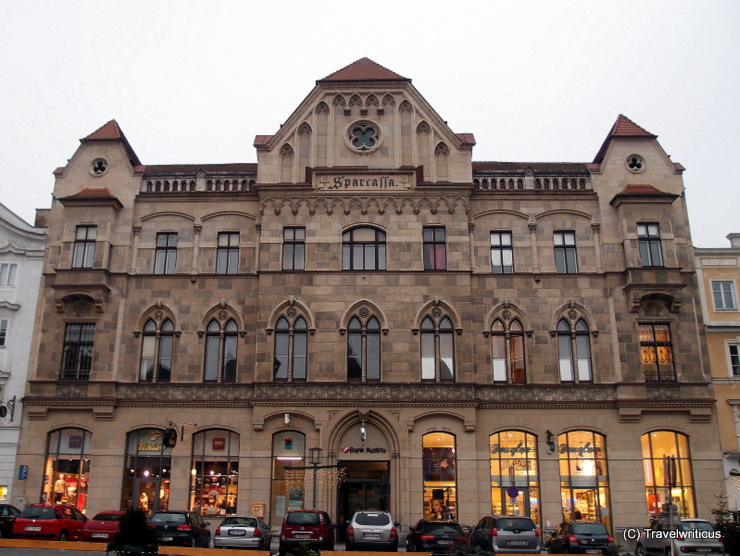
This building of a mutual savings bank (Sparkasse) was built in 1900 in the style of neo-Gothic. For this reason two older houses were demolished, e.g. the Reichlhaus. An interesting details is the writing on top of it, which uses the outdated term Sparcassa.
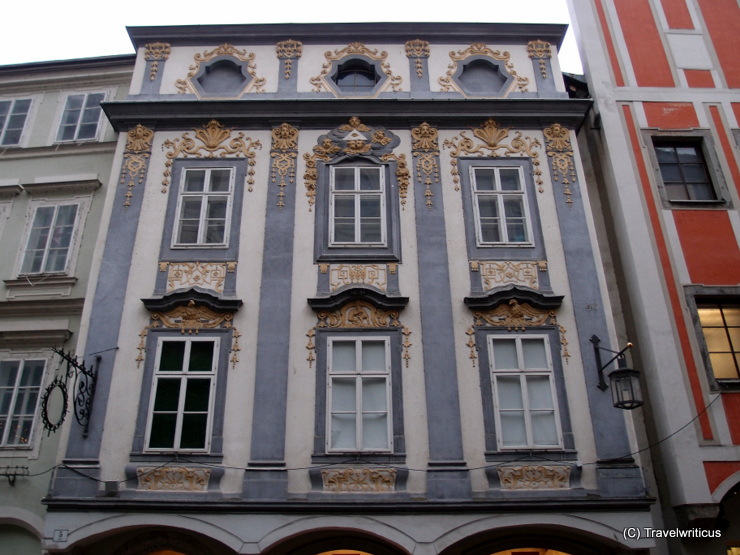
The building with the address Enge Gasse 5 has late Gothic origins and a Baroque facade created in the second quarter of the 18th century. It is generally known as the ‘Zum Andreas Hofer’ inn (Gasthaus ‘Zum Andreas Hofer’).
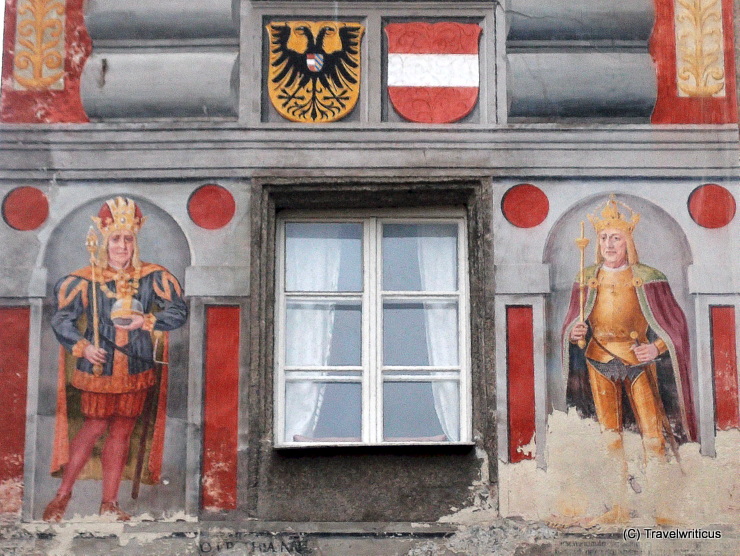
This wall painting located at the northern side of the Blumauerhaus in the city of Steyr shows emperor Frederick III (Friedrich III.) and his son Maximilian I. The building is named after Aloys Blumauer who was born there in 1755.
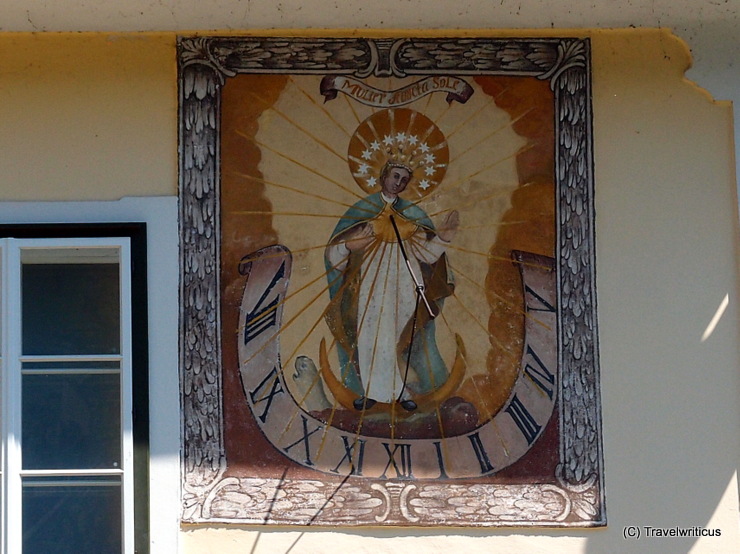
Sundial seen at the walls of Museum Hallstatt located in Hallstatt, a world heritage site in Austria. The museum presents the 2nd largest collection of pieces related to the Iron Age Hallstatt culture in Austria.
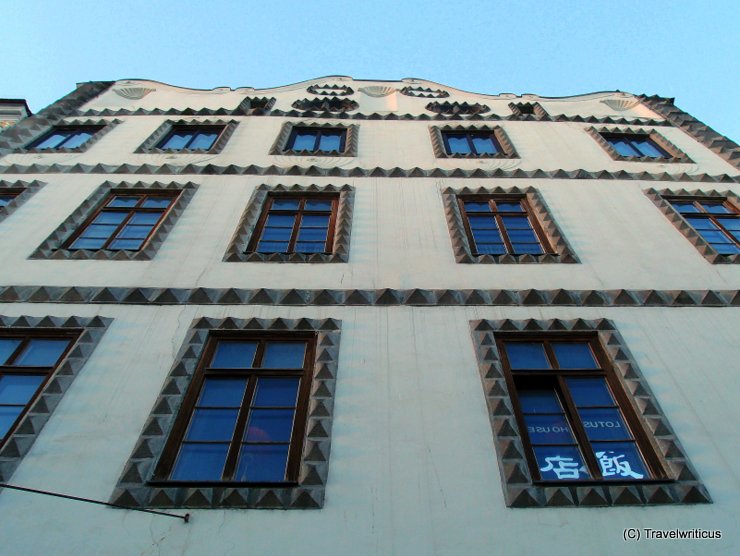
The Freihaus of Christoph Weiß was built at the end of the 16th century. The Renaissance building is especially known for its window frames made of diamond-shaped bossages.