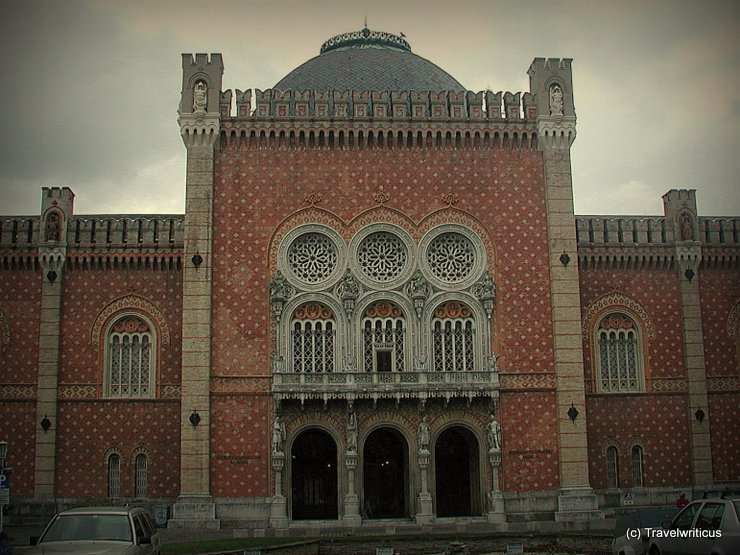
The Museum of Military History (Heeresgeschichtliches Museum) in Vienna is an architectural gem. So you find architecture in the style of Byzantine as well as Neo-Gothic. Some details made me think of being in Venice
You only see what you know (Goethe)
The Museum of Military History (Heeresgeschichtliches Museum) in Vienna is an architectural gem. So you find architecture in the style of Byzantine as well as Neo-Gothic. Some details made me think of being in Venice
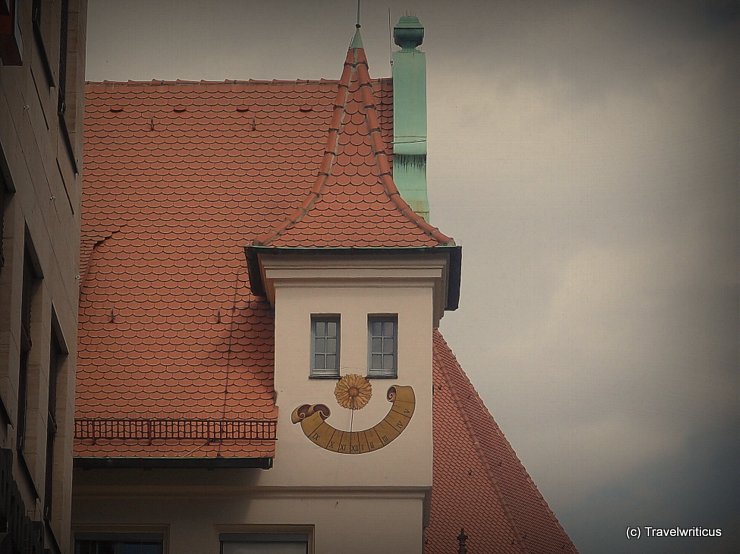
I can’t help myself, but this sundial made me smile! 🙂 I came across this piece while walking along the Sundial Path of Nuremberg. Besides artsy sundials, I also encountered fascinating medieval buildings and informative museums.
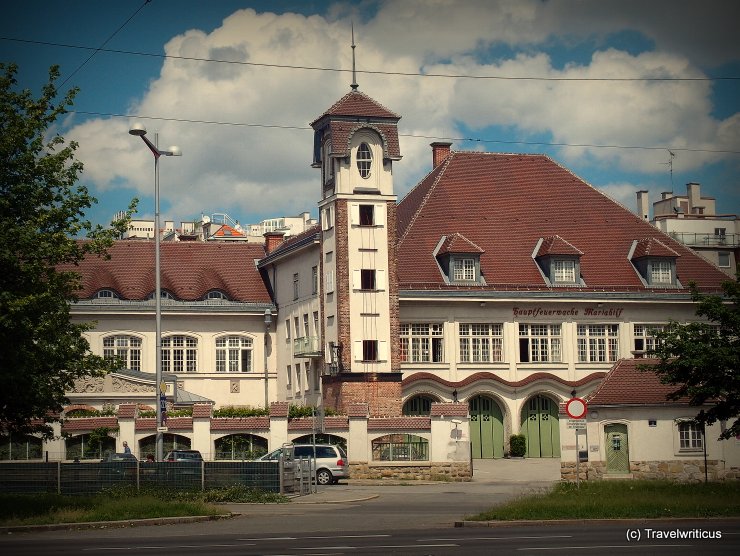
The Mariahilf Fire Station (Hauptfeuerwache Mariahilf) in Vienna saw its completion in 1914. Its architecture still resonates with the spirit of the age between the fin de siècle and the First World War.
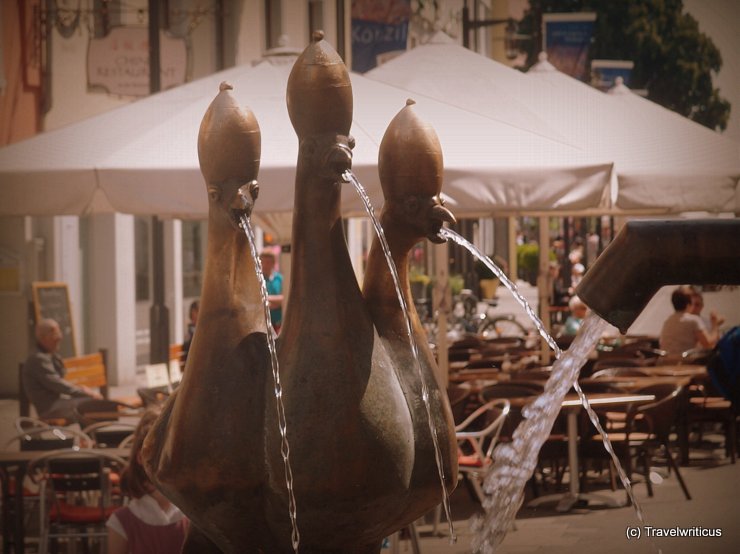
The Kaiserbrunnen (Emperor Fountain) in Konstanz (Constance) was created by sculptor Hans Baur in 1897. After a redecoration by Gernot Rumpf at the end of the 20th century, it refers to historical events related to Constance.
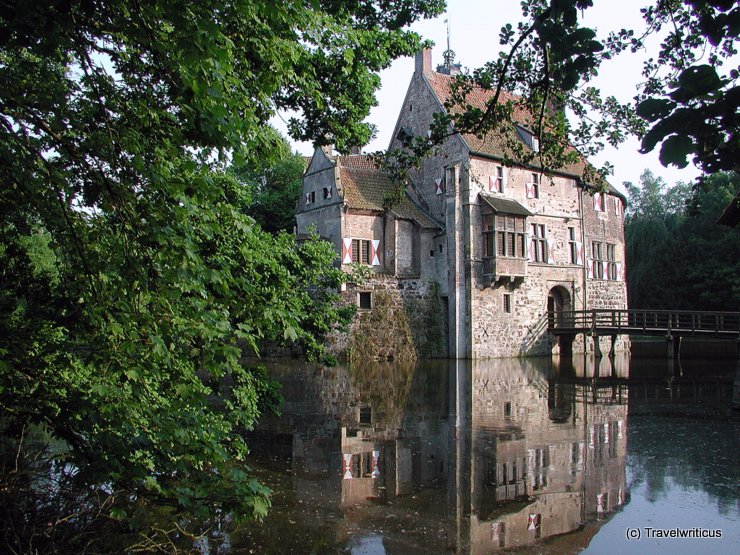
Vischering Castle (Burg Vischering) is a fine place to start a tour along the moated castles of Münsterland. You find the Münsterland Museum inside its walls, telling all about the castles and palaces of the region.
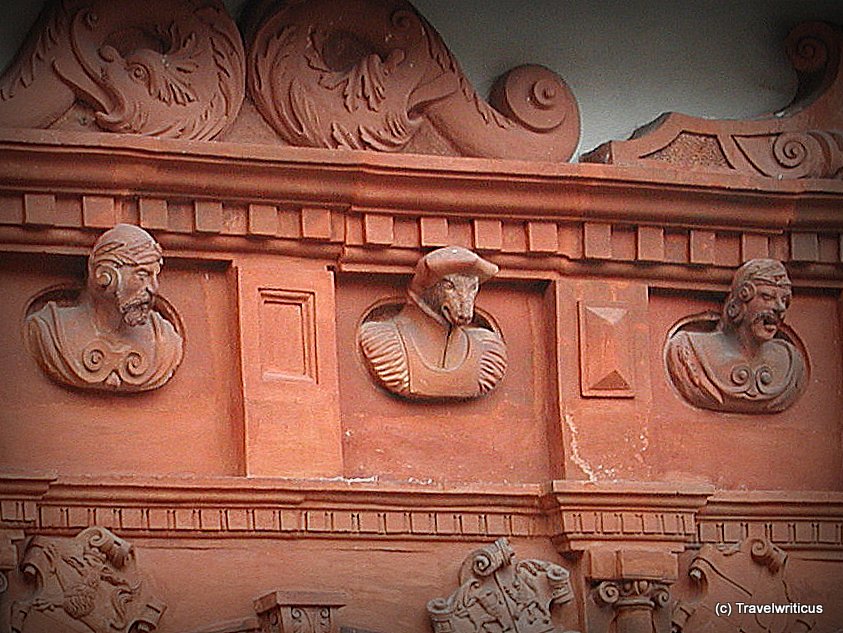
If you look at the sculptures decorating the courtyard of Schallaburg Castle (Schloss Schallaburg), you may discover the “Hundefräulein” (Dog Lady). This is the bust of a lady whose head looks like the head of a dog.
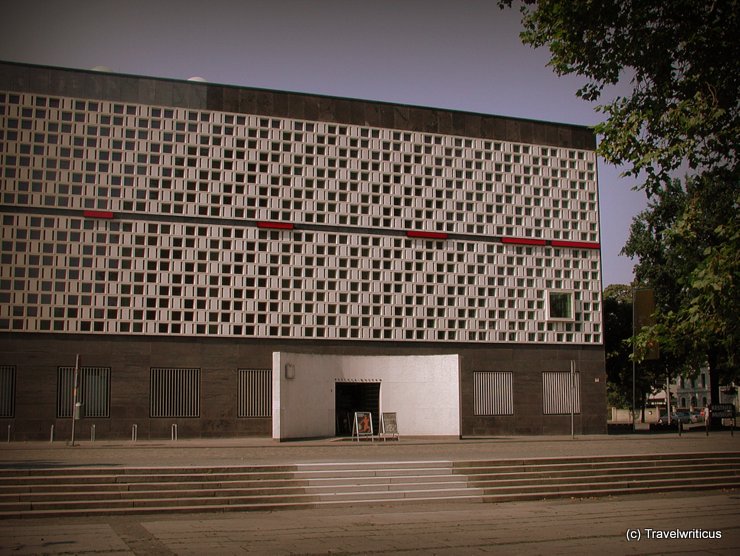
People call it “The house with the 5,000 windows”. Actually, the facade of the Museum August Kestner consists of thousands of glass elements. That way, visitors enjoy the exhibits in a special light. The building saw its opening in 1889. [German]
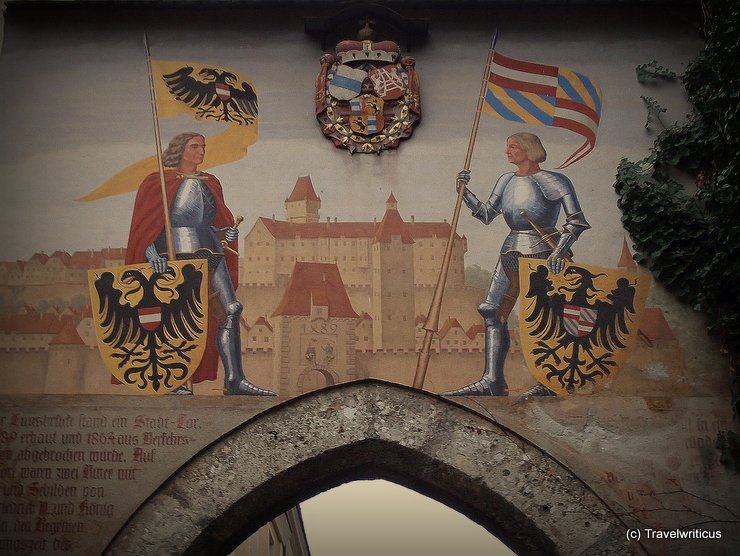
At the foot of Lamberg Castle, a Gothic archway blocks the way to the former palace. People call it Unteres Burgtor (Lower Castle Gate). A fresco depicting two emperors and a medieval view of the town adorns the structure. [German]
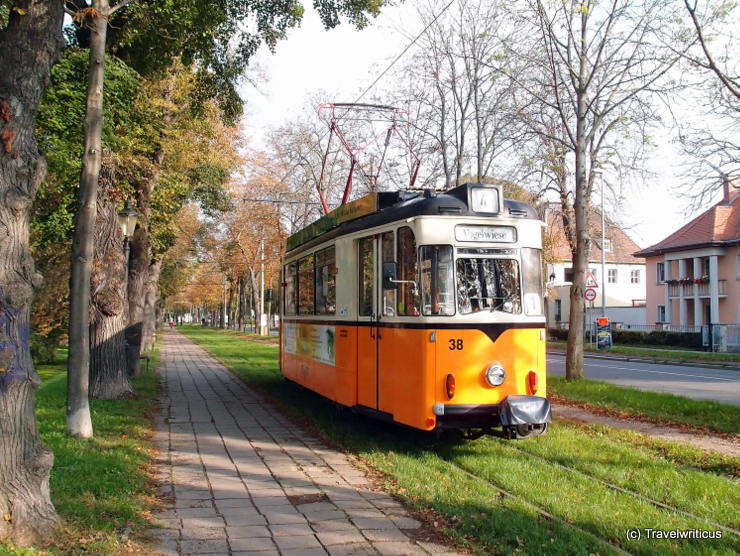
Naumburg (Saale) still uses GDR tramcars on its tourism tramline. While walking along the tracks, this “Gothawagen” T57 overtook me. Its nickname refers to the manufacturer, the Gothaer Waggonfabrik in Gotha. T57 stands for 1957, its first year of production.
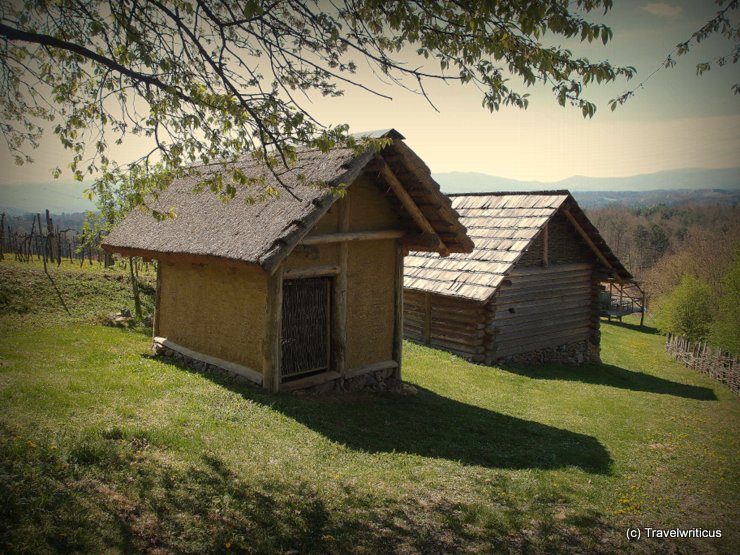
Long before the Romans established their province of Noricum on the grounds of today’s Styria, people of the Hallstatt Culture lived here. Near the Styrian place of Großklein, you find a reconstruction of farmhouses dating back to the Hallstatt period.
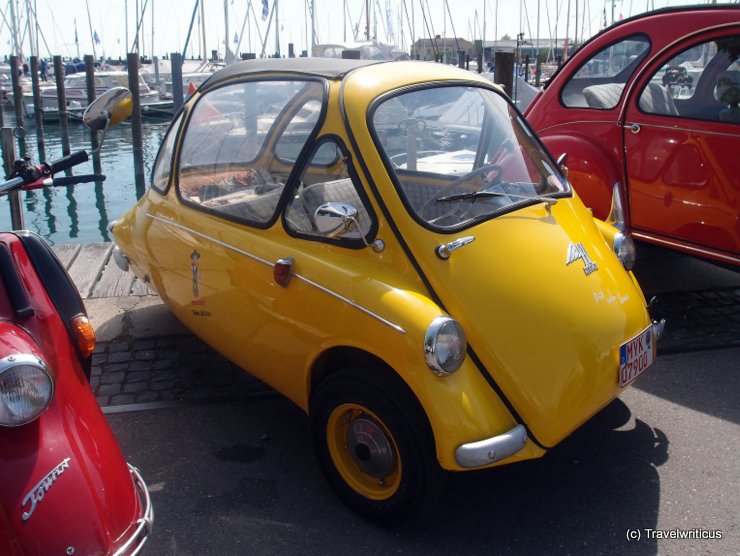
Ha, isn’t it a cutie? I saw this microcar – generally known as Heinkel Kabine – in the German city of Constance (Konstanz). It was obviously a participant in the activities along the International Lake Constance Week (Internationale Bodenseewoche). [German]