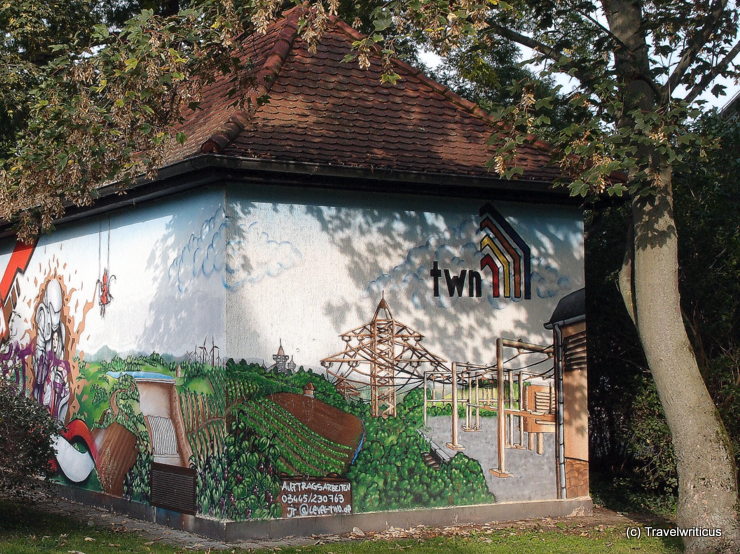
Interesting mural seen on an electrical substation of the TWN in Naumburg (Saale). It shows among others a large substation, some vineyards and the famous cathedral of Naumburg.
You only see what you know (Goethe)
Interesting mural seen on an electrical substation of the TWN in Naumburg (Saale). It shows among others a large substation, some vineyards and the famous cathedral of Naumburg.
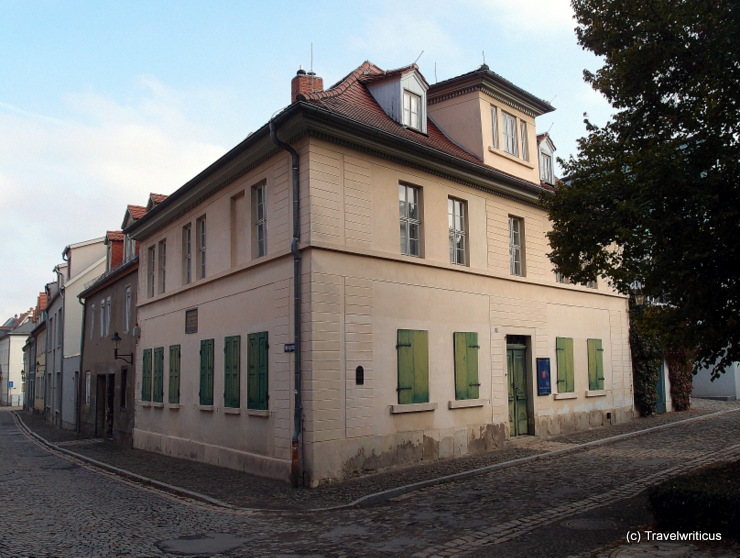
The Nietzsche House has been open to the public since 1994. A permanent exhibition is devoted to the life and work of the philosopher Friedrich Nietzsche. The Nietzsche Documentation Centre, also housed here, is concerned with researching the reception of Nietzsche’s works. [German]
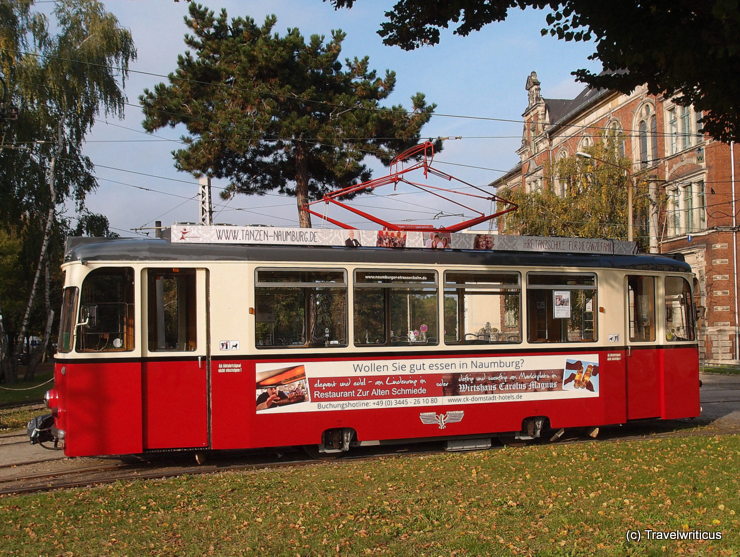
This tramcar, still operated by the Naumburg Tramway, was built in 1973. Even though this tramcar numbered N° 51 is of the same class as tramcar N° 50, it looks more lively. Fascinating how much difference some red paint can make.
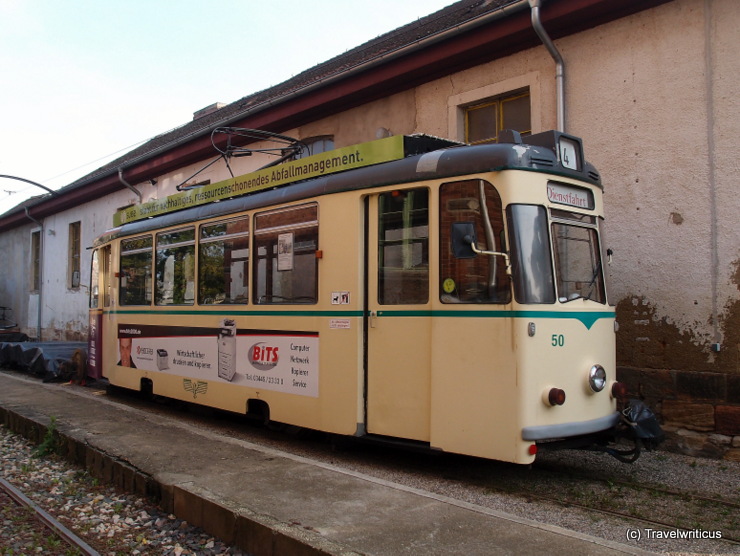
This tramcar of class 70/1 was built in 1971 and is one of the remaining historic vehicles by the Naumburg Tramway (Naumburger Straßenbahn) in Naumburg (Saale). The Naumburg Tramway is considered the shortest urban tramway in Germany and one of the smallest tramways in Europe.
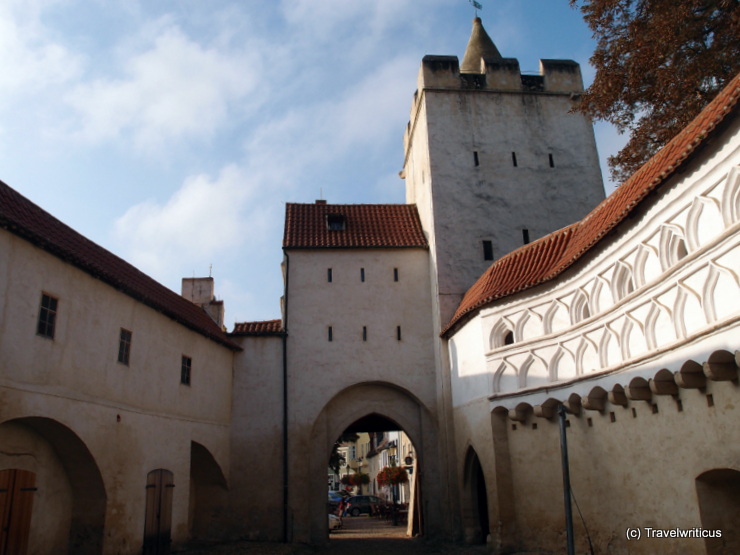
Of five town gates, only one is left. The Marientor is a gate dating back to 1445. It consists of a tower with the region’s typical conical roof and a barbican covered by a late Gothic wall walk.
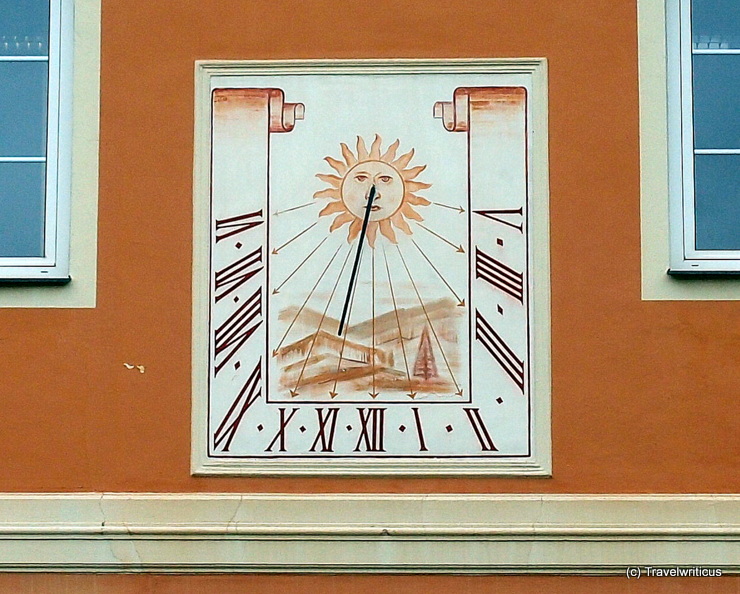
This sundial is located at a building generally known as Hofrichterstöckl. The 17th century edifice is covered with a hip roof and offers an early Baroque entrance portal labeled with the year of construction in 1640.
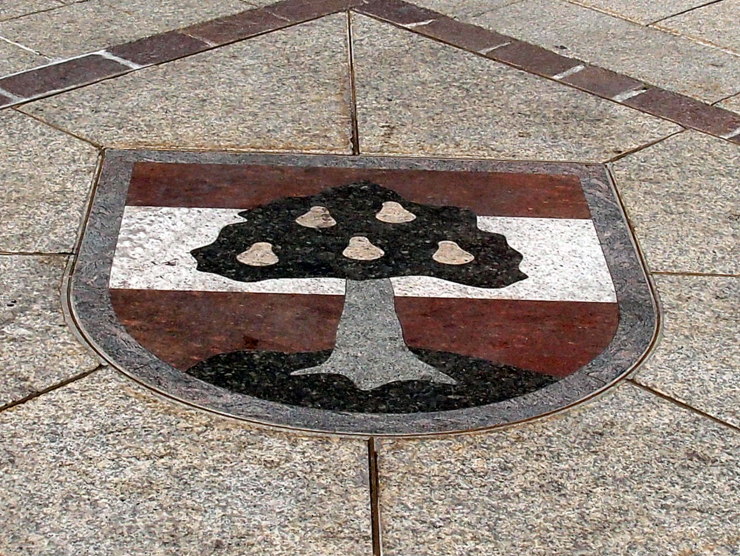
The town coat of arms of Dornbirn displays a pear tree. The symbol of a pear tree refers to the -birn in the city name as the German term Birne stands for the fruit of a pear tree. In marked contrast to this interpretation the name Dornbirn origins from torrin puirron, how the place was called in a 9th-century document.
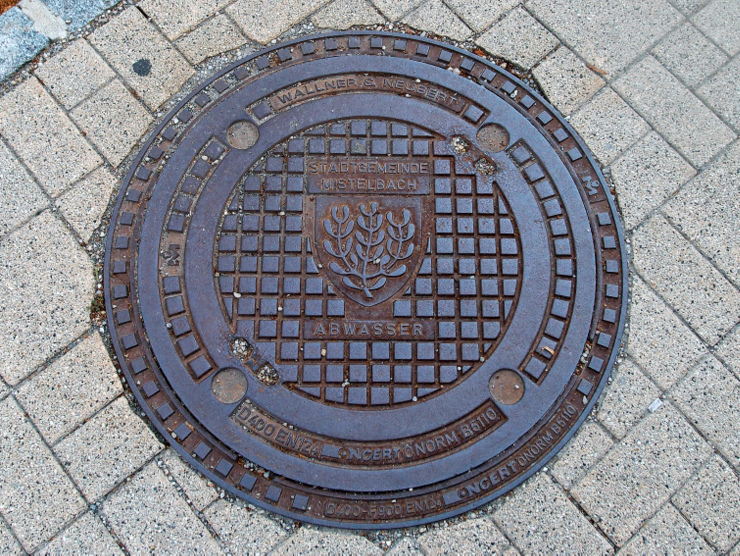
The manhole cover of Mistelbach shows a sprig of mistletoe, which is also depicted in the city arms. The term ‘Mistel‘ in the city name is actually the german term for a mistletoe.
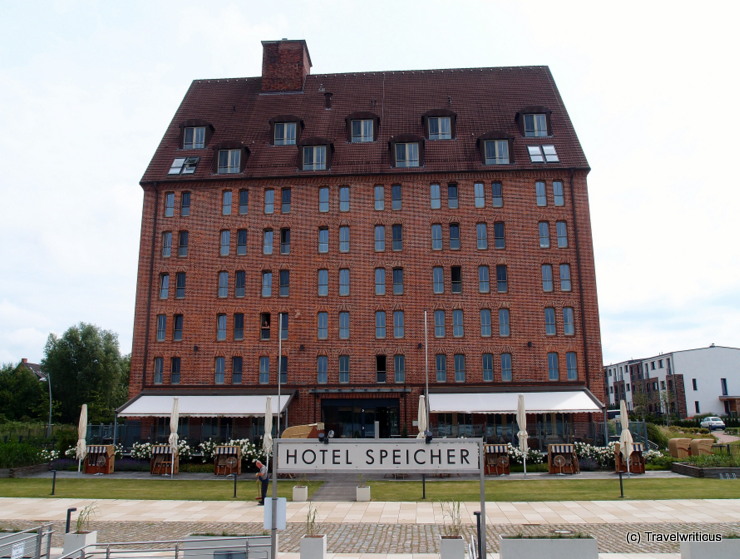
Visitors find the Hotel Speicher am Ziegelsee in a former granary dating back to 1939. The edifice is situated next to a lake named Ziegelsee, which is why guests can reach the hotel by boat. The sign HOTEL SPEICHER is the name board of the boat station.
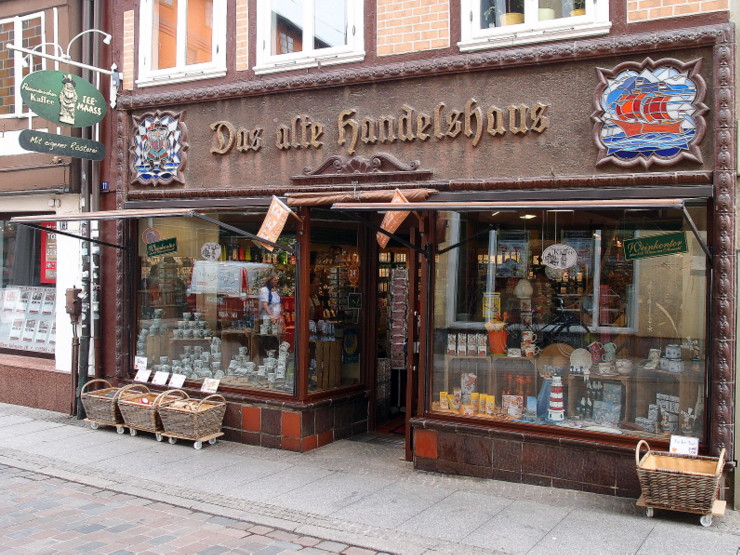
Lovers of fine tea find the traditional shop “Das alte Handelshaus” (The Old Merchant House) at the address Schmiedestraße 11. Today, it houses a chain store of the tea merchant Tee Maass.
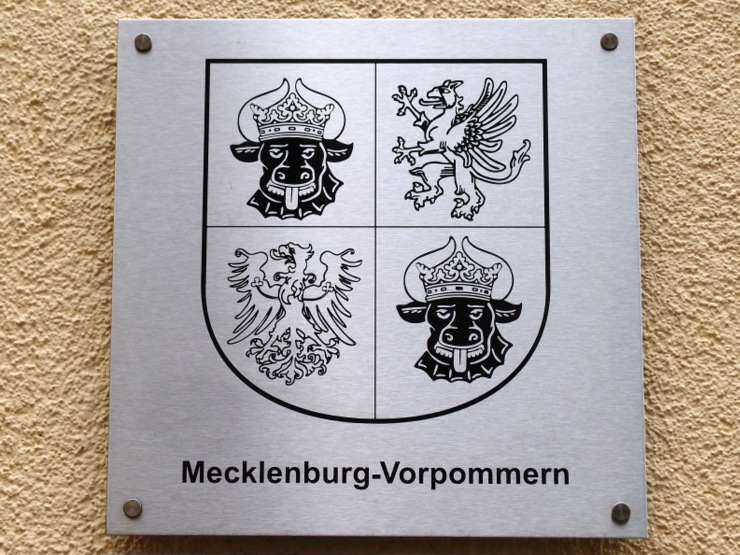
The federal state of Mecklenburg-Vorpommern was formed by a merger of two countries after World War II. The historic regions of Mecklenburg and Vorpommern got together, evoking the need of new coat of arms.