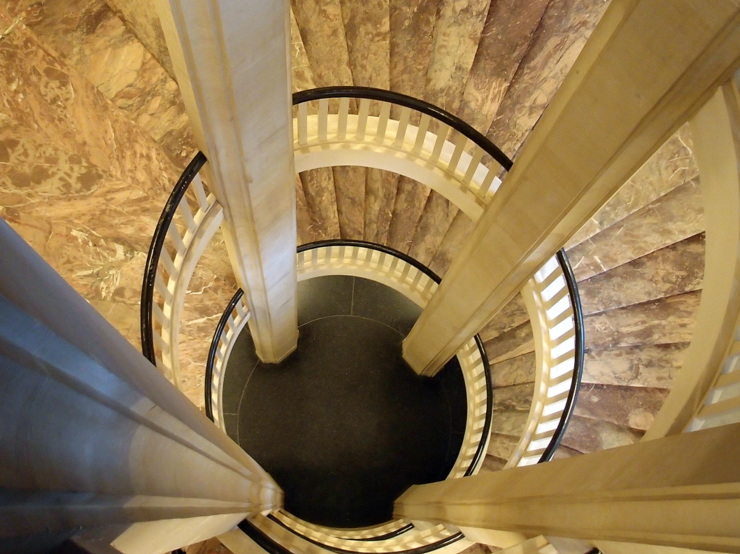
Looking downstairs at Schwerin Palace (Schloss Schwerin). The palace houses a museum as well as the state diet (Landtag) of the German federal state of Mecklenburg-Vorpommern.
You only see what you know (Goethe)
Looking downstairs at Schwerin Palace (Schloss Schwerin). The palace houses a museum as well as the state diet (Landtag) of the German federal state of Mecklenburg-Vorpommern.
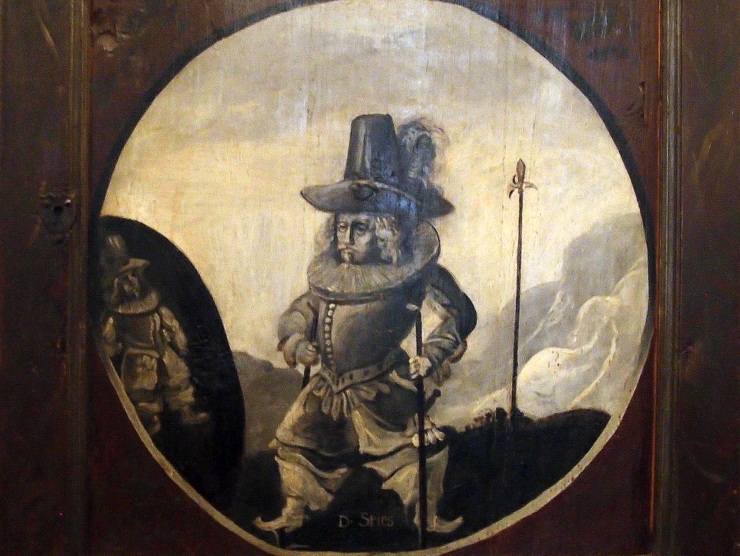
The Petermännchen (Little Peterman) is a good-natured household spirit who is said to live in the Schwerin Palace. He rewards those who are honest and brave but punishes thieves and intruders. Today it is a sort of mascot. You see him in many parts of the city life. There is even a coffee named after him: Petermännchen Kaffee.
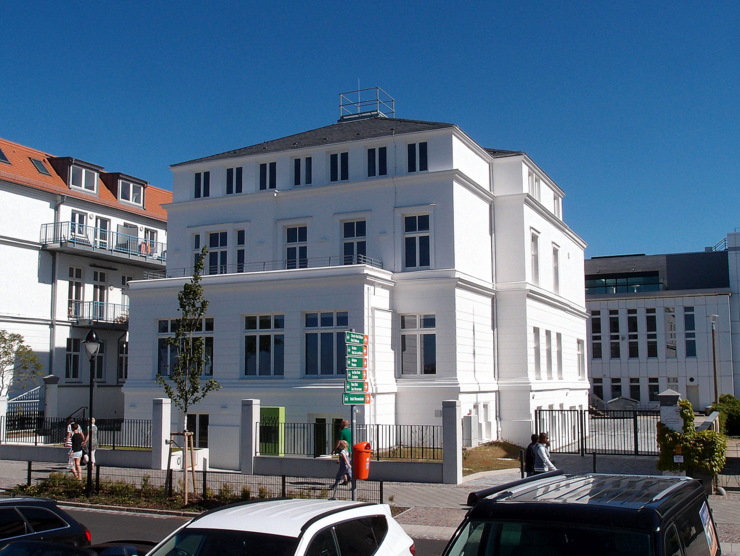
This villa, built in 1880, became famous for being the home of the aircraft designer Ernst Heinkel. One of his designs was the Heinkel He 178, the world’s first turbojet aircraft and jet plane. Today the villa is part of the Leibniz Institute for Baltic Sea Research (Leibniz-Institut für Ostseeforschung).
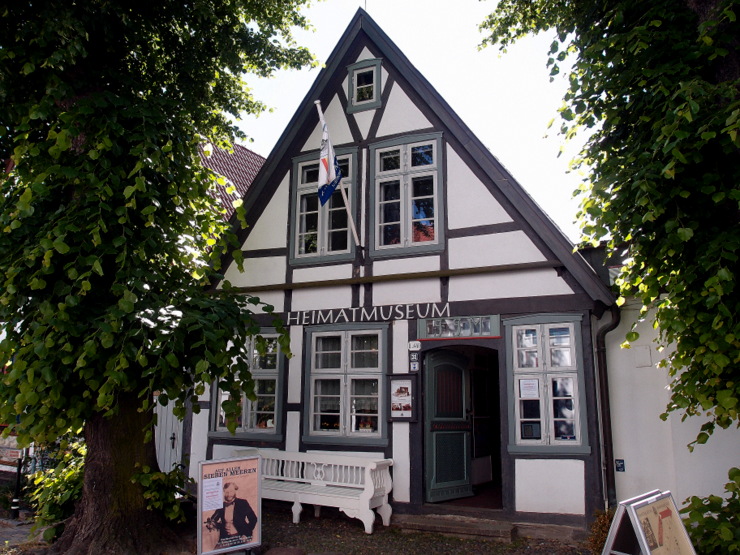
The museum of local history (Heimatmuseum) is located in a building dating back to 1767. The exhibition tells about local life as well as typical elements of a seaman’s life. For example, you see dioramas built by sailors. There are also souvenirs like English stoneware brought home from numerous sea travels.
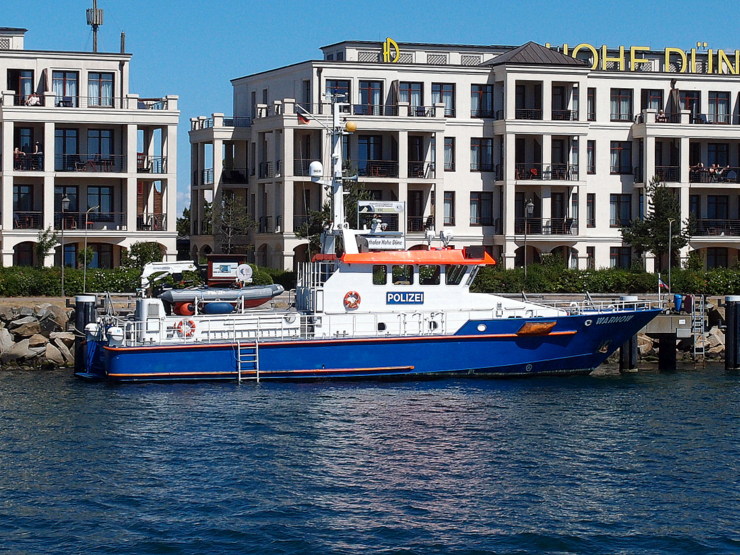
While cruising the river Warnow from Rostock to Warnemünde I came across a police boat of the same name. The Warnow is a patrol vessel (Type FPB 25) built by the company Fassmer.
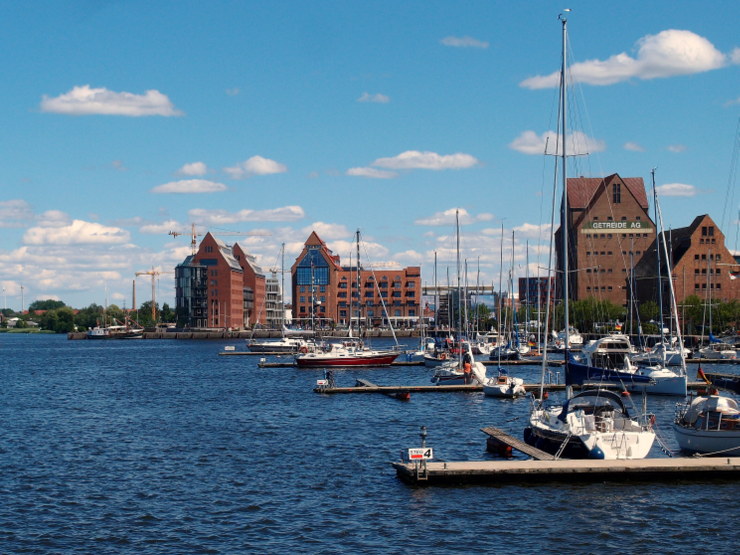
At the Rostock City Harbour you can find old as well as reconstructed warehouses. In the rooms of the warehouse on the left side the headquarter of AIDA Cruises is based. The piers for the huge AIDA cruisers are not far way at the port of Warnemünde.
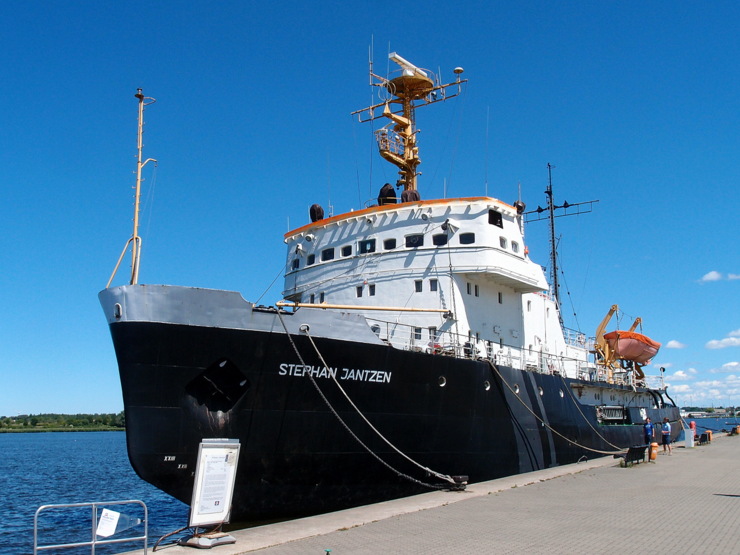
This icebreaker was built in 1967 and is named after the sea rescuer Stephan Jantzen (1827-1913). The ship is off duty now. Although plans were to convert the vessel into a luxury icebreaker for private tours to the Arctic and the Antarctic, it is still waiting for a new assignment at Rostock City Harbour.
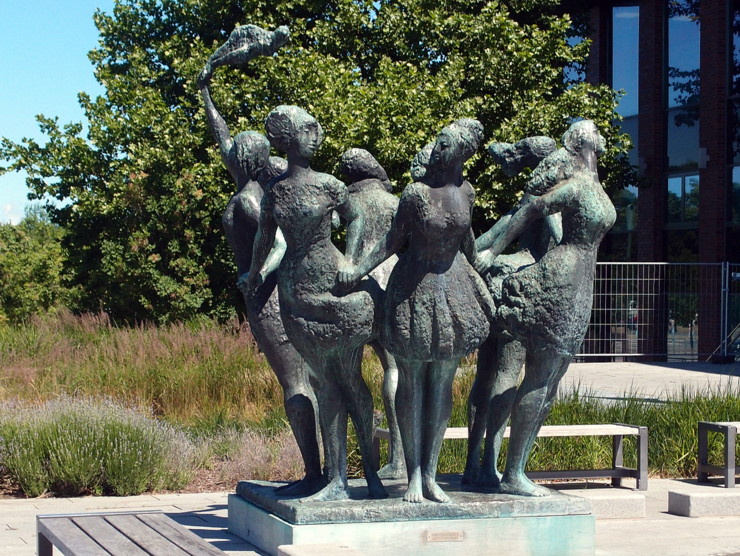
This sculpture in the city of Rostock named ‘Seven proud sisters are kissed by one sea’ (Sieben stolze Schwestern küsst das eine Meer) was created by Reinhardt Dietrich in 1985. It portrays the peaceful coexistence of the seven countries surrounding the Baltic Sea.
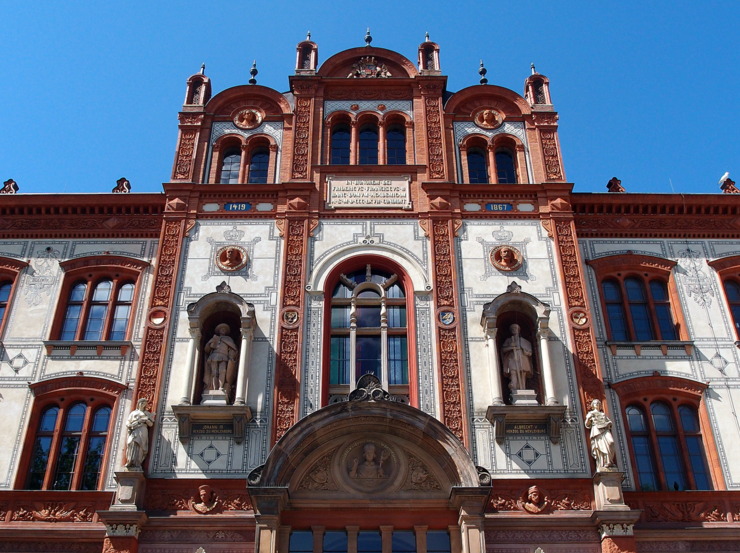
The Rostock University, founded in 1419, is considered the oldest university in the Baltic Sea area. The depicted main building was erected in the years 1867 – 1870 and is an example of Renaissance Revival architecture in Mecklenburg.
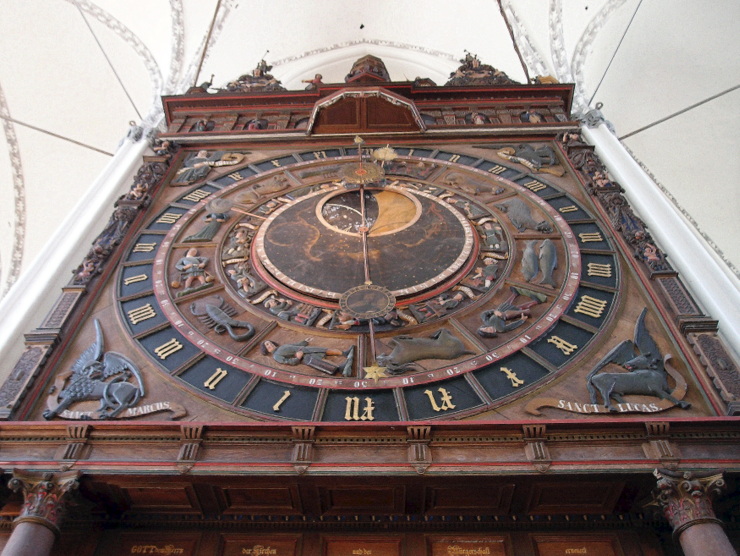
This astronomical clock was built in 1472 by Hans Düringer and is the only one of its kind still in working condition with its original clockwork. It stands in St. Mary’s church (Marienkirche), the biggest of three town churches in the Hanseatic city of Rostock.
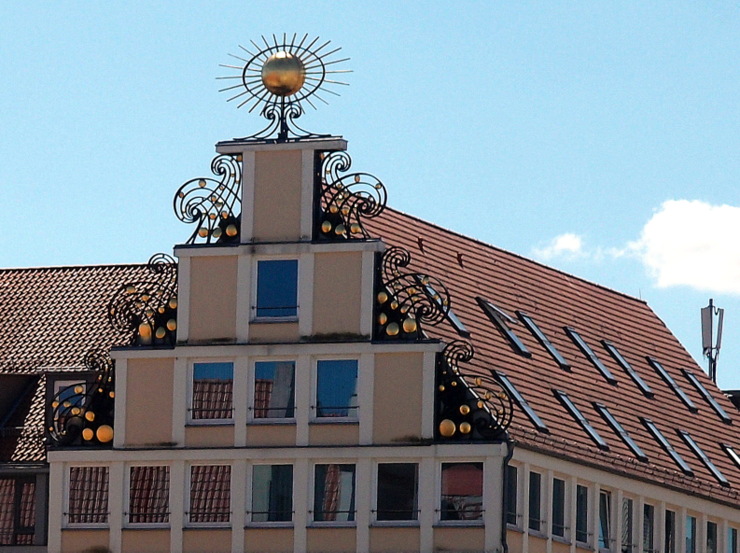
In Rostock, there are a lot of colourful gabled houses to see. It’s great fun to walk through the streets and count the different gables one discovers. Even this gable of a newly built edifice next to the old town hall has something decorative to offer.
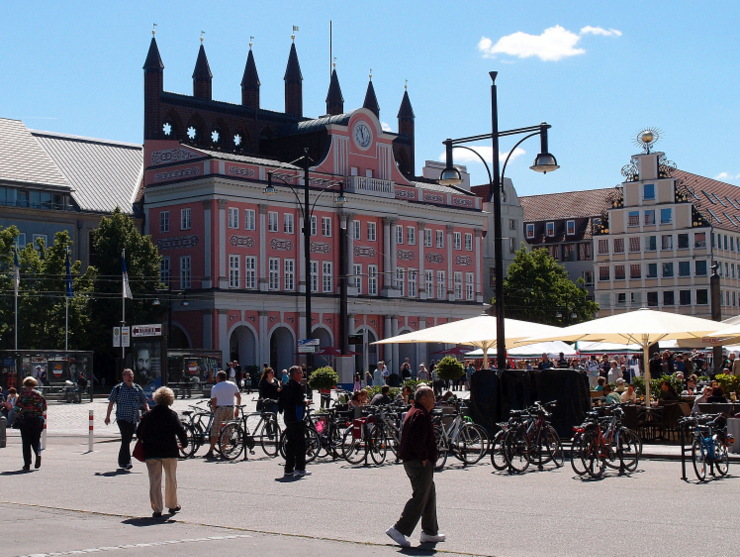
The city hall of Rostock, dating back to the 13th century, is an interesting mixture of Brick Gothic and Baroque architecture. The Baroque porch was built in front of the Gothic wall at the beginning of the 18th century.