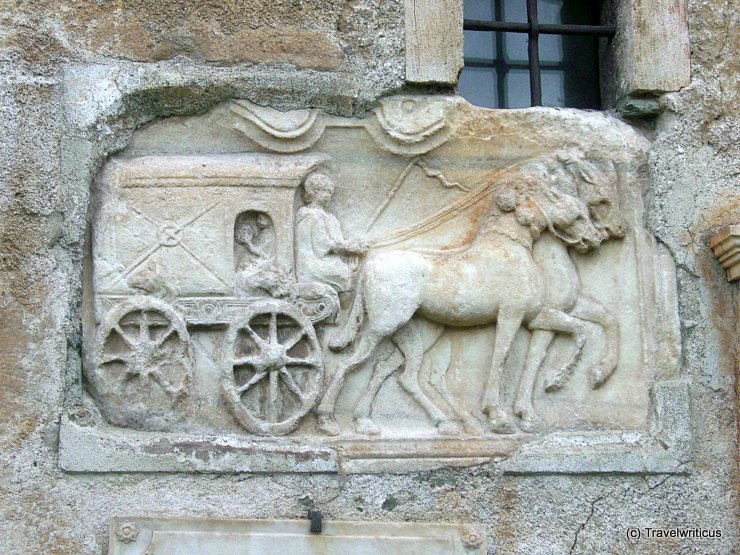
This piece is one of the most famous ancient Roman tombstones in Austria. It is the depiction of a coach. You find it in the wall of the Marienkirche, a church in Maria Saal. Though it doesn’t show a mail coach, it is sometimes called so.
You only see what you know (Goethe)
This piece is one of the most famous ancient Roman tombstones in Austria. It is the depiction of a coach. You find it in the wall of the Marienkirche, a church in Maria Saal. Though it doesn’t show a mail coach, it is sometimes called so.
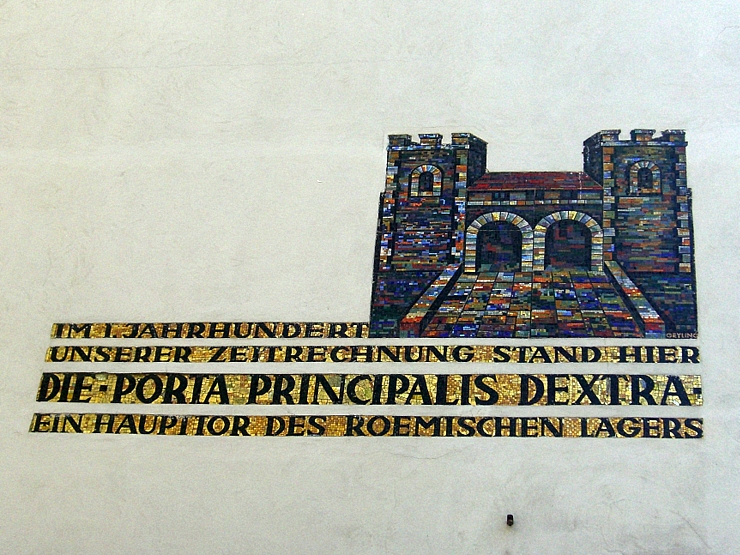
This mosaic at a building in Vienna reminds pedestrians of an ancient gate (porta principalis dextra) that stood here in the 1st century. It was part of the Roman fort Vindobona, the nucleus of modern Vienna.
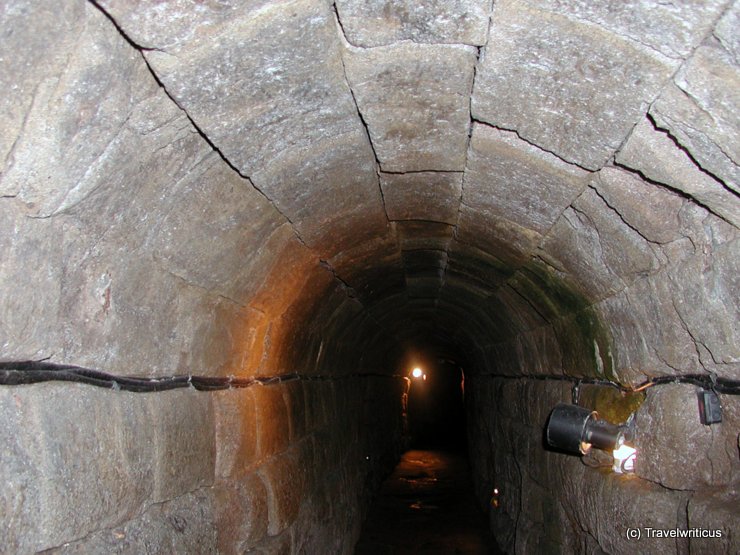
Below the Spanische Bau in Cologne, fans of Roman architecture find the remains of the ancient Roman Praetorium. Right next to these ruins, visitors have the chance to walk through a former Roman sewer below the streets of the modern city.
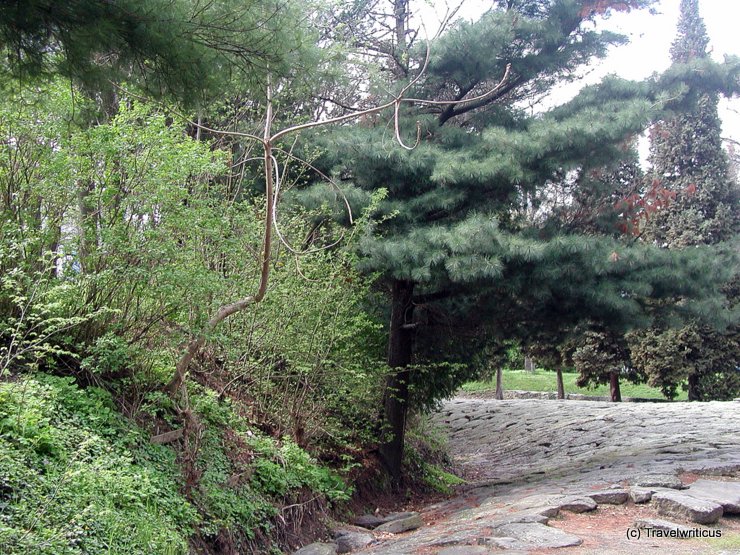
In the archaeological zone of the Hungarian town of Szombathely, there are remains of the ancient street paving. The Roman name of this place was Colonia Claudia Savaria. [German]
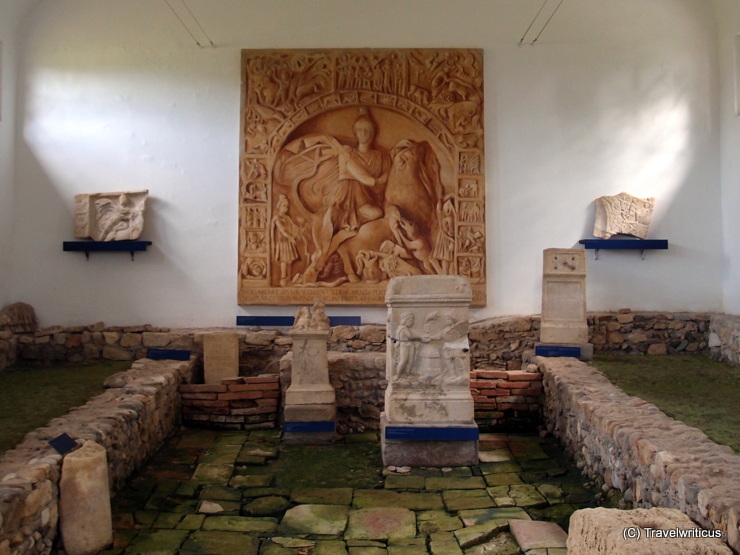
A protective building in the style of an ancient Roman sanctuary shelters the remains of the Mithras Shrine III in Ptuj. The shrine was erected in the sixties of the 3rd century by soldiers of the Legio XIII Gemina.
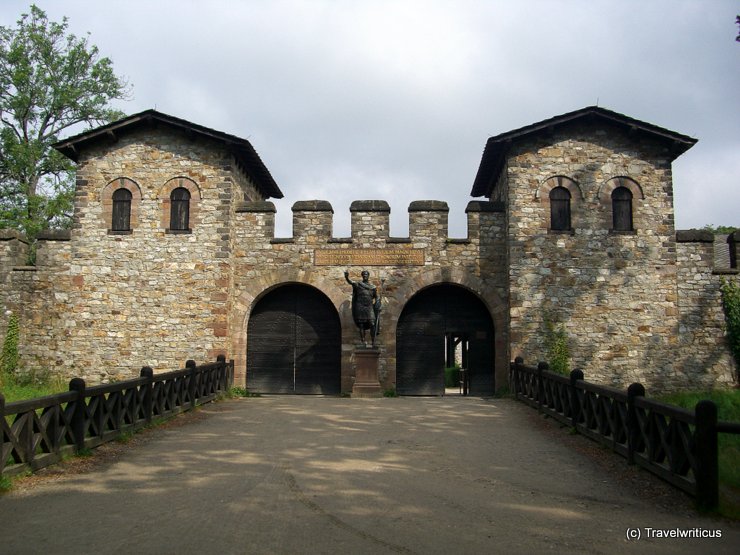
The Saalburg is a reconstructed Roman fort in Hesse. Inside its walls, a museum tells about the life of the soldiers along the border. The castellum was a part of the Upper Germanic-Rhaetian Limes. Today the remains of the Limes are enlisted as UNESCO World Heritage Site. [German]
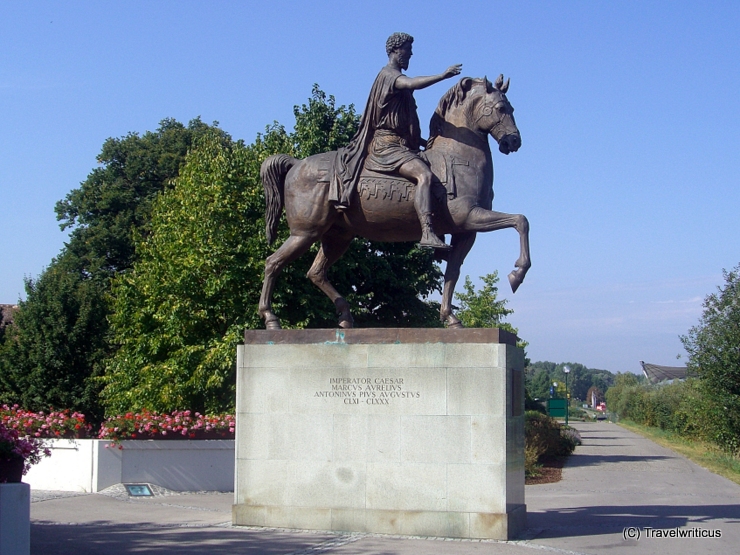
This equestrian statue of emperor Marcus Aurelius is a replica of the one that stood on Capitols Square (Piazza del Campidoglio) in Rome. The sculpture in Tulln commemorates that a Roman camp named Comagena was the predecessor of the modern city. [German]
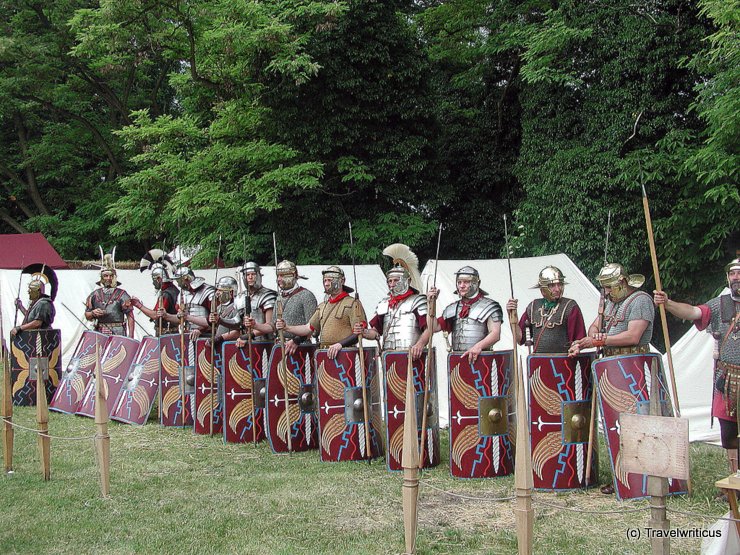
The Carnuntum Archeology Park hosts reenactment festivals with shows about Roman military routines and civic customs several times yearly. Numerous friend societies of Roman history provide visitors with broad information and even Roman food.
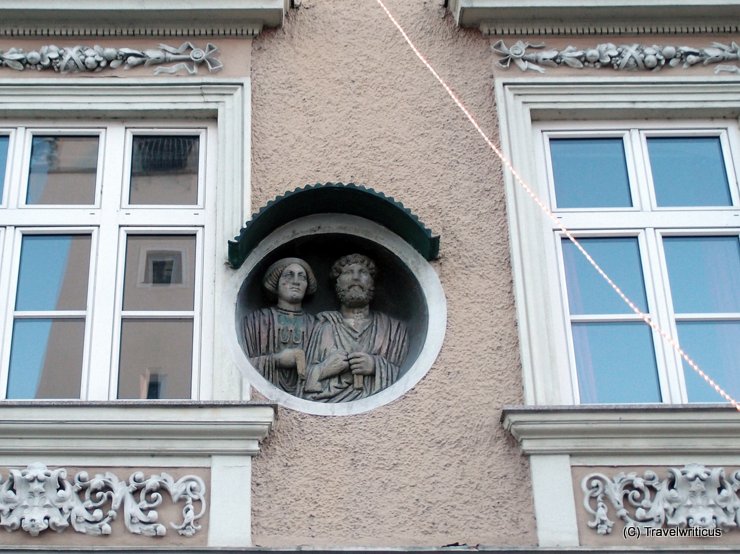
During the Roman era, the city of Wels was known as Ovilava and served as the capital of the province Noricum Ripense. Ancient remains are still visible in the cityscape. For example, this tombstone is part of a building in the town centre.
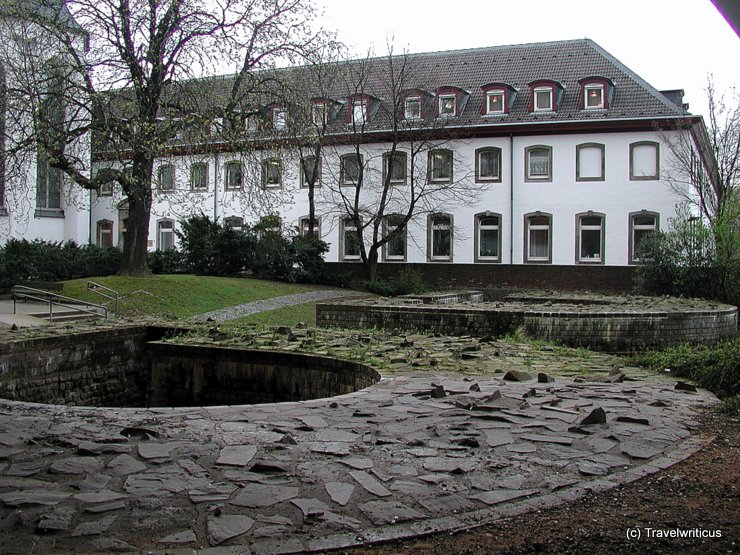
In the city of Cologne (Köln), you still see remains of a former Roman fort. During ancient times, the castrum Divitia guarded a bridge crossing the Rhine. Today, the ruins are part of the World Heritage Site “The Lower German Limes”.
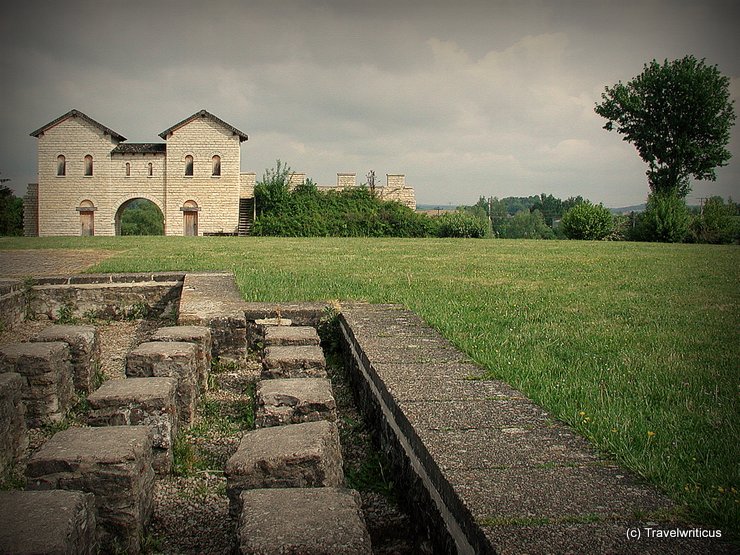
The Roman fort Biriciana, nowadays known as Kastell Weissenburg, was occupied by cavalry units during ancient times. The photo shows the reconstructed north gate (Porta decumana) of the fort area. In Roman times, this gate led to the Limes. [German]
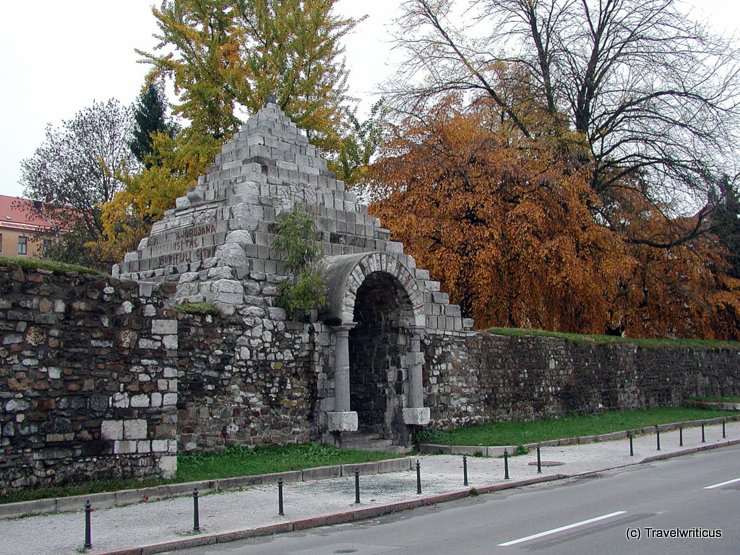
The ancient Roman name of Ljubljana was Emona. Today one can still see some Roman elements in the city. E.g. this redesign of a part of the Roman town walls created by architect Jože Plečnik. The reconstruction of the walls is not really authentic but works as remarkable monument to the former presence of the Romans.