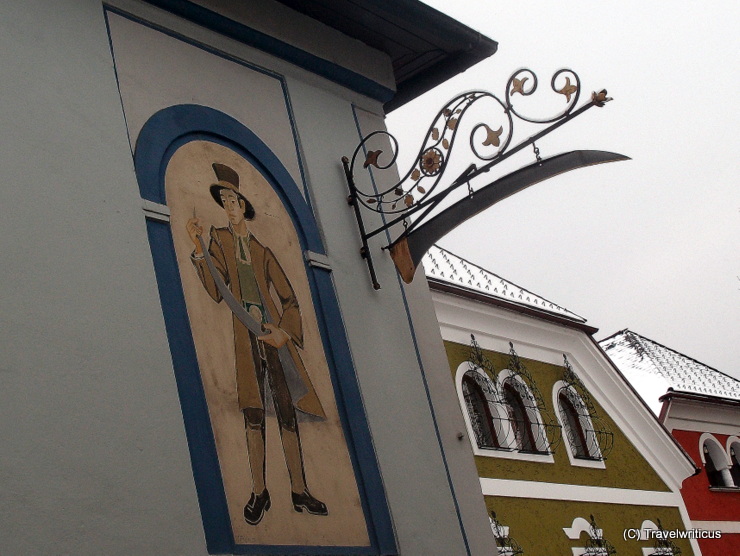
Inn sign and wall painting of the Blue Scythe Inn (Gasthof zur Blauen Sense) in Windischgarsten.
You only see what you know (Goethe)
Inn sign and wall painting of the Blue Scythe Inn (Gasthof zur Blauen Sense) in Windischgarsten.
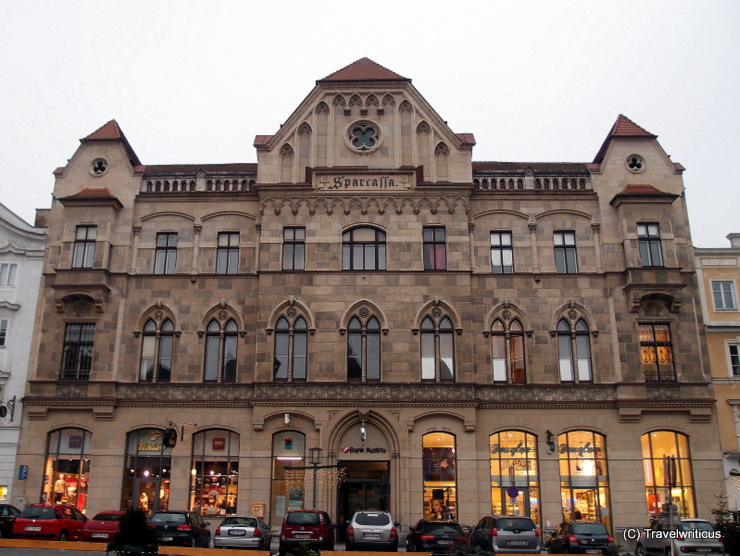
This building of a mutual savings bank (Sparkasse) was built in 1900 in the style of neo-Gothic. For this reason two older houses were demolished, e.g. the Reichlhaus. An interesting details is the writing on top of it, which uses the outdated term Sparcassa.
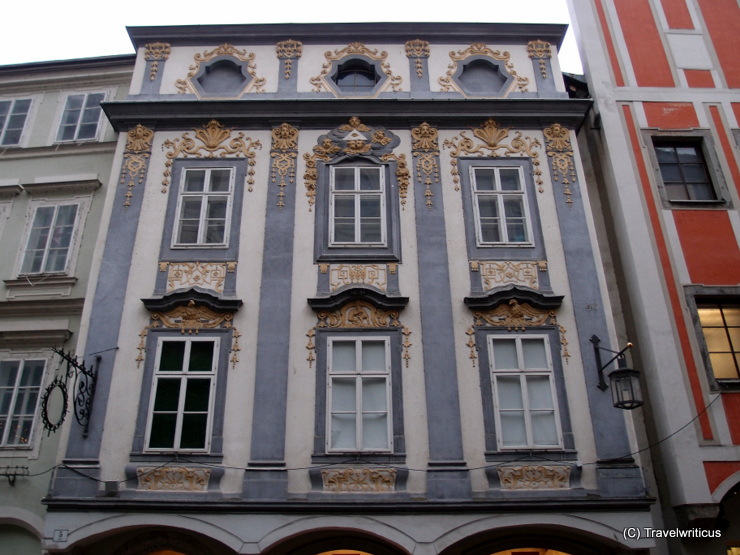
The building with the address Enge Gasse 5 has late Gothic origins and a Baroque facade created in the second quarter of the 18th century. It is generally known as the ‘Zum Andreas Hofer’ inn (Gasthaus ‘Zum Andreas Hofer’).
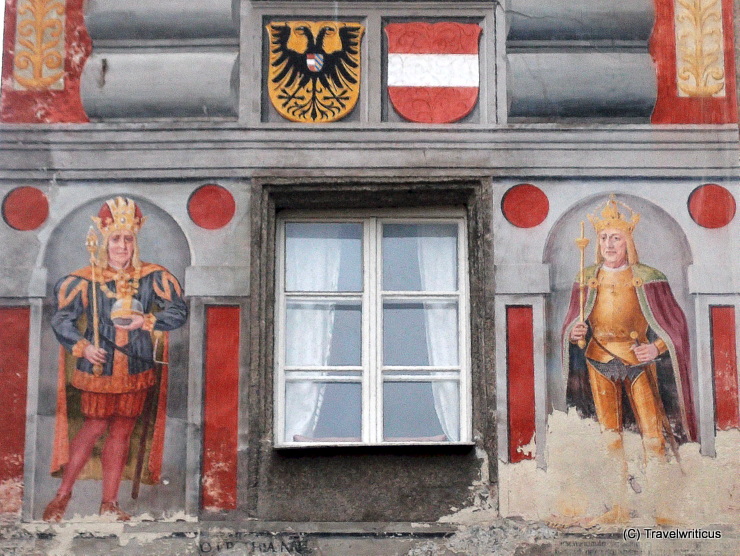
This wall painting located at the northern side of the Blumauerhaus in the city of Steyr shows emperor Frederick III (Friedrich III.) and his son Maximilian I. The building is named after Aloys Blumauer who was born there in 1755.
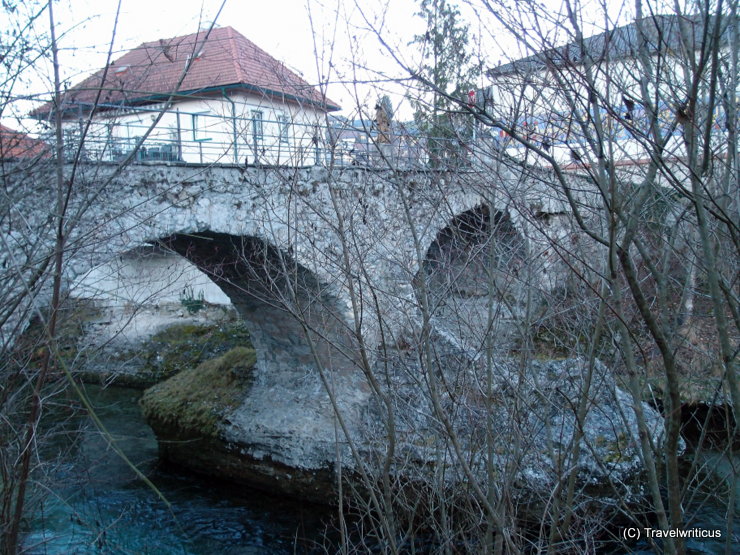
This stone bridge in Scheibbs was built in 1554 by Valentin Staudinger. The bridge using a rock in the middle of the river is considered the oldest still existing one crossing the Erlauf River.
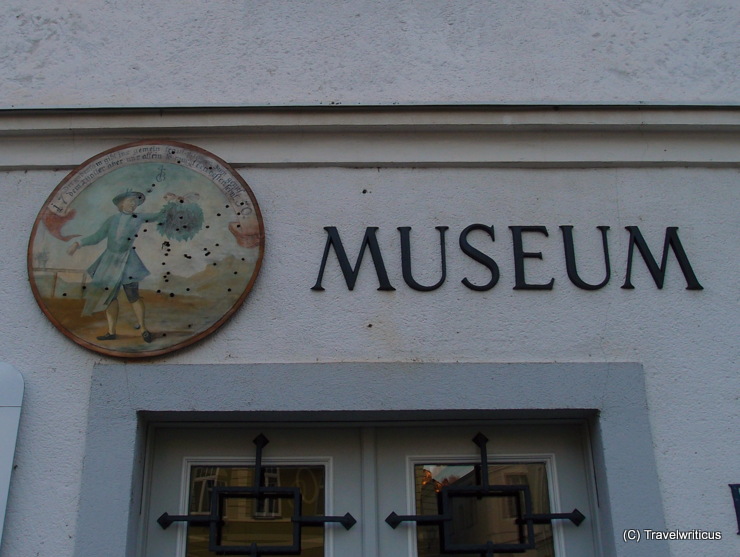
The museum of historical targets displays a collection of target boards (Schützenscheiben) dating from 1670 up to 1941 used by the local rifle club (Schützenverein). In general, these boards display scenes of daily life, local events and even important persons of history.
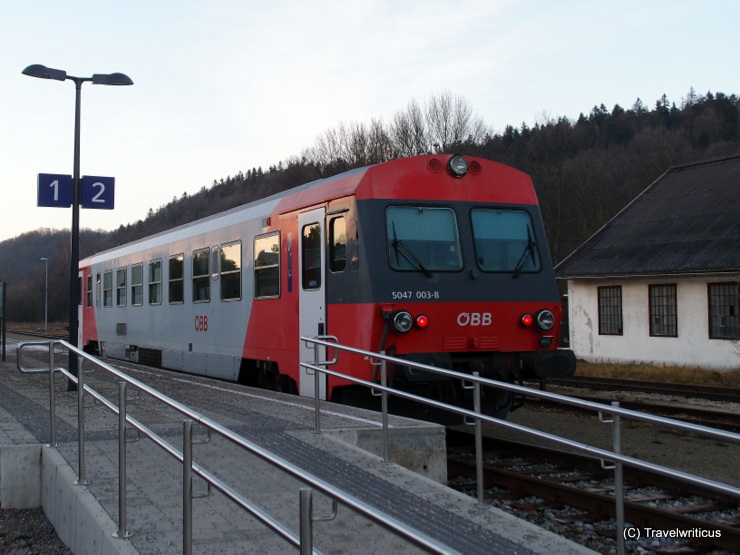
The diesel railcar ÖBB 5047 was produced by the Tyrolean Jenbacher Werke in the years 1987-1995. It replaced several older railcars such as the ÖBB 5144. I few of them were sold to competitors of the ÖBB, e.g. to the Hugarian-Austrian Raaberbahn AG.
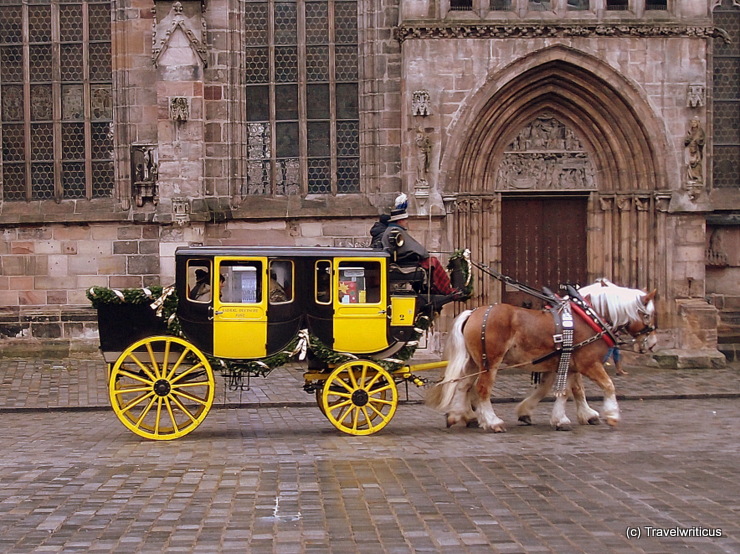
During the Christkindlesmarkt, Nuremberg’s traditional Christmas market, guests may ride on a 1939 reproduction of a nine-seater Berlin with two coupés from 1874. The stagecoach is supplied by the Museum for Communication, which is also worth a visit.
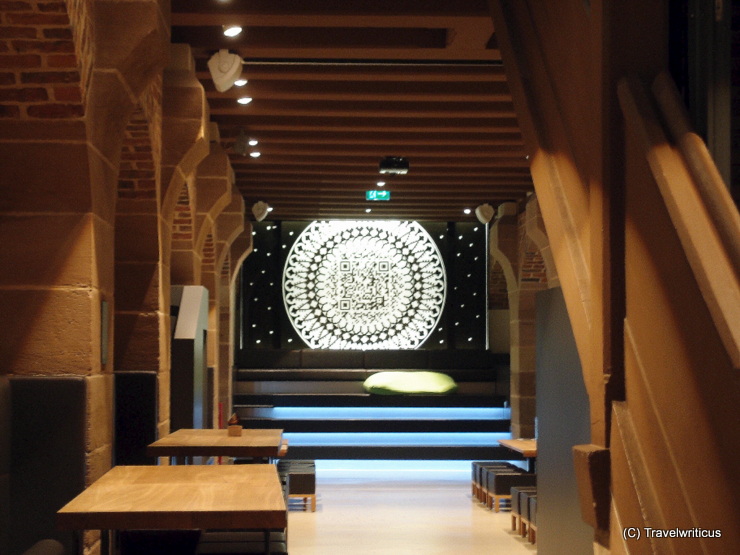
The youth hostel in Nuremberg (Nürnberg) is located in a part of the Imperial Castle complex high over the city. Though the rooms are pretty modern, there are also several atmospheric parts. Interesting detail: You can find huge QR codes all over the hostel telling you interesting details about the city of Nuremberg.
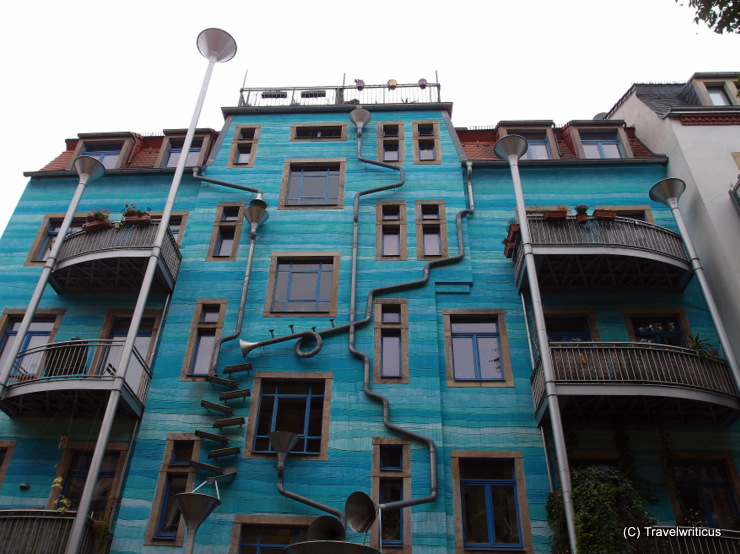
Strange downpipes seen at the Kunsthof in Dresden. This public art created by Annette Paul, Christoph Roßner and André Tempel produces a fun show during certain hours and rainfalls.
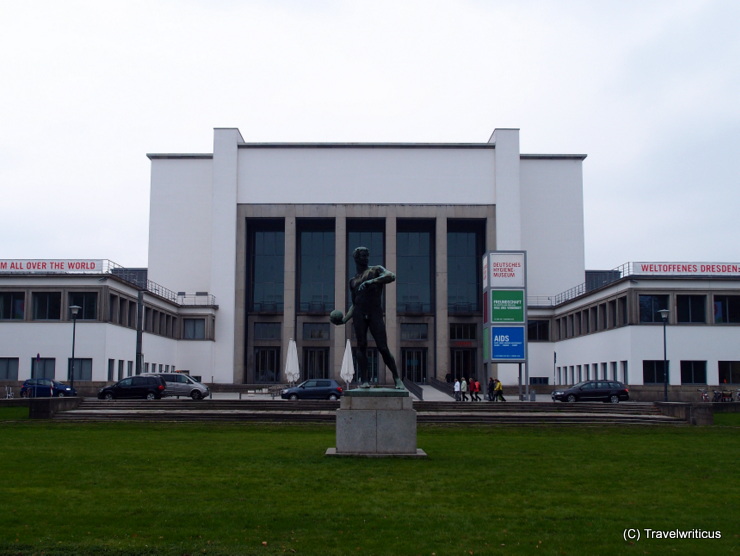
The German Hygiene Museum (Deutsches Hygiene-Museum) was founded in 1912 by Karl August Lingner, a Dresden businessman and manufacturer of hygiene products. Besides being a medical museum it conceives itself as a ‘forum for science, culture and society’.
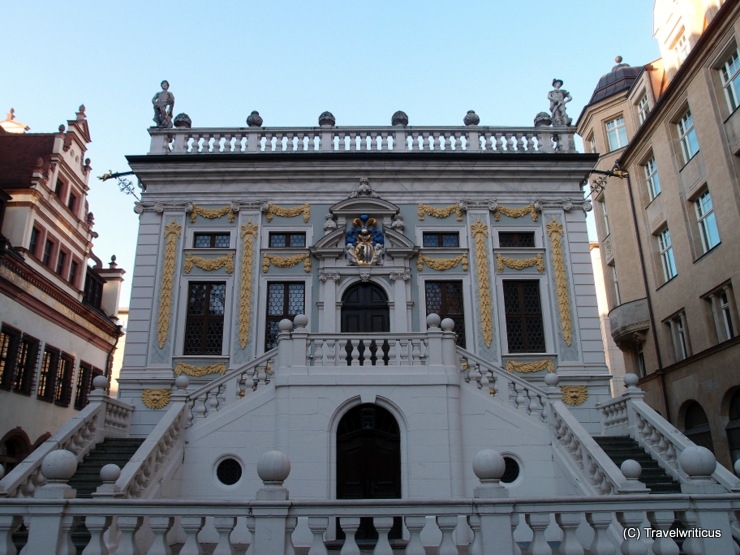
The Old Exchange (Alte Handelsbörse) was built in the 17th century in the early baroque style as a representative building where merchants could meet. Today, the hall serves for musical and literary events, company presentations and conferences, festive receptions and private parties.