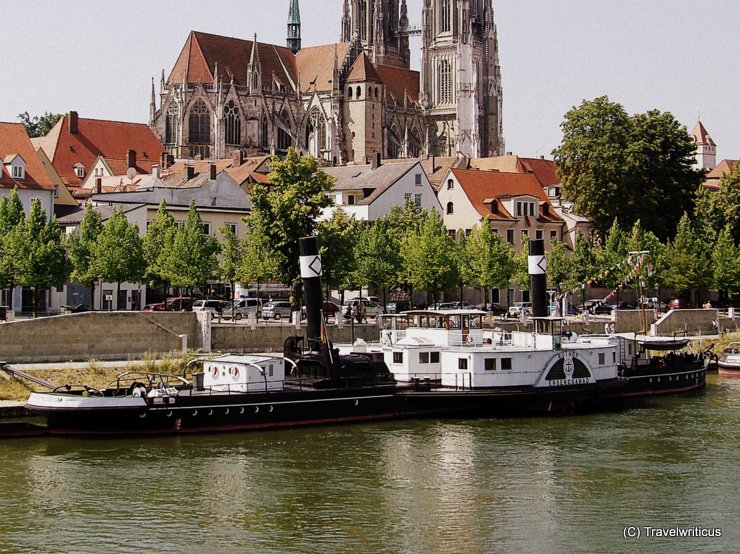
This steam tugboat saw its completion in 1922/23 at the shipyard Ruthof in Regensburg. Originally named Ruthof, it was renamed Érsekcsanád after World War II. Today it is part of the Danube Navigation Museum Regensburg.
You only see what you know (Goethe)

This steam tugboat saw its completion in 1922/23 at the shipyard Ruthof in Regensburg. Originally named Ruthof, it was renamed Érsekcsanád after World War II. Today it is part of the Danube Navigation Museum Regensburg.

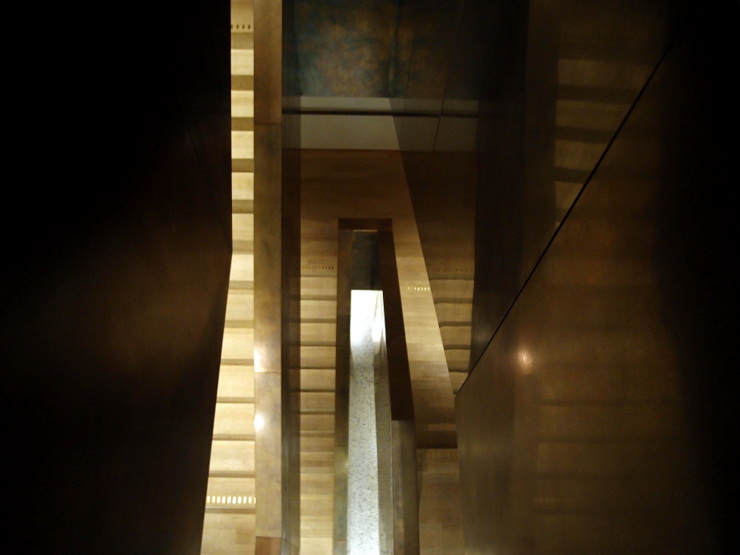
The Vorarlberg Museum in Bregenz offers some fascinating architectural details. The play of colours in the stairwell results from stairs made of oak and a handrail made of brass. [German]

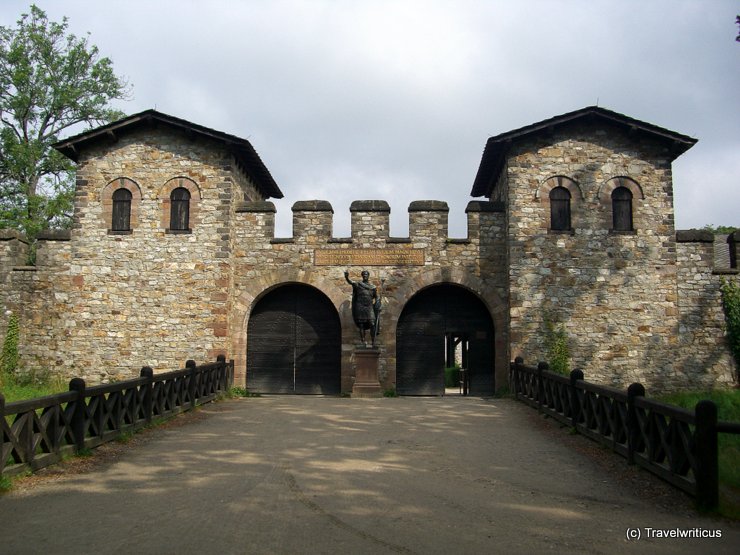
The Saalburg is a reconstructed Roman fort in Hesse. Inside its walls, a museum tells about the life of the soldiers along the border. The castellum was a part of the Upper Germanic-Rhaetian Limes. Today the remains of the Limes are enlisted as UNESCO World Heritage Site. [German]

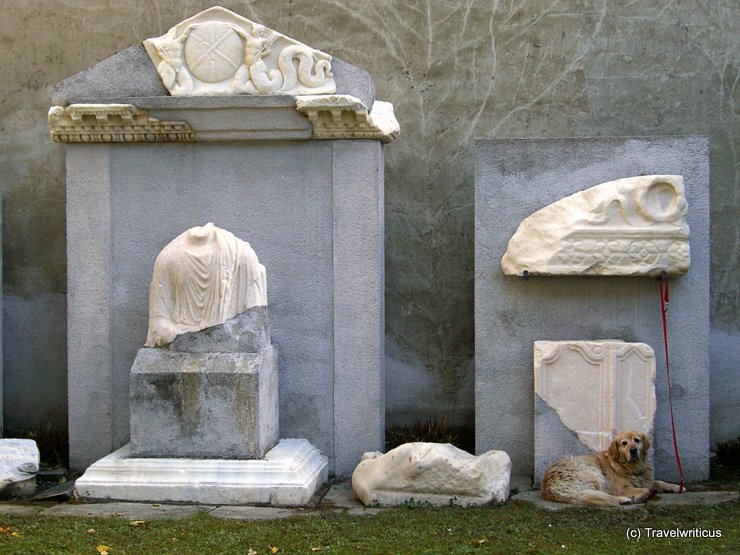
While walking along the lapidarium of the City Museum in Villach (Stadtmuseum Villach), I came across this dog who obviously loved to be among all these ancient pieces. Many of them reminds us of the Roman settlement Santicum.

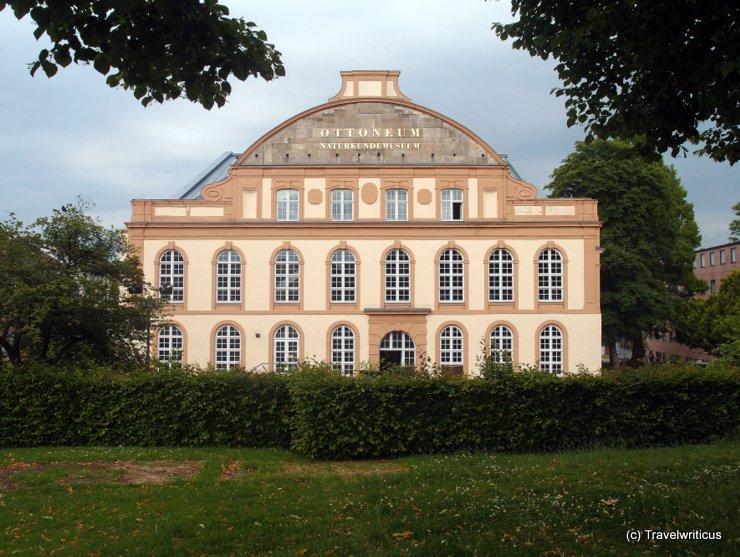
The building was erected as a theatre by architect Wilhelm Vernukken in 1603/1606. The commissioner was Landgraf Moritz, who named the Ottoneum after his son Otto. Today, a natural history museum is housed here. [German]

In this summer house formerly owned by Josef von Eggenwald (Eggenwaldsches Gartenhaus), the Peace Treaty of Leoben was signed between the Holy Roman Empire and the First French Republic on April 18th, 1797. This signing was an important event at the end of the “War of the First Coalition”. [German]

This showcase in the Romantikerhaus in Jena recalls that Johann Wolfgang von Goethe also worked as a scientist. For example, he dealt with the incisive bone. Contrary to his assumption, he was not the discoverer of this bone. [German]

In Nuremberg, there is some modern architecture inside the medieval town walls. As a result, the glass façade of the Neues Museum reflects the city wall like a mirror. By the way, the museum shows pieces of contemporary art and design.

The Knappenwelt (Pitmen’s World) in Angertal is an open-air museum about the late medieval gold and silver smelting in the Gasteinertal area. It is a station of the Via Aurea, which focuses on gold mining in the Austrian Tauern mountain ranges. [German]

This Art Nouveau pavilion dates back to 1898. Architect Otto Wagner designed it as a station building for the Viennese Metropolitan Railway (Wiener Stadtbahn). Today the Otto Wagner Pavillon houses a museum about this famous urban planner.

The Residenzschloss Dessau, a palace in the style of the Early Renaissance, lost many of its parts during World War II. The remaining wing, the Johannbau, houses the Museum für Stadtgeschichte (Dessau City Museum). [German]

The Old Synagogue in Erfurt is considered the oldest synagogue in Central Europe, which has been preserved up to its roof. Some parts of it date back to the 11th century. Its cellar houses the famous Erfurt Treasure found near the synagogue.