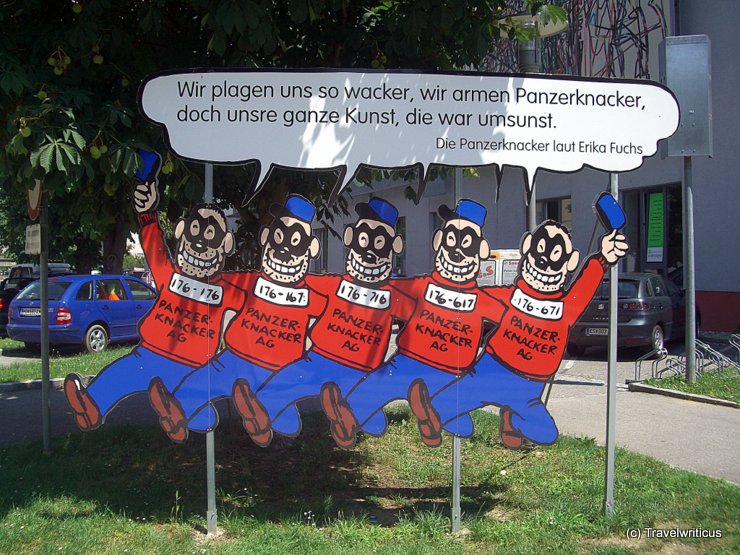
While heading to a Caricature Museum in Krems, I came across this depiction of the Beagle Boys. Its title mentioned Erika Fuchs, who became famous for translating comic stories. Fun fact: This piece stood opposite a jail. [German]
You only see what you know (Goethe)
While heading to a Caricature Museum in Krems, I came across this depiction of the Beagle Boys. Its title mentioned Erika Fuchs, who became famous for translating comic stories. Fun fact: This piece stood opposite a jail. [German]
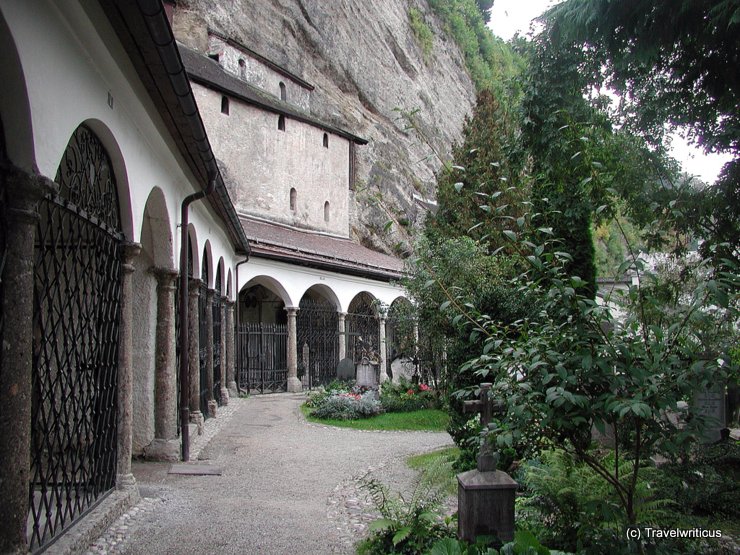
The cemetery of St. Peter (Petersfriedhof) is not only one of the oldest cemeteries of Salzburg but was also a set in the American movie ‘Sound of Music’. The small windows along the rock are part of the so-called catacombs.
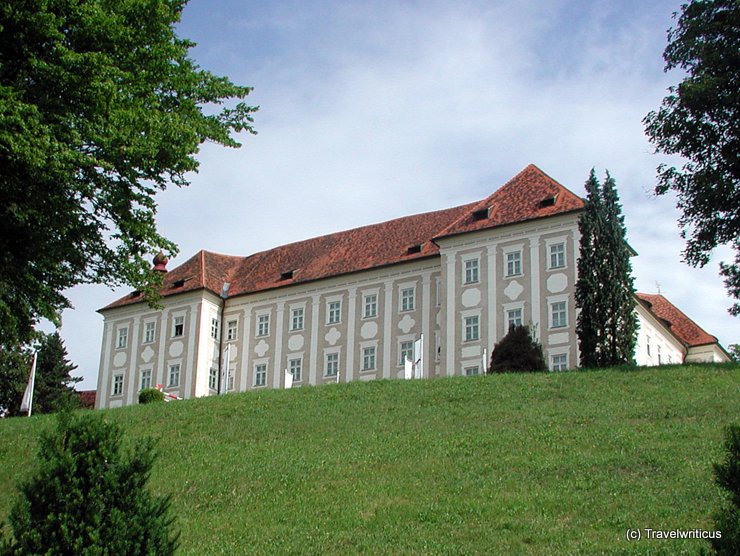
Piber Castle (Schloss Piber) is a palace in the Austrian state of Styria. It stands next to the Federal Stud Piber. The stud breeds the famous Lipizzan stallions performing at the Spanish Riding School in Vienna. [German]
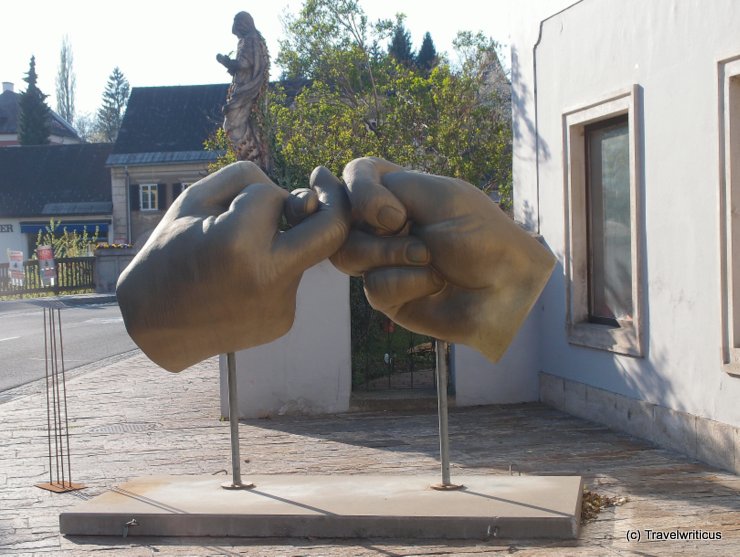
On a sunny spring day in 2012, I came across this sculpture in Ehrenhausen. At first view, it looked like public art portraying something fictitious. But this is wrong. It stands for a real sport with official championships: Finger pulling.
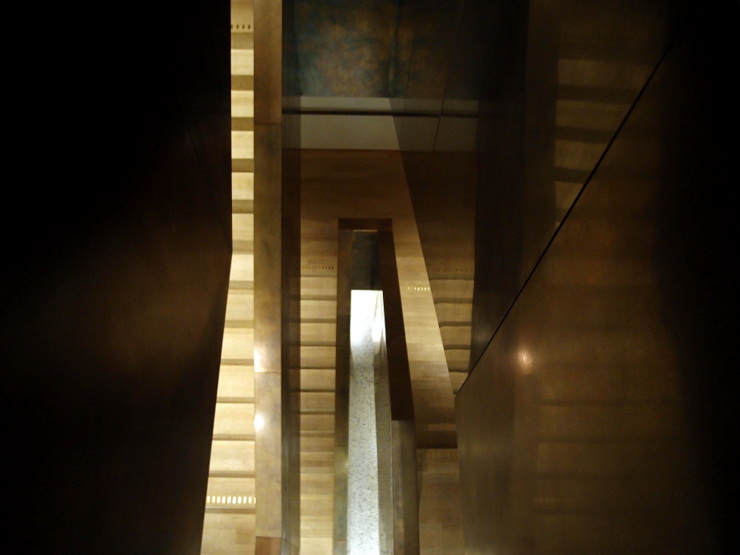
The Vorarlberg Museum in Bregenz offers some fascinating architectural details. The play of colours in the stairwell results from stairs made of oak and a handrail made of brass. [German]
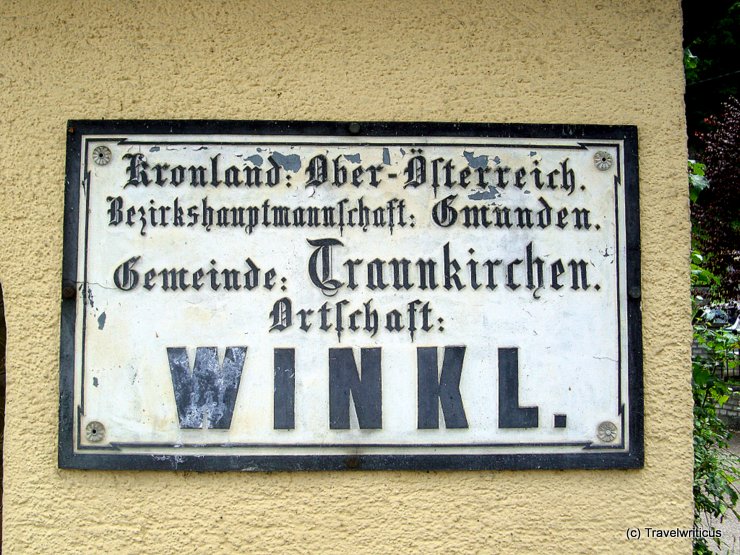
On my walk from the railway station of Traunkirchen to the town centre, I came across this vintage place-name sign. The Austrian State of Upper Austria (Oberösterreich) is still labelled as crown land (Kronland).
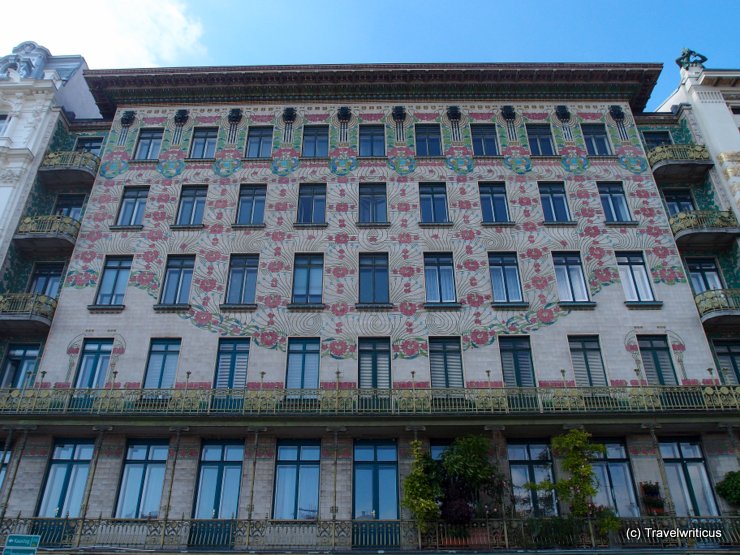
The Majolikahaus saw its completion in 1898. The architect of the building was Otto Wagner. His student Alois Ludwig created the floral design on the façade. The decoration with Majolica ([ger.] = Majolika) elements leads to today’s house name.
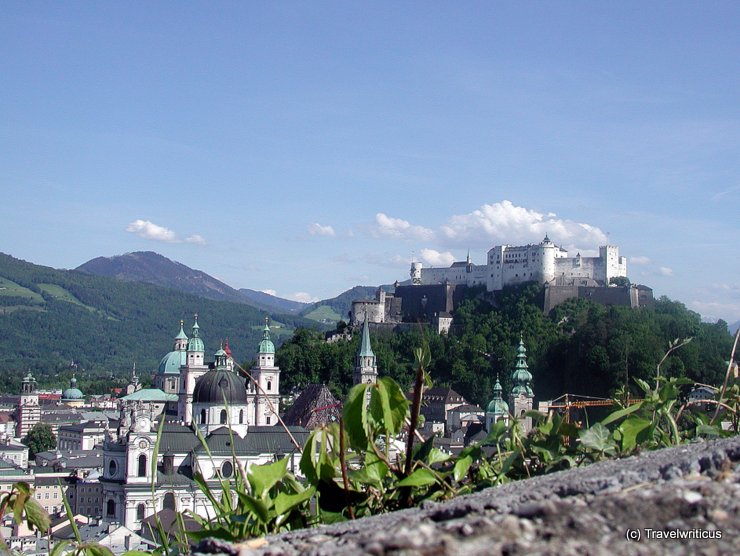
A narrow panoramic path leads in front of the Museum der Moderne in Salzburg. From there, I had this formidable view over the rooftops of Salzburg and Hohensalzburg Fortress.
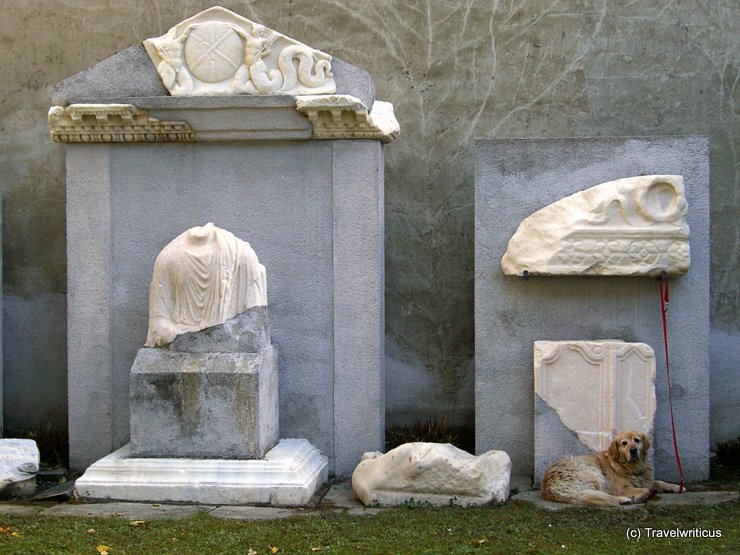
While walking along the lapidarium of the City Museum in Villach (Stadtmuseum Villach), I came across this dog who obviously loved to be among all these ancient pieces. Many of them reminds us of the Roman settlement Santicum.
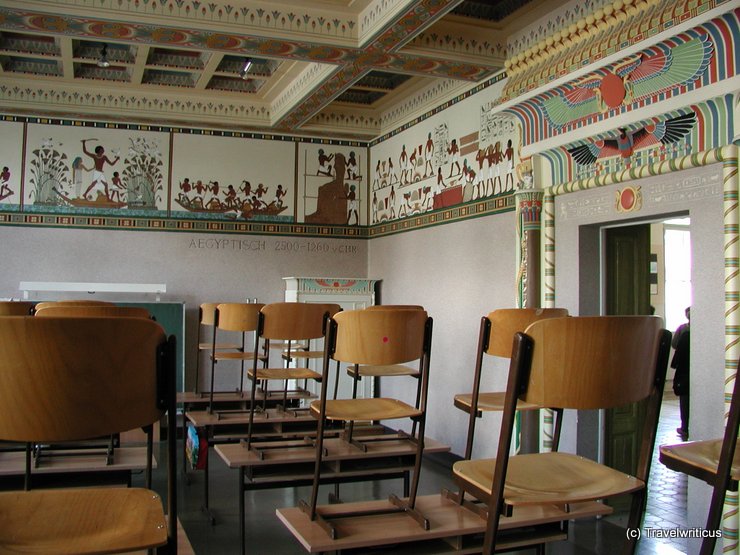
The Berndorf schools opened in 1909. Each classroom (Klassenzimmer) of them is designed in a different historical style (Stil), so the German name of these rooms is Berndorfer Stilklassen.
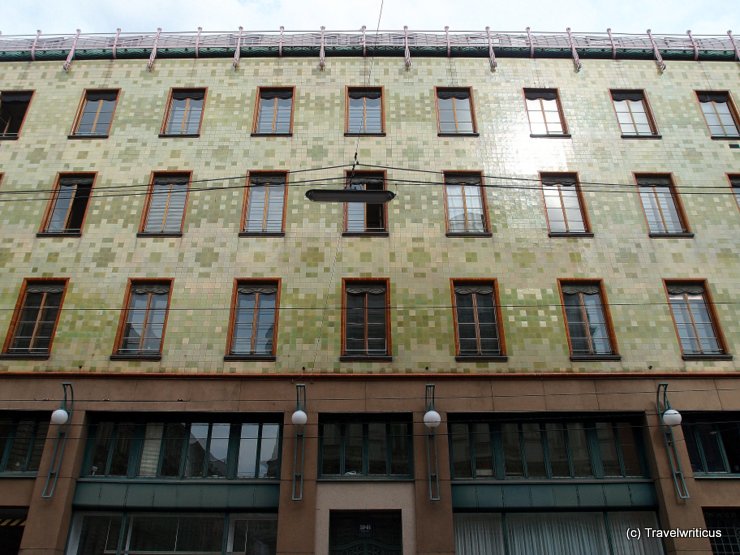
Architect Max Fabiani built this house for the company Portois & Fix in 1899/1901. The tiles on the façade are from the Hungarian porcelain manufacturer Zsolnay. The unique front evoked from using tiles with two different shades of green. [German]
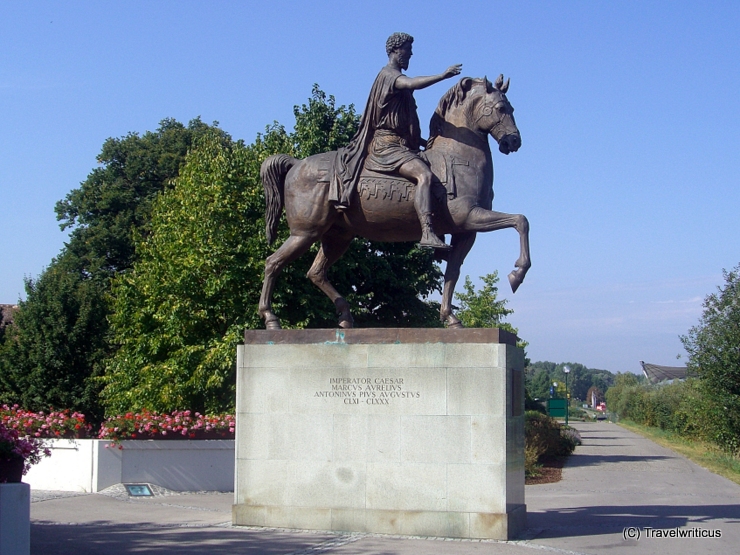
This equestrian statue of emperor Marcus Aurelius is a replica of the one that stood on Capitols Square (Piazza del Campidoglio) in Rome. The sculpture in Tulln commemorates that a Roman camp named Comagena was the predecessor of the modern city. [German]