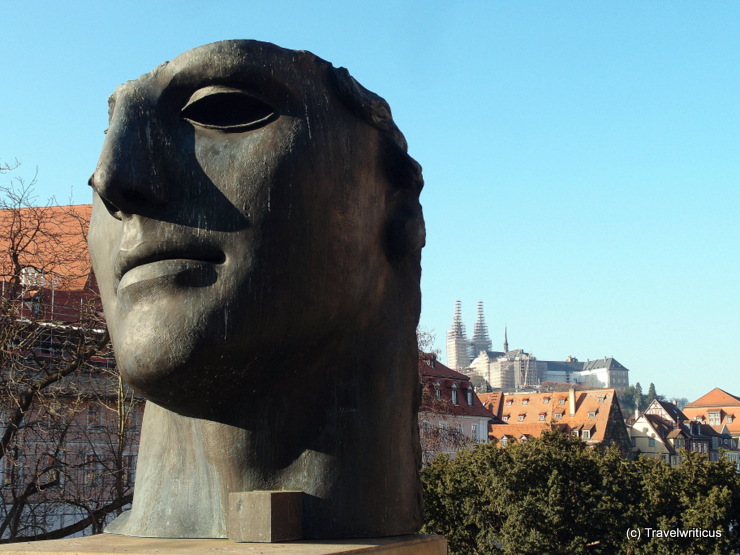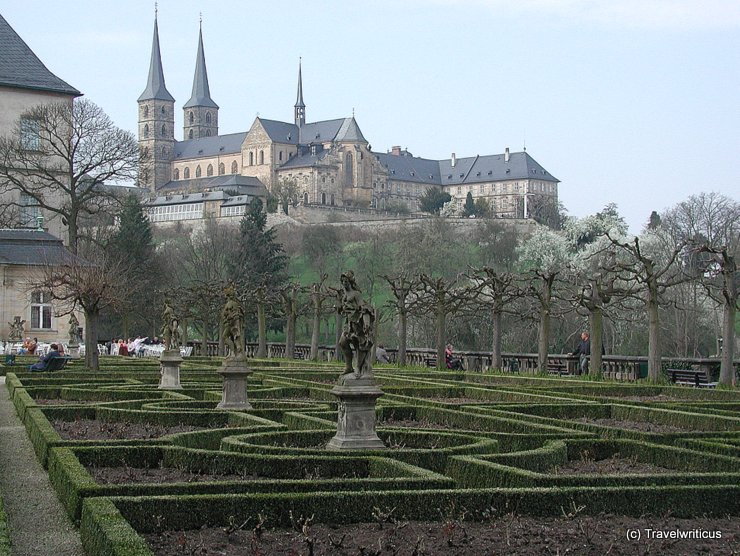
You have this view of Michelsberg Abbey (Kloster Michelsberg) in Bamberg from the rose garden of the New Residence (Neue Residenz). The Benedictine monastery changed into an almshouse in 1803. Today, it houses a retirement home. [German]
You only see what you know (Goethe)

You have this view of Michelsberg Abbey (Kloster Michelsberg) in Bamberg from the rose garden of the New Residence (Neue Residenz). The Benedictine monastery changed into an almshouse in 1803. Today, it houses a retirement home. [German]

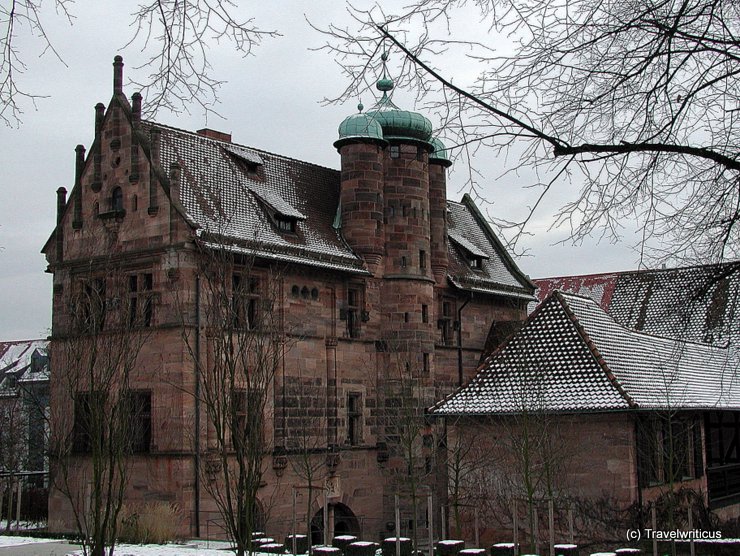
The Tucher Mansion (Tucherschloss) dates back to 1544. It served as a summer residence for the Tucher, a patrician family in Nuremberg. The museum inside shows how such a family lived in those times.

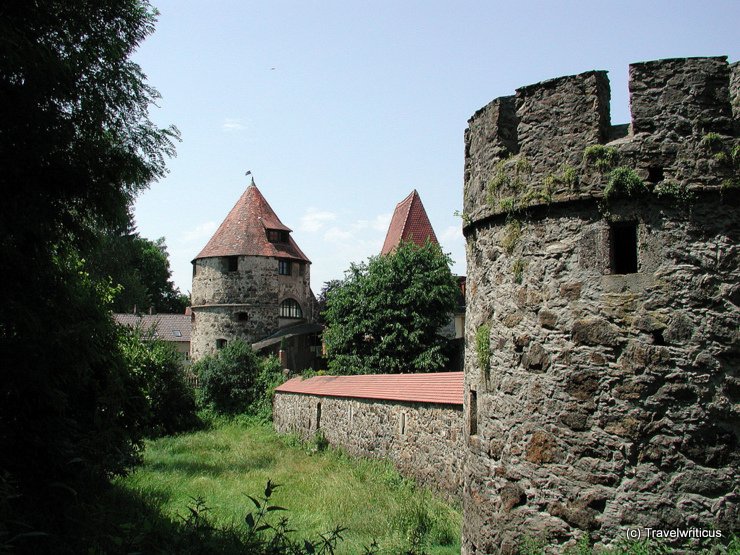
River cruisers may know the mighty Veste Oberhaus high over the Danube River. But there is also a town wall in Passau. You’ll find the depicted towers in the Innstadt area. This city district lies between the Inn River and the Austrian border. [German]

The Cathedral of Our Dear Lady (Frauenkirche), also known as Münchner Dom, is the largest church in Munich. The two steeples build an iconic landmark of the Bavarian capital by overtowering all rooftops. [German]

This mural at the old town hall tower displays a compilation of seals and coats of arms related to Munich. The dates tell when each emblem was in use. In most cases, you see a monk. The year 1818 shows a lion instead. [German]

I did know Füssen is known for intriguing Trompe-l’œils on the walls of the High Castle (Hohes Schloss). Though, I was surprised to see in the streets of Füssen such an impressive Trompe-l’œil featuring a book.

The Roman fort Biriciana, nowadays known as Kastell Weissenburg, was occupied by cavalry units during ancient times. The photo shows the reconstructed north gate (Porta decumana) of the fort area. In Roman times, this gate led to the Limes. [German]

Füssen has been a centre of the lute- and violinmaking industry for many years. In 1562, the city saw the foundation of the first lute makers’ guild in Europe. Today, the Museum of Füssen displays an extensive collection of historical lutes and violins.

You find the Erlangen City Museum in the former town hall of the Old Town (Altstadt) on Martin- Luther-Platz. It shows the city’s history from its beginnings to the 20th century. Especially worth seeing is the depiction of the history of the Huguenots. [German]

The house sign of the Pilatushaus in Nuremberg shows Saint George fighting the dragon. The motif fits well. The owner of this home was a Plattner (amorer), and George was the Saint of his craft guild.

Ehrenburg Palace (Schloss Ehrenburg) was the residential palace of the dukes of Saxe-Coburg until 1918. It originates from a Franciscan monastery. The present façade in the English Gothic Revival style is a work by Karl Friedrich Schinkel at the beginning of the 19th century. [German]

Cute! I found this group of teddy bears in front of a doll shop. Can you imagine my surprise to meet bears in the streets of Nuremberg? On the other hand, it wasn’t my first bear-related experience on this day.