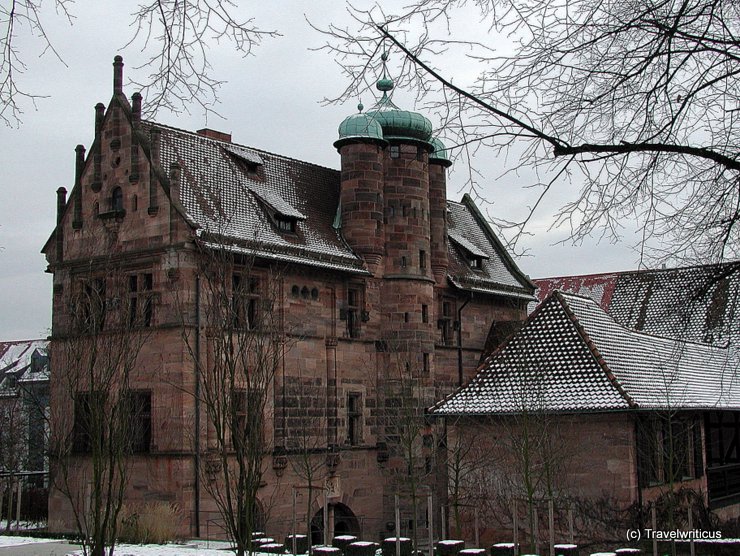
The Tucher Mansion (Tucherschloss) dates back to 1544. It served as a summer residence for the Tucher, a patrician family in Nuremberg. The museum inside shows how such a family lived in those times.
You only see what you know (Goethe)
The Tucher Mansion (Tucherschloss) dates back to 1544. It served as a summer residence for the Tucher, a patrician family in Nuremberg. The museum inside shows how such a family lived in those times.
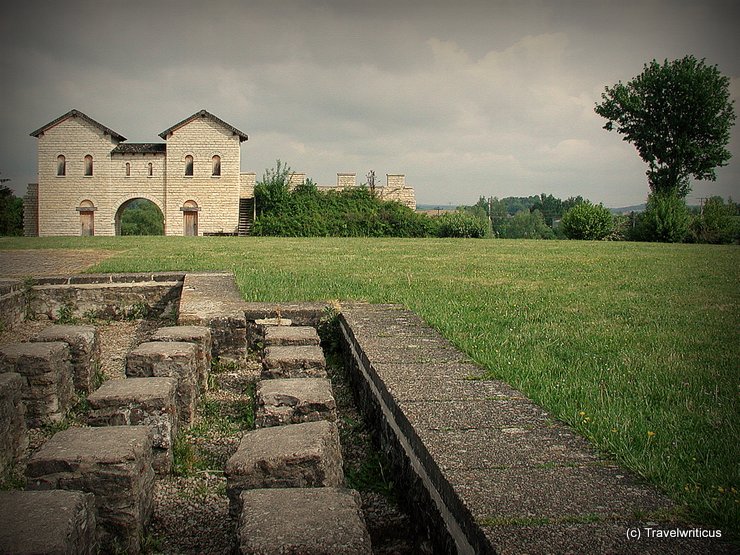
The Roman fort Biriciana, nowadays known as Kastell Weissenburg, was occupied by cavalry units during ancient times. The photo shows the reconstructed north gate (Porta decumana) of the fort area. In Roman times, this gate led to the Limes. [German]
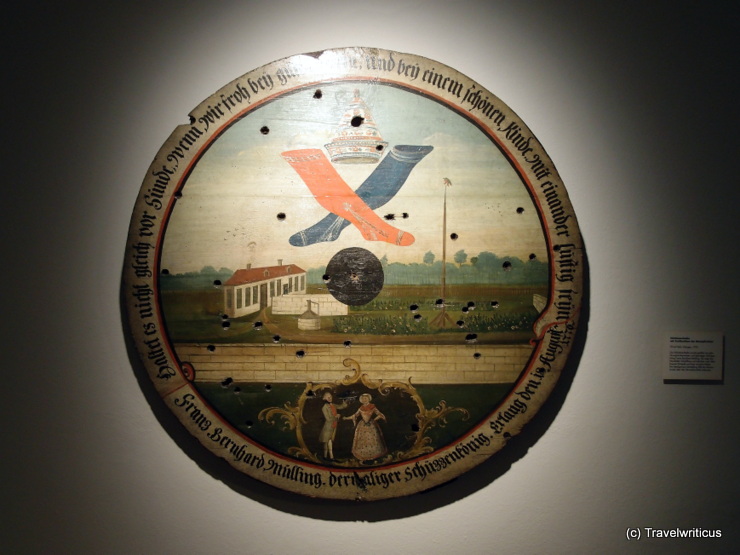
You find the Erlangen City Museum in the former town hall of the Old Town (Altstadt) on Martin- Luther-Platz. It shows the city’s history from its beginnings to the 20th century. Especially worth seeing is the depiction of the history of the Huguenots. [German]
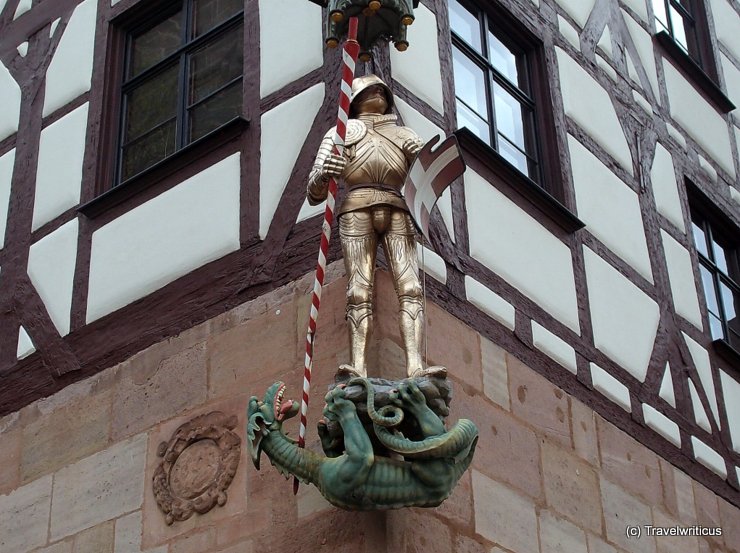
The house sign of the Pilatushaus in Nuremberg shows Saint George fighting the dragon. The motif fits well. The owner of this home was a Plattner (amorer), and George was the Saint of his craft guild.
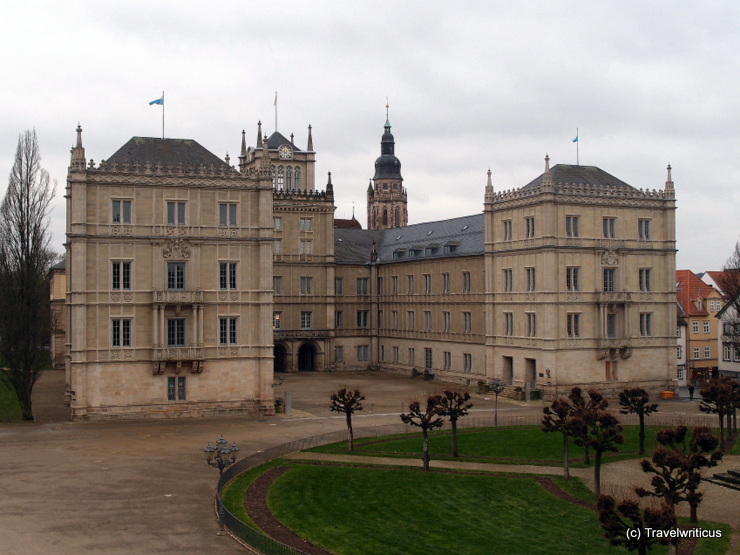
Ehrenburg Palace (Schloss Ehrenburg) was the residential palace of the dukes of Saxe-Coburg until 1918. It originates from a Franciscan monastery. The present façade in the English Gothic Revival style is a work by Karl Friedrich Schinkel at the beginning of the 19th century. [German]
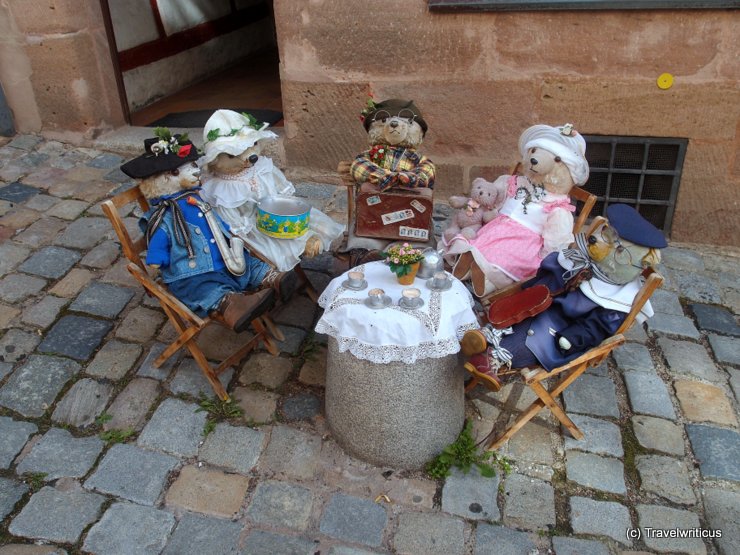
Cute! I found this group of teddy bears in front of a doll shop. Can you imagine my surprise to meet bears in the streets of Nuremberg? On the other hand, it wasn’t my first bear-related experience on this day.
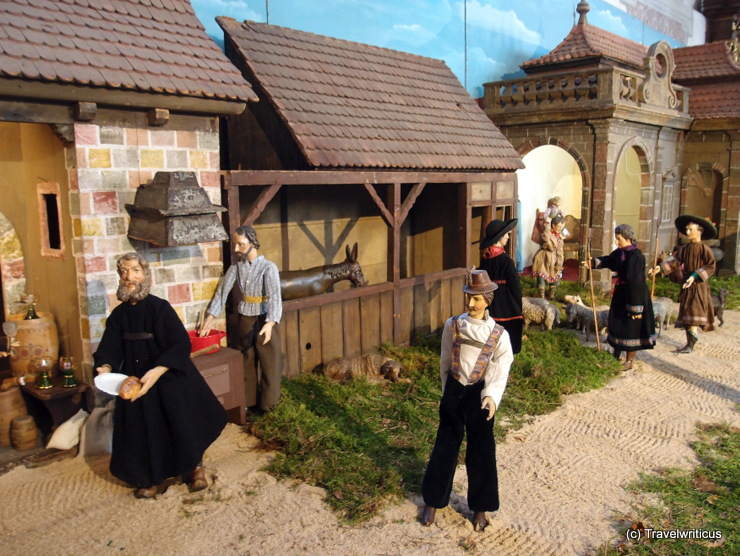
More than thirty nativity scenes are visible in the city of Bamberg. These are spread over the entire town and invite you to an exciting exploration of cribs. The range extends from historical to modern models. [German]
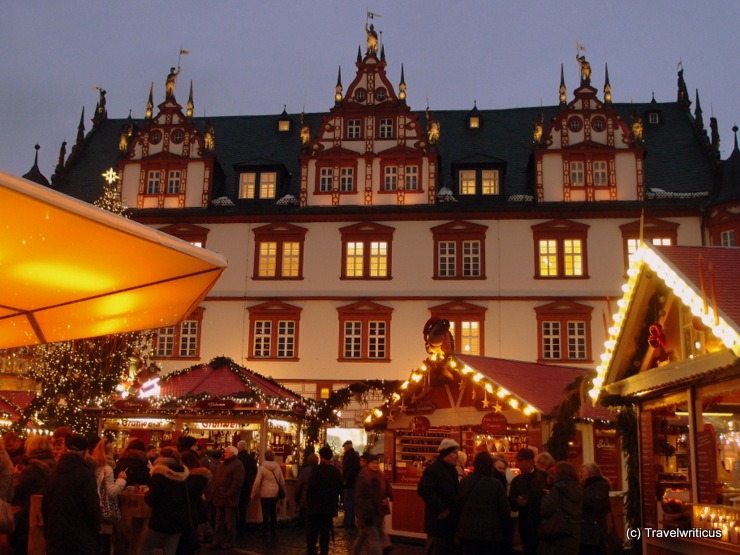
Renaissance facades and several corner oriels frame the Christmas market on the market square of Coburg. The oriels are known as Coburger Erker. Between the historic town hall and the former ducal chancery, visitors enjoy the Coburger Bratwurst. It is a sausage roasted over an open fire of pine cones. [German]
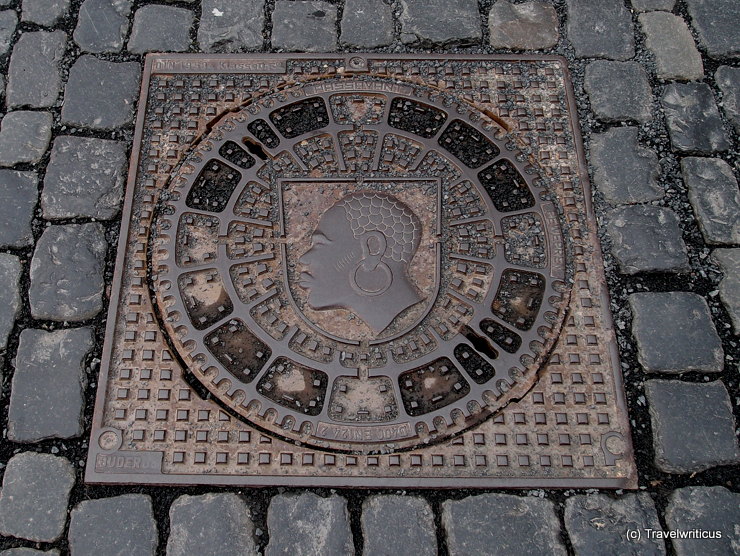
The manhole covers in Coburg show the city’s arms. They display the head of Saint Maurice, the patron of Coburg. This depiction of him is known as Coburger Mohr (Coburg Moor). According to legend, Saint Maurice died as leader of the Theban Legion, a martyr’s death in the 3rd century. [German]
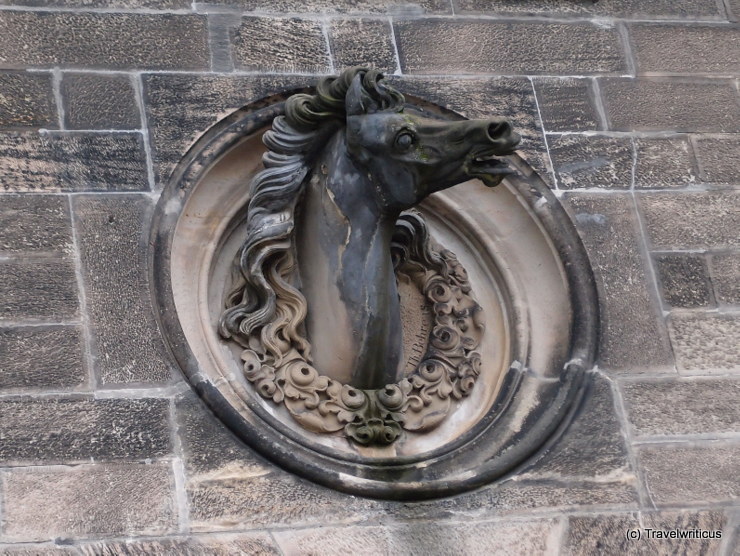
The Coburg Riding Hall (Coburger Reiterhalle) stands near to the Ehrenburg Palace (Schloss Ehrenburg). It was built according to the plans of Georg Konrad Rothbart in 1852. Theodor Behrens created the sculptural horse’s head in the tondo directly above the pointed arch portal. [German]
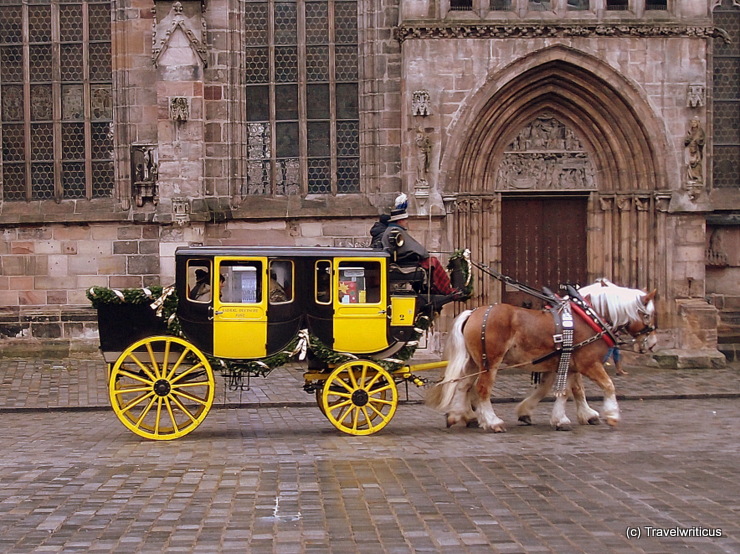
During the Christkindlesmarkt, Nuremberg’s traditional Christmas market, guests may ride on a 1939 reproduction of a nine-seater Berlin with two coupés from 1874. The stagecoach is supplied by the Museum for Communication, which is also worth a visit.
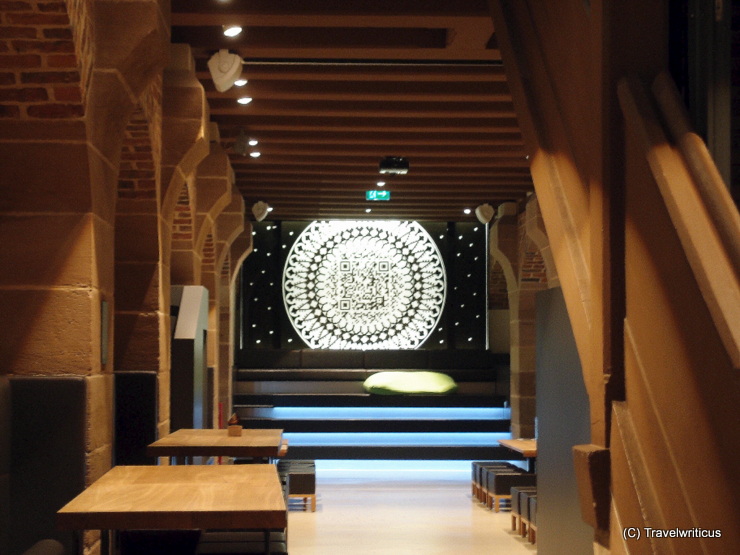
The youth hostel in Nuremberg (Nürnberg) is located in a part of the Imperial Castle complex high over the city. Though the rooms are pretty modern, there are also several atmospheric parts. Interesting detail: You can find huge QR codes all over the hostel telling you interesting details about the city of Nuremberg.