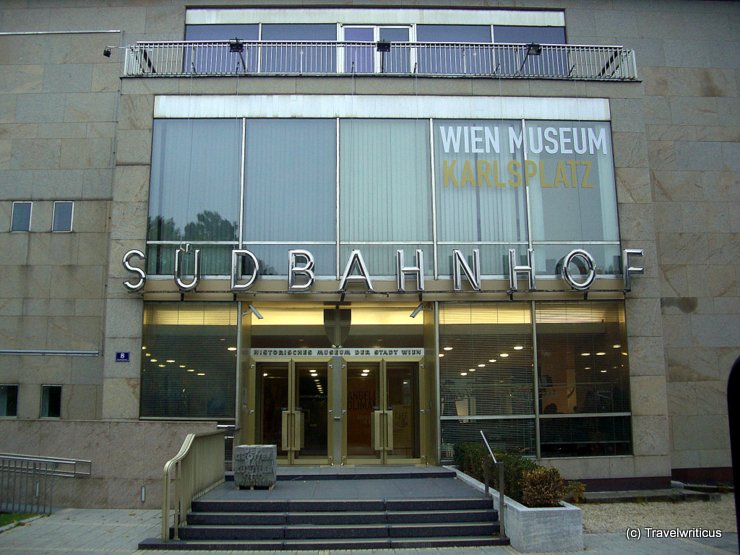
The railway station Südbahnhof closed in 2009 forever. Later, I saw the letters placed above the entrance of the Wien Museum. I wonder how many visitors realised the museum was labelled like a railway station.
You only see what you know (Goethe)
The railway station Südbahnhof closed in 2009 forever. Later, I saw the letters placed above the entrance of the Wien Museum. I wonder how many visitors realised the museum was labelled like a railway station.
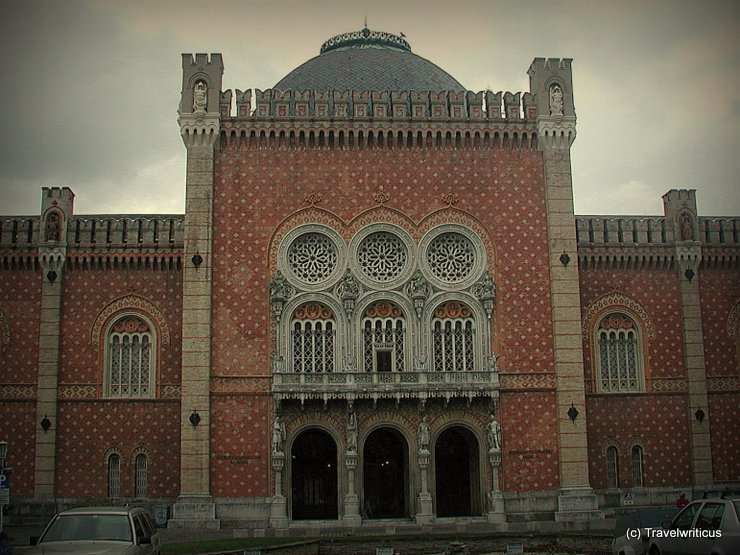
The Museum of Military History (Heeresgeschichtliches Museum) in Vienna is an architectural gem. So you find architecture in the style of Byzantine as well as Neo-Gothic. Some details made me think of being in Venice
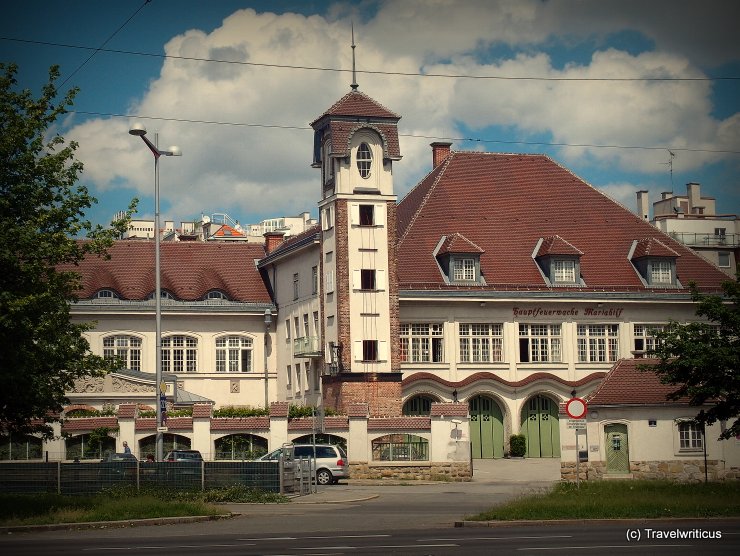
The Mariahilf Fire Station (Hauptfeuerwache Mariahilf) in Vienna saw its completion in 1914. Its architecture still resonates with the spirit of the age between the fin de siècle and the First World War.
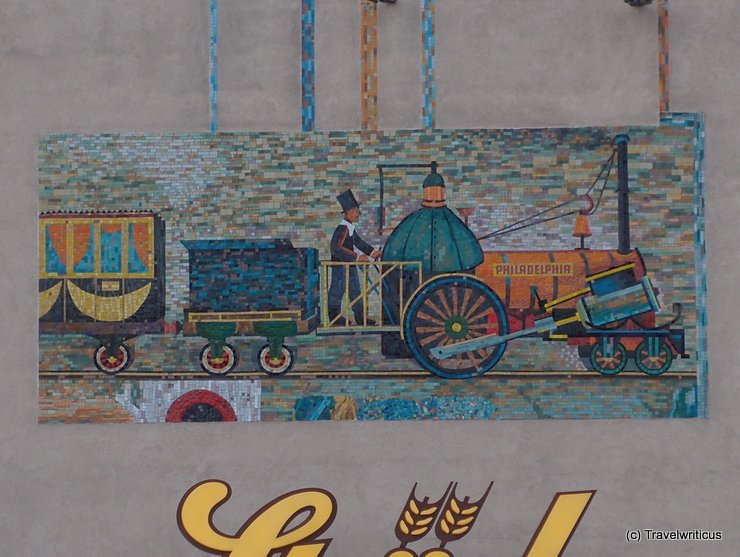
A mural near the railway station Wien Meidling reminds us that one of the first Austrian locomotives originated from the USA. The Norris Locomotive Works in Philadelphia assembled the WRB Philadelphia in 1837.
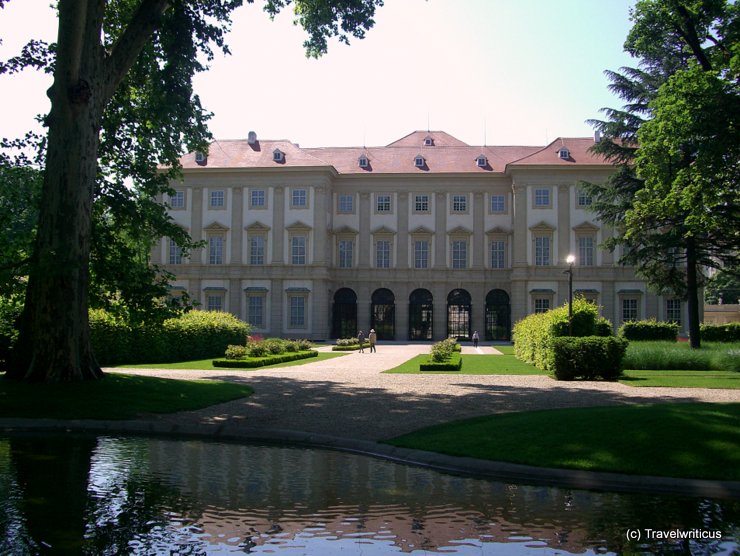
The Liechtenstein Garden Palace (Gartenpalais Liechtenstein) in Vienna houses a private art collection owned by the Princely Family of Liechtenstein. Guided tours tell you about the collected masterpieces and the palace architecture.
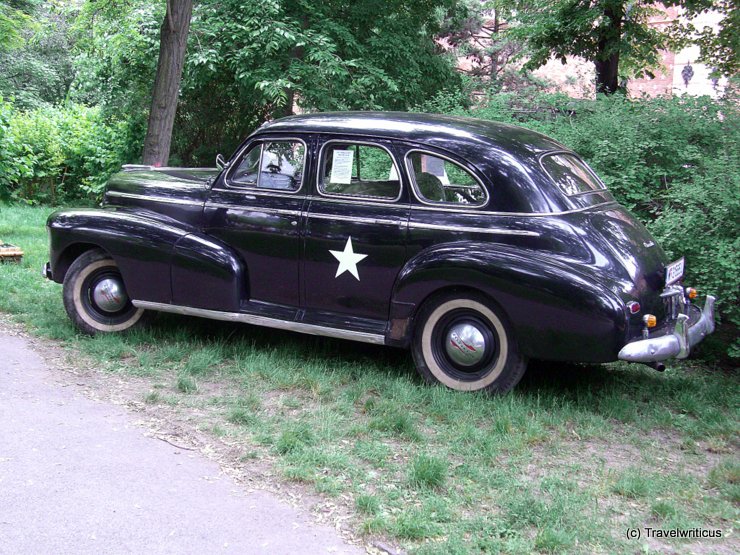
The Museum of Military History (Heeresgeschichtliches Museum) organizes a military car festival in Vienna every year. At this event, I took this photo of a Chevrolet Fleetmaster 1946. The US High Commissioner used the depicted car in Austria from 1946–1950.
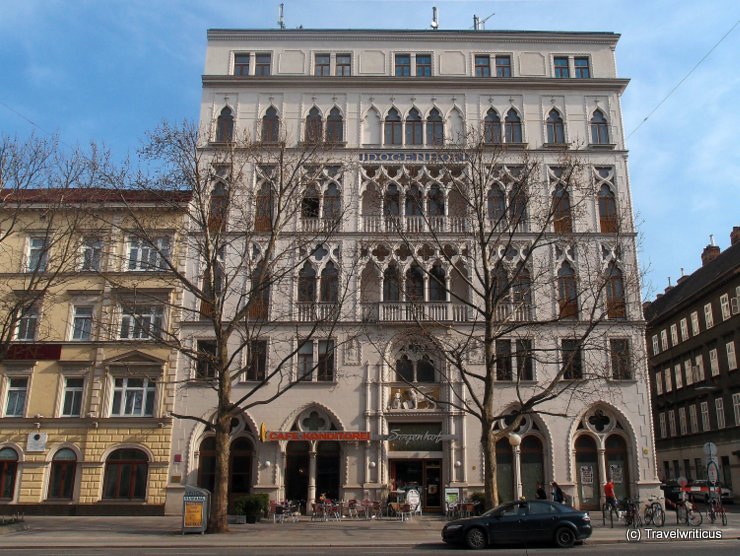
Around 1900 people of Vienna were very fancy about Venice. So there was an idea to build an Italian quarter along the Praterstraße. A small reminder of this gone idea is the Dogenhof (Praterstraße 70). Its architecture was influenced by a palazzo in Venice.
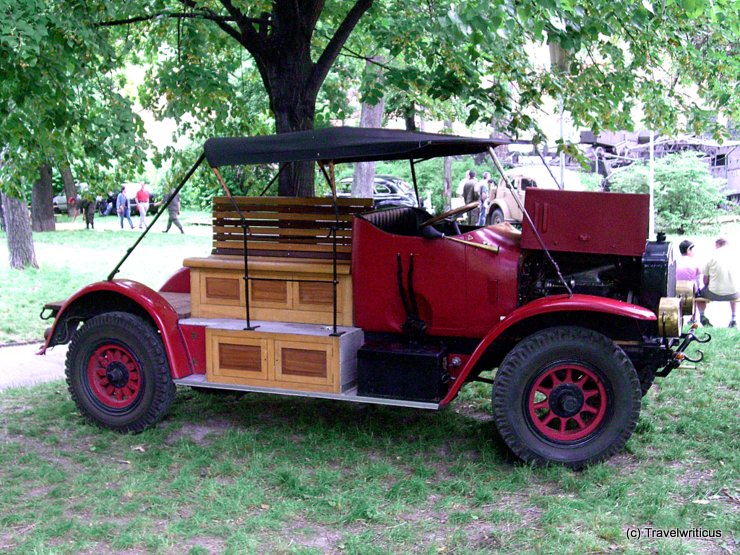
I took this photo at a meeting of classic cars hosted by the Military History Museum in Vienna. It shows a still-running automobile built by the Czech company Praga in 1914. A board told me the truck might have carried a floodlight of the Austro-Hungarian army during World War I. [German]
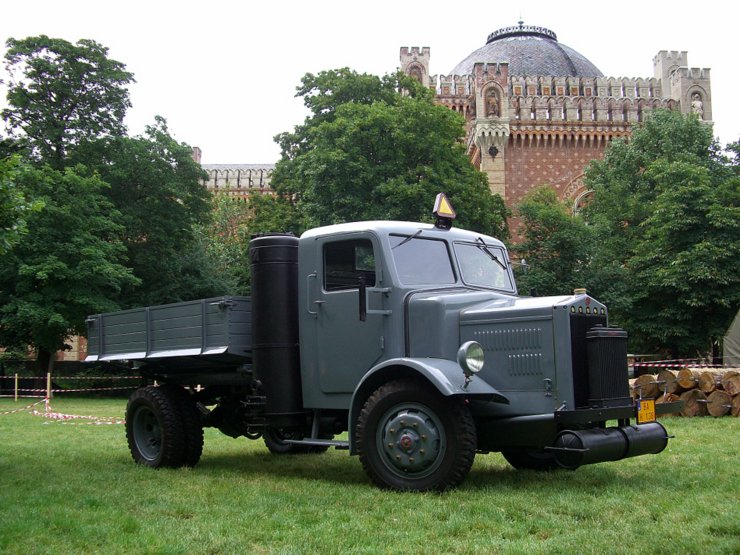
The idea of running an automobile with wood gas fascinated me even as a child. So I was particularly pleased to see this truck with a wood gasifier in Vienna. The lorry was part of a meeting of historic military vehicles. [German]
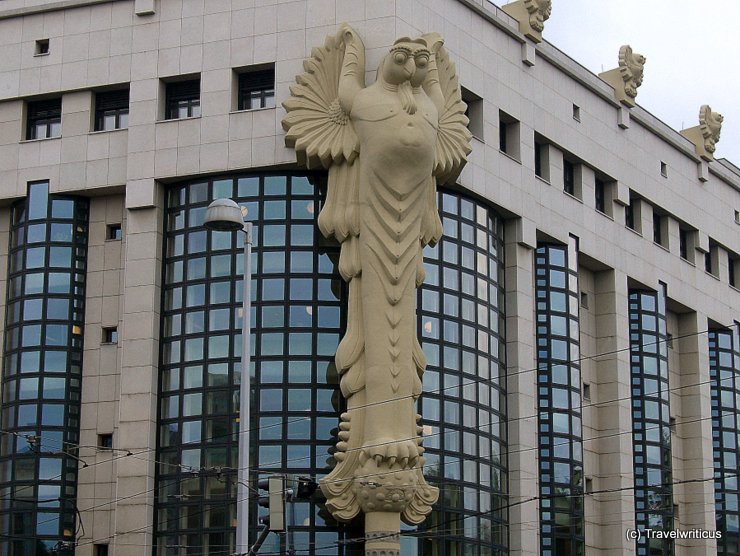
This owl is a decoration created by the Swiss artist and architect Bruno Weber. You find it at the Vienna University of Technology Library. The 18-metre-high sculpture and the 16 smaller owls along the attic make the building look like a place of wisdom. [German]
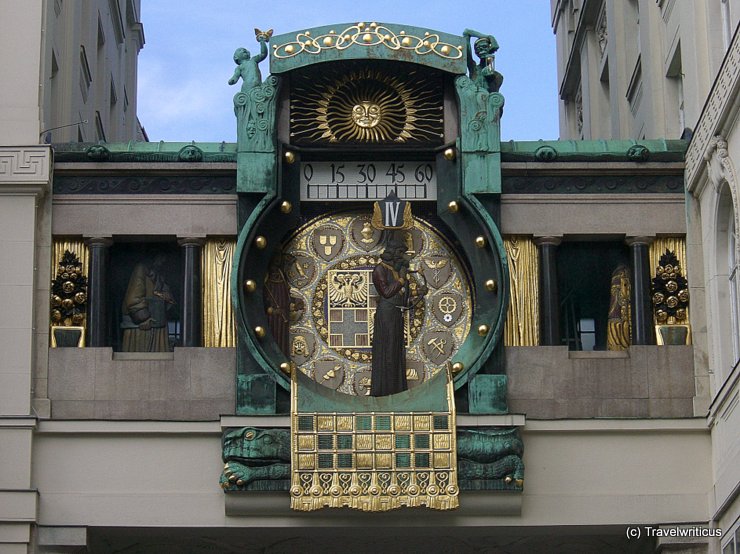
The Ankeruhr in Vienna is a clock in a gangway between two buildings on the Hoher Markt Square (1. District). It displays every hour a different personality who has played a role in the history of Vienna. [German]
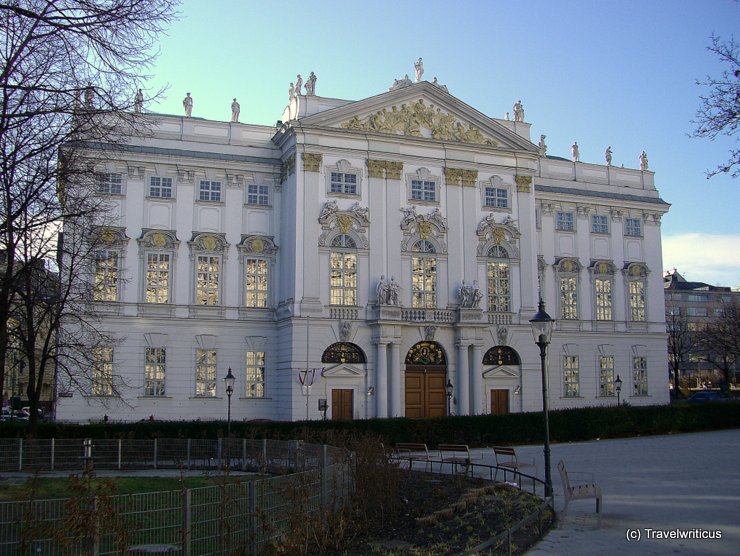
Palais Trautson, designed by Johann Bernhard Fischer von Erlach, is considered one of the most beautiful Baroque palaces in Vienna. For many years it served as the seat of the Royal Hungarian Guards. Today it houses the Austrian Ministry of Justice. [German]