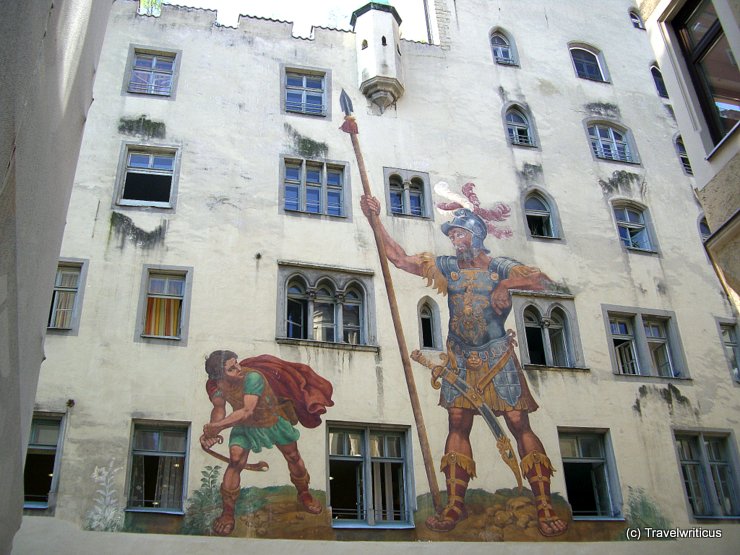
The Goliath House (Goliathhaus) in Regensburg shows the legend of David and Goliath. The first depiction dates back to the 16th century. Several renewals followed. That one from 1900 produced an unusually relaxed Goliath. [German]
You only see what you know (Goethe)
The Goliath House (Goliathhaus) in Regensburg shows the legend of David and Goliath. The first depiction dates back to the 16th century. Several renewals followed. That one from 1900 produced an unusually relaxed Goliath. [German]
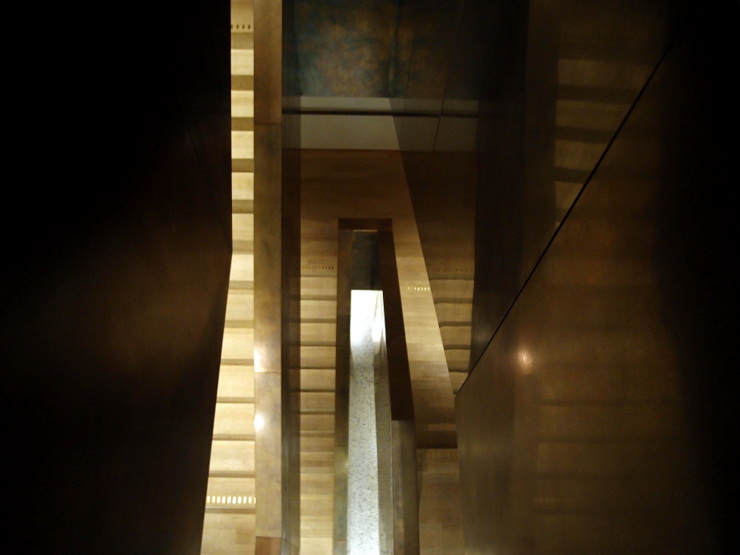
The Vorarlberg Museum in Bregenz offers some fascinating architectural details. The play of colours in the stairwell results from stairs made of oak and a handrail made of brass. [German]
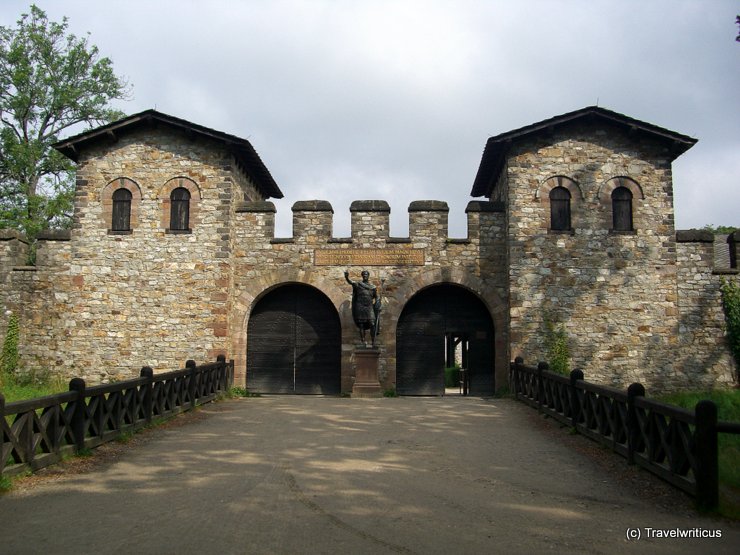
The Saalburg is a reconstructed Roman fort in Hesse. Inside its walls, a museum tells about the life of the soldiers along the border. The castellum was a part of the Upper Germanic-Rhaetian Limes. Today the remains of the Limes are enlisted as UNESCO World Heritage Site. [German]
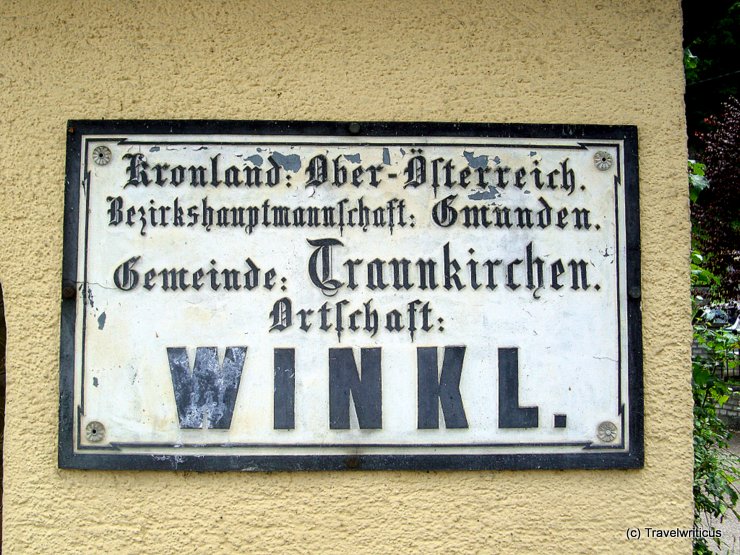
On my walk from the railway station of Traunkirchen to the town centre, I came across this vintage place-name sign. The Austrian State of Upper Austria (Oberösterreich) is still labelled as crown land (Kronland).
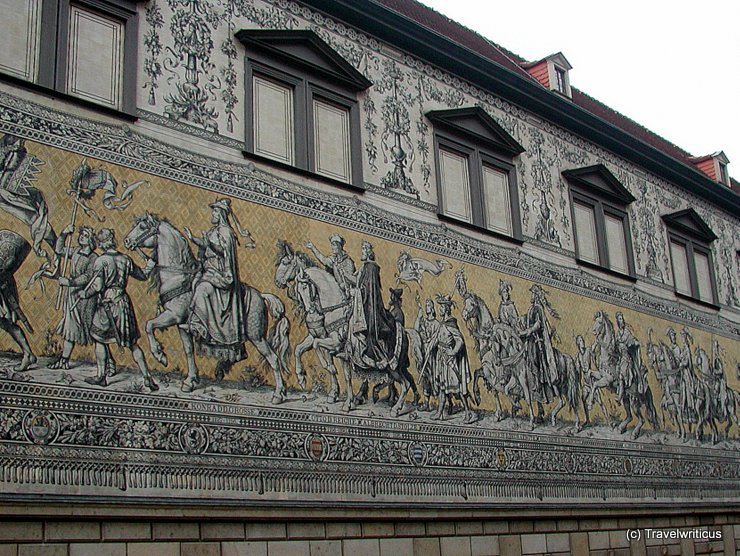
The Fürstenzug (Procession of Princes) is a 102-meter-long mural in Dresden. It is applied to 23,000 Meissen porcelain tiles and displays portraits of 35 members of the House of Wettin. These people formed the rulers of Saxony between 1127 and 1904. [German]
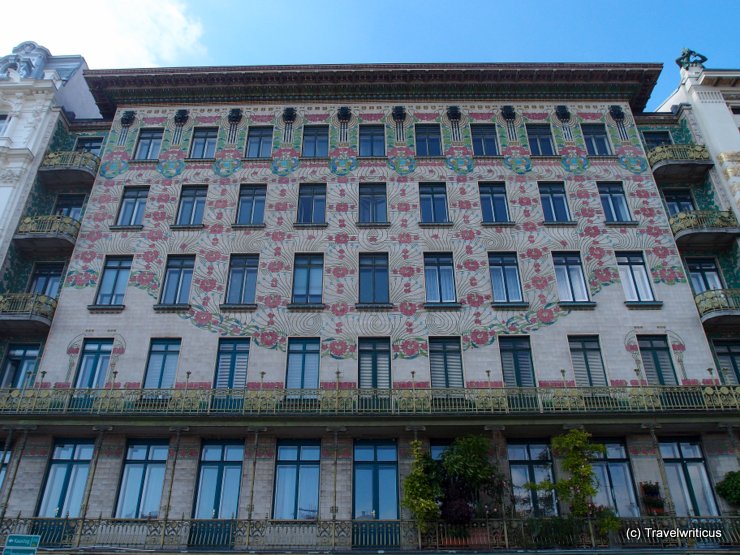
The Majolikahaus saw its completion in 1898. The architect of the building was Otto Wagner. His student Alois Ludwig created the floral design on the façade. The decoration with Majolica ([ger.] = Majolika) elements leads to today’s house name.
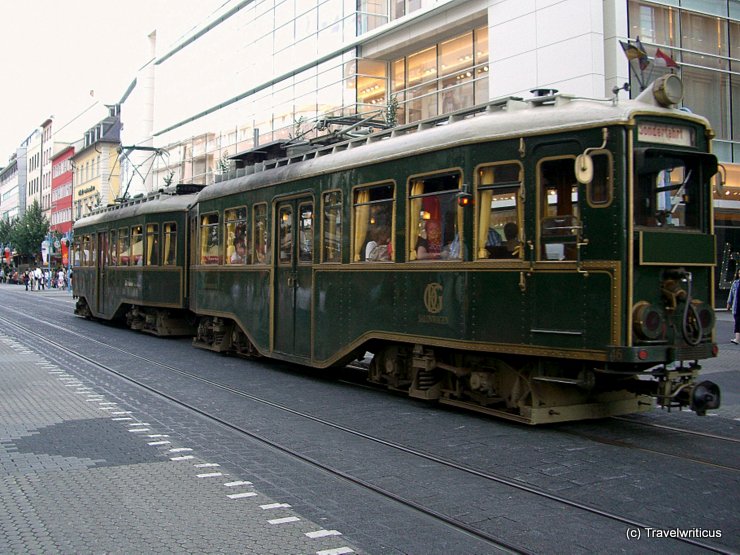
Shortly after discovering a museum-related manhole cover, the next surprise overtook me. An OEG Salonwagen (saloon car) in the design of the 1920s rattled past me. Inside, passengers chilled and enjoyed the view. [German]
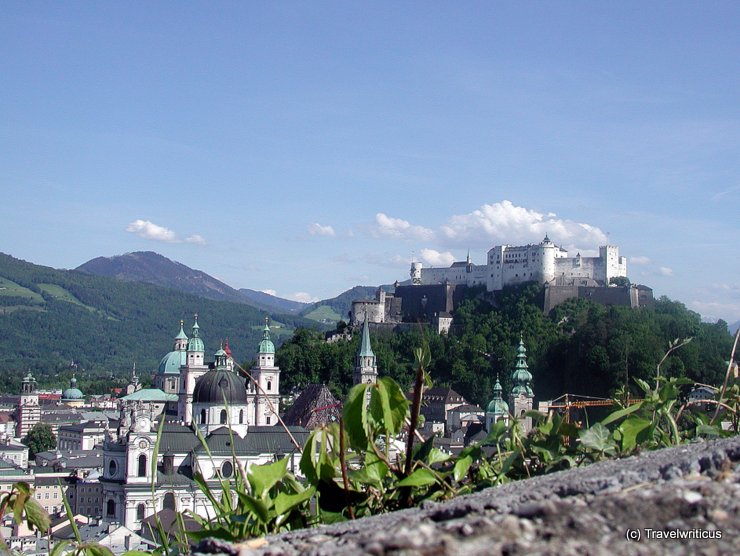
A narrow panoramic path leads in front of the Museum der Moderne in Salzburg. From there, I had this formidable view over the rooftops of Salzburg and Hohensalzburg Fortress.
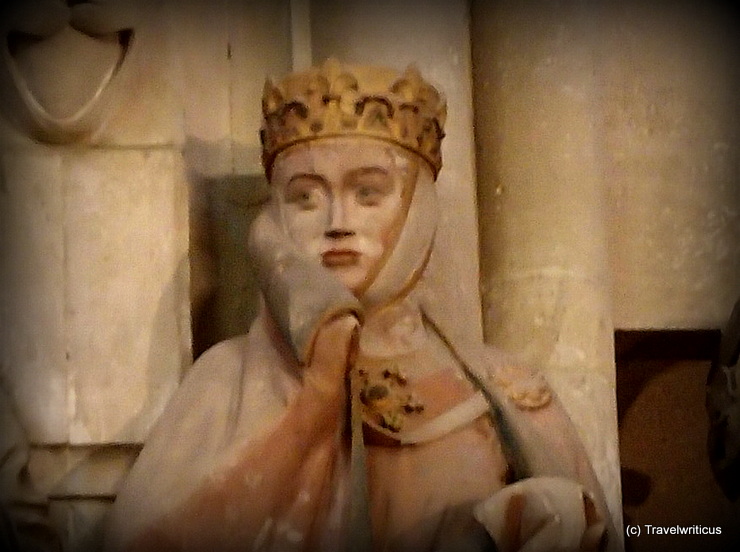
This sculpture is one of twelve donor portraits located in the west choir of Naumburg Cathedral. Due to the look of the depicted lady, this work is considered the most beautiful of the twelve. The name of the statue is Uta of Naumburg.
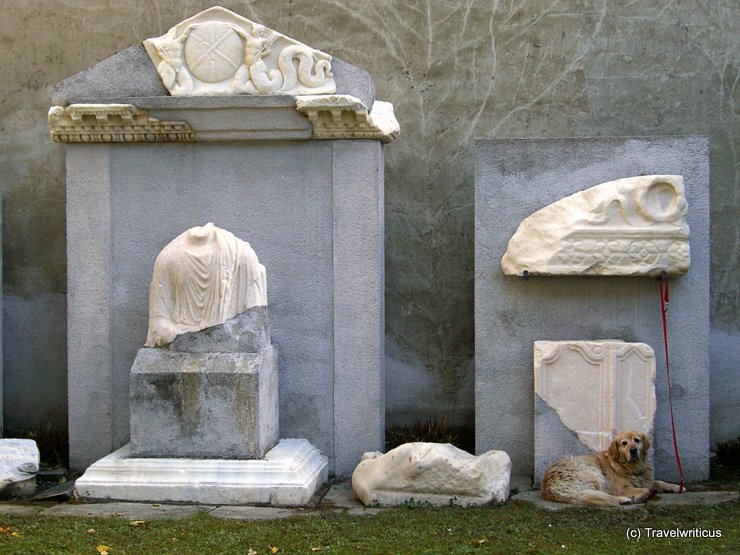
While walking along the lapidarium of the City Museum in Villach (Stadtmuseum Villach), I came across this dog who obviously loved to be among all these ancient pieces. Many of them reminds us of the Roman settlement Santicum.
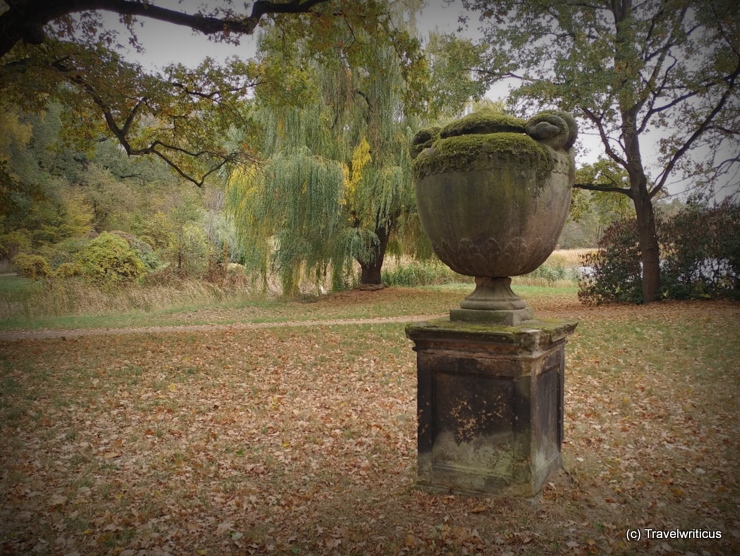
The Dessau-Wörlitz Garden Realm is a landscape park in and around Dessau-Roßlau. Another common name is the Garden Kingdom of Dessau-Roßlau. The park dates back to the Age of Enlightenment. [German]
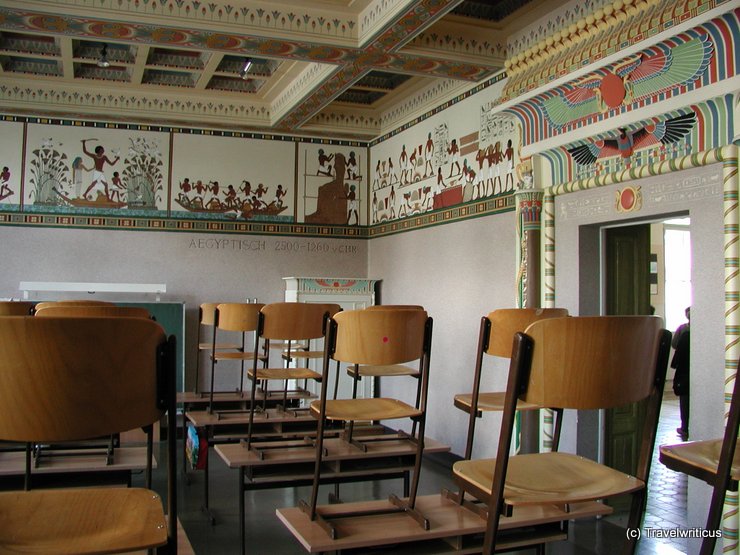
The Berndorf schools opened in 1909. Each classroom (Klassenzimmer) of them is designed in a different historical style (Stil), so the German name of these rooms is Berndorfer Stilklassen.