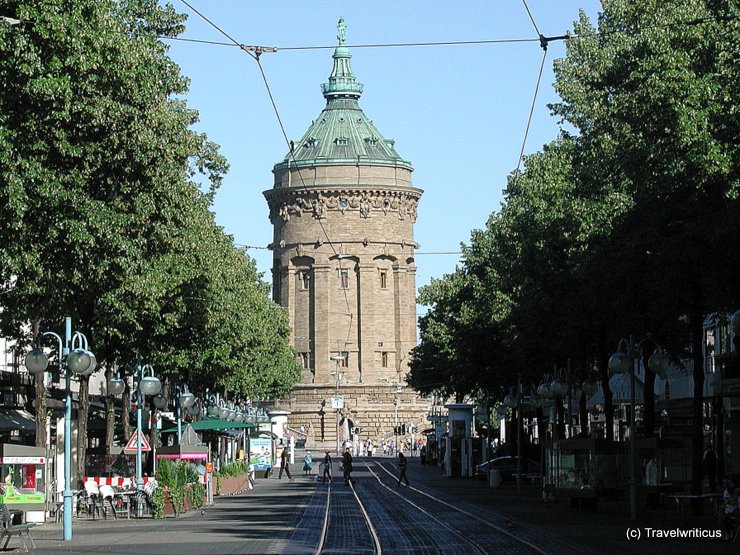
This water tower in Mannheim is the landmark of the Quadratestadt (Square City). You find it on Frederick Square (Friedrichsplatz). It was built according to plans by Gustav Halmhuber in 1886-1889. [German]
You only see what you know (Goethe)
This water tower in Mannheim is the landmark of the Quadratestadt (Square City). You find it on Frederick Square (Friedrichsplatz). It was built according to plans by Gustav Halmhuber in 1886-1889. [German]
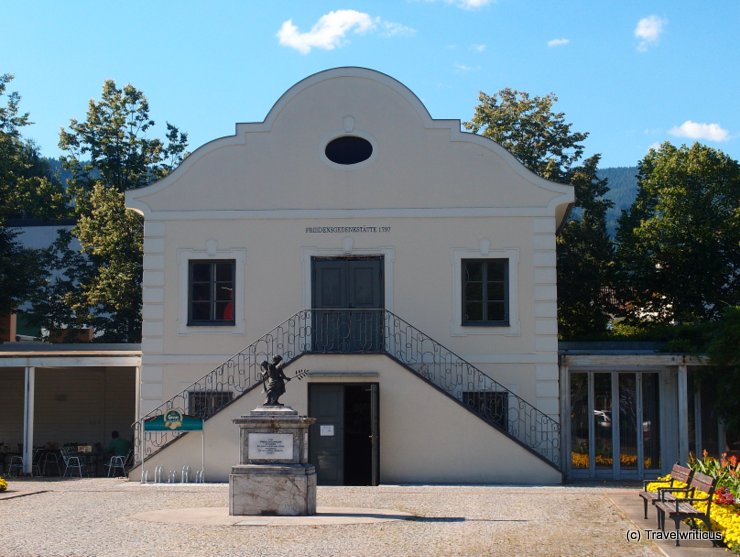
In this summer house formerly owned by Josef von Eggenwald (Eggenwaldsches Gartenhaus), the Peace Treaty of Leoben was signed between the Holy Roman Empire and the First French Republic on April 18th, 1797. This signing was an important event at the end of the “War of the First Coalition”. [German]
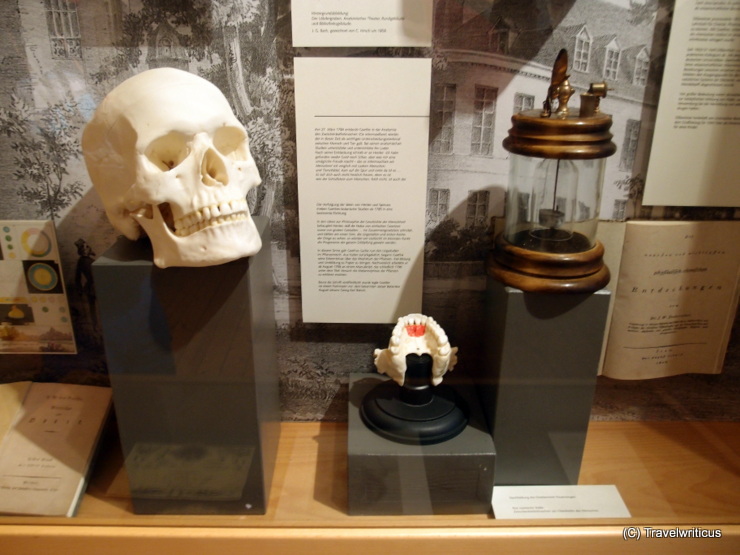
This showcase in the Romantikerhaus in Jena recalls that Johann Wolfgang von Goethe also worked as a scientist. For example, he dealt with the incisive bone. Contrary to his assumption, he was not the discoverer of this bone. [German]
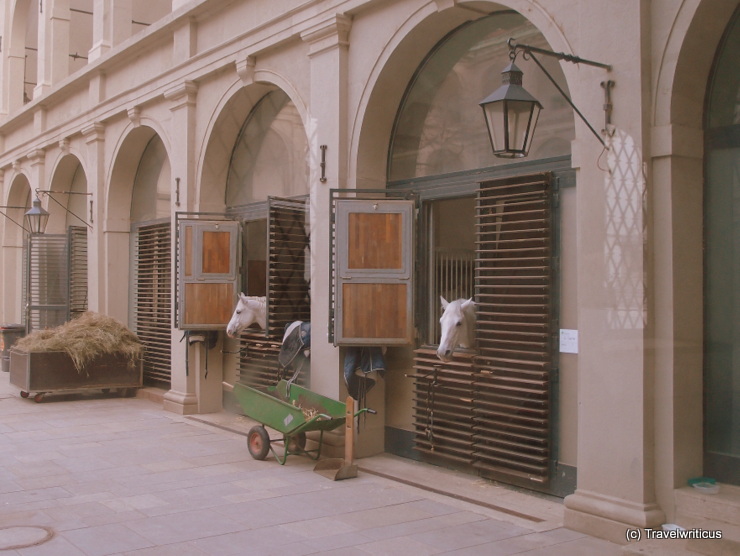
A chance to see the famous Lipizzaner horses of the Spanish Riding School for free is at the Stallburg building. This former residence is placed next to the Winter Riding School. Between the training and the performances, the Stallburg is the home of the white stallions.
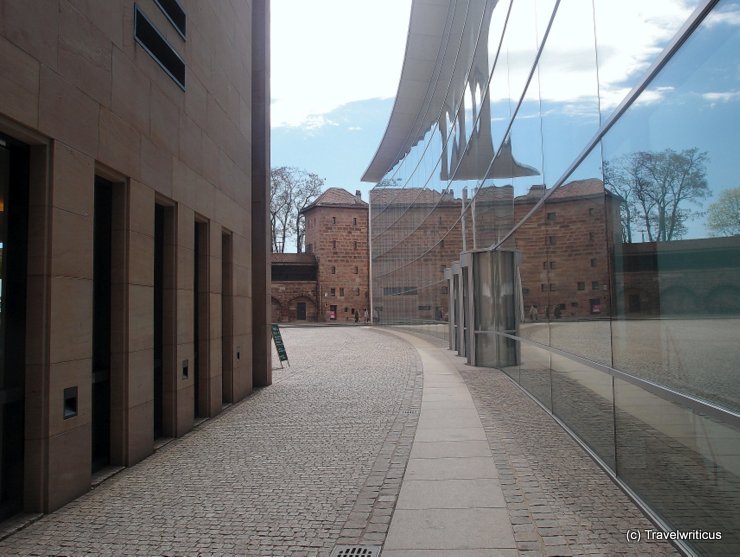
In Nuremberg, there is some modern architecture inside the medieval town walls. As a result, the glass façade of the Neues Museum reflects the city wall like a mirror. By the way, the museum shows pieces of contemporary art and design.
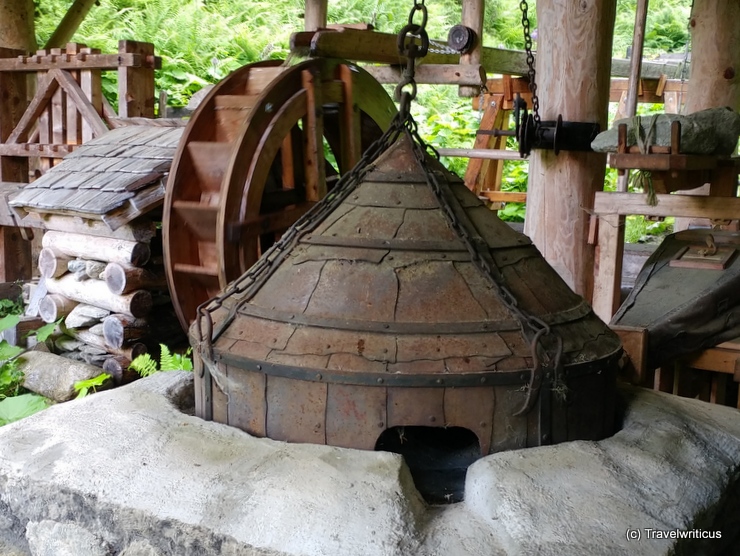
The Knappenwelt (Pitmen’s World) in Angertal is an open-air museum about the late medieval gold and silver smelting in the Gasteinertal area. It is a station of the Via Aurea, which focuses on gold mining in the Austrian Tauern mountain ranges. [German]
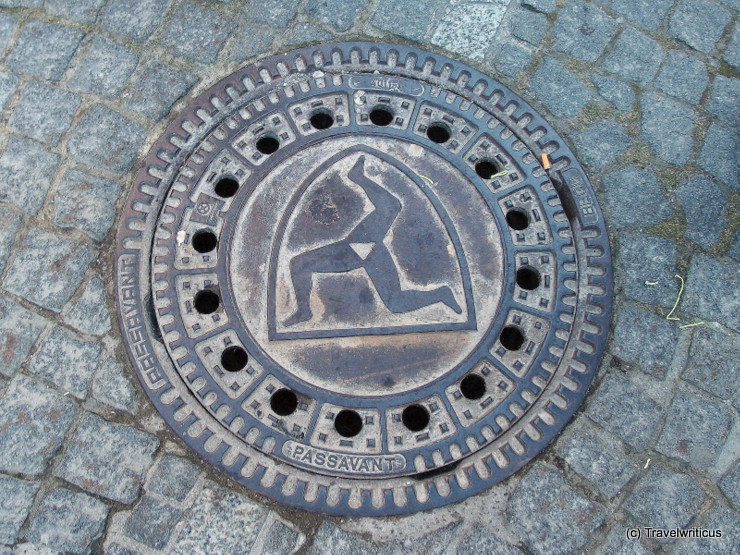
On the manhole covers in Füssen, you see the local city arms showing three legs. This is a fine example of canting arms. The German word for feet is “Füsse”. But why sounds this Bavarian town name like a body part?
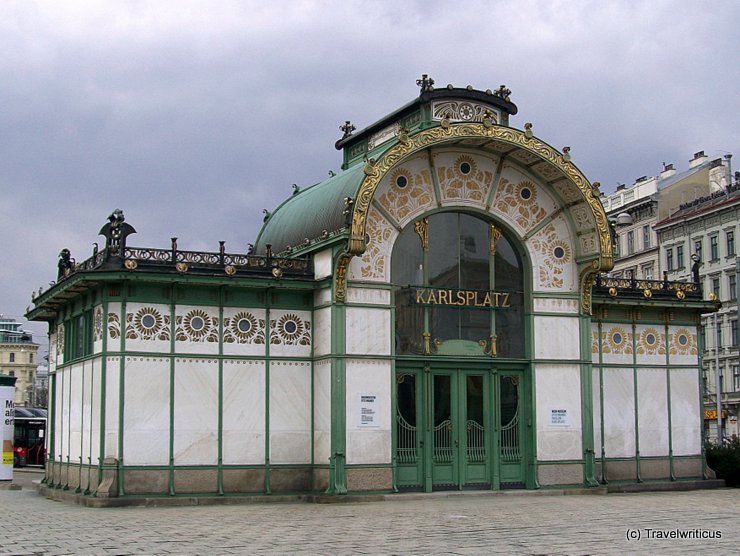
This Art Nouveau pavilion dates back to 1898. Architect Otto Wagner designed it as a station building for the Viennese Metropolitan Railway (Wiener Stadtbahn). Today the Otto Wagner Pavillon houses a museum about this famous urban planner.

The Zwehrenturm in Kassel was a medieval tower within the city’s fortifications, serving as both a prison and an observatory over the centuries. The sundial on the Zwehrenturm dates from the 18th century. [German]
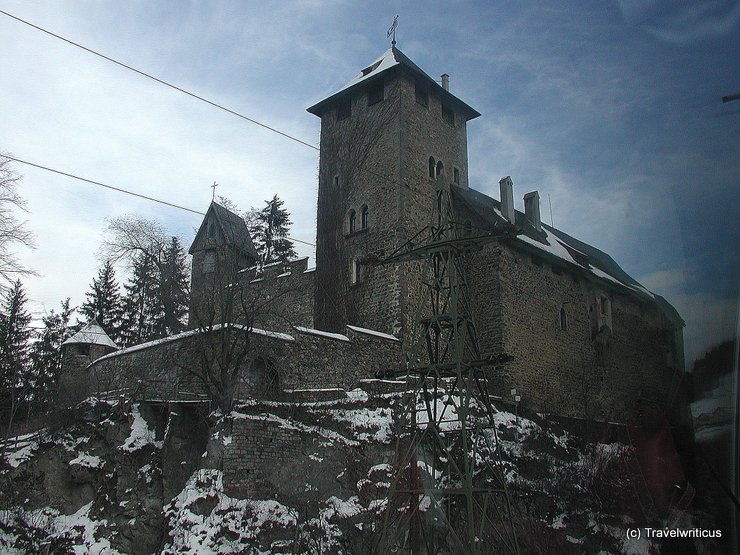
The castle above the mouth of the Paznaun in the Stanzer Valley dates back to the 13th century. Several of today’s structures result from a renovation at the beginning of the 20th century. In May 1945, parts of the German Wehrmacht surrendered to American troops after negotiations in this castle. [German]
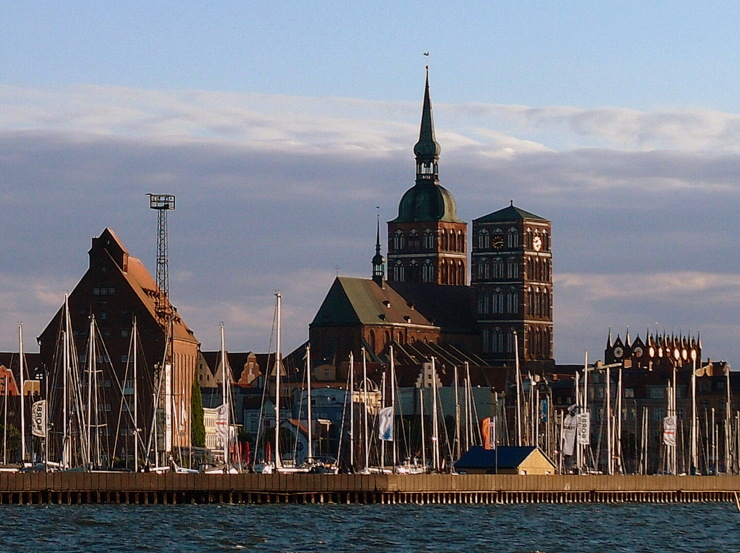
While cruising the Strela Sound with a snug sailing boat, I took this photo of the St. Nicholas Church (Nikolaikirche) in Stralsund. The church offers not only two different towers but also an astronomical clock.
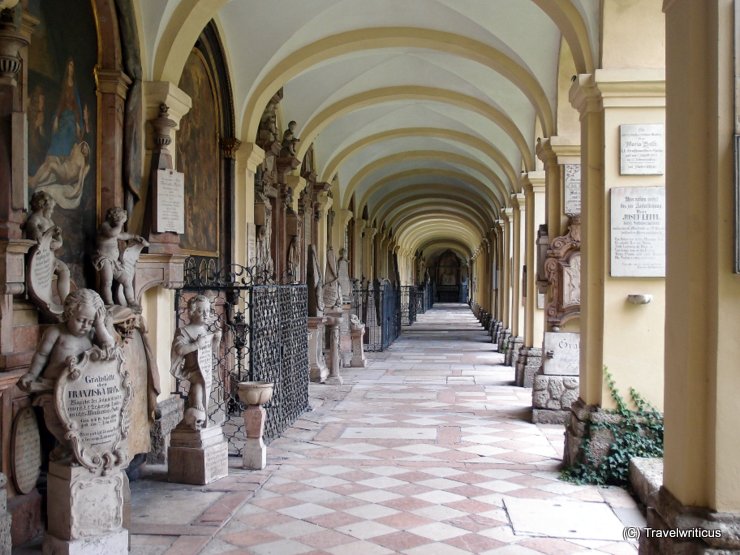
The Sebastian’s Cemetery (Sebastiansfriedhof) dates back to the end of the 16th century. It was built in the style of an Italian campo santo. You find here the graves of Mozart’s widow and Paracelsus, founder of the discipline of toxicology. [German]