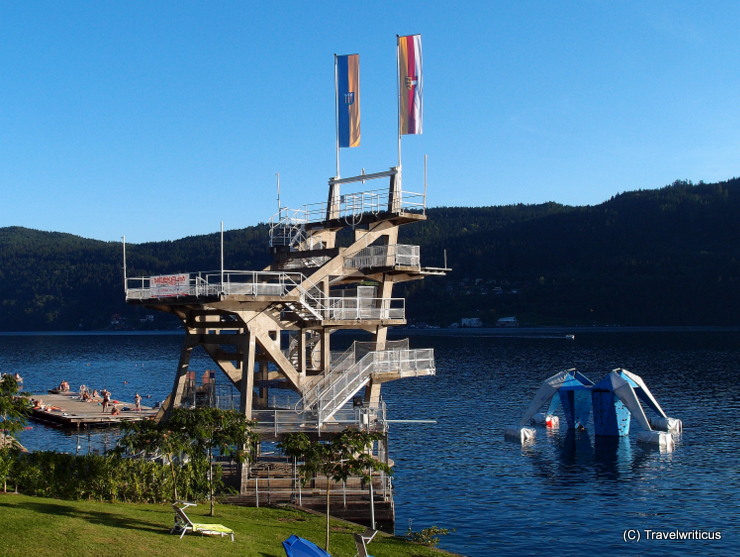
Sometimes, you go to the swimming bath to see a local landmark. So it is in Millstatt, a city in the Austrian state of Carinthia. This listed diving tower saw its construction in 1930 according to the plans of Christof Benedikt.
You only see what you know (Goethe)
Sometimes, you go to the swimming bath to see a local landmark. So it is in Millstatt, a city in the Austrian state of Carinthia. This listed diving tower saw its construction in 1930 according to the plans of Christof Benedikt.
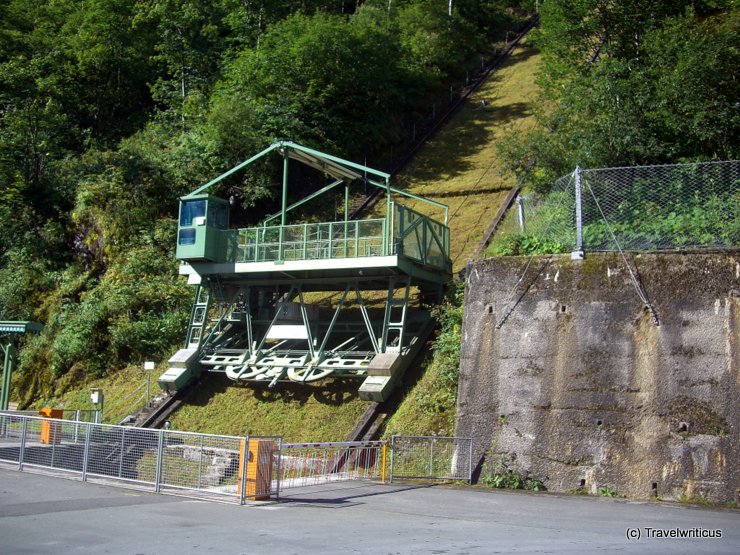
On a sunny summer day, I took this exceptional funicular to the hydroelectric plant at the Wasserfallboden. It is generally known as Lärchwand Lift. The inclined lift with an 8.2-metre track width transports large groups of people up the powerful sights.
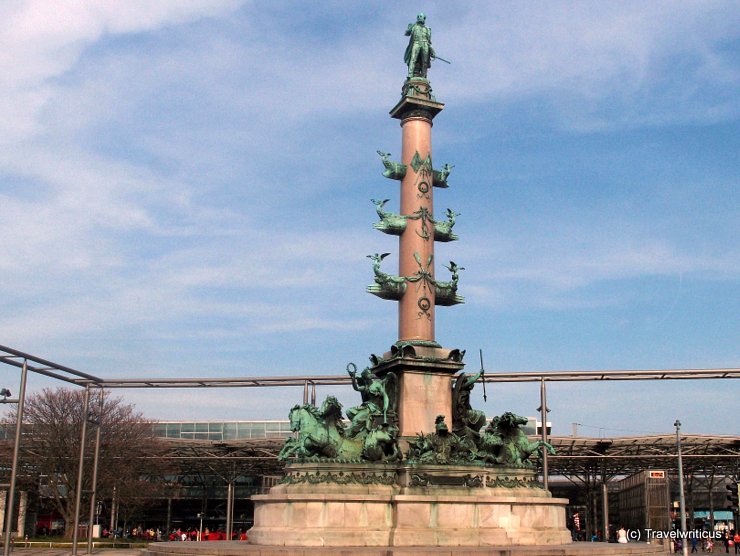
This monument to Wilhelm von Tegetthoff stands next to the Praterstern railway station in Vienna. Wilhelm von Tegetthoff was an Austrian admiral who became famous for the Victory of Lissa (1866). [German]
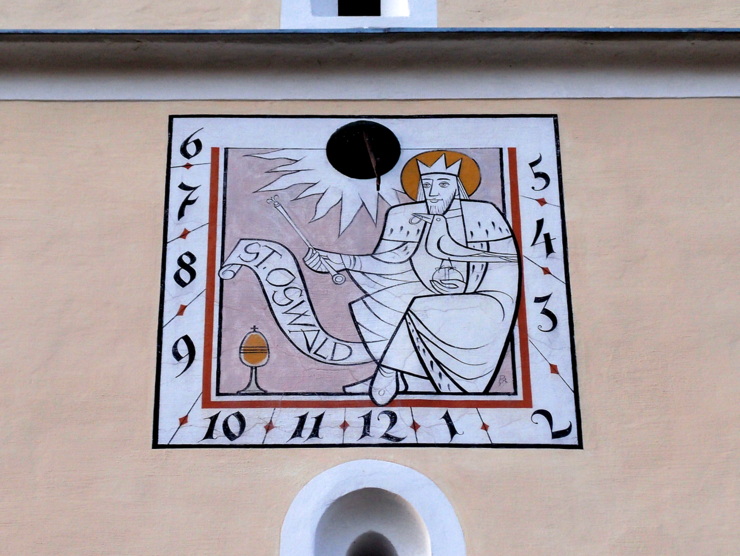
This sundial at the parish church of Puch bei Weiz shows Saint Oswald with a raven in his hand. The church is consecrated to this saint, who ruled as a King of Northumbria in the years 634-642.
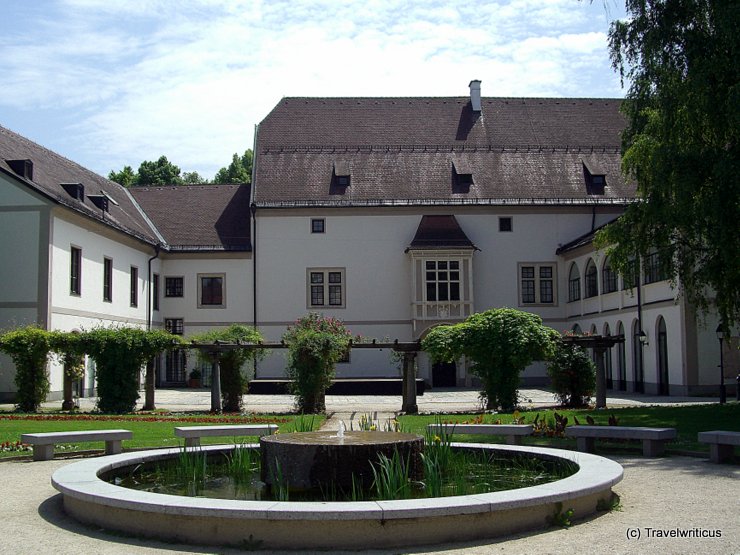
The castle in Wels is generally known as the Castle (Die Burg) or the Wels Castle (Die Welser Burg). It was first mentioned in 776. At that time, the site was just a wooden building with palisades. The construction in stone took place in the 12th or 13th century. [German]
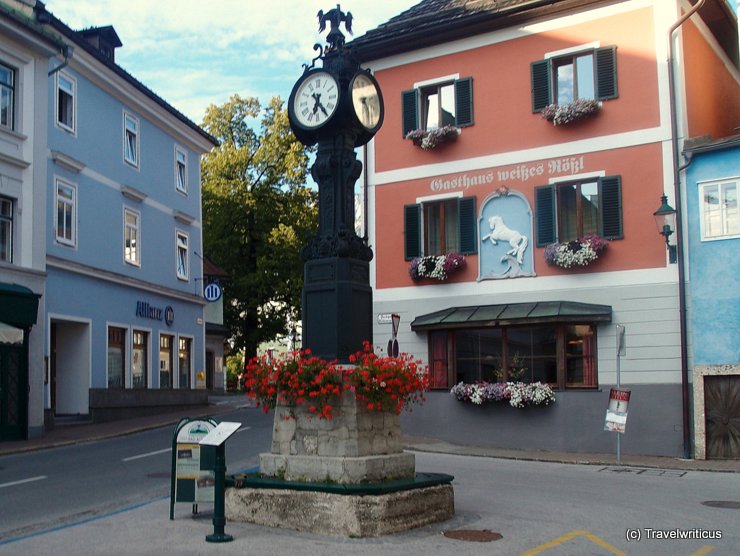
The Lössl-Uhr (Lössl Clock) is a technical gem in Bad Aussee. The public clock designed by Friedrich von Lössl used to work with the power of changes in atmospheric pressure and temperature.
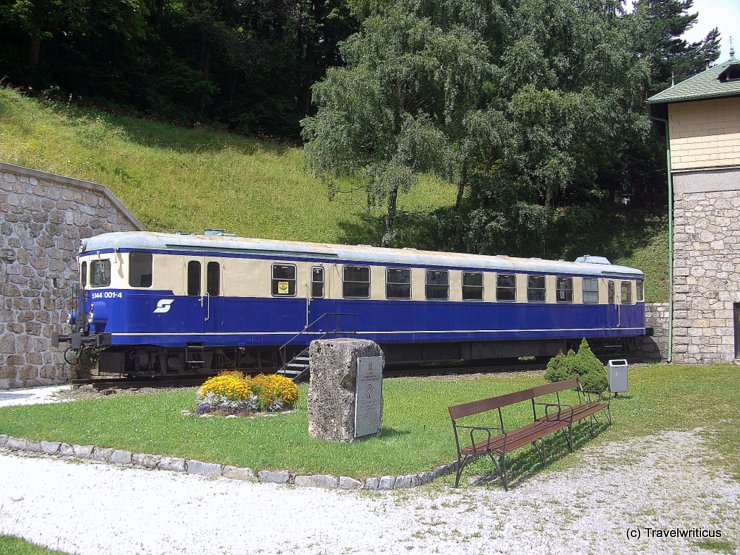
Passengers of trains running along the Semmering Railway World Heritage Site may have seen this diesel railcar at Semmering station. It is a railcar of the ÖBB Class 5144, dating back to 1951. [German]
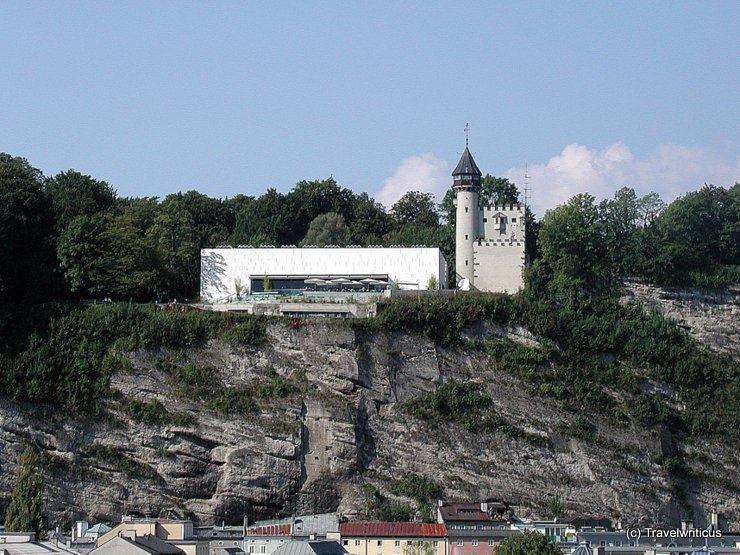
Guests of Salzburg know this view well: A castle-like tower high over the city, adjacent to a white building with a set of sunshades in front of it. We speak about a former water tower and the Museum der Moderne Salzburg.
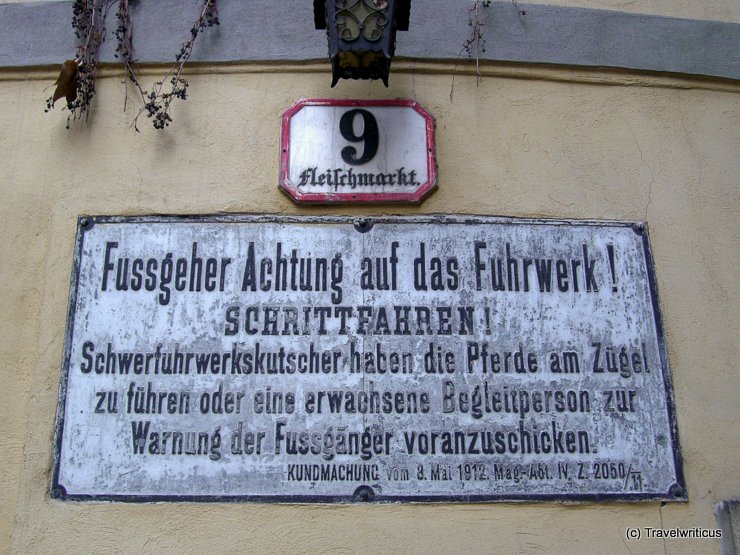
On my walk through Vienna, I came across this sign dating back to 1912. It asked drivers of heavy horse-drawn wagons to walk next to the horses or to send an accompanying person ahead to warn the pedestrians.
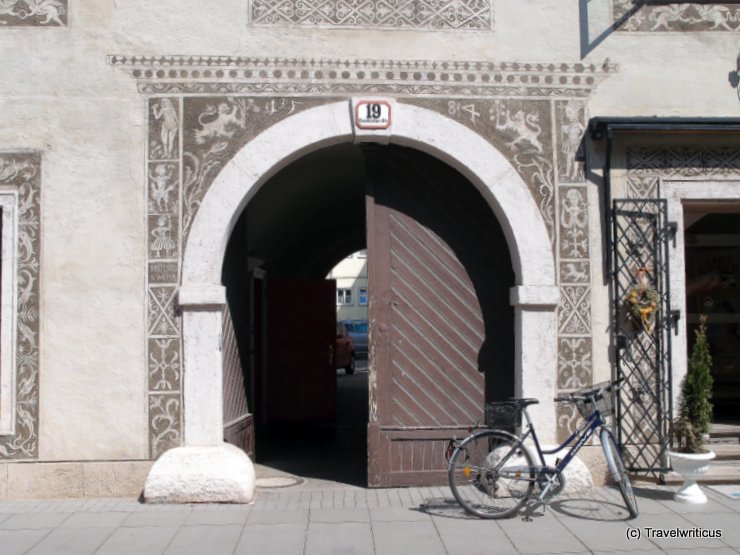
You find this building with lovely sgraffito at Neunkirchner Straße 19 in Wiener Neustadt. Around the gate, visitors see mythological creatures and the date 1584. The core of the house dates back to the 14th century.
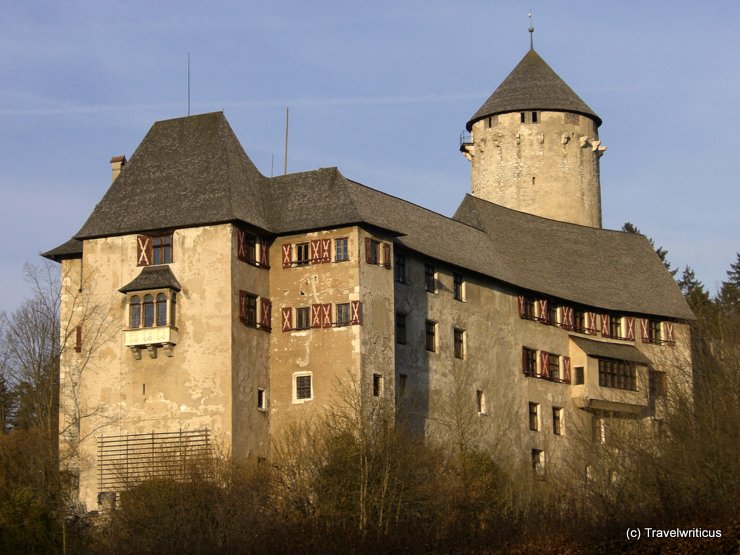
Matzen Castle in Reith was first mentioned in the 13th century. In earlier times, a settlement named Mascianum guarded a Roman street here. Today, the building houses a castle hotel. [German]
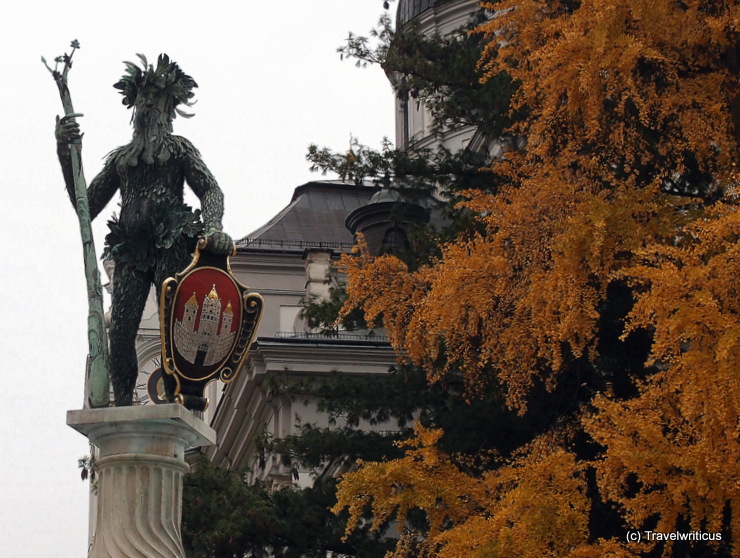
The Wild Man Fountain (Wilder-Mann-Brunnen) has existed since the beginning of the 17th century. Its water basins kept the fish fresh on the fish markets. Today, the fountain stands on the Max Reinhardt Square opposite the Grand Festival Hall. [German]