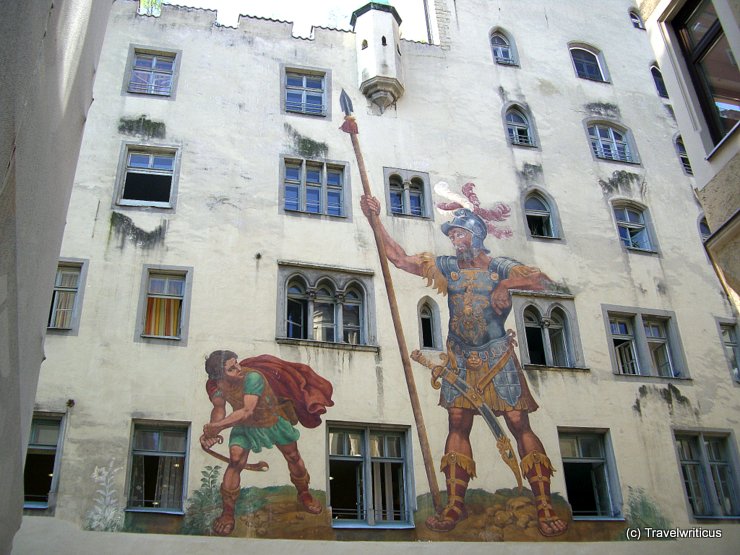
The Goliath House (Goliathhaus) in Regensburg shows the legend of David and Goliath. The first depiction dates back to the 16th century. Several renewals followed. That one from 1900 produced an unusually relaxed Goliath. [German]
You only see what you know (Goethe)
The Goliath House (Goliathhaus) in Regensburg shows the legend of David and Goliath. The first depiction dates back to the 16th century. Several renewals followed. That one from 1900 produced an unusually relaxed Goliath. [German]
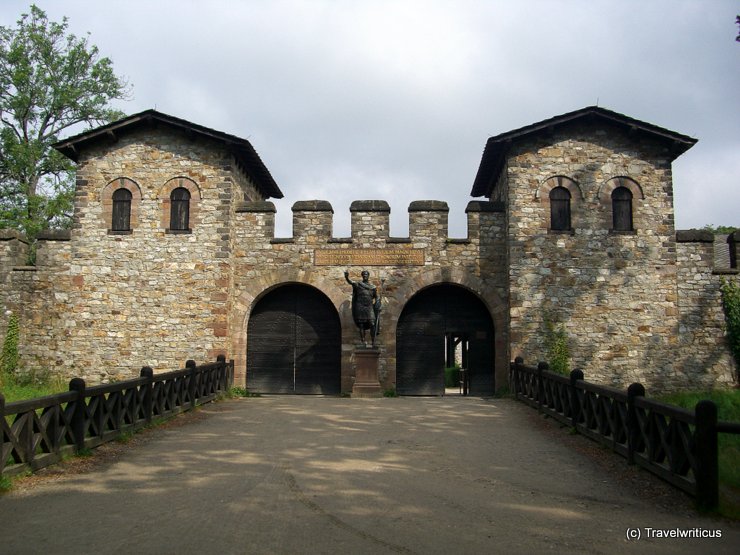
The Saalburg is a reconstructed Roman fort in Hesse. Inside its walls, a museum tells about the life of the soldiers along the border. The castellum was a part of the Upper Germanic-Rhaetian Limes. Today the remains of the Limes are enlisted as UNESCO World Heritage Site. [German]
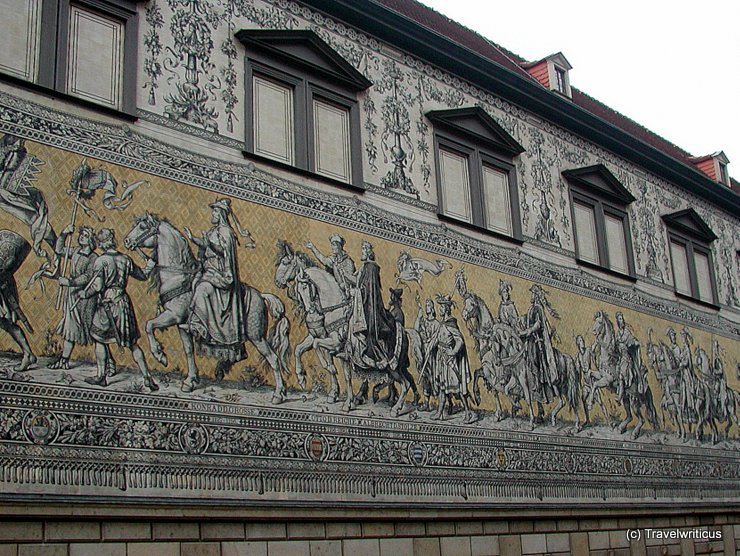
The Fürstenzug (Procession of Princes) is a 102-meter-long mural in Dresden. It is applied to 23,000 Meissen porcelain tiles and displays portraits of 35 members of the House of Wettin. These people formed the rulers of Saxony between 1127 and 1904. [German]
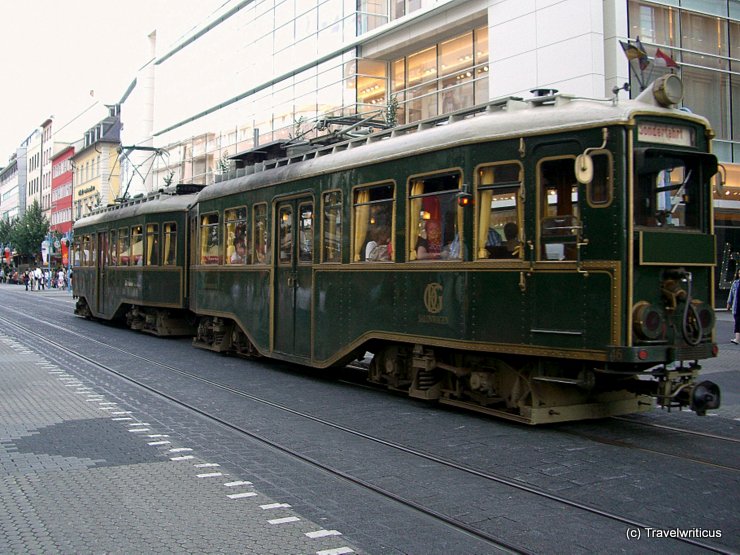
Shortly after discovering a museum-related manhole cover, the next surprise overtook me. An OEG Salonwagen (saloon car) in the design of the 1920s rattled past me. Inside, passengers chilled and enjoyed the view. [German]
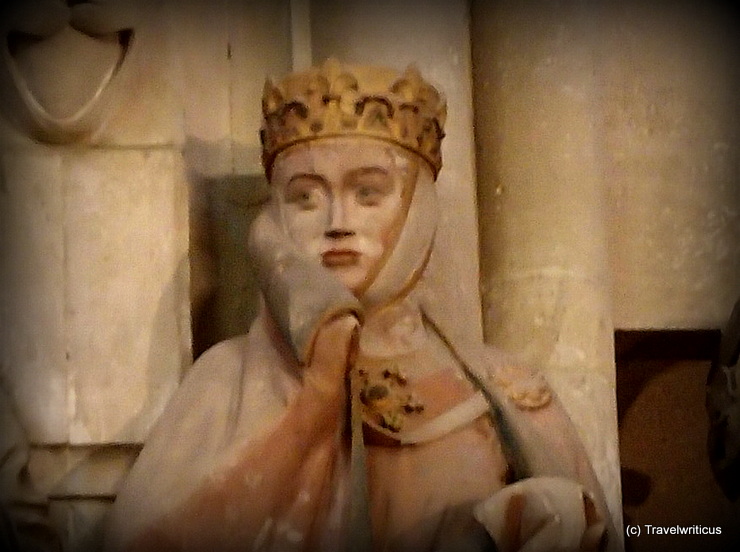
This sculpture is one of twelve donor portraits located in the west choir of Naumburg Cathedral. Due to the look of the depicted lady, this work is considered the most beautiful of the twelve. The name of the statue is Uta of Naumburg.
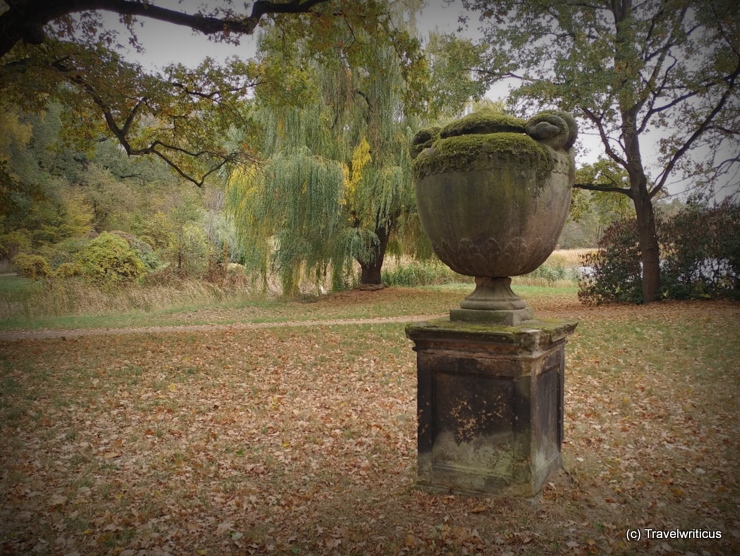
The Dessau-Wörlitz Garden Realm is a landscape park in and around Dessau-Roßlau. Another common name is the Garden Kingdom of Dessau-Roßlau. The park dates back to the Age of Enlightenment. [German]
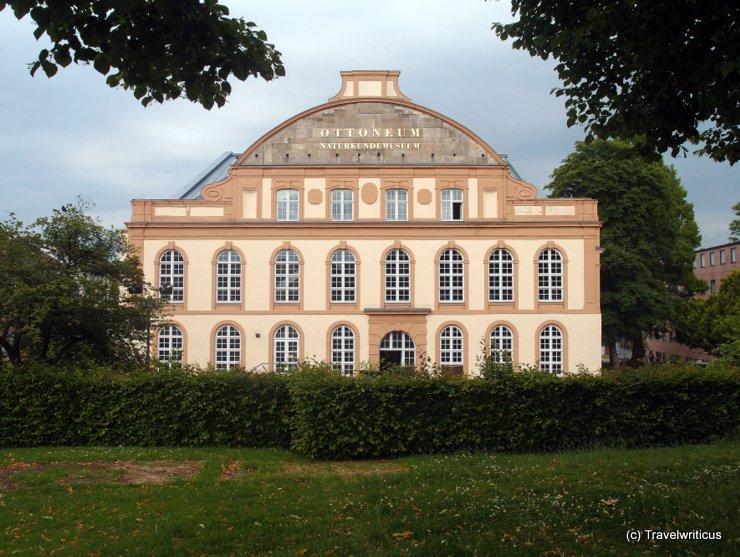
The building was erected as a theatre by architect Wilhelm Vernukken in 1603/1606. The commissioner was Landgraf Moritz, who named the Ottoneum after his son Otto. Today, a natural history museum is housed here. [German]
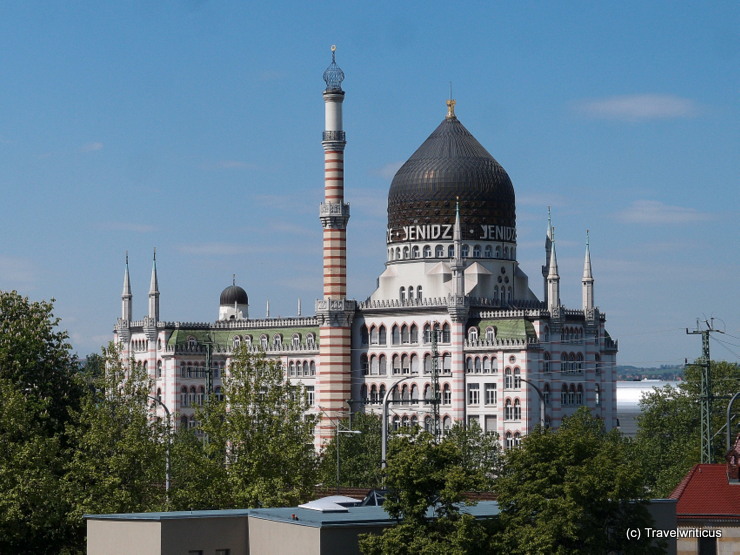
The former cigarette factory building was designed by architect Martin Hammitzsch in 1907. The company name referred to the Ottoman place Yenidze (the Greek Genisea of today), where the tobacco was bought from. Today, the house serves as an office building. [German]
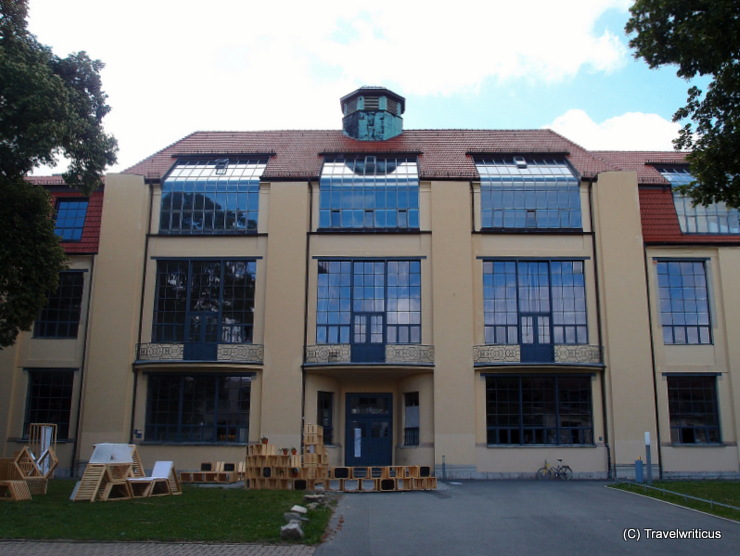
This building, designed by Henry van de Velde, saw its completion in 1911. At that time, it housed the sculptors’ studios at the Grand Ducal Saxon Art School. Today, it forms the main building of the Bauhaus University and is considered a World Heritage Site.
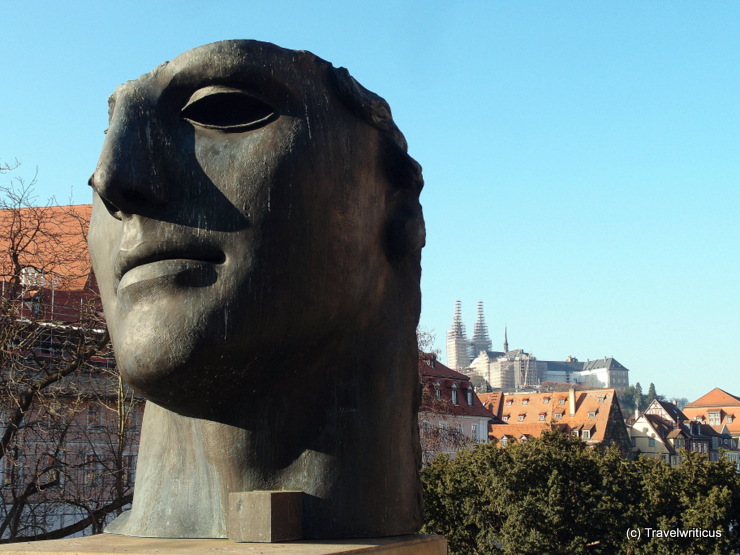
The sculpture Centurione I was created by the Polish artist Igor Mitoraj in 1987. It stands near the Old Town Hall of Bamberg at the eastern end of the Untere Brücke (Lower Bridge). [German]
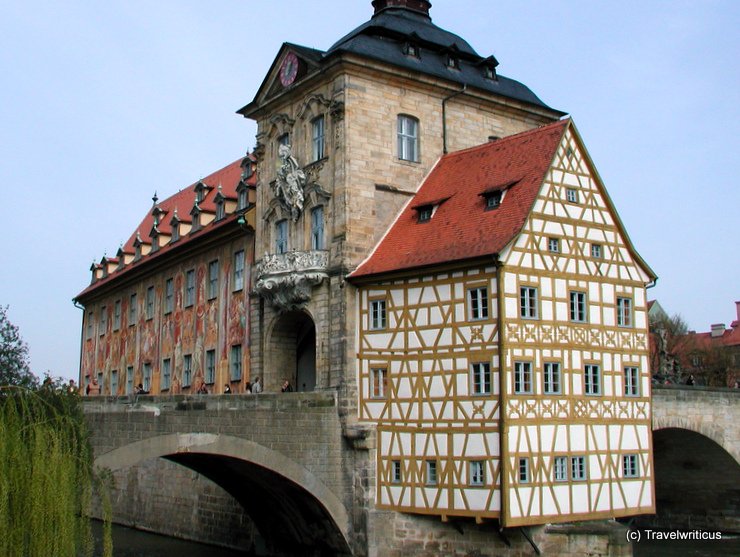
The first mention of the old town hall (Altes Rathaus) in Bamberg dates back to 1387. The building is famous for its location on an artificial island in the Regnitz River and the façade created by Johann Anwander. [German]
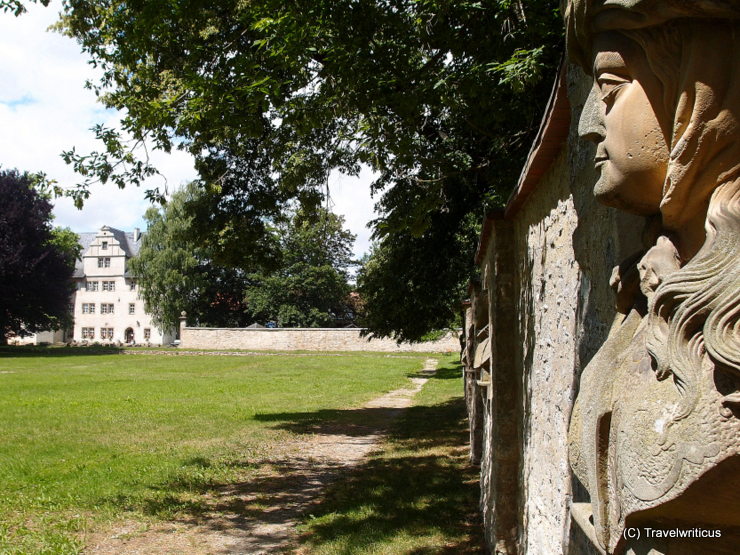
The excursion along the Ilm Valley Cycle Path (Ilmtal-Radweg) takes us to the intriguing garden of Kromsdorf Palace. 64 stone busts adorn the garden wall. The exact assignment of the busts is controversial, which increases the appeal of a walk. [German]