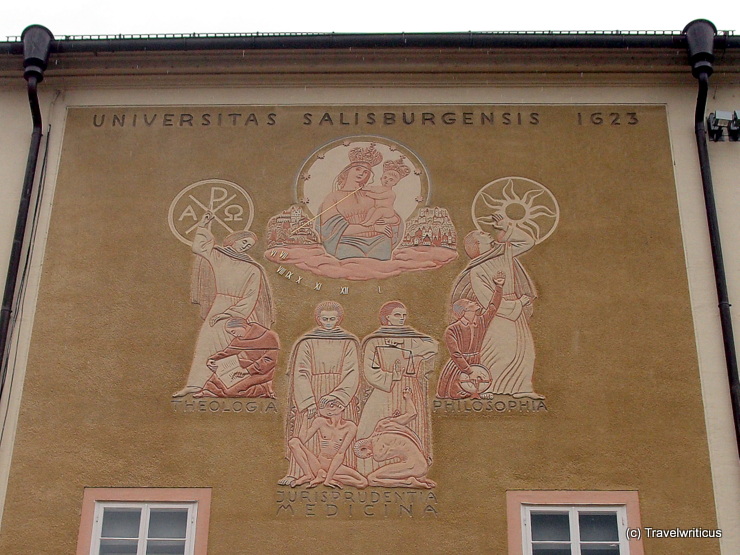
This fresco with a sundial is located on a wall of the old university at the Max-Reinhard-Platz. It was created by Georg Jung (1899-1957). The depictions refer to the university founded in 1622. [German]
You only see what you know (Goethe)
This fresco with a sundial is located on a wall of the old university at the Max-Reinhard-Platz. It was created by Georg Jung (1899-1957). The depictions refer to the university founded in 1622. [German]
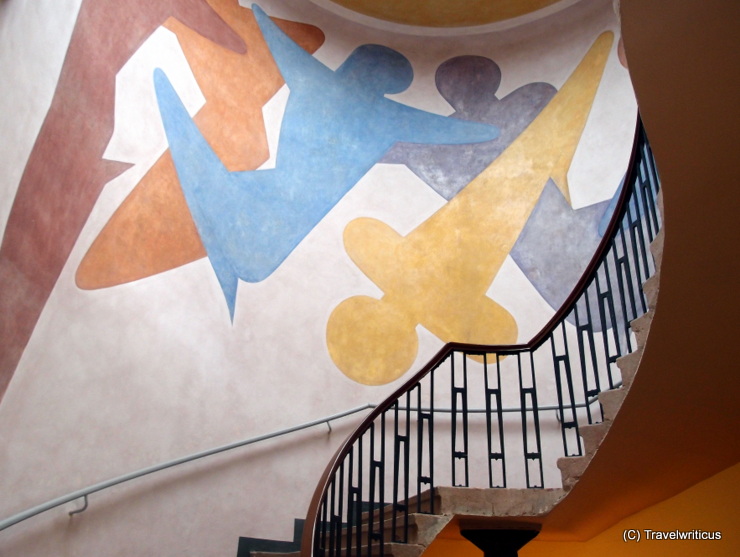
The Van de Velde Building was designed by Henry van de Velde for the Grand Ducal Saxon School of Arts and Crafts. Today it houses the Faculty of Art and Design of the Bauhaus-Universität Weimar. At the central staircase you can see a restored mural, originally made by Oskar Schlemmer.
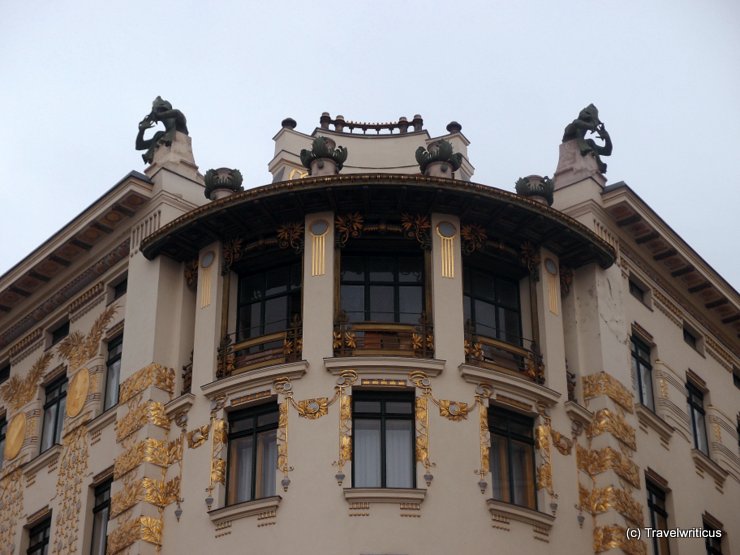
The building N° 38, situated on the Linke Wienzeile (6. District), was designed by Otto Wagner. Koloman Moser created the golden ornaments. You find this facade next to the Naschmarkt, one of the most popular markets in Vienna. [German]
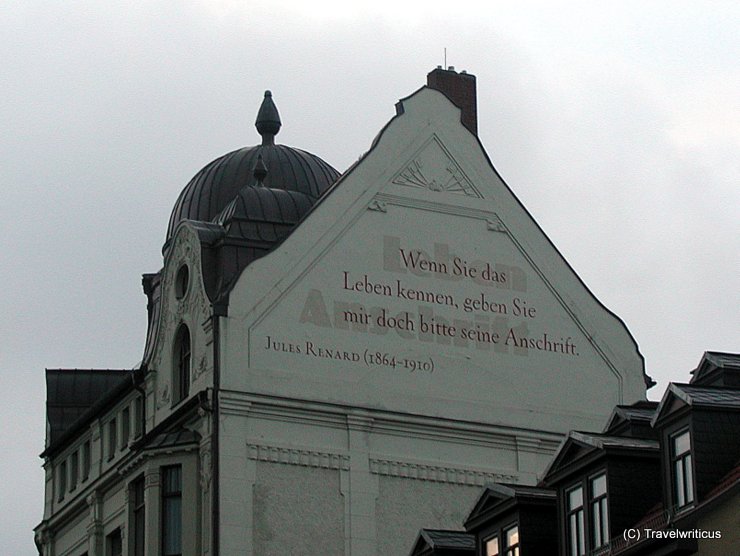
The quotes on the house walls of Weimar are a challenge for attentive walks. They inspire not only to look at gable ends but also to reflect. This quote from Jules Renard made me pensive: “If you know life, please give me its address”. [German]
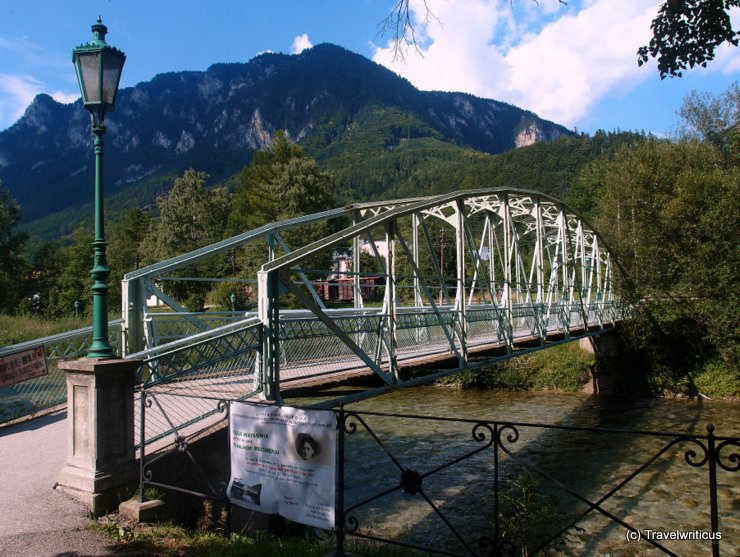
On my way to the Reichenau railway station, I crossed the Schwarza on a pedestrian bridge with filigree iron construction. The elegant lanterns reminded me that I walked on the grounds of a famous spa town in the era of the Austro-Hungarian Empire. [German]
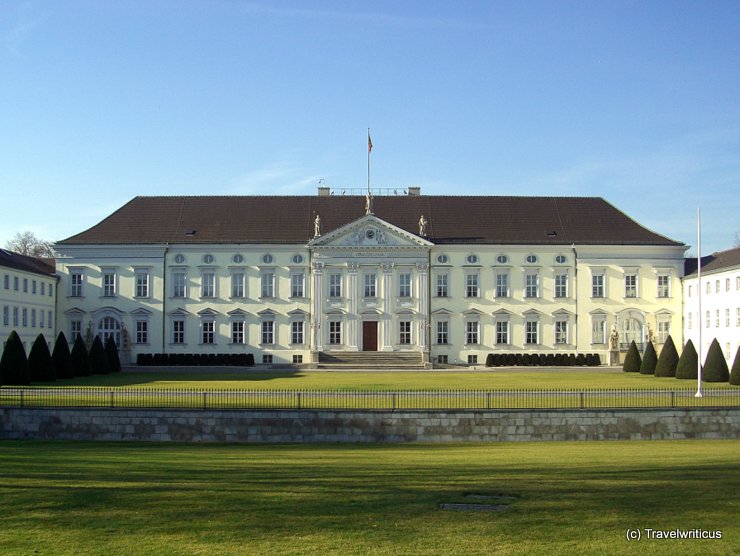
Designed by architect Michael Philipp Boumann, Bellevue Palace (Schloss Bellevue) was erected in 1786 as a summer residence for Prince Augustus Ferdinand of Prussia. Since 1994, it is the official residence of the Federal President of Germany.
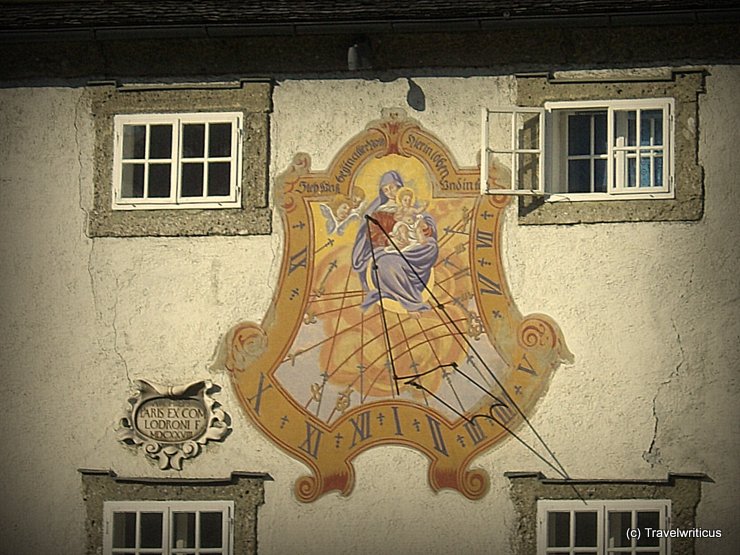
The Zeugwartstöckl in Salzburg is the surviving guardhouse of the demolished Michaelstor (Michael Gate). It stands between Mozartplatz and Rudolfskai. You see this sundial, dating back to 1628, on the facade facing Mozartplatz. [German]
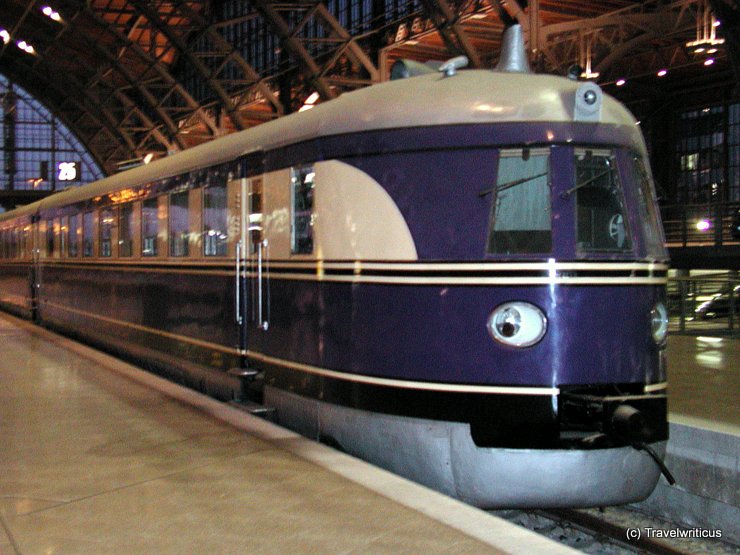
While waiting for my connection train, I came across this DMU (diesel multiple unit) dating back to 1935. Before WWII, it ran as one of the first high-speed trains in Germany. After 1945, the train depicted above (SVT 137 225) operated for the GDR government.
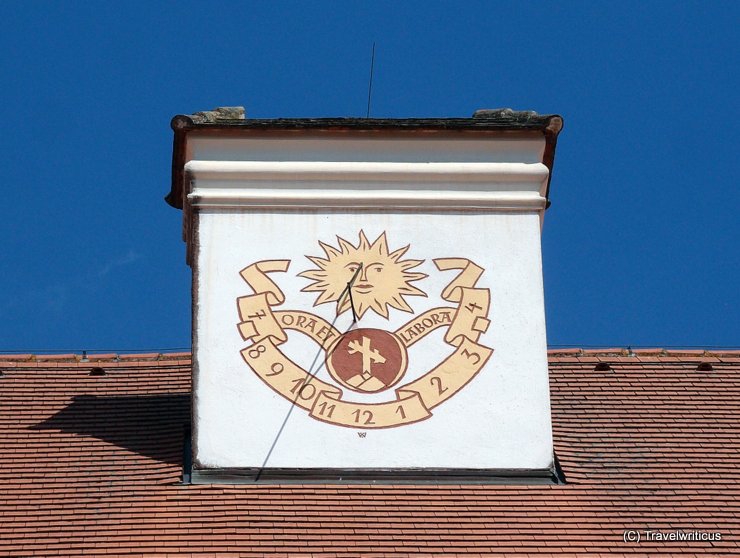
You find this sundial on a chimney of Seitenstetten Abbey (Stift Seitenstetten). This abbey is a large Benedictine monastery in the Austrian region of Mostviertel. The inscription “Ora et Labora” refers to the motto of the Benedictines. It translates into “Pray and Work”. [German]
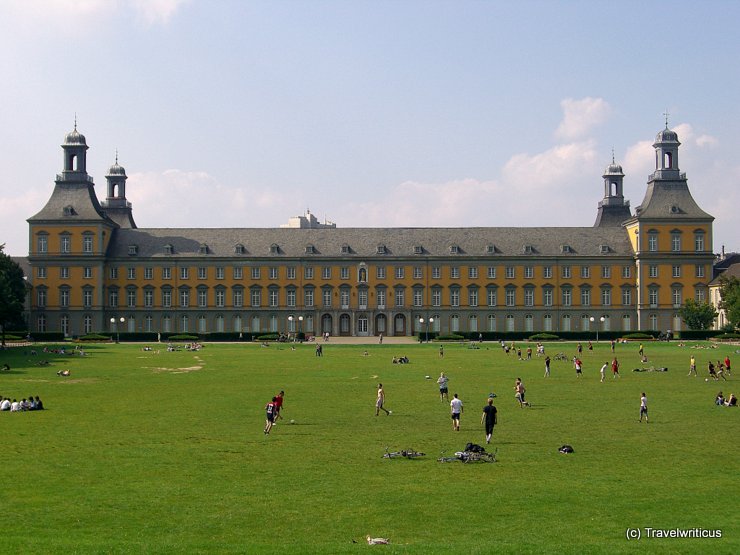
The Electoral Palace (Kurfürstliches Schloss) in Bonn was the former residential palace of the Prince-Electors of Cologne. Where the Prince-Electory used to walk in a beautiful garden, young people play football these days. [German]
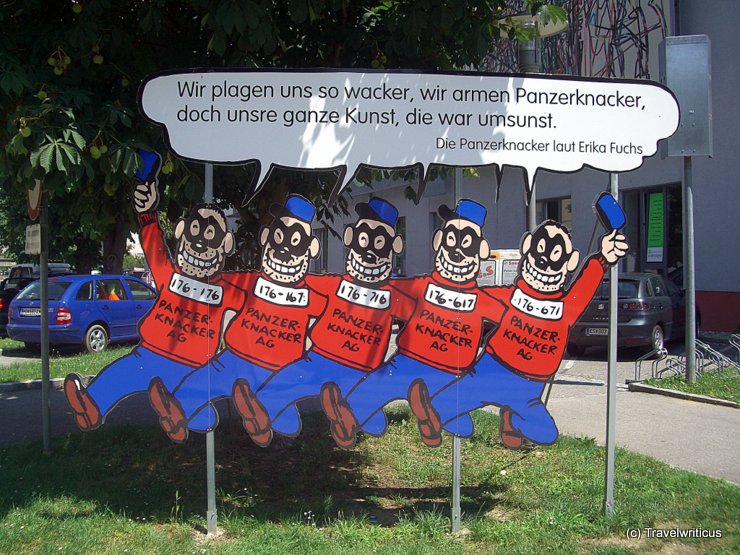
While heading to a Caricature Museum in Krems, I came across this depiction of the Beagle Boys. Its title mentioned Erika Fuchs, who became famous for translating comic stories. Fun fact: This piece stood opposite a jail. [German]
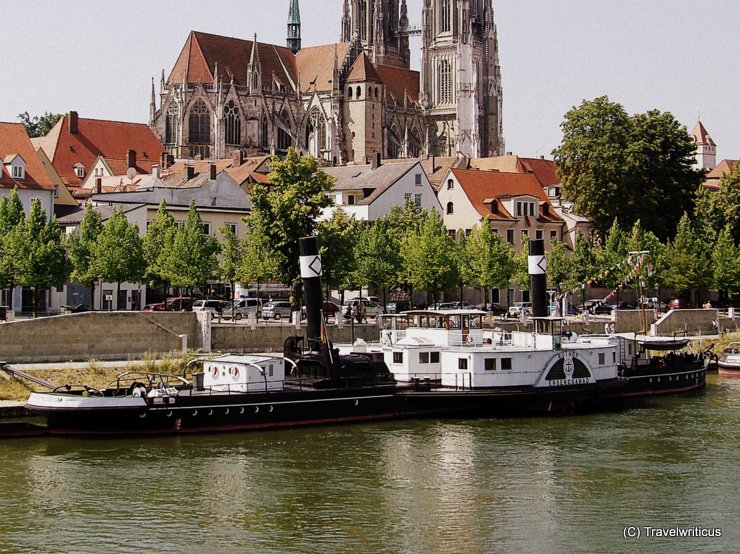
This steam tugboat saw its completion in 1922/23 at the shipyard Ruthof in Regensburg. Originally named Ruthof, it was renamed Érsekcsanád after World War II. Today it is part of the Danube Navigation Museum Regensburg.