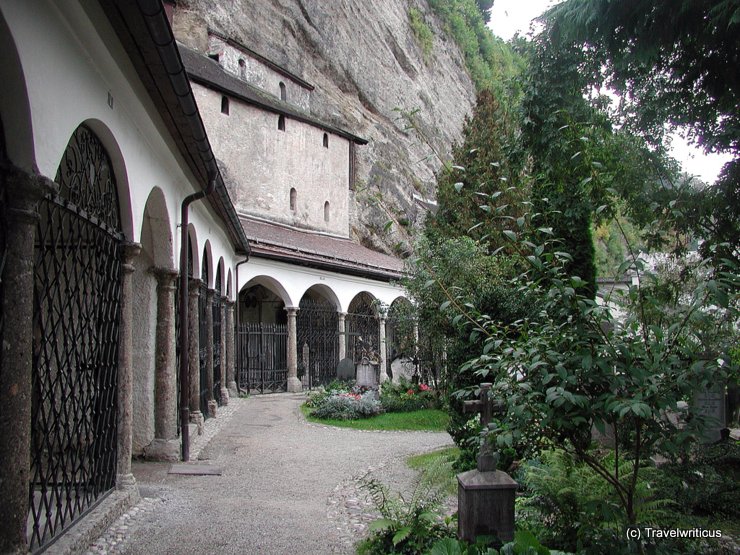
The cemetery of St. Peter (Petersfriedhof) is not only one of the oldest cemeteries of Salzburg but was also a set in the American movie ‘Sound of Music’. The small windows along the rock are part of the so-called catacombs.
You only see what you know (Goethe)
The cemetery of St. Peter (Petersfriedhof) is not only one of the oldest cemeteries of Salzburg but was also a set in the American movie ‘Sound of Music’. The small windows along the rock are part of the so-called catacombs.
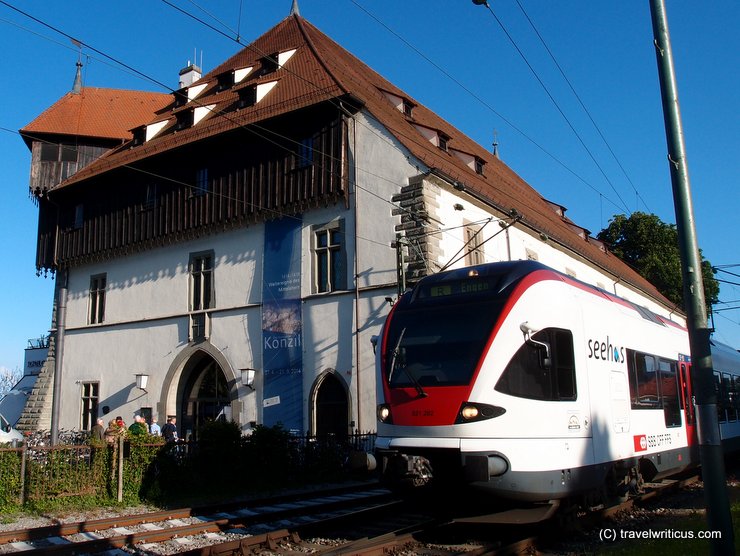
The Seehas Railway is a rail link between Konstanz and Engen. The name doesn’t derive from the existing fish Seehase (lumpsucker) but from a fabulous creature supposed to live in the western part of Lake Constance. [German]
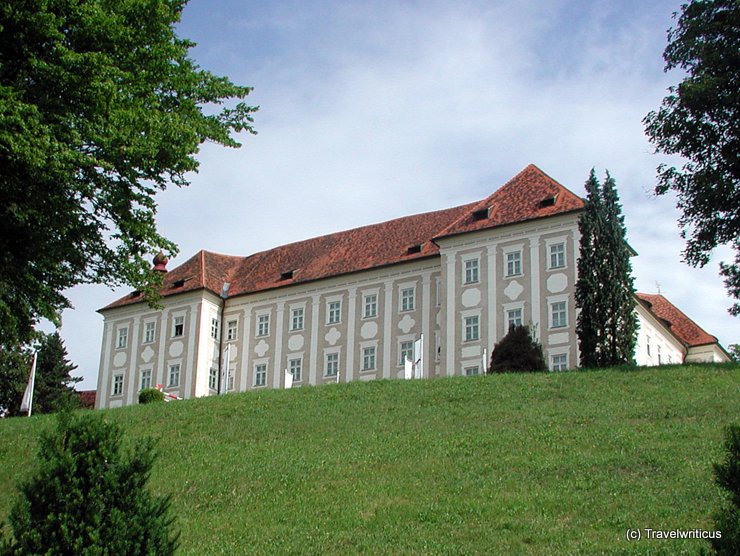
Piber Castle (Schloss Piber) is a palace in the Austrian state of Styria. It stands next to the Federal Stud Piber. The stud breeds the famous Lipizzan stallions performing at the Spanish Riding School in Vienna. [German]
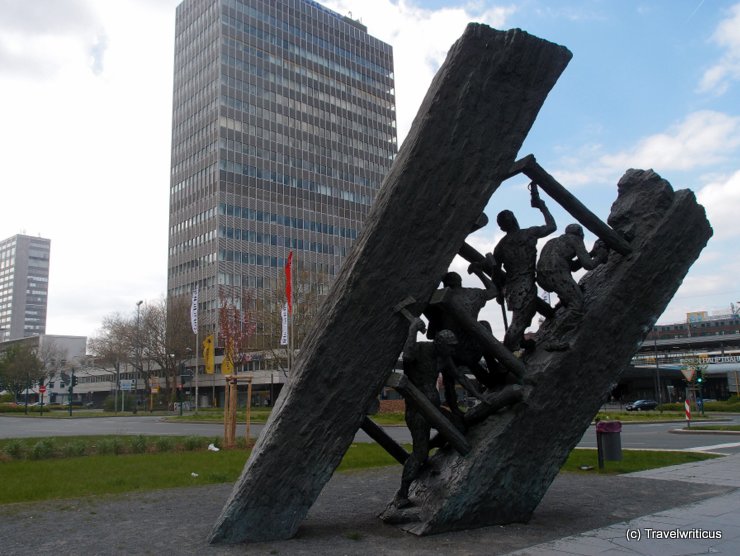
After arriving at Essen Main Station, I came across this sculpture near the station hall. The work “Steile Lagerung” by sculptor Max Kratz reminded me that Essen was one of the largest mining towns in Europe for a certain period. [German]
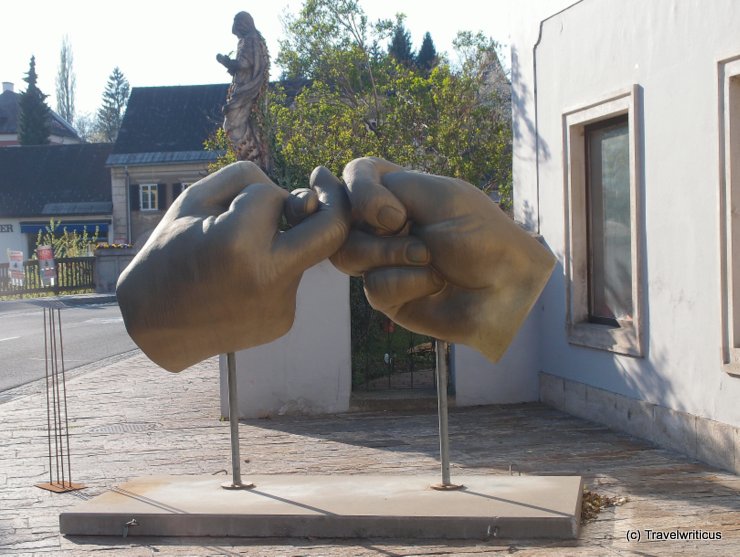
On a sunny spring day in 2012, I came across this sculpture in Ehrenhausen. At first view, it looked like public art portraying something fictitious. But this is wrong. It stands for a real sport with official championships: Finger pulling.
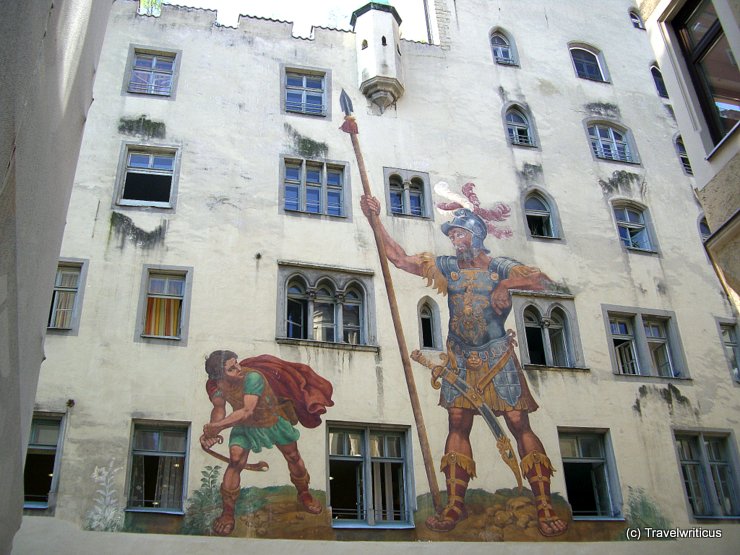
The Goliath House (Goliathhaus) in Regensburg shows the legend of David and Goliath. The first depiction dates back to the 16th century. Several renewals followed. That one from 1900 produced an unusually relaxed Goliath. [German]
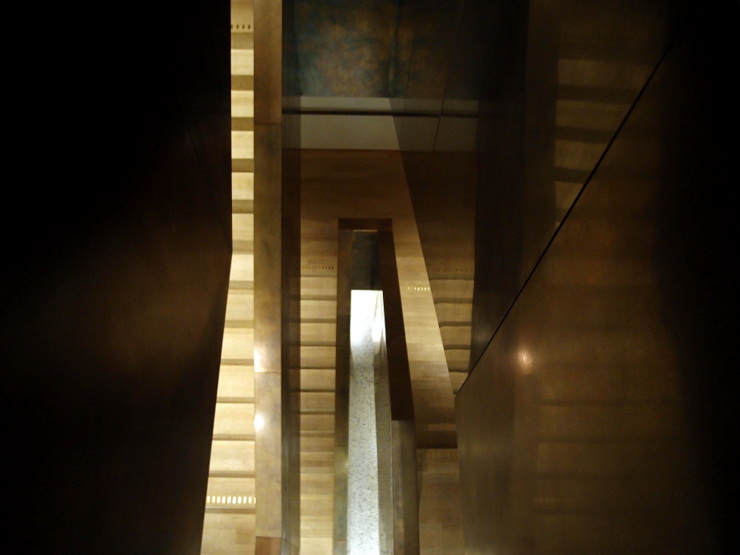
The Vorarlberg Museum in Bregenz offers some fascinating architectural details. The play of colours in the stairwell results from stairs made of oak and a handrail made of brass. [German]
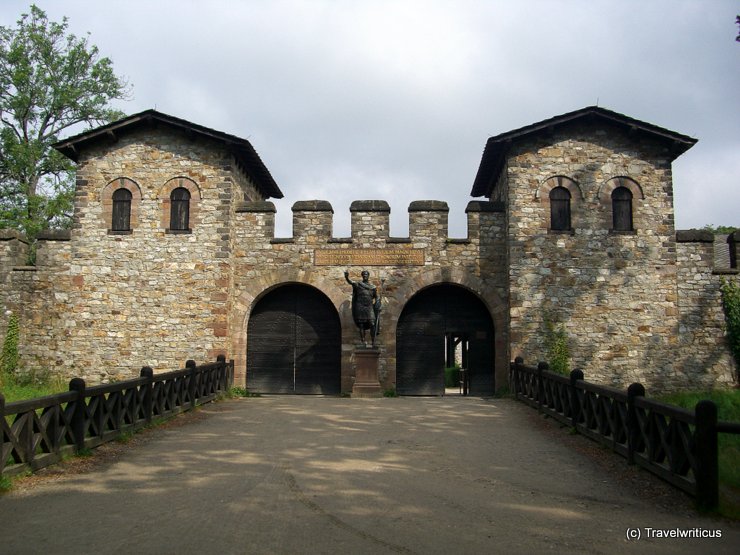
The Saalburg is a reconstructed Roman fort in Hesse. Inside its walls, a museum tells about the life of the soldiers along the border. The castellum was a part of the Upper Germanic-Rhaetian Limes. Today the remains of the Limes are enlisted as UNESCO World Heritage Site. [German]
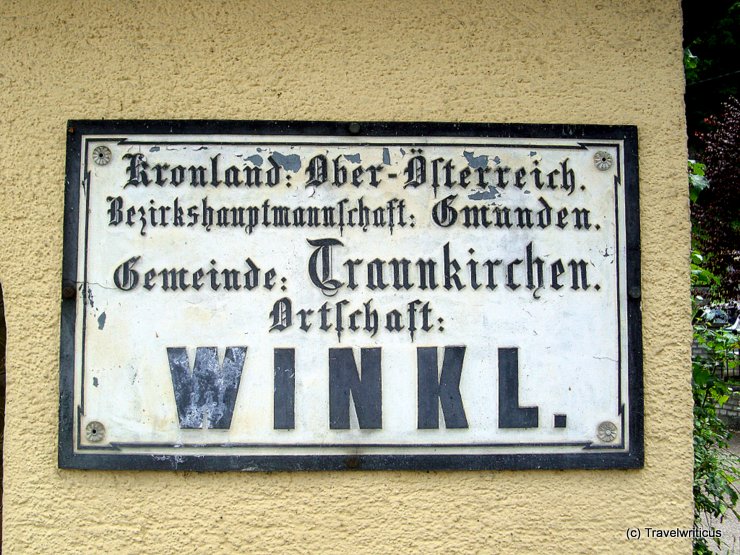
On my walk from the railway station of Traunkirchen to the town centre, I came across this vintage place-name sign. The Austrian State of Upper Austria (Oberösterreich) is still labelled as crown land (Kronland).
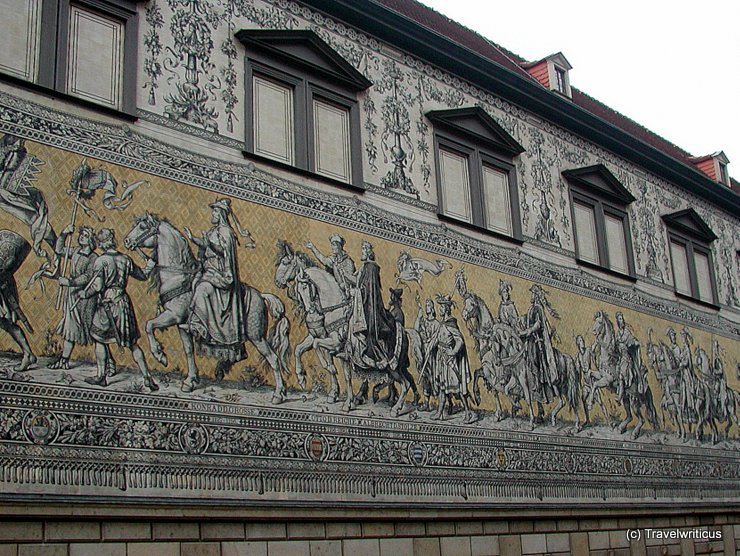
The Fürstenzug (Procession of Princes) is a 102-meter-long mural in Dresden. It is applied to 23,000 Meissen porcelain tiles and displays portraits of 35 members of the House of Wettin. These people formed the rulers of Saxony between 1127 and 1904. [German]
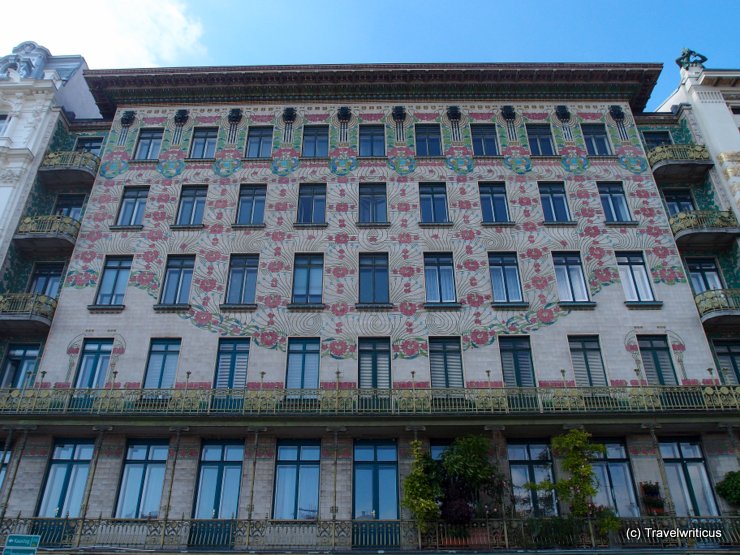
The Majolikahaus saw its completion in 1898. The architect of the building was Otto Wagner. His student Alois Ludwig created the floral design on the façade. The decoration with Majolica ([ger.] = Majolika) elements leads to today’s house name.
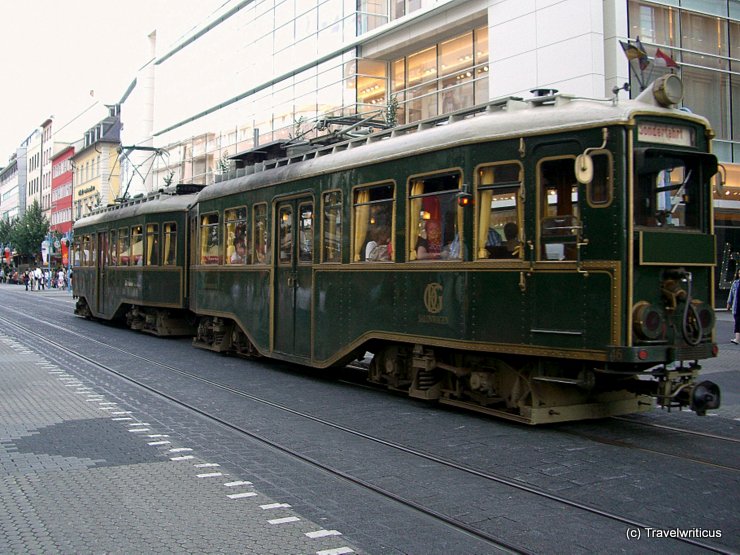
Shortly after discovering a museum-related manhole cover, the next surprise overtook me. An OEG Salonwagen (saloon car) in the design of the 1920s rattled past me. Inside, passengers chilled and enjoyed the view. [German]